
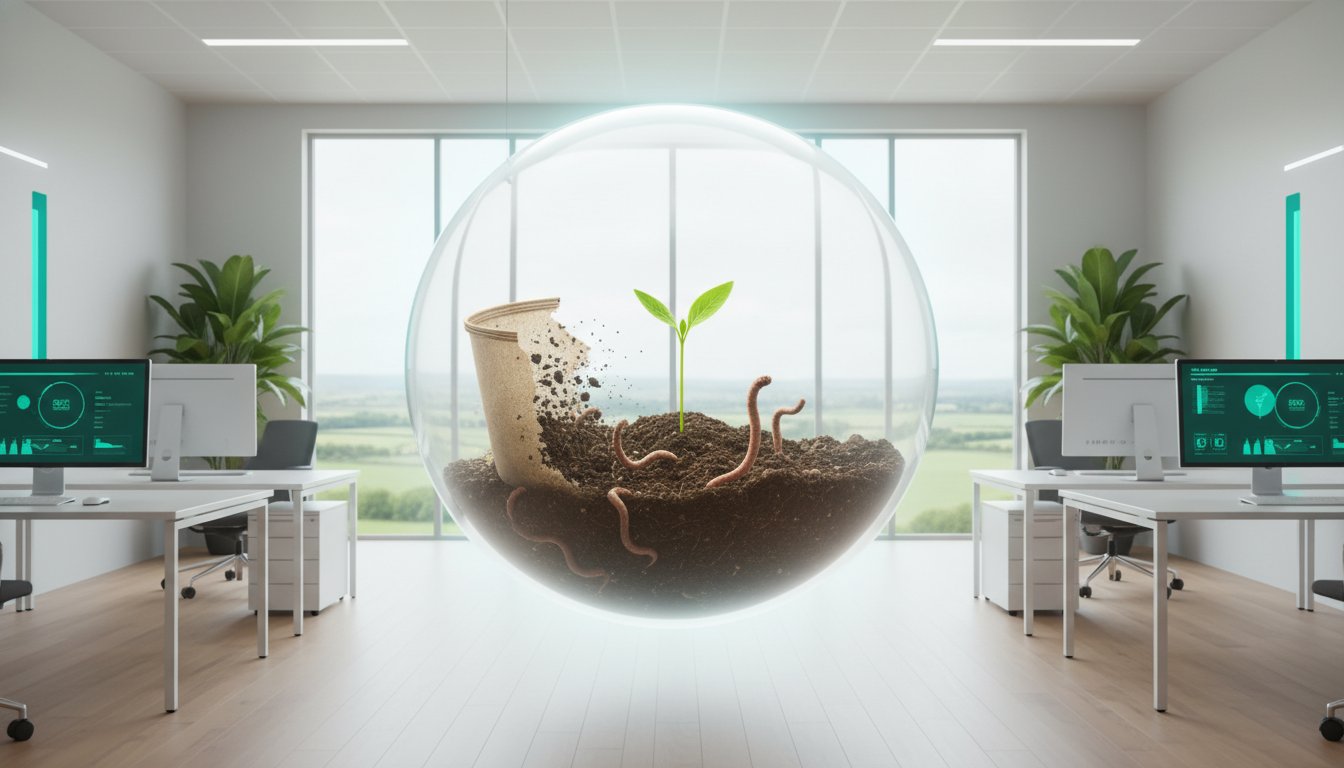
What if the very bag you use to collect food scraps could become a nutrient-rich resource for your worms, rather than a lingering contaminant in your compost? For many businesses and local organisations, using compostable bags in a wormery represents a significant step toward a cleaner, more efficient waste management system. It's understandable to feel hesitant; the fear of hidden plastics or liners that refuse to decompose is a common hurdle when you're aiming for true environmental stewardship. You want a hygienic way to transfer waste that supports, rather than hinders, the biological processes of your farm.
We believe that proactive, solution-oriented practices are the foundation of a sustainable future. This guide provides the expertise you need to safely integrate compostable liners into your wormery without disrupting the delicate ecosystem of your worm farm. You will learn how to verify certifications against the latest 2026 standards, understand the practical implications of the EU's Packaging and Packaging Waste Regulation, and master the techniques required to ensure your resulting compost is completely free of synthetic residues. By choosing the right tools, you can turn a potential waste problem into a high-performance circular solution.
Key Takeaways
- Distinguish between certified plant-based polymers and misleading plastics to ensure your worm farm remains free from toxic synthetic residues.
- Master the most effective methods for using compostable bags in a wormery, including the benefits of shredding liners to accelerate microbial colonisation.
- Improve hygiene and operational efficiency in commercial environments by integrating high-performance caddy liners into your waste management strategy.
- Align your business with 2026 sustainability standards and the UK’s shift toward a circular economy by adopting scalable, plastic-free alternatives.
Are Compostable Liners Safe for Wormeries? Understanding the Science
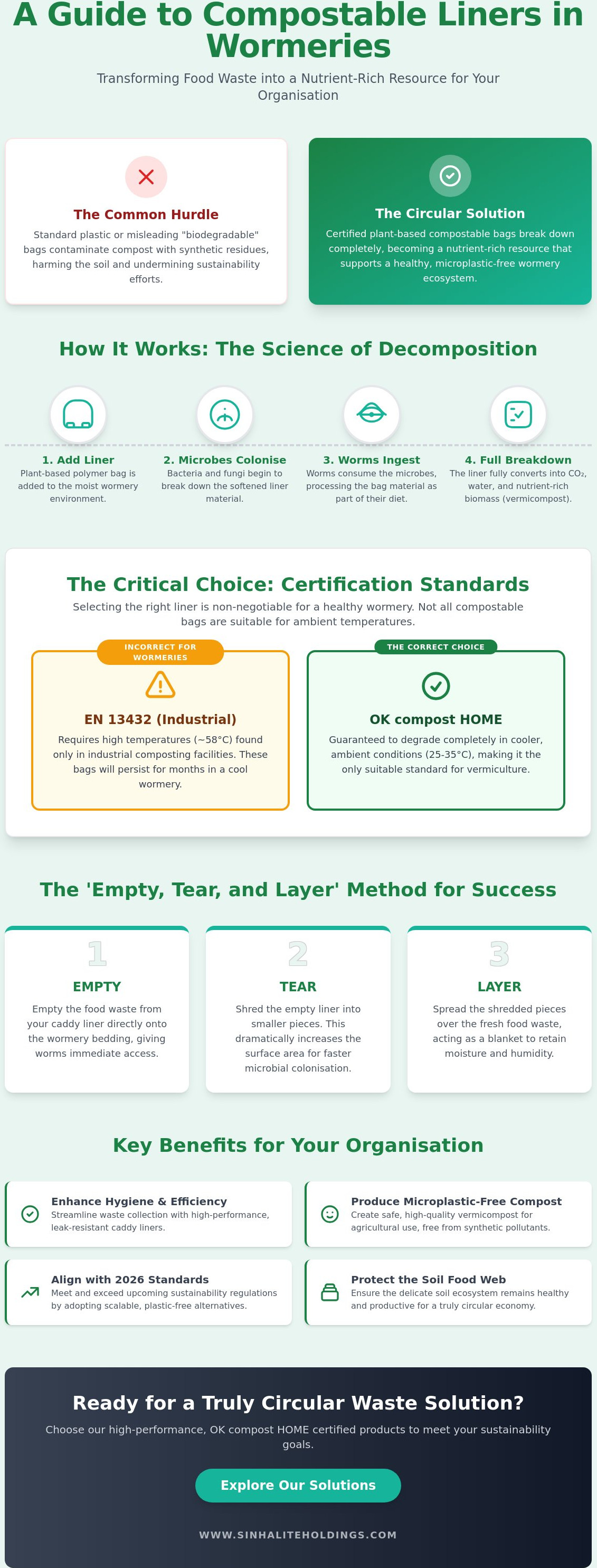
Understanding the science behind using compostable bags in a wormery is essential for any responsible organisation looking to close the loop on food waste. Unlike traditional plastics, certified compostable bags are engineered from plant-based polymers such as cornstarch or PBAT. These materials are specifically designed to be metabolised by microorganisms. It's vital to distinguish these from products labelled simply as "biodegradable," which often contain oxo-degradable additives that merely fragment into smaller pieces of plastic. True compostability ensures that the material breaks down into water, CO2, and biomass, leaving zero toxic residue in your soil.
To appreciate the process, we must look at what vermicomposting is in a biological sense. Earthworms do not consume the bag material directly. Instead, they wait for bacteria and fungi to colonise the surface as the moisture in the wormery softens the polymers. The worms then ingest these microbes, inadvertently processing the bag material as it undergoes biological decomposition. This symbiotic relationship ensures that the liner becomes part of the nutrient cycle rather than a pollutant.
To better understand how these systems function in a practical setting, watch this helpful video:
The Role of EN 13432 and OK compost HOME Standards
The distinction between industrial and home standards is the most common point of failure for those using compostable bags in a wormery. Most commercial liners are certified under EN 13432, which requires temperatures of approximately 58°C to trigger breakdown. Because wormeries typically operate at ambient temperatures between 25°C and 35°C, these bags may persist for months. For a successful transition, you must verify that your bags meet the OK compost HOME standard. This certification guarantees that the material will degrade in cooler conditions, making it the non-negotiable choice for vermiculture.
Protecting the Soil Food Web
A primary concern for many businesses is whether these liners introduce hidden pollutants into their final product. High-quality compostable caddy bags are free from microplastics, ensuring that the resulting vermicompost is safe for agricultural use. By selecting products that adhere to strict chemical safety standards, you protect the delicate soil food web and ensure your organisation contributes to a genuinely circular economy. This commitment to transparency and performance is what separates responsible innovators from those offering mere greenwashed alternatives.
How to Use Compostable Caddy Bags in Your Worm Farm
Successful vermiculture relies on precision and a healthy balance of oxygen and moisture. While it's tempting to simply toss a full liner into the bin, this can lead to anaerobic pockets that stall decomposition. Using compostable bags in a wormery requires a more methodical approach to ensure the material integrates seamlessly into the nutrient cycle. By following a structured routine, organisations can maintain high hygiene standards without compromising the health of their worm population.
Start by emptying the contents of your food caddy directly onto the wormery bedding. This provides your worms with immediate access to nitrogen-rich scraps. Once the bag is empty, tear or shred the liner into smaller pieces. Increasing the surface area in this way allows microbes to colonise the material much faster. This technique is supported by scientific research on biodegradable plastics, which demonstrates that physical fragmentation is a critical precursor to biological ingestion by the soil food web.
The 'Empty, Tear, and Layer' Method
This three-step process is the most effective way to manage waste in a commercial or large-scale wormery. First, invert the bag to release the organic waste. Second, use the shredded bag fragments as a top layer over the fresh food. This acts as a carbon-rich "blanket" that retains moisture and keeps the environment dark and humid. Finally, once the bag pieces become translucent and soft, mix them into the deeper bedding layers. Adopting high-performance compostable caddy bags makes this transition clean and manageable for staff in any professional kitchen or office setting.
Troubleshooting Slow Decomposition
If you find that liners are persisting too long, check the internal temperature and moisture levels of your farm. Low temperatures can significantly stall the biological breakdown of plant-based polymers. You should also ensure adequate aeration by occasionally fluffing the bedding to prevent shredded bags from forming a slimy, anaerobic seal. Microbial activity is the engine that drives bag decomposition in a wormery. By maintaining a damp, well-oxygenated environment, you ensure that these innovative materials are converted into rich compost as intended.
Optimising Waste Management with High-Performance Compostable Solutions
Implementing a clean and efficient waste stream is a priority for any modern organisation. High-quality compostable caddy bags significantly improve hygiene in commercial kitchens and office environments by containing food scraps securely until disposal. This transition isn't merely about convenience; it's a strategic move toward a circular economy. By choosing compostable SKUs, businesses actively reduce plastic contamination in the organic waste stream, ensuring that the final compost remains a pure, high-value agricultural input. This commitment positions your organisation as a responsible innovator dedicated to systemic change.
Scaling Sustainability for UK Businesses
For councils and large organisations, the benefits of using compostable bags in a wormery become even more apparent at scale. Consistent, certified inputs allow for predictable decomposition cycles in industrial-sized vermiculture systems. Managing waste on-site reduces the carbon footprint associated with waste transport and third-party processing fees. When your team uses reliable, plant-based liners, they can transfer waste with confidence, knowing the material supports the biological health of the farm. This decentralised approach to waste management is a practical, scalable solution for meeting 2026 environmental targets.
Choosing the Right Liner for Your Needs
Performance is essential. A liner must offer high puncture resistance and durability to handle heavy food waste loads without leaking or tearing. Professional-grade tools are necessary for a successful plastic-free transition. It's also helpful to learn how to keep a food waste bin from smelling during the collection phase, as this ensures a pleasant working environment before the scraps reach the worms. Sinhalite Holdings provides the robust compostable garbage bags and caddy liners required to bridge the gap between industrial utility and ecological responsibility. By selecting the right materials, using compostable bags in a wormery becomes a seamless, standard operating procedure for any forward-thinking entity.
Advancing Toward a Circular Waste Future
Transitioning to a circular economy requires both visionary leadership and practical, high-performance tools. We've established that the safety of your vermiculture system depends on the clear distinction between true compostable polymers and greenwashed plastics. By implementing the "Empty, Tear, and Layer" technique, your organisation can maintain impeccable hygiene while supporting the biological health of your farm. Using compostable bags in a wormery acts as a functional bridge between commercial efficiency and environmental stewardship.
The shift away from single-use plastics is an achievable goal when supported by reliable innovation. Our products are 100% plant-based and plastic-free, featuring a puncture-resistant design tailored for the rigours of commercial use. Every liner is certified to EN 13432 standards, providing the transparency and performance your business demands. Explore our range of certified compostable caddy bags for your home or business to begin your transition today. It's time to build a future where waste is no longer a burden, but a biological resource for a thriving planet.
Frequently Asked Questions
Will worms actually eat the compostable bags?
Worms don't ingest the bag material as their primary food source. Instead, they consume the bacteria and fungi that colonise the plant-based polymers as the material begins to soften and decompose. As the microbes break the liner down into smaller fragments, it becomes part of the organic matter that worms process into nutrient-rich vermicompost, ensuring the bag is fully integrated into the soil food web.
How long do compostable liners take to disappear in a wormery?
In a well-maintained system, high-quality liners typically vanish within three to six months. This timeframe depends on moisture levels, internal temperature, and whether the bag was shredded before being added. Using compostable bags in a wormery requires a steady biological pace; because home systems operate at lower temperatures than industrial facilities, the breakdown is a natural process that rewards patience and consistent conditions.
Can I use 'biodegradable' bags if I can't find compostable ones?
You should avoid using bags labelled only as 'biodegradable' in your worm farm. These products often contain oxo-degradable additives that fragment into persistent microplastics rather than converting into organic biomass. To protect the health of your worms and the purity of your final compost, always verify that your liners carry a certified 'home compostable' or 'OK compost HOME' seal before use.
What happens if a compostable bag doesn't break down?
If a liner remains intact for more than six months, it usually indicates that the environment is too dry or the material lacks sufficient microbial contact. Using compostable bags in a wormery successfully relies on maintaining a damp, aerated environment to initiate the softening of the polymers. If a bag persists, you can accelerate the process by shredding it into smaller pieces and burying it deeper into the moist bedding layers.


