With the 31 March 2026 deadline for mandatory weekly food waste collections now in effect across England, many households are finding that their commitment to sustainability comes with an unwelcome side effect: persistent kitchen odours. You've likely felt the frustration of a leaking liner or the irritation of fruit flies hovering over your caddy. It's a common struggle, but managing organic waste doesn't have to compromise the air quality of your home. We believe that a transition to responsible waste practices should be both achievable and advantageous for your daily life.
In this guide, you'll discover professional, eco-friendly strategies for how to keep a food waste bin from smelling while maintaining a pristine kitchen environment. We'll move beyond simple masking scents to focus on the industrial pragmatism of moisture control and high-integrity compostable barriers. You'll learn how to select BS EN 13432 certified liners that offer the durability you need and the breathable performance that prevents anaerobic decay. This narrative provides a clear, sustainable routine to ensure your food caddy remains fresh, hygienic, and entirely leak-proof.
Key Takeaways
- Identify why moisture is the primary catalyst for foul odours and how managing it can transform your kitchen's hygiene.
- Establish a consistent, eco-friendly cleaning routine that leverages natural agents to eliminate bacteria without the need for harsh chemicals.
- Learn professional techniques for how to keep a food waste bin from smelling by utilizing double-wrapping and moisture-wicking strategies.
- Transition from standard plastic to high-integrity compostable sacks to ensure durability and breathability in your food waste routine.
- Discover the essential performance differences between biodegradable and certified compostable materials to ensure your household meets 2026 UK standards.
Understanding Why Food Waste Bins Smell
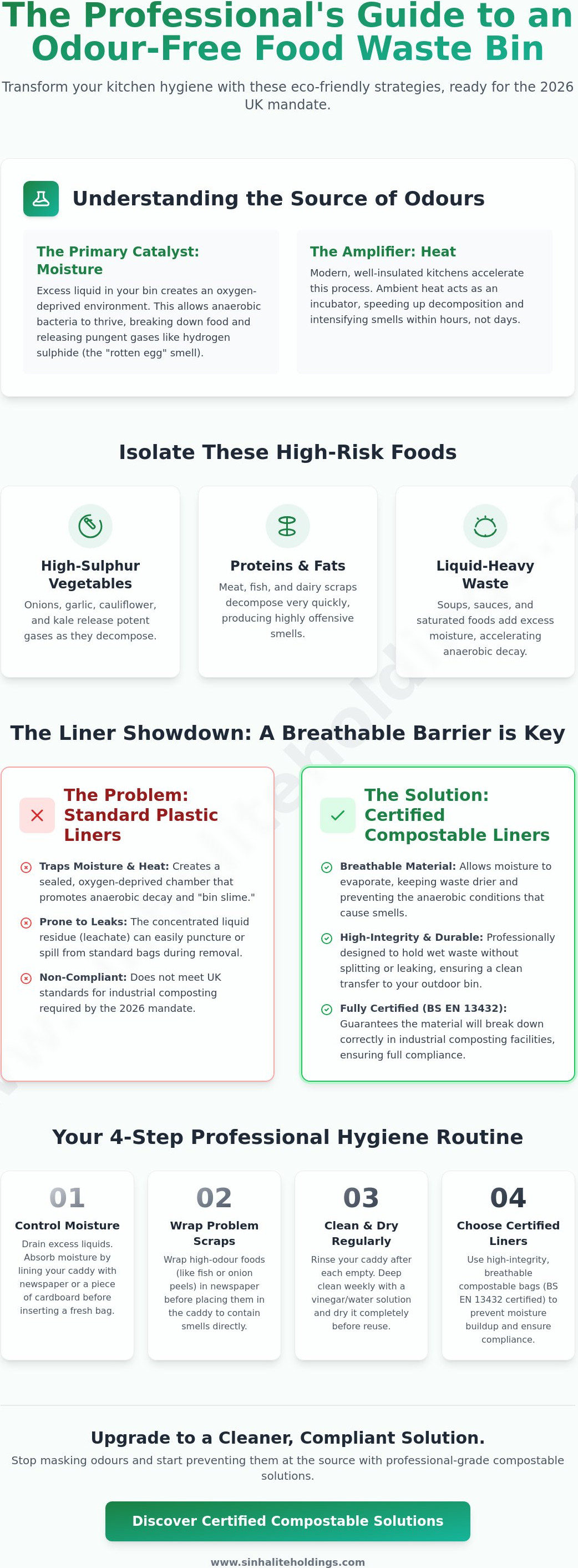
To effectively master how to keep a food waste bin from smelling, one must first understand the biological mechanisms at play. Most people assume that food waste simply rots, but the scent is actually a byproduct of specific bacterial activity. When organic matter is placed in a confined space like a kitchen caddy, oxygen is quickly depleted. This shift creates an environment where anaerobic bacteria thrive, leading to the production of pungent gases that permeate your kitchen.
Moisture serves as the primary catalyst for these foul-smelling emissions. Excess liquid facilitates the movement of microbes and accelerates the cellular breakdown of food scraps. In many UK kitchens, this process is further intensified by ambient heat. Modern insulation and central heating systems create a microclimate that speeds up the process of food spoilage, turning a small amount of waste into a significant olfactory issue within hours.
To better understand this concept, watch this helpful video:
The Role of Anaerobic Decomposition
Anaerobic decomposition is the breakdown of organic material in the absence of oxygen. This specific type of decay produces methane and hydrogen sulphide, which are responsible for the "rotten egg" smell often associated with waste bins. When you use standard plastic liners, you create a sealed, oxygen-deprived chamber. These bags trap moisture and heat, which causes a "slime" layer to form. This liquid residue is a concentrated source of bacteria and is the most difficult element to clean once it leaks into the base of your caddy.
Common Odour Culprits in the Caddy
Identifying specific high-risk foods is a practical step in learning how to keep a food waste bin from smelling. Certain items are naturally more prone to producing strong odours during decomposition:
- High-sulphur vegetables: Onions, garlic, and brassicas like cauliflower or kale release potent gases as they break down.
- Proteins and fats: Meat and dairy scraps decompose rapidly and produce some of the most offensive scents if not isolated.
- Liquid-heavy waste: Leftover soups, sauces, or saturated cereals introduce unnecessary moisture that drowns the waste and triggers anaerobic activity.
By managing these specific items with greater care and ensuring your waste remains as dry as possible, you can significantly reduce the potential for unpleasant smells. Transitioning to a breathable waste management system, which allows moisture to evaporate rather than pool, is the most effective way to interrupt this cycle of decay and maintain a hygienic kitchen environment.
Essential Cleaning and Hygiene Practices
Maintaining a hygienic environment is a fundamental component of effective waste management. While the biological factors discussed previously provide the "why," a rigorous cleaning protocol provides the "how." A proactive approach ensures that residual bacteria do not accumulate. We recommend establishing a consistent schedule: a quick rinse for your indoor caddy every time it's emptied, followed by a thorough deep clean once a week. For outdoor bins, a monthly sanitisation is typically sufficient to prevent long-term buildup. It is vital to dry the bin completely after every wash, as any remaining droplets will immediately react with new waste to restart the cycle of decay.
Choosing the right agents is critical for those learning how to keep a food waste bin from smelling. Many commercial products rely on synthetic fragrances that merely mask odours with heavy chemicals. This approach is often counterproductive as it introduces non-biodegradable substances into your home and fails to address the underlying microbial activity. Instead, embracing natural cleaning agents aligns your household with broader ecological goals while providing superior, professional results.
Natural Deodorisers and Cleaners
A simple solution of equal parts white vinegar and water serves as a powerful, non-toxic disinfectant. The acidity of the vinegar breaks down the biological films that form on the bin's surface, effectively neutralising the source of the scent. For persistent acidic odours, bicarbonate of soda acts as an excellent alkaline buffer. Sprinkling a small amount at the base of the bin after cleaning provides a continuous neutralising effect. If you prefer a fresh scent, adding lemon juice or a few drops of antimicrobial essential oils, such as tea tree or eucalyptus, offers a botanical alternative to artificial sprays.
Optimising Your Caddy Location
Strategic placement is an often overlooked factor in how to keep a food waste bin from smelling. Heat acts as a direct accelerant for decomposition. Therefore, positioning your caddy next to a radiator, oven, or in direct sunlight will inevitably lead to faster spoilage and stronger gases. Aim for a cool, shaded area, such as a cupboard under the sink or a ventilated pantry. Ensuring there is adequate air circulation around the bin prevents the buildup of condensation, which otherwise invites mould and compromises the integrity of your liners.
Success in sustainable waste management depends on the integrity of your tools. Utilizing high-quality compostable caddy bags alongside these hygiene practices creates a robust system that prevents leaks and simplifies the cleaning process. By treating the caddy as a piece of high-performance kitchen equipment rather than a mere receptacle, you ensure a fresh and inviting kitchen environment.
Managing Moisture to Neutralise Odours
Moisture control stands as the fundamental principle of effective odour management. When organic materials are saturated, they create the ideal conditions for the anaerobic bacteria mentioned earlier to thrive. Mastering how to keep a food waste bin from smelling requires a shift in how we handle organic liquids at the source. By implementing a rigorous dry-waste technique, you can effectively neutralise odours before they begin to permeate your living space. This proactive approach transforms the kitchen caddy from a source of frustration into a seamless part of a sustainable household routine.
The Dry-Waste Technique
The most effective way to prevent foul scents is to ensure that excess liquids never enter the bin. Using a simple sink strainer to remove moisture from food scraps before disposal can reduce the liquid volume in your caddy by a significant margin. It's also vital to allow hot food to cool completely before placing it in the bin; steam from warm leftovers creates condensation, which accelerates the breakdown of both the waste and the liner. While some online forums suggest using old newspaper to soak up leaks, this often leads to a soggy, disintegrating mess that sticks to the base of the bin. Instead, a layer of dry cardboard or even a small amount of dry garden waste provides a more structured and hygienic absorbent base.
Choosing High-Integrity Caddy Liners
The durability of your waste system depends heavily on the quality of the barrier you use. Many consumers find themselves asking do compostable bags contain plastic when they experience premature tearing or leaking. True high-integrity compostable caddy bags are engineered without traditional fossil-fuel plastics, instead utilizing advanced materials like Mater-Bi technology. This innovation is specifically designed to be breathable, allowing moisture to evaporate through the liner while keeping solids and liquids securely contained.
This breathability is a critical factor in how to keep a food waste bin from smelling. When moisture can escape as vapour, the waste stays drier, which significantly slows the rate of decomposition and prevents the formation of pungent gases. Choosing liners with reinforced, leak-proof seams ensures that any residual liquid remains trapped, protecting your caddy from the "slime" layer that causes long-term hygiene issues. By investing in professional-grade compostable solutions, you align your daily operations with modern ethical standards without sacrificing the utility and strength required for a fresh kitchen environment.
Best Practices for Food Disposal and Wrapping
Effective waste management requires more than just a receptacle; it demands a tactical approach to containment. While previous sections focused on hygiene and moisture, the way you physically introduce waste into the caddy determines the overall success of your system. Adopting a method of "double-wrapping" for highly pungent scraps is a cornerstone of how to keep a food waste bin from smelling. This practice isolates the most active sources of decay at the point of disposal, preventing gases from permeating the kitchen environment before the bag is even full.
A successful routine relies on a clear hierarchy of disposal. Not every scrap requires the same level of containment. Dry items, such as eggshells, bread crusts, or the outer skins of onions, can often be placed into the caddy loose without issue. However, high-moisture or protein-rich items, such as cooked leftovers, fruit pulps, and raw meat trimmings, should always be wrapped. This distinction ensures that you use your resources efficiently while maintaining high standards of kitchen hygiene and environmental stewardship.
Strategic Wrapping with Compostable Clingfilm
Utilizing the best compostable cling film for leftovers provides a professional-grade solution for managing problematic waste. Wrapping fish skins, meat scraps, or dairy-heavy leftovers in compostable clingfilm creates an airtight secondary barrier. This prevents the immediate release of hydrogen sulphide and other foul gases. It is essential to ensure that any wrap used is certified fully compostable to avoid contaminating the organic waste stream. This level of source-separation is a fundamental strategy for how to keep a food waste bin from smelling, as it traps odours within a secure, degradable layer.
Frequency and Timing of Emptying
The "Little and Often" rule is a non-negotiable standard for any sustainable waste routine. Even with the best wrapping techniques, organic matter begins to break down immediately. We recommend emptying indoor caddies every two to three days to prevent waste from becoming stagnant. This frequency is particularly important before weekends or holidays when a bin might otherwise sit undisturbed. Regular emptying also significantly reduces the risk of fruit fly infestations, as it interrupts their breeding cycle. By maintaining this steady rhythm, you ensure that your kitchen remains a fresh and inviting space.
To implement these professional strategies in your own home, you can explore our range of high-performance compostable household clingfilm and caddy bags. Choosing tools designed for durability and breathability is the most advantageous way to align your daily operations with modern ethical standards while achieving a truly fresh kitchen environment.
Switching to Professional Compostable Solutions
The transition to a more responsible waste routine requires a final, critical step: the selection of high-performance tools. While manual hygiene and moisture control are essential, the integrity of your containment system determines whether these efforts succeed. Many consumers are misled by the term "biodegradable," which often lacks a verified timeframe for decomposition and can leave behind microplastics. In contrast, certified compostable materials meet rigorous standards, such as BS EN 13432, ensuring they return to the earth without environmental harm. Choosing certified products is the most reliable way to maintain a fresh home while supporting systemic ecological change.
A holistic approach to how to keep a food waste bin from smelling involves coordinating your liners, wrapping techniques, and cleaning habits into a single, seamless system. When you utilize materials designed for the specific challenges of organic decay, you move away from the frantic pace of managing odours toward a steady, predictable routine. This shift not only improves your immediate kitchen environment but also aligns your household with the 2026 UK recycling standards.
Why Quality Liners Prevent Odours
The link between bag integrity and kitchen hygiene is absolute. Low-quality bags often split under the weight of wet waste, leading to the accumulation of "bin juice" at the base of your caddy. This liquid residue is the primary source of the extreme odours we seek to avoid. Sinhalite Holdings’ heavy-duty compostable sacks are engineered with superior tensile strength to resist tearing and leaking. By providing a secure barrier, these sacks reduce the need for frequent, intensive bin scrubbing. Their breathable nature allows moisture to escape as vapour, which keeps the contents drier and significantly slows the bacterial processes that cause foul scents.
The Vision for a Plastic-Free Kitchen
Connecting your daily waste habits to wider environmental stewardship is a powerful motivator for change. Every choice to avoid single-use plastics contributes to a larger movement of responsible innovation. For peace of mind, we focus on the "OK compost HOME" certification, which guarantees that our products will break down safely even in domestic composting environments. This ensures that your commitment to a fresh kitchen does not come at the cost of the planet's health.
Sinhalite Holdings acts as a dedicated advocate for this better future, providing the tangible tools needed to reach it. By integrating professional-grade solutions into your home, you can feel confident in the durability and sustainability of your waste routine. We invite you to take the final step in your journey toward a cleaner, more ethical household. Upgrade your food waste management with Sinhalite and discover how to keep a food waste bin from smelling through the intersection of modern innovation and natural processes.
Advancing Toward a Fresh and Sustainable Kitchen
Mastering how to keep a food waste bin from smelling is a practical expression of environmental responsibility. By prioritising rigorous moisture control and adopting a "little and often" emptying routine, you transform a potential chore into a seamless, hygienic process. These intentional adjustments in disposal habits ensure your kitchen remains a fresh and inviting space while you contribute to the UK’s collective goal of reducing landfill methane emissions.
Success in this transition depends on the integrity of your tools. As a specialist UK provider of sustainable packaging, we provide the industrial pragmatism needed to support your visionary goals. Our offerings feature tear-resistant Mater-Bi technology and carry the TUV Austria OK compost HOME certification, ensuring high standards of utility and peace of mind. Explore Sinhalite’s range of leak-proof compostable caddy bags to secure your waste management routine. It's time to embrace a future where responsible living and domestic comfort coexist perfectly. We're here to help you make that change with confidence.
Frequently Asked Questions
How often should I empty my food waste caddy to prevent smells?
You should aim to empty your indoor food waste caddy every two to three days. This frequency prevents organic matter from entering the advanced stages of anaerobic decomposition, where the most pungent gases are produced. By maintaining a regular schedule, you ensure that moisture doesn't pool at the base, which is a primary cause of persistent kitchen odours.
Can I use bicarbonate of soda in a compostable bin liner?
Yes, sprinkling a small amount of bicarbonate of soda into the base of your liner is an excellent way to neutralise acidic food odours. It acts as a natural pH buffer that interrupts the chemical processes leading to foul scents. This practice is entirely compatible with certified compostable materials and won't interfere with the eventual breakdown of the waste at a processing facility.
Why does my compostable bin liner keep splitting or leaking?
Splitting often occurs when low-quality liners are subjected to excessive moisture or heavy, sharp food scraps. High-performance bags engineered with Mater-Bi technology offer superior tensile strength and breathability compared to generic alternatives. Selecting a high-integrity liner is a vital part of how to keep a food waste bin from smelling, as it prevents the leakages that lead to bacterial buildup in your caddy.
Is it better to keep the food waste bin lid open or closed?
It's best to keep the lid closed to prevent pests and contain immediate scents, provided you use a ventilated caddy. A lid with an integrated air filter or small vents allows moisture to evaporate while keeping fruit flies out. This balance of containment and airflow prevents the oxygen-deprived environment that anaerobic bacteria need to produce the strongest odours.
How do I stop fruit flies from gathering around my food waste bin?
The most effective way to deter fruit flies is to ensure all high-sugar waste, such as fruit peels, is wrapped securely. Using compostable clingfilm or caddy bags creates a physical barrier that prevents flies from accessing the waste to lay eggs. Regular emptying and ensuring the rim of your bin is kept clean of food residue will also significantly reduce their presence.
What is the best natural way to clean a smelly outdoor wheelie bin?
A solution of white vinegar and warm water is the most effective natural disinfectant for outdoor bins. The acetic acid breaks down biological films and neutralises odours without the need for harsh synthetic chemicals that can harm the local ecosystem. After rinsing, it's essential to let the bin air-dry completely in a shaded area before adding a new liner.
Can I put compostable clingfilm in my council food waste bin?
Yes, you can include compostable clingfilm in your council collection if it's certified to the BS EN 13432 standard. This certification ensures the material will break down fully within the timeframe required by industrial anaerobic digestion facilities. Always check your local authority's specific guidance, though most UK councils now accept certified compostable wrappings as part of the 2026 recycling reforms.
Does freezing food scraps really stop the bin from smelling?
Freezing scraps halts the decomposition process entirely, which effectively eliminates odour until the waste is moved to an outdoor bin. While this is a successful tactic, managing moisture through breathable liners is often a more practical long-term strategy for how to keep a food waste bin from smelling. Proper moisture control addresses the root cause of decay without requiring dedicated space in your freezer.