
What if the most significant obstacle to your organisation’s sustainability transition wasn't the cost of materials, but the simple, messy reality of a bin liner that refuses to let go? As the 2026 Simpler Recycling legislation makes weekly food waste collection mandatory across England, many businesses and households are discovering that eco-friendly intentions often lead to damp residue and split bags. We understand that a reliable waste system is the backbone of operational integrity, and a sticking liner can quickly turn a green initiative into a logistical headache.
Learning how to stop compostable liners sticking to the bin is not just about convenience; it's about mastering the micro-climate within your waste caddy. By managing moisture and airflow, you can ensure your compostable solutions perform with the same durability as traditional alternatives. This guide provides professional techniques to prevent moisture build-up and maintain liner strength. You will discover how to achieve a clean, easy to empty food waste system that supports a circular economy without increasing your maintenance burden.
Key Takeaways
- Understand the breathability of plant-based materials like cornstarch to identify why condensation forms between the liner and the bin wall.
- Implement practical strategies for how to stop compostable liners sticking to the bin, such as using organic absorbers and selecting vented caddies for better airflow.
- Evaluate the importance of micron thickness to ensure your eco-friendly liners remain intact and resistant to splitting during heavy commercial use.
- Recognise the value of TUV Austria "Home Compostable" certifications in selecting reliable products that meet the highest standards of durability and performance.
- Streamline your waste management operations to meet 2026 compliance standards while significantly reducing the time and effort required for bin maintenance.
Understanding Why Compostable Liners Stick to Your Bin
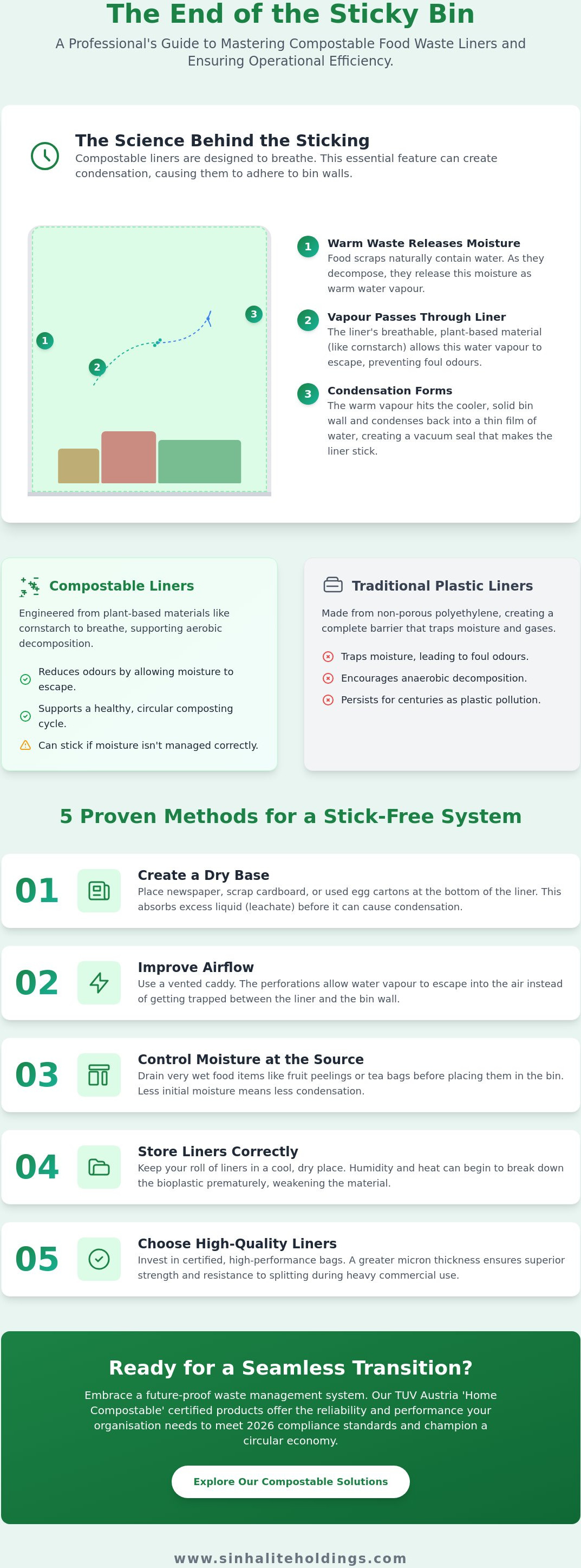
Transitioning to sustainable waste management is a vital step for any forward-thinking organisation. However, many users encounter a specific friction point where the liner adheres firmly to the container walls. This phenomenon occurs because compostable materials are engineered to be breathable. Unlike traditional plastics, the materials used in compostable bags, such as cornstarch and PBAT, allow water vapour to escape through the bag's surface.
When warm food waste is placed inside the bag, moisture evaporates and passes through this semi-permeable membrane. As the vapour hits the cooler surface of the bin wall, it condenses back into liquid water. This trapped moisture creates a thin film that acts like an adhesive, leading to the frequent challenge of how to stop compostable liners sticking to the bin. This is often exacerbated by a vacuum effect, where the moisture seals the liner against smooth plastic surfaces, making removal difficult.
To better understand this concept, watch this helpful video:
The Science of Bioplastic Breathability
High-performance liners balance structural integrity with efficient environmental breakdown. As the OK compost HOME certification explained in our recent analysis, these products must meet strict criteria for degradation in domestic settings. Water vapour transmission rates (WVTR) dictate exactly how much moisture moves through the bag wall over time, which is a critical factor in both bag strength and condensation levels. It's a delicate equilibrium between allowing the waste to "breathe" and maintaining a dry exterior.
Why Traditional Plastic Liners Don’t Stick
Traditional polyethylene liners are entirely non-porous. They act as a total barrier to moisture, which keeps the bin surface dry but traps heat and gases inside the bag. While this prevents sticking, it encourages anaerobic decomposition and the foul odours businesses want to avoid. Sticking is actually a positive indicator that your liner is an active organic material. It shows the bag is ready to begin its natural transition back into the earth, moving away from the static, permanent nature of single-use plastics.
5 Proven Methods to Stop Liners Sticking and Splitting
Mastering the practicalities of food waste separation is essential for operational efficiency. While the science of breathability explains the adhesion, applying strategic moisture management ensures your waste system remains clean and reliable. Understanding how to stop compostable liners sticking to the bin requires a proactive approach that addresses the environment inside the container.
- The Dry Base Method: Place a layer of organic absorbers like newspaper or scrap cardboard at the bottom of the liner. This material soaks up excess leachate before it can condense against the bin walls.
- Improving Airflow: Select vented caddies designed with perforated sides. These allow water vapour to escape into the air rather than being trapped between the liner and a solid plastic surface.
- Moisture Control: Ensure food scraps are drained of excess liquid before disposal. Reducing the initial liquid weight slows the condensation process and preserves the liner's structural integrity.
- Climate-Controlled Storage: Keep your liners on a roll in a cool, dry environment. Storing bioplastics in humid areas can trigger premature degradation, making them more prone to sticking and tearing when eventually used.
Creating a Physical Barrier
Introducing a physical barrier is a sophisticated way to break the vacuum seal caused by moisture. Placing used egg cartons or shredded paper at the base of the bin creates essential air pockets. This simple addition does more than prevent sticking; it introduces a valuable carbon source into the waste stream. This balances the nitrogen-rich food scraps, which ultimately improves the quality of the final compost, supporting a more robust circular economy. Investing in high-quality compostable caddy bags ensures that these physical interventions are supported by superior material strength.
Managing Commercial Food Waste Volumes
For businesses handling significant quantities of organic matter, material thickness is paramount. We recommend using puncture resistant compostable garbage bags to accommodate the increased weight and pressure of commercial waste. Maintaining a consistent bin-washing schedule is also vital. A clean, dry bin surface reduces the likelihood of moisture adhesion. For more comprehensive advice on hygiene, our guide on how to keep a food waste bin from smelling offers professional strategies to maintain a fresh and compliant workplace environment.
The Role of Liner Quality in Efficient Waste Management
High-performance waste management starts with precise material specification. While we have explored physical methods for how to stop compostable liners sticking to the bin, the inherent quality of the liner remains the most significant variable. Thickness, measured in microns, determines the bag's ability to resist the heat and moisture that lead to adhesion. Flimsy, low-micron alternatives often lack the tensile strength to withstand the weight of organic waste, leading to the messy residues that frustrate commercial operators.
Selecting products with the TUV Austria "Home Compostable" certification ensures that the bags meet rigorous global standards for durability and breakdown. These certified liners are engineered to maintain structural integrity even when subjected to high-moisture environments. By choosing professional-grade materials, organisations reduce the risk of liners splitting. This minimises cleaning time and maintains the high hygiene standards necessary for a productive workplace. Identifying the right material grade is a critical final step in learning how to stop compostable liners sticking to the bin effectively.
Why Premium Compostable Caddy Bags Matter
Bargain liners often lack the density required to manage the vacuum effect caused by condensation. Professional-grade compostable caddy bags provide a robust barrier against liquid seepage, ensuring the bin surface stays drier for longer. This reliability is essential when navigating the complexities of council food waste bags regulations. Using high-quality, certified liners simplifies compliance and ensures that your waste stream is free from the contamination often caused by inferior, non-certified products.
Transitioning Your Business to Sustainable Solutions
Adopting compostable solutions is a strategic move for any organisation’s ESG (Environmental, Social, and Governance) framework. Integrating compostable aprons and high-performance liners into your daily operations creates a unified approach to plastic reduction. Sinhalite Holdings acts as a visionary partner, providing the industrial-strength tools needed to support a circular economy. High-quality liners ensure that food waste remains a valuable resource rather than a contaminant. This facilitates a seamless transition to the mandatory 2026 standards while reinforcing your commitment to environmental stewardship.
Advancing Toward a Seamless Circular Economy
As the UK transitions to mandatory food waste separation in 2026, operational efficiency becomes a hallmark of responsible leadership. We have seen that the challenge of sticking liners is a manageable side effect of the natural decomposition process, easily solved through moisture control and improved airflow. By implementing these professional strategies, your organisation can maintain high hygiene standards while actively reducing its plastic footprint.
Understanding how to stop compostable liners sticking to the bin ensures that your sustainable initiatives are both practical and scalable. Success lies in the synergy between correct usage and material excellence. At Sinhalite Holdings, we have served as a specialist UK supplier of sustainable packaging since 2018, providing the tools needed for this transition. Our puncture-resistant designs are specifically engineered for commercial use, offering the durability required for heavy duty waste management.
Explore our range of high-performance compostable caddy bags, all of which are certified OK compost HOME by TUV Austria. Choosing high-quality solutions reinforces your commitment to a cleaner, greener future. Let's work together to make sustainable practices the standard for every modern business.
Frequently Asked Questions
Can I use newspaper at the bottom of my food waste caddy?
Yes, placing a layer of newspaper at the base of your caddy is a highly effective way to manage moisture. This organic material absorbs excess liquids that would otherwise condense against the bin wall. By keeping the exterior of the bag dry, you directly address how to stop compostable liners sticking to the bin. It's a practical addition that also provides a beneficial carbon source for the final composting process.
How often should I change my compostable bin liner to prevent sticking?
We recommend changing your liner every two to three days to maintain optimal hygiene and bag integrity. Leaving food waste for longer periods allows moisture to accumulate and initiates the material's organic breakdown. Frequent removal prevents the vacuum seal from forming between the liner and the container. This simple habit ensures that your eco-friendly waste system remains easy to manage and completely odour-free for your organisation.
Why do compostable bags seem to sweat inside the bin?
This sweating effect is a sign that the bioplastic is functioning correctly through its breathable membrane. Compostable bags allow water vapour to escape to prevent the contents from rotting anaerobically. When this vapour meets the cooler, non-porous surface of a standard plastic bin, it condenses into liquid droplets. Improving airflow with a vented container is the most efficient way to manage this natural process without compromising bag strength.
Are thicker compostable liners better for preventing splits?
Yes, a higher micron thickness significantly increases the puncture resistance and overall durability of the liner. Thicker bags are better equipped to handle the weight and sharp edges of commercial food waste without splitting during removal. Investing in premium-grade liners is a core strategy for how to stop compostable liners sticking to the bin, as they maintain their structural integrity even when exposed to high levels of moisture.


