

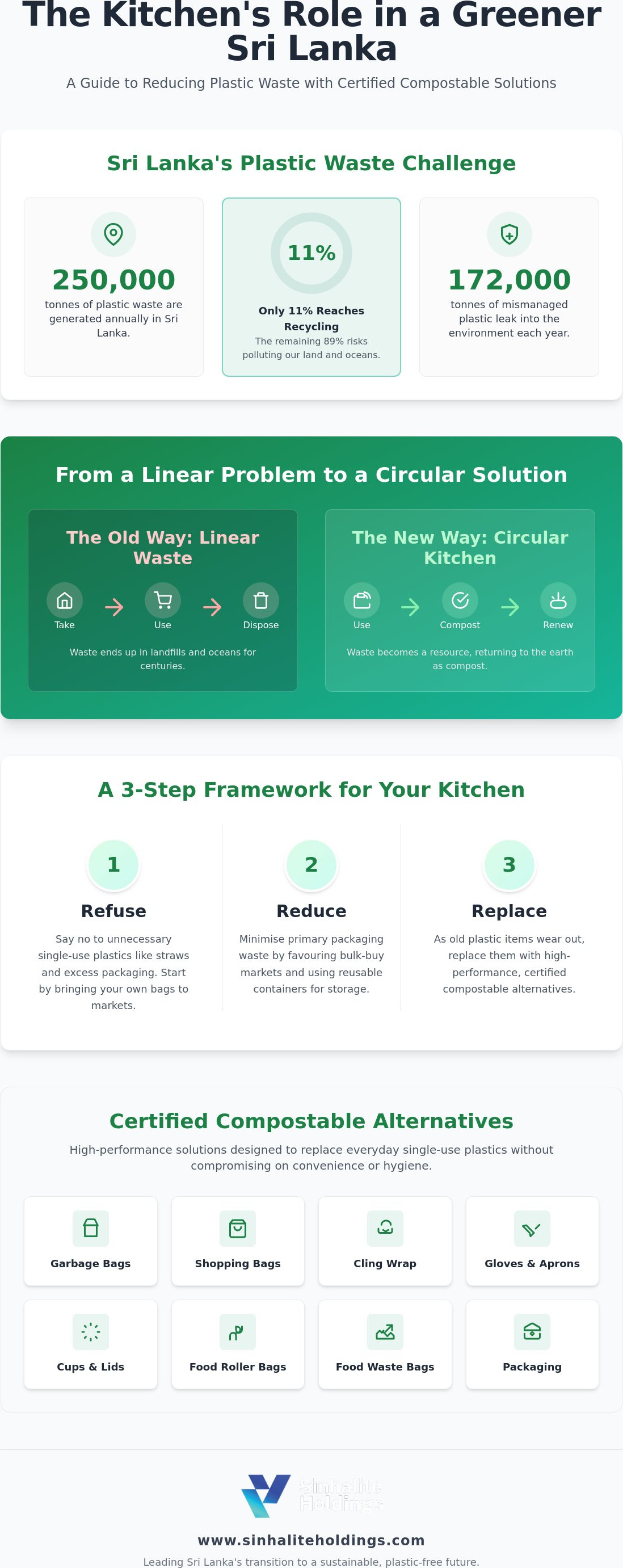
Did you know that Sri Lanka generates roughly 250,000 tonnes of plastic waste annually, yet only 11% of it currently reaches a recycling facility? It's a confronting statistic that explains why so many local families and businesses are searching for answers to the pressing question of how to reduce plastic in the kitchen uk, and seeking international circular economy models to guide their own sustainability journeys. We understand that the transition to a zero-waste lifestyle can feel daunting, particularly when you're faced with the confusion of greenwashed products that fail to deliver on their environmental promises.
This guide offers a clear, actionable roadmap to transform your kitchen into a hub of environmental stewardship through the use of certified compostable solutions. We'll explore how to replace traditional single-use items with high-performance alternatives like compostable clingfilm and caddy bags, ensuring your household or business meets the highest standards of waste reduction without compromising on hygiene or convenience. By adopting these scalable strategies, you can confidently contribute to a cleaner, greener future for our island.
#SustainableSriLanka #ZeroWasteKitchen #CompostableSolutions #SinhaliteHoldings #EcoFriendlyLanka #PlasticFree2026 #CircularEconomy #GreenLivingSL #WasteReduction #SustainableLiving
Key Takeaways
- Transition from a linear waste model to a circular kitchen system that prioritises sustainable inputs and fully compostable outputs for a cleaner home.
- Master the "Refuse, Reduce, Replace" framework to eliminate primary packaging waste by leveraging local bulk markets and high-performance certified alternatives.
- Discover how to reduce plastic in the kitchen uk standard quality solutions that are specifically designed for the rigorous performance needs of the Sri Lankan market.
- Scale environmental stewardship from household habits to commercial operations using durable, heavy-duty compostable garbage bags and shopping bags.
- Understand the urgency of protecting Sri Lanka’s unique ecosystems by transitioning away from traditional single-use plastics in daily food management.
Why Your Kitchen is the Frontline of Sustainability in Sri Lanka
The kitchen is the heart of any Sri Lankan home, yet it's also the primary source of household plastic waste. With the nation generating approximately 250,000 tonnes of plastic waste annually, the urgency to rethink our daily habits has never been greater. By viewing the kitchen as a circular system, we can ensure that every input is sustainable and every output is fully compostable. This shift is essential for protecting our unique ecosystems from the 172,000 tonnes of mismanaged plastic that currently leak into the environment each year.
To better understand how these changes look in practice, watch this helpful video on sustainable kitchen management:
Establishing a zero-waste kitchen is the most impactful step a household or business can take toward environmental stewardship. As a responsible innovator, Sinhalite Holdings aims to bridge the gap between traditional convenience and modern ecological standards. When researching how to reduce plastic in the kitchen uk standard certifications often serve as a benchmark for compostable performance; bringing these high standards to Sri Lanka is central to our mission. This proactive approach turns the kitchen from a waste-generator into a hub for positive change.
The Problem with Traditional Kitchen Plastics
Traditional items like clingfilm and shopping bags are engineered for durability, which becomes a curse when they persist in landfills for centuries. Many consumers face confusion over labels. It's a common misconception that "biodegradable" always means a product is plastic-free. To avoid these pitfalls, we recommend reading our essential guide to bioplastics. This knowledge ensures that the items you bring into your home don't contribute to the estimated 70% of national waste comprised of single-use plastics.
The Shift Toward a Circular Economy
A circular economy focuses on "closing the loop," where waste becomes a resource rather than a burden. In the kitchen, this means transitioning to home or industrial composting systems. Businesses and large organisations can lead this movement by adopting strategic procurement of compostable essentials. By replacing traditional poly-bags with certified compostable garbage bags and shopping bags, we can move closer to the national goal of a cleaner, greener Sri Lanka.
5 Actionable Zero Waste Kitchen Tips for Daily Impact
Implementing a zero-waste kitchen in Sri Lanka requires a tailored approach that respects our tropical climate and local shopping habits. We recommend adopting the "Refuse, Reduce, Replace" framework. Start by refusing unnecessary plastic bags at the local market or supermarket. While researching how to reduce plastic in the kitchen uk standard quality benchmarks often provide the best guidance for selecting durable, high-performance compostable alternatives for the Sri Lankan market. Visiting your local 'pola' with reusable containers is a practical way to eliminate primary packaging waste entirely.
Don't feel pressured to discard your current plastic containers immediately. A sustainable transition involves replacing these items with high-performance compostable alternatives only as they reach the end of their functional life. This methodical replacement ensures you aren't creating more waste in the name of sustainability. By focusing on longevity and responsible disposal, you can transform your kitchen into a hub of environmental stewardship. You can explore our range of compostable kitchen solutions to begin this transition today.
Smart Food Preservation and Storage
Tropical humidity can quickly lead to food spoilage, making effective storage critical. Using compostable food roller bags for fresh produce allows fruits and vegetables to maintain necessary moisture levels without the environmental cost of traditional polyethylene. For leftovers, switching to compostable cling film that actually clings provides a reliable seal that rivals traditional plastic wrap. Compostable clingfilm preserves food while ensuring zero microplastic leaching.
Managing Organics and Food Scraps
Food waste management is a significant challenge in warmer climates where decomposition happens rapidly. Utilising compostable caddy bags makes the collection of organic scraps both hygienic and efficient, as these bags can be placed directly into a home composting system. If you're concerned about pests or odours, learning how to keep a food waste bin from smelling is a vital skill for any sustainable Sri Lankan household. This proactive management prevents organic waste from entering the formal waste stream, where it often contributes to methane emissions in landfills.
Implementing Scalable Solutions with Sinhalite Holdings
Sinhalite Holdings serves as a dedicated ally for those ready to move beyond the theory of waste reduction. We provide the tangible tools required for both domestic and large-scale commercial kitchens to function without the environmental burden of traditional plastics. Our compostable garbage bags are engineered for heavy-duty performance. This ensures that strength and durability are never sacrificed during the transition to greener operations. We believe that efficiency and environmental stewardship must go hand in hand to create lasting change.
Viewing this transition as a long-term investment in Sri Lanka’s environmental health is essential for future resilience. When researching how to reduce plastic in the kitchen uk standards often act as the definitive benchmark for material safety and performance. By implementing these high-performance solutions today, you protect our island’s unique biodiversity for the next generation. It's a proactive step that moves us away from the linear "take-make-dispose" model toward a truly circular future.
Choosing the Right Compostable Products
It's vital to distinguish between generic claims and verified performance. When selecting products, always look for global standards like OK compost HOME certification. This ensures the material breaks down completely in domestic environments without leaving toxic residues or microplastics. Our range extends beyond simple bags to include compostable gloves and various food packaging solutions, providing a versatile and reliable toolkit for every sector.
A Call to Action for Businesses and Organisations
Large entities have a unique opportunity to drive systemic change across the nation. By switching business to sustainable packaging, organisations can align their operations with modern ethical standards while improving brand loyalty among eco-conscious consumers. We encourage councils and large organisations to adopt compostable shopping bags and aprons to lead the national shift away from single-use plastics. Large entities can contact us directly to request bulk supply of these compostable essentials, ensuring a reliable and ethical supply chain.
#SustainableSriLanka #SinhaliteHoldings #EcoInnovation #PlasticFreeKitchen #CompostablePackaging #GreenBusinessSL #CircularEconomy #ZeroWaste2026 #SustainabilityInAction #SriLankaEco #WasteReduction #EcoFriendlyLiving
Leading the Way to a Plastic-Free Sri Lanka
The journey toward a zero-waste kitchen is a powerful commitment to the environmental health of our island. By shifting from a linear "take-make-dispose" model to a circular system, you ensure that household and commercial outputs nourish the earth rather than polluting it. We've explored how the "Refuse, Reduce, Replace" framework, combined with smart food preservation, can drastically lower your ecological footprint. Many homeowners look for how to reduce plastic in the kitchen uk standard advice to ensure they're using the most reliable and scientifically backed methods available.
Sinhalite Holdings acts as your steady ally in this mission. We offer UK-standard compostable technology specifically tailored for the Sri Lankan market. Our extensive range of SKUs, from clingfilm to heavy-duty bags and gloves, is already trusted by businesses and households nationwide. We invite you to explore our full range of compostable kitchen solutions and find the high-performance tools you need. Every small change in your kitchen ripples outward, contributing to a systemic shift that will define our nation's environmental legacy. The transition to a greener future is not just achievable; it's already happening.
#SustainableSriLanka #ZeroWasteKitchen #CompostableSolutions #SinhaliteHoldings #PlasticFreeSL #CircularEconomy #EcoFriendlyLiving #GreenKitchen #SustainableFuture #SriLankaEco #WasteManagementSL #EcoInnovation
Frequently Asked Questions
How do I start a zero waste kitchen on a budget?
Starting a zero-waste journey begins with the "Refuse" and "Reduce" stages, which require no financial investment. You should continue using your existing plastic containers until they are no longer functional instead of buying new glass sets immediately. When you eventually need to replace items, focus on high-quality compostable food roller bags and shopping bags. This strategic replacement is a cost-effective way to learn how to reduce plastic in the kitchen uk standard practices suggest.
Are compostable bags as strong as traditional plastic garbage bags?
Yes, modern compostable garbage bags are engineered to match the utility and durability of traditional polyethylene options. Sinhalite Holdings provides heavy-duty solutions designed specifically for the rigorous demands of Sri Lankan waste management. These products undergo strict testing to ensure they don't tear or leak under pressure. This performance-oriented approach provides a reliable alternative for both residential and commercial sectors without sacrificing strength or hygiene.
Can I use compostable clingfilm in the microwave or freezer?
Our compostable household clingfilm is designed for versatility and is perfectly safe for use in the freezer to prevent freezer burn. While it provides an excellent seal for refrigerated leftovers, you should check specific packaging instructions for high-heat microwave use. Because these materials are plant-based, they ensure zero microplastic leaching into your food. This safety profile makes them a superior choice for families researching how to reduce plastic in the kitchen uk standard safety protocols recommend.
What is the difference between home compostable and industrially compostable products?
Home compostable products are designed to break down at the lower, variable temperatures found in a typical garden compost heap. Industrially compostable items require the higher, sustained heat of a professional facility to decompose efficiently. Sinhalite Holdings prioritises certifications like OK compost HOME for our caddy bags and food roller bags. This focus ensures our solutions are accessible for everyday Sri Lankan households, allowing you to manage organic waste directly on your own property.
#SustainableSriLanka #ZeroWasteTips #CompostableTech #SinhaliteHoldings #EcoFriendlyKitchen #PlasticFreeLanka #CircularEconomy #GreenLiving2026 #WasteReduction #SustainabilitySolutions #EcoInnovation #SriLankaGreen


