What if the material you've been told to avoid is actually a vital tool for a waste-free future? As the UK moves toward a more circular economy, many environmentally conscious consumers find themselves asking: do compostable bags contain plastic? It's natural to feel skeptical when vague marketing often masks the same petroleum-based problems we're trying to solve. You want to protect our soil and oceans from microplastic pollution, not accidentally contribute to the crisis through confusing terminology or unverified claims.
We're here to provide the technical clarity you need to choose truly sustainable packaging with confidence. This guide will demystify the molecular architecture of bioplastics and show you how to distinguish genuine ecological solutions from deceptive greenwashing. We'll explore the chemistry of compostable materials and explain how to verify essential UK certifications, such as the BS EN 13432 standard for industrial compostability. You'll also learn how the April 2026 Plastic Packaging Tax rate of £228.82 per tonne and new EPR fees are reshaping the industry. By the end, you'll understand how responsible innovation allows products like caddy bags and household clingfilm to return safely to the earth as biomass rather than waste.
Key Takeaways
- Understand the technical distinction between petroleum-based polymers and plant-derived bioplastics to answer the question: do compostable bags contain plastic?
- Identify how ingredients like PLA and PBAT provide the industrial strength required for shopping and garbage bags while ensuring a complete biological return to the earth.
- Learn the vital difference between plastic fragmentation and true mineralisation to ensure your packaging choices do not contribute to long-term microplastic pollution.
- Master the ability to verify official UK certifications, such as the BS EN 13432 standard, to protect your brand from greenwashing and maintain operational integrity.
- Discover how transitioning to high-performance alternatives like compostable clingfilm and caddy liners facilitates a seamless shift toward more responsible environmental stewardship.
Are Compostable Bags Actually Plastic? Defining the Terminology
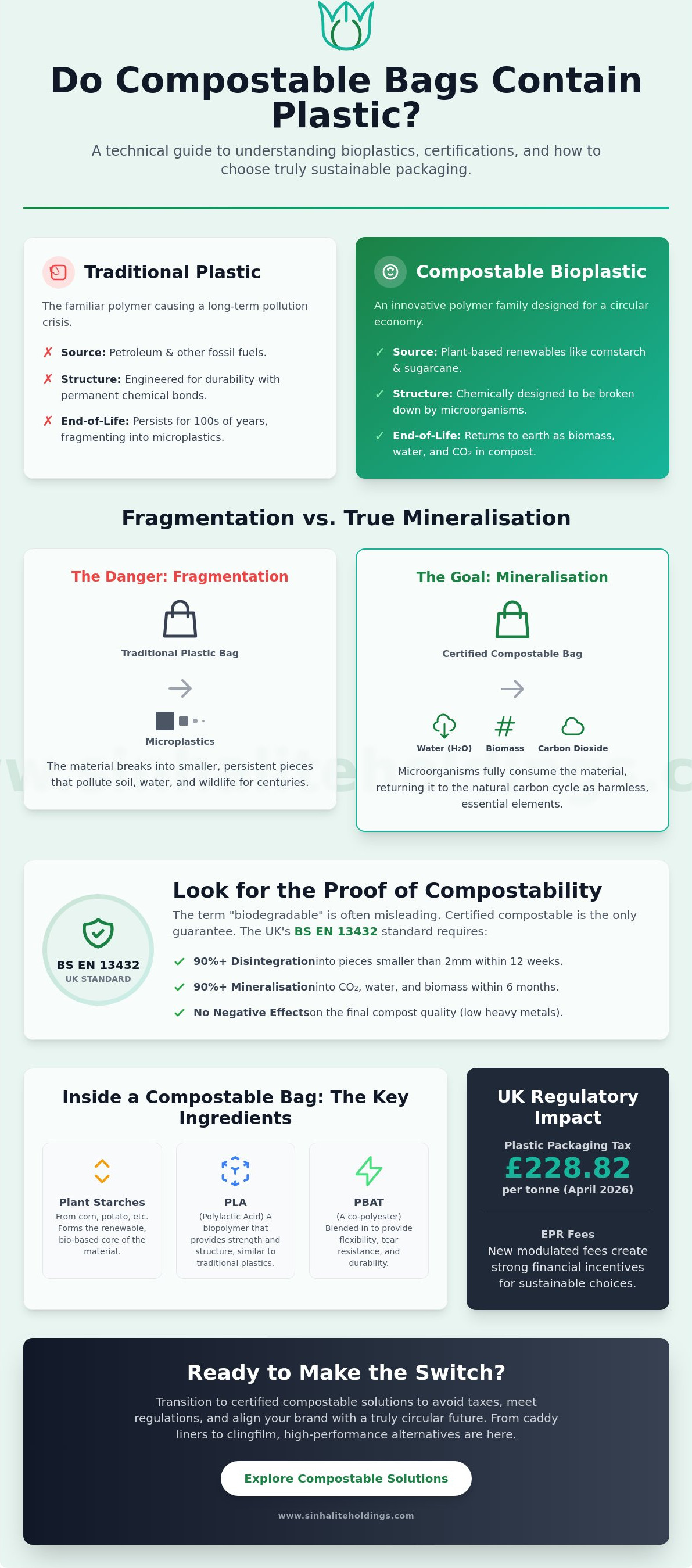
The term "plastic" often triggers thoughts of pollution and permanence. However, when people ask, do compostable bags contain plastic, the answer requires a look at molecular science rather than just a simple yes or no. In technical terms, these products are polymers, which is the same chemical family as traditional plastic. The difference lies in the source of the carbon and the strength of the chemical bonds. Traditional plastics use long-lasting petroleum chains. In contrast, modern compostable solutions use plant-based polymers designed to break down under specific conditions.
This category of materials is known as Bioplastic. It serves as an umbrella term for materials that are either bio-based, biodegradable, or both. Understanding this distinction is the first step toward genuine environmental stewardship. It allows us to transition from materials that persist for centuries to those that integrate back into the natural world.
To better understand this concept, watch this helpful video:
Bioplastic vs. Traditional Plastic
Traditional plastic, such as polyethylene, is derived from fossil fuels. It's engineered for durability, which means it can persist in the environment for hundreds of years. Bioplastics offer a more visionary path. These materials are often crafted from renewable resources like cornstarch, potato, or sugarcane. It's vital to recognize that being "bio-based" refers only to the origin of the material. Some bio-based plastics are designed to be non-biodegradable and just as permanent as their oil-based counterparts. True compostable products, like our shopping bags and food roller bags, must be both bio-based and chemically structured to be consumed by microorganisms.
The Problem with the Term "Biodegradable"
In the UK, the word "biodegradable" has frequently been used as a greenwashing tactic because it lacks a precise legal definition. A product could be labeled biodegradable even if it takes decades to break down or leaves behind harmful residues. This ambiguity creates distrust among consumers who want to avoid microplastic pollution. When businesses ask do compostable bags contain plastic, they're often looking for assurance that their waste won't haunt the planet.
Compostable standards, specifically BS EN 13432, provide the transparency that "biodegradable" labels lack. These standards require materials to mineralise into CO2, water, and biomass within a strict timeframe in industrial facilities. This rigorous verification ensures that a caddy liner or garbage bag doesn't just fragment into smaller pieces but actually returns to the nutrient cycle. As the UK implements modulated EPR fees and maintains the Plastic Packaging Tax at £228.82 per tonne, choosing certified compostable materials becomes a practical necessity for responsible operations.
Inside the Bag: Common Ingredients in Compostable Packaging
The physical properties of a bag, its stretch, its strength, and its texture, are the result of precise chemical engineering. While we've established that these materials are bioplastics, we must look closer at the ingredients to understand how they function. Most modern compostable products are not made from a single substance. Instead, they're a sophisticated blend of plant-derived starches and biodegradable polymers. This combination ensures that items like food roller bags remain durable during use but transition into soil nutrients once discarded. When exploring the specific materials used, many wonder: do compostable bags contain plastic in the way we traditionally understand it?
The answer involves a shift in perspective. We're moving away from permanent, oil-dependent materials toward polymers that respect biological cycles. According to research conducted by packaging platform Sourceful, the environmental efficacy of these products is tied to their material composition and how they are processed at the end of their life. By utilizing renewable feedstocks, manufacturers can significantly reduce the carbon footprint associated with traditional packaging production.
The Science of PBAT: Is it Synthetic?
PBAT, or polybutylene adipate terephthalate, is a cornerstone of modern bioplastic manufacturing. It's technically a petroleum-derived polymer, yet it's fully compostable by design. We use PBAT to give caddy liners and garbage bags their essential strength and flexibility. Unlike traditional polyethylene, the chemical bonds in PBAT are engineered to be vulnerable to soil microbes. These microorganisms recognize the structure and break the polymer chains down into CO2, water, and biomass. This process ensures that the material disappears entirely rather than lingering as a pollutant.
Plant-Based Starches and PLA
Polylactic Acid (PLA) is perhaps the most well-known ingredient in the bioplastic world. It's created by fermenting the natural sugars found in renewable crops such as corn, sugarcane, or cassava. This fermentation process produces lactic acid, which is then polymerized to create a versatile material. PLA is a starch-based polyester used in food-grade films. Using these renewable feedstocks allows us to bypass the environmental costs of oil extraction. It provides a visionary path toward packaging that starts in a field and ends in a compost heap.
Beyond these primary polymers, natural fillers like cornstarch and vegetable oils are often added to the mix. These additives help fine-tune the texture and performance of products like compostable household clingfilm. These vegetable oils provide the necessary "cling" without the need for harmful plasticizers. High-quality certified products also ensure the absence of "forever chemicals" like PFAS. This commitment to purity means that when you use compostable shopping bags, you're choosing a solution that prioritizes both functional utility and long-term ecological safety. Do compostable bags contain plastic? Only in the sense of their molecular classification; their impact on the planet is fundamentally different.
The Microplastic Question: Do Compostable Bags Leave Residue?
One of the most pressing concerns regarding sustainable packaging is the fear of microplastic pollution. When we ask, do compostable bags contain plastic, we are often really asking if they will leave behind permanent synthetic fragments in our soil. Traditional plastic is stubborn. It does not disappear; it merely fragments into microscopic shards that infiltrate the food chain and water supply. This process of fragmentation is what gives conventional polymers their destructive reputation. For a solution to be truly visionary, it must offer more than just a physical disappearance; it must provide a biological return.
The integrity of a compostable product is defined by its ability to mineralise. This means the material is consumed by microorganisms and converted into carbon dioxide, water, and nutrient-rich biomass. Unlike traditional shopping bags or garbage bags that break into smaller pieces of the same problem, certified compostable materials are designed to become part of the earth again. This transition ensures that the end of a product's life is actually the beginning of a new natural cycle.
Fragmentation vs. Mineralisation
Understanding the difference between these two processes is vital for any business or household seeking to align with modern ethical standards. Fragmentation is a physical breakdown. It occurs when heat, light, or mechanical stress causes a material to shatter into tiny bits. A study published this week in Environmental Science and Technology highlights how many bags labeled "biodegradable" fail to break down entirely, remaining functional and intact even after three years in the soil. Only mineralisation is acceptable for true composting. This biological conversion ensures that no synthetic polymers remain. It is the gold standard for ecological responsibility.
Eco-toxicity and Soil Health
True environmental stewardship requires looking beyond the visible. Certified compostable materials must pass rigorous eco-toxicity tests to ensure they do not harm the organisms that live in the soil. These tests evaluate the impact of the material on plant growth and the survival of earthworms. They also check for the presence of heavy metals and other toxic residues. Do compostable bags contain plastic that compromises the safety of our gardens? Not if they are certified to UK standards.
High-quality items like compostable caddy bags and food roller bags use water-based inks and non-toxic additives. This ensures that the "humus" or compost created is safe for use in UK gardening and agriculture. By choosing products that prioritise soil health, we support a system where packaging supports life rather than hindering it. This methodical approach to material safety is what transforms a simple household item into a tool for systemic change.
Identifying Genuine Compostable Solutions in the UK
Discerning the difference between a truly ecological product and a deceptive marketing claim requires an understanding of specific industry certifications. In the UK market, visual cues on packaging serve as a roadmap for responsible disposal. When consumers look at a product and ask, do compostable bags contain plastic, they aren't just curious about the ingredients; they're seeking assurance that the item will not contaminate the environment. Relying on vague terms like "eco-friendly" is no longer sufficient for businesses aiming for high standards of integrity.
To ensure a product meets the criteria for biological return, you must look for recognized logos. The Seedling logo and the OK Compost Industrial mark are the primary indicators that a bag is fit for UK industrial composting facilities. These symbols prove that the material has undergone rigorous testing to confirm it leaves no toxic residue behind. Without these certifications, a bag is simply a polymer of unknown origin and uncertain future.
The EN 13432 Standard Explained
The technical foundation of compostable packaging in the UK is the EN 13432 standard. This European regulation remains the benchmark for determining if a material can be processed alongside organic waste. To achieve this certification, a product must meet several strict criteria:
- Disintegration: The material must achieve 90% disintegration within 12 weeks in industrial conditions.
- Biodegradation: It must demonstrate 90% biological breakdown into CO2 within six months.
- Chemical Purity: There are strict caps on volatile matter and heavy metals like mercury and lead.
EN 13432 is the gold standard for UK compostability. It provides the empirical proof that items like shopping bags or garbage bags will mineralise rather than fragment into microplastics.
Home vs. Industrial Composting
It's vital to distinguish between materials that require high-heat industrial processing and those that break down in a garden heap. Industrial facilities maintain temperatures between 55°C and 60°C, which provides the energy needed to break the molecular bonds of thicker bioplastics. If a bag is only certified for industrial use, it won't disappear in your backyard. Do compostable bags contain plastic that persists in cold soil? If they only carry the "OK Compost Industrial" mark, they might remain intact for years in a standard garden bin.
For home use, look specifically for the "OK Compost HOME" certification. This indicates the material is designed to break down at lower, ambient temperatures over a longer period. Identifying if your caddy liner is suitable for your garden heap is as simple as checking for this specific home-compostable logo. This distinction ensures your personal composting efforts are effective and free from stubborn synthetic residues.
One final rule of stewardship is to never place compostable bags in the standard plastic recycling bin. These materials are designed to break down, which makes them a contaminant in the mechanical recycling stream for traditional plastics like PET or HDPE. Mixing the two reduces the quality of recycled materials and undermines the circular economy. To align your operations with the highest ethical standards, explore our range of certified compostable garbage bags and shopping solutions today.
Choosing the Right Path: From Clingfilm to Caddy Liners
Transitioning from a traditional kitchen to a sustainable one requires practical alternatives that don't sacrifice performance. We've explored the molecular differences and the importance of certification. Now, we must look at how these innovations apply to your daily routine. Many people continue to ask do compostable bags contain plastic because they've been disappointed by poor-quality alternatives in the past. At Sinhalite Holdings, we bridge the gap between ecological responsibility and industrial-grade strength. We believe that a better future is achievable through the use of tangible, high-performance tools.
The shift begins with items often overlooked, such as traditional PVC clingfilm. Conventional wrap is a significant source of non-recyclable waste that often ends up in landfills. Our compostable household clingfilm offers a vital replacement. It maintains food freshness through advanced plant-based chemistry while ensuring the material can return to the earth as biomass. This is the essence of responsible innovation; it's about providing a functional "how" to match your philosophical "why." By replacing petroleum-based wraps with compostable alternatives, you eliminate a persistent pollutant from your waste stream.
The Sinhalite Commitment to Plastic-Free Innovation
Our mission is to empower UK households with tools that align with modern ethical standards. We focus on high-performance, plant-based materials that serve the needs of a busy home. For example, our caddy bags and garbage bags utilize smart biopolymer blends to ensure they don't split or leak under pressure. This durability is essential for maintaining hygiene in food waste collection. We don't believe that sustainability should come at the cost of utility. Instead, we ensure that our products meet the highest standards of strength and reliability while remaining 100% compostable compliant.
Practical Steps for a Greener Kitchen
Making the switch to a plastic-free environment is a methodical and rewarding process. It's best to start by replacing your high-volume items. Transitioning to compostable shopping bags and food roller bags reduces your reliance on fossil-fuel-based synthetics immediately. These small changes contribute to a larger systemic shift. As the UK market for compostable packaging continues to grow, projected to reach a significant valuation by 2035, your individual choices drive this collective progress.
Proper disposal is the final step in your journey of stewardship. Always check your local authority's guidelines to see if they accept industrially compostable materials in your food waste bin. If you manage a garden heap, ensure you select products with the "OK Compost HOME" certification. This simple check ensures your efforts result in nutrient-rich soil rather than fragmented waste. Do compostable bags contain plastic? When you choose our certified solutions, you're choosing a material designed for life, not for the landfill.
Take the next step in your environmental journey. Explore our full range of compostable kitchen essentials to align your home or business with a visionary, waste-free future.
Empowering a Circular Future with Plant-Based Innovation
Understanding the technical truth behind bioplastics allows you to move past the confusion of greenwashing. While the question do compostable bags contain plastic has a complex answer in the laboratory, the environmental impact is clear. Certified materials mineralise into soil-enriching biomass instead of fragmenting into permanent microplastics. This shift from petroleum-based persistence to biological return is essential for protecting our natural ecosystems.
Sinhalite Holdings acts as your steady partner in this transition. As a specialist UK provider, we deliver high-performance plant-based materials that are fully certified to EN 13432 standards. You don't have to sacrifice durability or utility to achieve your sustainability goals. From shopping bags to garbage liners, our solutions provide the industrial strength you need with the ecological integrity the earth deserves.
Switch to 100% Compostable Clingfilm and Bags Today
Choosing responsible packaging is a powerful step toward a cleaner and more resilient world. We're here to help you make that change with confidence and purpose.
Frequently Asked Questions
Do compostable bags contain polyethylene or other traditional plastics?
Certified compostable bags don't contain polyethylene or other traditional petroleum-based plastics designed for permanence. Instead, they're engineered from plant-derived polymers that microorganisms can consume. This molecular difference is why they don't persist in the environment for centuries like conventional plastics. Choosing these materials ensures your waste management aligns with natural biological cycles rather than contributing to long-term landfill accumulation.
What happens if a compostable bag ends up in the ocean?
Compostable bags aren't designed to break down in marine environments and shouldn't be disposed of in the ocean. While they're more ecological than traditional plastic, the cold temperatures and lack of specific microbes in sea water can prevent them from mineralising properly. They may still pose a risk to marine life if they enter waterways. Responsible disposal in a controlled composting environment is the only way to ensure they return safely to the earth.
Can I put compostable bags in my garden compost bin?
You can only put these bags in your garden compost bin if they carry the specific "OK Compost HOME" certification. Standard compostable bags often require the high, consistent heat of industrial facilities to break down their thicker structures. If a bag is only industrially certified, it'll likely remain intact in a domestic heap for several years. Always verify the logo on your caddy liner before adding it to your home compost.
Why can’t I put compostable bags in the plastic recycling bin?
You must never put compostable bags in a standard plastic recycling bin because they contaminate the mechanical recycling process. These materials have a different chemical structure than traditional polymers like PET or HDPE. If they're mixed into the recycling stream, they can weaken the quality of the resulting recycled plastic. To maintain the integrity of waste systems, always dispose of compostable items in designated organic waste streams.
Are compostable bags stronger or weaker than regular plastic bags?
Modern compostable bags offer comparable strength and durability to regular plastic bags when they're used within their intended parameters. Advanced biopolymer blends ensure that garbage bags and shopping bags can handle significant weight without tearing. However, because they're designed to be sensitive to moisture and heat, they shouldn't be overloaded with extremely wet waste for long periods. This performance-oriented design ensures you don't have to sacrifice utility for environmental responsibility.
Do compostable bags expire or break down while in storage?
Compostable bags do have a finite shelf life and will eventually begin to lose their structural integrity if stored for too long. Most products maintain their full strength for approximately 12 to 18 months if kept in a cool, dry place away from direct sunlight. High humidity or heat can accelerate the natural breakdown process. It's best to purchase only what you need for a year of operations to ensure your supplies remain reliable.
Are there any toxic chemicals in compostable bag inks?
Certified products don't contain toxic chemicals or heavy metals in their printing inks. To meet the BS EN 13432 standard, manufacturers must use water-based or soy-based inks that are safe for the soil. This ensures that when a bag mineralises, it doesn't leave behind harmful residues that could compromise gardening or agriculture. This commitment to purity is a core part of the responsible innovator persona we uphold.
How can I tell the difference between a biodegradable and a compostable bag?
The primary way to tell the difference is to look for official certification logos rather than relying on marketing text. People often ask, do compostable bags contain plastic, because they're confused by the term "biodegradable," which is often used as a vague greenwashing tactic. While "biodegradable" has no regulated timeframe in the UK, "compostable" requires the material to break down within 12 weeks in industrial conditions. Always look for the Seedling or OK Compost marks for verified performance.