Did you know that UK households discard an estimated 1.7 billion pieces of plastic packaging every single week? This staggering figure highlights a systemic challenge that many of us feel personally when packing for a day in the countryside. It's difficult to enjoy the natural beauty of our parks when our picnic baskets are filled with single-use plastics that often end up in landfill. You likely want a way to protect your sandwiches using compostable food bags for outdoor eating uk rather than dealing with the lingering guilt of environmental harm or the frustration of soggy, poorly stored food.
This guide provides a clear path toward a zero-waste outing by integrating high-performance, certified materials into your routine. We'll demonstrate how to transition to sustainable dining using a practical checklist of essentials that balance utility with integrity. You'll gain the knowledge needed to manage waste with confidence while adhering to the 2026 Simpler Recycling legislation. We'll show you that choosing ecological stewardship doesn't mean sacrificing the freshness or convenience of your outdoor meals.
Key Takeaways
- Understand the environmental footprint of traditional UK picnics and how to adopt a systemic zero-waste approach aligned with 2026 recycling standards.
- Identify the essential reusable hardware needed to build a durable foundation for your outdoor kit while minimizing embodied energy.
- Discover how to maintain peak food freshness by utilizing compostable food bags for outdoor eating uk and high-performance compostable clingfilm.
- Learn to navigate UK waste streams effectively by using certified caddy liners to manage food scraps and maintain hygiene during transport.
- Explore how integrating certified compostable materials facilitates a seamless transition into a circular picnic culture.
The Impact of Picnic Plastic in the UK: Why We Need a 2026 Reset
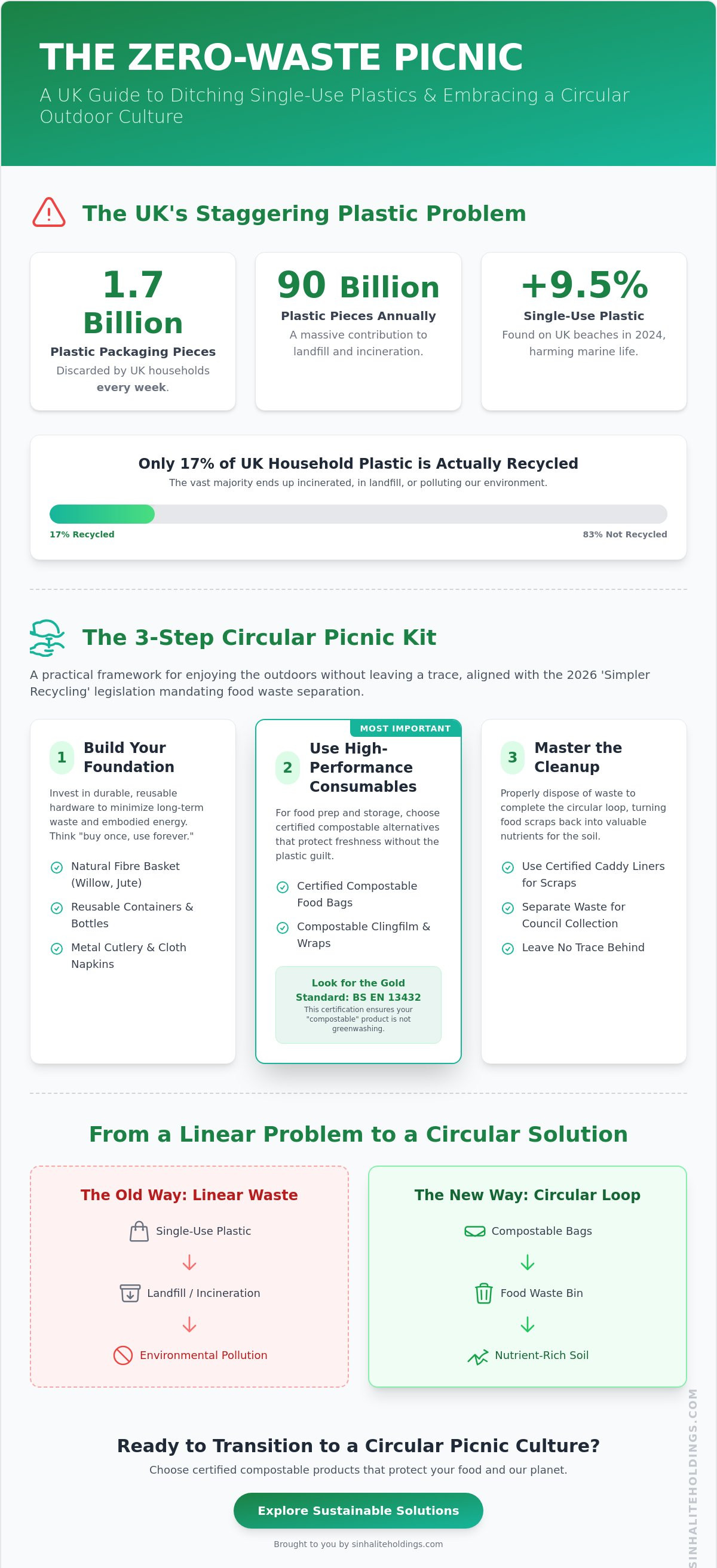
Adopting an eco-friendly picnic strategy is more than a trend; it's a systemic commitment to zero-waste leisure. As of March 31, 2026, the "Simpler Recycling" legislation has fundamentally changed how we manage waste in England by making food waste separation mandatory. This policy shift mirrors a growing national awareness of our environmental footprint. Every year, UK households discard approximately 90 billion pieces of plastic, much of which originates from convenience-led dining. Transitioning to compostable food bags for outdoor eating uk allows us to enjoy our natural landscapes while actively participating in their preservation.
To better understand the performance and utility of these sustainable alternatives, watch this helpful review and leak test:
Responsible innovation is the primary tool we have to protect our national parks and coastlines. Traditional recycling has often fallen short, with only 17% of household plastic waste actually being recycled in the UK. The remainder is frequently incinerated or sent to landfill, where it fails to contribute to a circular economy. By choosing compostable solutions, we move away from the limitations of downcycling and toward a visionary model where our picnic essentials return to the earth as valuable nutrients.
The Problem with Traditional Single-Use Plastics
Standard plastic films and cutlery are designed for minutes of use but persist in the environment for centuries. When these materials are left in UK green spaces, they don't simply disappear. They fragment into microplastics that infiltrate the soil and disrupt local food chains. Data from the Marine Conservation Society showed a 9.5% increase in single-use plastic waste on UK beaches in 2024. This persistence creates a long-term ecological debt that traditional waste management can't easily repay. The 2026 standards for outdoor products now emphasize materials that leave zero toxic residue, ensuring our leisure activities don't compromise the health of the countryside.
Defining Certified Compostable vs. Biodegradable
Many consumers fall into greenwashing traps because the term "biodegradable" is often used loosely without regulatory oversight. In contrast, "compostable" is a strictly defined performance standard. For UK consumers, the BS EN 13432 certification is the gold standard. It ensures that compostable food bags and wraps will disintegrate by at least 90% into fragments smaller than 2mm within 12 weeks in an industrial facility. Choosing products that meet these criteria is a logical step for anyone seeking a truly circular lifestyle. The adoption of compostable food bags for outdoor eating uk ensures that your commitment to the environment is backed by verified industrial standards, providing confidence that your waste won't haunt the landscapes you love.
Durable Foundations: The Reusable Hardware for Your Picnic Kit
Establishing a truly sustainable picnic kit requires a shift in perspective. We must view our outdoor dining equipment as a long-term investment rather than a series of temporary conveniences. While high-performance compostable food bags for outdoor eating uk are essential for food preservation, they perform best when paired with durable, reusable hardware. This "buy once, use forever" approach minimizes the embodied energy of your kit. It ensures that every item you carry into a UK national park has a clear purpose and a lifespan measured in decades. By selecting materials with low environmental impact, you contribute to a growing circular picnic culture that prioritizes resource efficiency over mindless consumption.
Sustainable Picnic Baskets and Blankets
The vessel you choose to carry your meal sets the tone for your environmental commitment. Natural fibres like willow, jute, and seagrass are excellent choices because they're renewable and biodegradable at the end of their long lives. If you need a picnic blanket, look for recycled wool or organic cotton options. Ensure any waterproof backing is PFC-free to prevent harmful "forever chemicals" from leaching into the soil. Often, the most ecological choice is a vintage wicker basket or a second-hand wool rug. These items already exist in the economy, so choosing them avoids the carbon cost of new manufacturing entirely.
Crockery and Cutlery: Beyond Flimsy Plastic
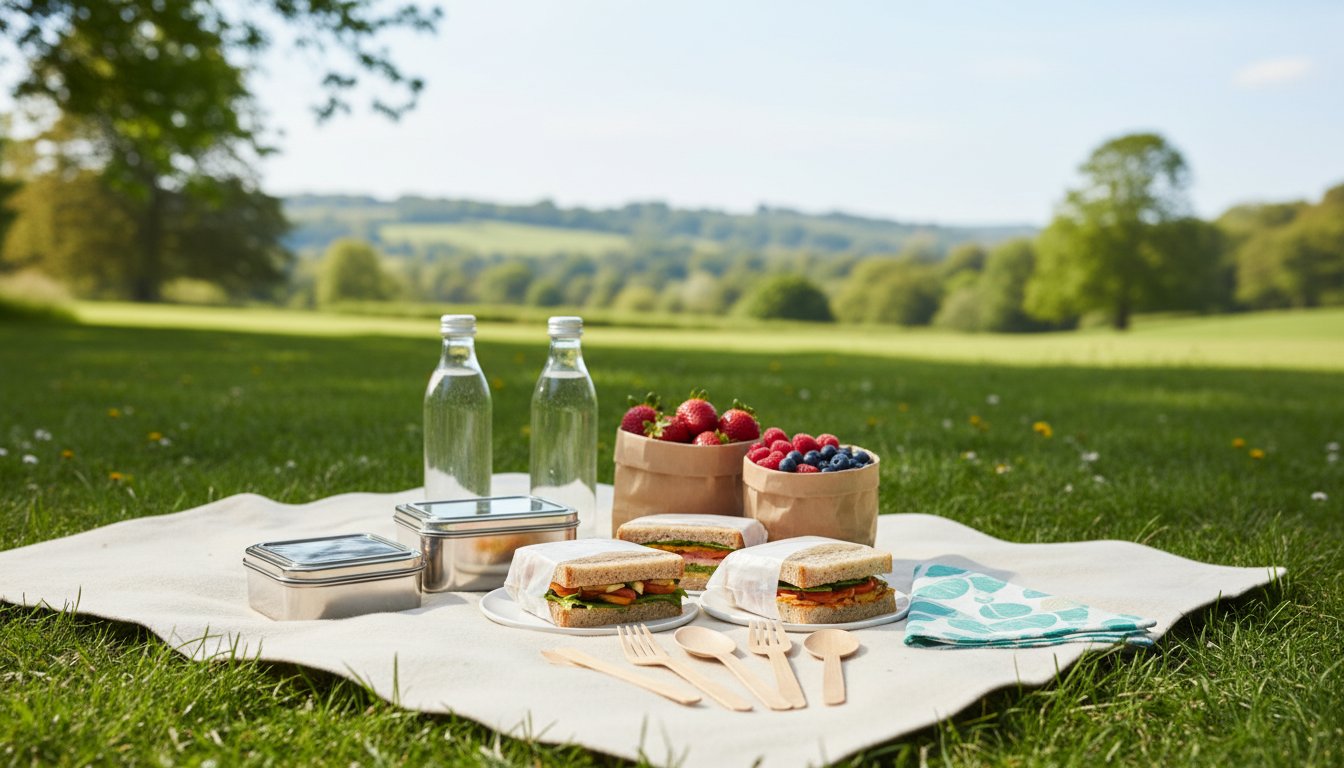
Ditching flimsy plastic forks is a fundamental step toward zero-waste dining. Stainless steel is the gold standard for durability. It's easy to clean, non-reactive, and virtually indestructible. If weight is a concern for long-distance hill walking in the Lake District, consider bamboo or rice husk alternatives. These materials are significantly lighter than steel while remaining far more robust than single-use plastics. Always verify that your chosen plates and cups are BPA-free and toxin-free. High-quality hardware ensures that no chemical residues contaminate your food. It's a simple way to maintain high standards of health and utility simultaneously.
To keep your hardware in peak condition, wash items promptly after returning home and store them in a dry place. Proper maintenance prevents the need for premature replacements. When you pair these durable foundations with compostable shopping bags for transport, you create a seamless, waste-free system. This combination allows you to focus on the experience of nature without leaving a trace of your visit behind. It's a practical, logical way to align your leisure time with your environmental values.
High-Performance Prep: Compostable Food Bags and Wraps
While durable hardware provides the foundation, the integrity of your picnic depends on how you preserve the food itself. Spoiled food is a significant contributor to the waste problem highlighted in official UK waste and recycling statistics. High-performance preparation tools ensure that your sandwiches and snacks remain fresh without relying on traditional petrochemical plastics. By integrating compostable food bags for outdoor eating uk into your kitchen routine, you bridge the gap between convenience and environmental responsibility. This proactive approach ensures that the energy used to prepare your meal isn't wasted due to poor storage.
The Science of Compostable Clingfilm
Traditional clingfilm is notorious for its inability to be recycled and its tendency to fragment into microplastics. Modern alternatives utilize Mater-Bi resins, which are derived from plant starches and vegetable oils. These resins provide the necessary "cling" and elasticity without the use of toxic plasticisers. One functional advantage of these films is their natural breathability. Unlike non-porous plastic, compostable film allows moisture to escape; this prevents bread from becoming soggy during transport. Sinhalite’s compostable clingfilm is designed to break down completely in a home compost heap within 12 months, returning to the soil as organic matter.
Compostable Food Bags for On-the-Go Convenience
When packing for a hike or a day at the beach, weight and space are critical factors. While glass containers are excellent for home storage, they're often too heavy for long-distance outings. Compostable food bags for outdoor eating uk offer a lightweight, hygienic solution for portioning fruit, nuts, or baked goods. These bags provide the same barrier protection as plastic but are fully compostable under BS EN 13432 standards. Using these items is a core part of broader sustainable kitchen swaps 2026 strategies that aim to eliminate single-use plastics from the home entirely.
This methodical approach to food prep reduces the volume of waste generated before you even leave your front door. It ensures that every item in your basket is part of a circular system. Food roller bags facilitate easy portioning; this helps prevent over-packing and subsequent food waste. By choosing materials that align with natural processes, you're not just packing a lunch; you're participating in a necessary industrial transition. This shift is essential if we want to reverse the trends seen in recent national waste data and protect our shared outdoor spaces for the future.
Zero-Waste Cleanup: Navigating UK Waste Streams
A successful picnic doesn't end when the last sandwich is eaten; it concludes when every scrap is responsibly managed. The implementation of the 2026 "Simpler Recycling" legislation means that households and businesses across England are now legally required to separate food waste from general rubbish. This regulatory shift makes the cleanup phase of your outing just as critical as the preparation. By using compostable food bags for outdoor eating uk, you ensure that organic remnants can be integrated into the correct waste stream without the risk of plastic contamination. This methodical approach transforms a potential mess into a streamlined, hygienic process that aligns with national environmental goals.
Some people hesitate to adopt eco-friendly cleanup methods because they fear it will be messy or emit unpleasant odours. However, high-performance compostable materials are specifically engineered to provide a robust barrier against leaks and smells. When you use certified liners, you maintain the same level of cleanliness as traditional plastic while fulfilling your role as an environmental steward. This transition is both achievable and advantageous, as it simplifies the journey from the park to the compost bin.
Portable Food Waste Management
Managing food scraps on the go requires a proactive strategy. Small compostable caddy bags are ideal for collecting fruit peels, vegetable stalks, and bread crusts at the picnic site. These bags can be tied securely to seal in moisture and odours during the journey home. Additionally, compostable shopping bags serve as an excellent "clean zone" within your picnic basket. You can use them to isolate used cutlery and dirty plates from your clean items. This keeps your kit organized and ensures that any food residue is contained until you reach your kitchen sink.
Closing the Loop: Composting at Home
The final step in a circular picnic is ensuring that collected scraps reach their intended destination. It's essential to follow best practices for storing food waste once you return home to prevent hygiene issues before the weekly collection. Most UK councils now accept food waste including fruit, vegetables, meat scraps, and coffee grounds in their dedicated brown bins. However, you should always check local guidelines regarding compostable packaging, as some facilities have different processing times. By correctly sorting your compostable food bags for outdoor eating uk into the food waste stream, you help turn picnic leftovers into nutrient-rich soil. This visionary outcome is the logical conclusion of a truly sustainable lifestyle, ensuring that nothing is wasted and the natural cycle remains unbroken.
To maintain high standards of hygiene in your kitchen while preparing for your next outing, consider stocking up on high-strength compostable caddy bags. These tools provide the tangible means to reach your zero-waste goals with confidence and ease.
Transitioning to a Circular Picnic Culture with Sinhalite Holdings
Adopting a circular picnic culture is a profound act of environmental stewardship. It represents a move away from the linear "take-make-waste" model that has historically burdened UK landscapes. Sinhalite Holdings acts as a dedicated ally in this transition, providing the tangible tools required to align your outdoor activities with modern ethical standards. By choosing compostable food bags for outdoor eating uk, you are investing in a future where convenience and conservation coexist. This isn't merely about a single afternoon in the park; it's about participating in a systemic shift toward a more responsible and visionary way of living.
The logic behind choosing compostable essentials is clear. These products provide the high standards of utility and strength you expect, yet they're designed to return to the earth as organic matter. This ensures that your commitment to the environment doesn't require a sacrifice in performance. Whether you're using high-cling film or robust caddy liners, you can proceed with the confidence that your choices support long-term ecological health.
The Sinhalite Commitment to Stewardship
Our focus remains on providing the essential components for a positive future. We understand that systemic change requires accessible, high-performance solutions available across the UK. Sinhalite products are engineered to meet strict BS EN 13432 standards, ensuring they disintegrate effectively within industrial composting cycles. When you look for the Sinhalite seal of integrity, you're choosing a partner that prioritizes transparency and industrial pragmatism. We don't just sell bags; we provide the means for households to comply with the 2026 recycling mandates while protecting the natural beauty of our national parks.
The Ultimate 2026 Eco-Friendly Picnic Checklist
To ensure your next outing is truly zero-waste, use this final checklist of essentials:
- Durable Hardware: Stainless steel cutlery and bamboo plates to eliminate single-use plastic.
- High-Performance Prep: Sinhalite compostable clingfilm and food roller bags to maintain freshness.
- Clean Transport: compostable food bags for outdoor eating uk and shopping bags for organized carrying.
- Hygienic Cleanup: Certified caddy bags to collect organic waste for your home or council food bin.
Next Steps for the Environmentally Conscious
We invite you to explore our full range of compostable packaging to find the right fit for your lifestyle. Many of our regular users find that bulk-buying these essentials is a logical way to reduce both their carbon footprint and long-term costs. By keeping a steady supply of compostable garbage bags and food wraps, you ensure that your kitchen is always ready for a sustainable adventure. Change is achievable when we have the right tools. Empower your next outdoor adventure with Sinhalite essentials.
Embracing a Future of Circular Outdoor Dining
Transitioning to a truly sustainable picnic experience is a logical step for anyone committed to environmental stewardship. By combining durable hardware with certified prep materials, you ensure that your leisure time aligns with the 2026 Simpler Recycling mandates. High-performance compostable food bags for outdoor eating uk provide the necessary barrier protection for your meals while guaranteeing a toxin-free return to the earth. This systemic approach allows you to enjoy the British countryside without the lingering guilt of plastic waste.
As a UK-based specialist in sustainable packaging, Sinhalite Holdings provides the tangible tools needed for this national shift toward circularity. Our products are rigorously certified to EN 13432 standards and remain entirely PFAS-free and toxin-free; this ensures that your commitment to nature is never compromised by harmful residues. You can manage your food scraps and maintain peak freshness without the ecological debt associated with traditional plastics. Explore our range of compostable picnic essentials to empower your next outdoor adventure. Every responsible choice you make today helps preserve the integrity of our shared natural spaces for years to come.
Common Questions Regarding Sustainable Outdoor Dining
What are the most essential items for an eco friendly picnic?
The most essential items include durable hardware such as stainless steel cutlery and bamboo plates paired with high-performance compostable wraps for food preservation. You should also carry certified caddy liners to manage organic scraps and a reusable basket made from natural fibres like willow or jute. These tools allow you to eliminate single-use plastics while maintaining a high standard of utility and hygiene during your outing.
Can I put compostable clingfilm in my home compost heap?
Yes, you can compost Sinhalite’s clingfilm at home because it is specifically engineered to break down in domestic environments. While industrial composting facilities offer higher temperatures, our plant-based resins are designed to disintegrate into organic matter within 12 months in a standard garden heap. This process ensures that your food wraps return to the earth as nutrients rather than persisting as microplastic pollution in the soil.
Are compostable food bags strong enough for heavy picnic items?
Modern compostable bags utilize advanced plant-based resins that provide high tensile strength and puncture resistance for typical picnic fare. They are engineered to hold everything from dense sandwiches to weighted fruit without tearing or leaking. This industrial pragmatism ensures that you don't have to sacrifice performance when choosing an ecological alternative to traditional petrochemical plastics for your outdoor meals.
How do I clean my reusable picnicware without using harsh chemicals?
You can effectively clean your reusable items using warm water and a mild, plant-based detergent or a simple solution of white vinegar and bicarbonate of soda. These natural alternatives remove food residues and odours without leaving toxic chemical traces on your plates or cutlery. Promptly drying your hardware after washing is the best way to prevent corrosion and ensure your kit remains in peak condition for decades.
Is it better to use bamboo or stainless steel for picnic cutlery?
Both materials are excellent choices, but the best option depends on your specific needs for weight and durability. Stainless steel offers a "buy once, use forever" solution that is virtually indestructible and easy to sterilize. Bamboo is a visionary choice for hikers or those walking long distances to picnic spots because it is significantly lighter while remaining far more robust than flimsy single-use plastic alternatives.
What should I do with my picnic waste if there are no recycling bins nearby?
You should always carry your waste home to ensure it is sorted into the correct UK domestic waste streams. Use a compostable shopping bag to isolate used items and food scraps during the journey back. This practice prevents the contamination of general park bins and ensures that your organic waste reaches a facility or home compost heap where it can be processed into nutrient-rich soil.
Are compostable food bags safe for wrapping all types of picnic food?
Yes, food-grade compostable food bags for outdoor eating uk are entirely safe for wrapping sandwiches, fruit, snacks, and produce. These bags are manufactured to be toxin-free and PFAS-free, ensuring that no harmful chemicals leach into your food during storage. They provide a breathable yet protective barrier that helps maintain the freshness and integrity of your meal while you are on the move.
How much does it cost to switch to a completely plastic-free picnic kit?
The initial investment for a plastic-free kit depends on the quality of the durable hardware you select, such as stainless steel containers or wool blankets. While these items represent a higher upfront cost than disposable plastic, they offer significant long-term value through their extreme longevity. Transitioning to a circular lifestyle is an advantageous move that reduces the recurring expense and environmental debt of constantly purchasing single-use products.