
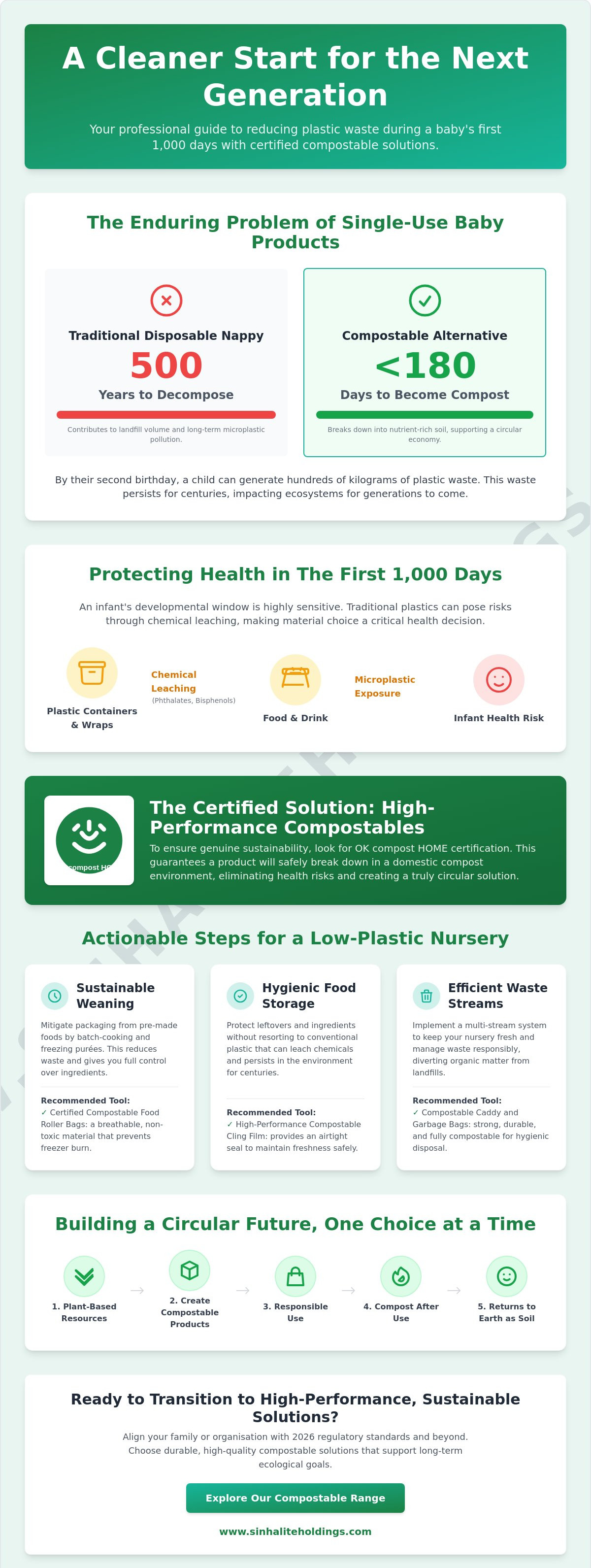
Did you know that a single disposable nappy can take up to 500 years to decompose in a landfill? This means the waste generated in just one afternoon could still exist when your great-great-grandchildren are grown. It is natural to feel a sense of conflict when the joy of a new arrival is met with the heavy reality of plastic-cluttered bins and valid concerns about chemical leaching from traditional food storage. You want the best for your child's health and the planet they will inherit, yet the marketplace is often a confusing maze of "eco" labels and misleading claims. Mastering the art of reducing plastic waste with a new baby does not require you to sacrifice hygiene or your limited time.
This 2026 guide offers a professional roadmap to navigate your child's first 1,000 days with confidence. You will discover how to implement actionable strategies and use innovative, certified compostable materials that align with a circular economy. We will examine the latest regulatory shifts, such as the 2026 EU packaging requirements, and provide practical alternatives for feeding and changing. This approach ensures a cleaner, safer start for the next generation while maintaining the high standards of utility and durability your family deserves.
Key Takeaways
- Understand the environmental footprint of early childhood and the shift toward protecting infants from microplastic exposure through informed material choices.
- Identify actionable strategies for reducing plastic waste with a new baby, focusing on high-performance compostable alternatives for essential care tasks.
- Master plastic-free weaning and food storage by utilising certified compostable clingfilm and food roller bags to maintain hygiene without ecological cost.
- Design an efficient multi-stream waste management station that ensures nursery freshness while facilitating the transition to a circular economy.
- Align your operations with 2026 regulatory standards by choosing durable, high-quality compostable solutions that support long-term ecological goals.
The Impact of Plastic Waste in Early Childhood Development
The 'Plastic Baby' phenomenon describes the immense volume of waste generated during a child's first two years of life. In the UK, households often find their bins overflowing with single-use plastics, ranging from nappy components to excessive food packaging. This surge in waste is a significant contributor to the global issue of plastic pollution, which currently sees millions of tonnes of material entering our ecosystems annually. By the time a child reaches their second birthday, they have likely been the source of hundreds of kilograms of non-recyclable material that will persist for centuries.
Transitioning toward a circular economy within the home means viewing waste as a resource rather than a burden. When parents focus on reducing plastic waste with a new baby, they aren't just tidying up; they are participating in a systemic shift toward environmental stewardship. This movement prioritises products that return to the earth, ensuring that the convenience of modern parenting doesn't come at the cost of the planet's future. It's about making choices today that protect the world your child will inherit tomorrow.
To better understand how we can create a more sustainable environment for our children, watch this helpful video:
Why the First 1000 Days Matter
The first 1000 days of life represent a critical window for physical and cognitive development. During this period, infants are particularly vulnerable to chemical exposure from traditional plastics. Research indicates that common additives like phthalates and bisphenols are known endocrine disruptors that can leach into food and water. A 2026 perspective on health prioritises the reduction of microplastic exposure by replacing plastic storage with safer alternatives. Choosing compostable food roller bags or caddy bags helps eliminate these risks at the source, creating a safer immediate environment for your child to grow.
The Role of Responsible Innovation in 2026
Modern bioplastics have undergone a significant evolution. They now offer the same durability and strength as traditional polymers without the long-term ecological damage. It's vital for families to look for verified standards, such as the OK compost HOME certification explained in recent industry guides. This certification ensures that items like compostable household clingfilm or garbage bags will break down safely in a domestic environment. By integrating these high-performance materials, you can maintain the rigorous hygiene standards required in a nursery while supporting a cleaner, greener future.
Practical Steps for Reducing Plastic Waste with a New Baby
Practicality is the cornerstone of sustainable parenting. While the scale of global waste can feel overwhelming, reducing plastic waste with a new baby begins with an audit of the highest-frequency touchpoints in your home. This typically starts in the kitchen and the nursery. For those seeking broader institutional frameworks for waste reduction, the EPA guide to reducing plastic waste provides a robust foundation for identifying hidden single-use materials. By replacing oil-based polymers with high-performance compostable alternatives, you can maintain a sterile environment without contributing to the 20 billion nappies that enter landfills each year.
Sustainable Weaning and Food Storage
The weaning phase often introduces a surge of plastic packaging, from pre-packaged pouches to traditional cling wrap. You can mitigate this by batch-cooking and utilising compostable food roller bags for freezing purées. These plant-based materials are designed to be breathable, which helps prevent the 'freezer burn' often associated with low-quality plastics. For covering bowls and leftovers, it's essential to use compostable cling film that actually clings. This ensures an airtight seal that preserves nutrients while remaining fully compatible with home composting systems. Transitioning to these tools allows for a seamless, plastic-free kitchen that supports your child's health and your environmental values.
The Nappy Change Revolution
Managing the disposal of eco-friendly nappies requires a system that matches their environmental integrity. Traditional plastic bin liners trap moisture and gases, leading to unpleasant odours and methane production in landfills. Switching to heavy-duty compostable garbage bags provides a superior hygiene solution. These bags allow for better moisture regulation and are strong enough to handle the weight of nursery waste without tearing. Plant-based materials offer a natural barrier that is often more effective at managing hygiene than traditional oil-based plastics. To ensure your nursery remains a fresh and responsible space, consider integrating high-quality compostable sacks into your daily routine. This small change ensures that even the most frequent tasks align with a cleaner, greener outlook.
Mastering Your Household Waste Management System
Managing the surge of waste that accompanies a newborn requires more than just good intentions; it demands a structured, professional-grade system. A multi-stream waste station allows you to separate compostables, recyclables, and residual waste at the point of disposal. This methodical approach is essential for reducing plastic waste with a new baby, as it prevents the cross-contamination that often sends potentially circular materials to landfill. By treating your household waste management with the same rigour as a commercial operation, you ensure that every material reaches its intended end-of-life destination.
Eliminating Odours and Leaks
Hygiene is the primary concern for many parents transitioning away from traditional plastic liners. Modern plant-based materials are now engineered to handle the specific challenges of nursery and kitchen waste without compromise. It's vital to use puncture resistant compostable garbage bags for heavy, wet items like organic nappies or food scraps. These liners provide the necessary structural integrity to prevent leaks while remaining breathable. To maintain a fresh environment, you should follow specific guidance on how to keep a food waste bin from smelling, such as using high-quality compostable caddy bags that facilitate natural airflow. This reduces the anaerobic decomposition that typically causes unpleasant nursery odours.
Closing the Loop: Composting at Home
Establishing a sustainable home environment involves understanding the nuances of material certification. You must distinguish between 'industrial' and 'home' compostable labels to ensure your waste is processed correctly within your local infrastructure. Resources like the Healthy Baby Guide emphasise that reducing plastic waste with a new baby is a long-term investment in your child's health and the wider ecosystem. By choosing products like compostable food roller bags and shopping bags, you aren't just managing waste; you're creating a cleaner legacy. This visionary outlook transforms daily chores into a profound act of environmental stewardship, ensuring the choices you make today positively impact the world your child will inherit.
Securing a Greener Legacy for the Next Generation
The transition to sustainable parenting is a profound commitment to both immediate health and long-term environmental stewardship. By addressing the volume of waste generated in the earliest years, you create a safer environment free from microplastic exposure and endocrine disruptors. Success in reducing plastic waste with a new baby depends on integrating professional-grade systems into your daily routine. Practicality meets purpose. This shift includes everything from plastic-free weaning to high-performance nursery waste management.
Choosing the right materials is essential for maintaining hygiene without compromising ecological values. Our solutions provide the durability needed for heavy-duty household tasks while ensuring a clean return to the earth. You can rely on certified OK compost HOME solutions that feature puncture-resistant technology for secure waste disposal. These materials are PFAS-free and non-toxic; they offer peace of mind for your kitchen and nursery. It's time to align your household with the principles of a circular economy. Discover the Sinhalite range of compostable essentials for your sustainable home and take a proactive step toward a cleaner future today.
Frequently Asked Questions
Is compostable clingfilm safe for wrapping a baby's food?
Yes, certified compostable clingfilm is an exceptionally safe choice for wrapping infant food because it is formulated without the harmful plasticisers found in traditional wraps. These plant-based films are non-toxic and PFAS-free; they ensure that no chemical leaching occurs during storage. This provides a secure barrier for leftovers and purées while supporting a circular economy. By choosing certified materials, you maintain high hygiene standards without introducing endocrine disruptors into your kitchen environment.
How do I deal with the smell of a nappy bin without using plastic liners?
Effective odour management is achieved by using breathable compostable garbage bags that facilitate natural airflow. Unlike traditional plastic liners that trap moisture and trigger anaerobic decomposition, these breathable materials reduce the build-up of foul-smelling gases. This is a practical strategy for reducing plastic waste with a new baby while maintaining nursery freshness. Regular disposal and the use of natural bicarb-based deodorisers can complement this system for a consistently fresh, plastic-free nursery environment.
Are compostable bags strong enough to hold wet baby waste?
Modern compostable garbage bags are engineered with puncture-resistant technology to ensure they remain robust even when holding heavy, wet waste. These bags match the utility of traditional polymers; they don't tear or leak under the weight of used nappies or food scraps. This industrial-grade strength is a hallmark of responsible innovation in 2026. You can confidently transition to compostable sacks, knowing that the structural integrity of your waste management system is never sacrificed for environmental benefits.
How can I tell if a baby product is genuinely plastic-free or just greenwashed?
Identifying genuine sustainability requires a focus on verified certifications rather than vague marketing claims. Look for the OK compost HOME or Seedling logos; these indicate that a product has passed rigorous testing for safety and decomposition. Avoid terms like "biodegradable" if they lack an associated standard, as these are often used for greenwashing. Professional-grade transparency is vital when reducing plastic waste with a new baby, so always verify that the manufacturer provides clear documentation of their environmental credentials.


