The era of choosing between a clean conscience and a sealed bowl is officially over. Most UK households have experienced the frustration of eco-friendly wraps that slide off glass or tear the moment they're stretched. It is disheartening to invest in sustainability only to find the product fails at its primary job of keeping food fresh. We believe that for a transition to responsible practices to be successful, the tools must work as well as the plastics they replace.
This guide demonstrates how modern biopolymer engineering has finally produced compostable cling film that actually clings, delivering the professional-grade suction and seal you expect. You will learn how these advanced materials balance molecular elasticity with environmental breakdown. We also provide clarity on the 2026 "Simpler Recycling" regulations and the critical differences between certified compostable standards like EN 13432 and vague biodegradable claims. By the end of this article, you'll have the knowledge to reduce household plastic waste without compromising the integrity of your meal prep.
Key Takeaways
- Understand the critical distinction between "biodegradable" and "certified compostable" materials to ensure your waste contributes to nutrient-rich soil rather than microplastic pollution.
- Discover how the combination of PBAT and PLA biopolymers provides the high-performance elasticity and structural clarity required for effective food preservation.
- Learn to identify compostable cling film that actually clings by evaluating the three essential pillars of performance: molecular suction, material strength, and recognized certifications.
- Master specific application techniques, such as activating polymer tension through slight stretching, to achieve a professional-grade seal on various container surfaces.
- Explore how Sinhalite Holdings integrates industrial innovation with environmental stewardship to provide reliable, plant-based solutions for UK households and businesses.
What is Compostable Cling Film and Why Has it Changed?
Understanding the evolution of food preservation is essential for any household aiming to reduce its environmental footprint. Compostable cling film is a sophisticated, plant-based biopolymer wrap specifically engineered to mimic the functional properties of traditional polyethylene. In the past, eco-friendly alternatives often felt like stiff paper or lacked any adhesive quality. However, the development of compostable cling film that actually clings represents a major breakthrough in material science. It successfully balances the need for a professional-grade suction seal with the requirement for rapid biological breakdown. This shift marks the arrival of performance-led sustainability, where high standards of utility are no longer sacrificed for ecological responsibility.
To better understand how these modern materials are manufactured and how they perform in real-world settings, watch this helpful video:
The Problem with Traditional Plastic Wraps
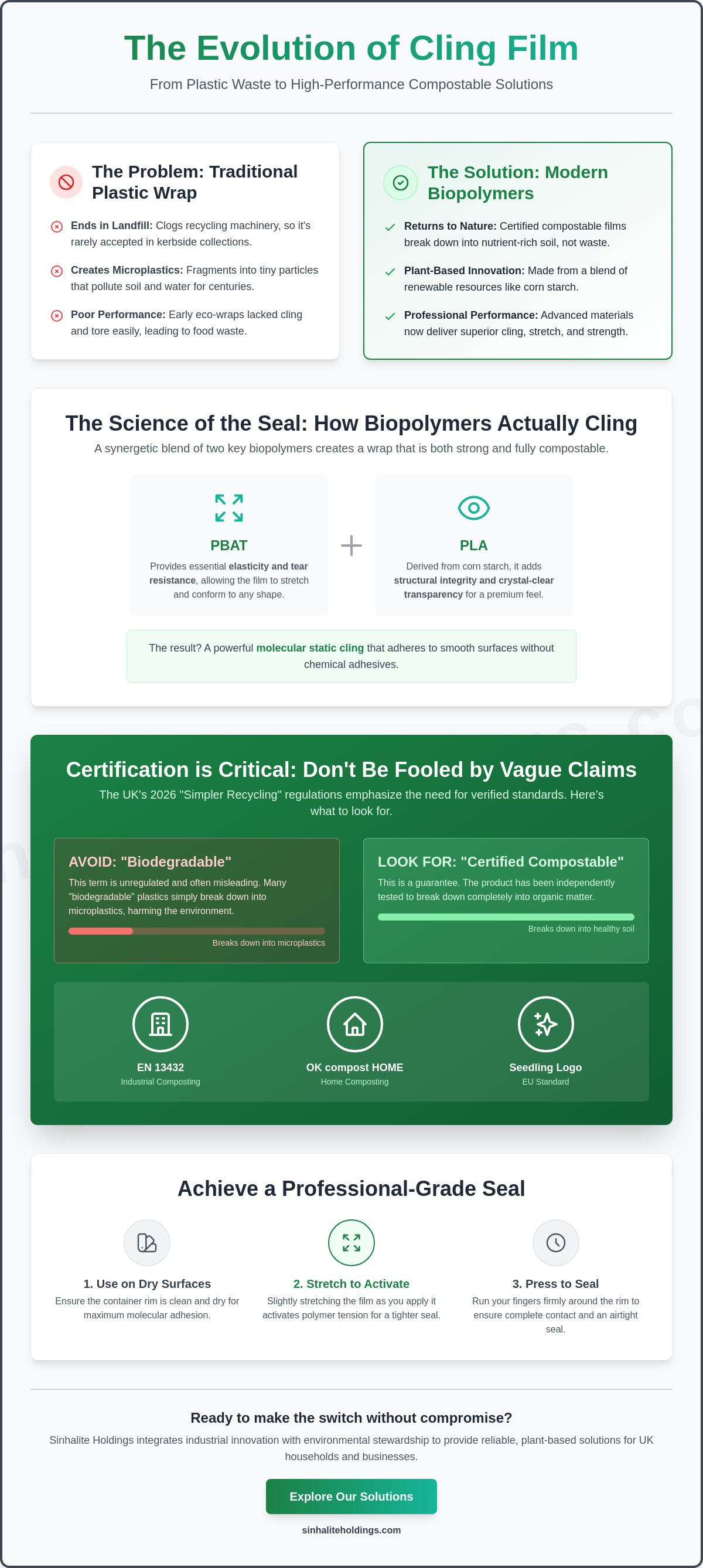
Traditional PVC and PE wraps present a significant challenge for UK waste management systems. These thin-film plastics are almost never accepted in standard kerbside collections because their lightweight nature causes them to clog sorting machinery at recycling centres. This leads to a systemic failure where most plastic wrap ends up in landfill or incineration. There's also a chemical concern. Over long storage periods, traditional plasticisers can leach into fatty foods like cheese or meats, raising health questions for the conscious consumer. In local British ecosystems, these polyethylene materials don't disappear. They simply fragment into microplastics that persist for centuries, entering our soil and water systems.
The 2026 Standard: Certified Compostability
The UK market has moved beyond vague claims of being "eco-friendly" or "green." In 2026, the industry standard is defined by rigorous, third-party verification. The EN 13432 European certification is the primary benchmark, ensuring a product will fully break down in industrial composting facilities without leaving harmful residues behind. While some early sustainable films relied on regenerated cellulose for its barrier properties, modern blends of PBAT and PLA offer significantly better stretch and adhesion. For many UK residents, the "OK compost HOME" certification is the ultimate goal. It confirms that the film will degrade effectively in a domestic garden heap, turning your food wrap into nutrient-rich soil rather than waste. Relying on "plant-based" labels isn't enough; you must look for these specific certifications to ensure your compostable cling film that actually clings is truly part of a circular economy.
The Science of the Seal: How Biopolymers Actually Cling
The secret behind compostable cling film that actually clings lies in the precise calibration of plant-based polymers. Unlike traditional plastics that rely on synthetic plasticisers to achieve flexibility, modern eco-wraps use a sophisticated blend of PBAT (Polybutylene adipate terephthalate) and PLA (Polylactic Acid). PBAT is a biodegradable random copolymer that provides the essential elasticity and strength required to wrap around various shapes without tearing. Meanwhile, PLA, derived from renewable resources like corn starch, contributes the structural integrity and crystal-clear transparency that consumers expect from a high-quality food wrap. This synergy ensures the material remains robust during use but breaks down completely when introduced to a composting environment.
Static Energy vs. Chemical Adhesives
Many people assume that "stickiness" requires chemical tackifiers. In reality, the performance of high-quality compostable film depends on molecular surface energy. This creates a natural static-cling effect, allowing the film to grip smooth surfaces like glass or ceramic through surface tension alone. For a deeper understanding of these materials, you can consult this authoritative overview of different bioplastics and their roles in food safety. The cling is a physical property of the polymer chain itself, meaning the film sticks better to itself and non-porous containers without leaving any sticky residue behind.
Elasticity and Puncture Resistance
Manufacturing techniques in 2026 have solved the "snap-back" effect that plagued early generations of eco-wraps. By carefully controlling the film thickness, often measured in microns, producers can balance delicate handling with impressive puncture resistance. Modern bioplastics now rival traditional LDPE (Low-Density Polyethylene) in their stretch-to-break ratio. This means you can pull the wrap tight over a bowl of leftovers or a piece of fruit without the material failing under tension. This durability is a hallmark of the high-performance compostable cling film developed for the UK market, where utility and environmental stewardship intersect.
Beyond the seal, these biopolymers offer a unique advantage in food preservation: breathability. While traditional plastic creates a completely anaerobic environment that can cause produce to sweat and spoil, compostable films allow for a controlled rate of gas exchange. This permeability helps to regulate moisture levels, which often keeps vegetables and fruits fresh for longer periods. It is a functional benefit that traditional plastic wraps simply cannot replicate, proving that the transition to sustainable materials can actually improve the quality of your food storage.
Buying Guide: Choosing a Compostable Wrap That Works
Selecting the right product requires looking beyond surface-level "eco" branding. To find a compostable cling film that actually clings, you should evaluate three fundamental pillars: adhesion, tensile strength, and official certification. High-quality film shouldn't just stick to itself; it must create a reliable seal against ceramic and glass. Strength is equally vital, as the material needs to withstand stretching without premature tearing. Finally, certifications provide the necessary proof that the product will indeed return to the earth as nutrients rather than waste.
The physical dispenser is often overlooked but remains a critical component of the user experience. A flimsy cardboard box leads to frustration and wasted film. Look for a sturdy box equipped with a clean, sharp cutting edge. This ensures precise portioning and prevents the film from bunching up before it reaches the container. Because bioplastics are designed to break down, they possess a finite shelf life. Most manufacturers specify an expiry date of approximately 12 months from the date of production. Storing your rolls in a cool, dry place away from direct sunlight ensures the polymers maintain their integrity until the very last metre.
Home Compostable vs. Industrial Only
Distinguishing between certification logos is vital for proper disposal. The TUV Austria 'Industrial' logo indicates the film requires the high-heat environment of a professional facility to degrade. In contrast, the 'Home' logo signifies the material will break down in a standard garden heap. For UK flat-dwellers who don't have access to a garden, industrial-certified film is often a practical choice. It can be disposed of in local authority food waste caddies, provided your council accepts compostable liners and wraps. Home compostable film remains the gold standard for versatility, as it functions perfectly in both domestic and municipal systems.
Material Transparency and Safety
Safety is a primary driver for moving away from traditional plastics. Ensure your chosen wrap is explicitly BPA-free and phthalate-free to avoid chemical leaching into your meals. Responsible brands also provide transparency regarding their raw materials. This includes verifying that corn starch inputs are GMO-free and that the manufacturing process is guaranteed to be microplastic-free. These details confirm that the product is safe for your family and the wider environment.
When comparing options, look past the initial price of the box. A roll costing £5 might seem more expensive than standard plastic, but you must calculate the price-per-metre to understand the true value. Often, longer rolls provide a lower cost per use while reducing the total amount of packaging waste generated. Investing in a compostable cling film that actually clings saves money in the long run by preventing food spoilage and reducing the need for double-wrapping.
How to Get the Best Performance from Your Eco-Wrap
Achieving a reliable seal with compostable cling film that actually clings requires a small shift in kitchen habits. While traditional plastic wraps rely on aggressive chemical tackifiers, biopolymer films use molecular surface tension. This means the condition of your container and the way you handle the material directly impact how well it performs. By following a few intentional steps, you can ensure your food stays fresh while supporting a circular economy. Use these four practical steps to master the application:
- Step 1: Prepare the surface. Ensure the container rim is completely dry and free from oil or food residue. Moisture creates a barrier that prevents the film from forming a static bond with glass or ceramic.
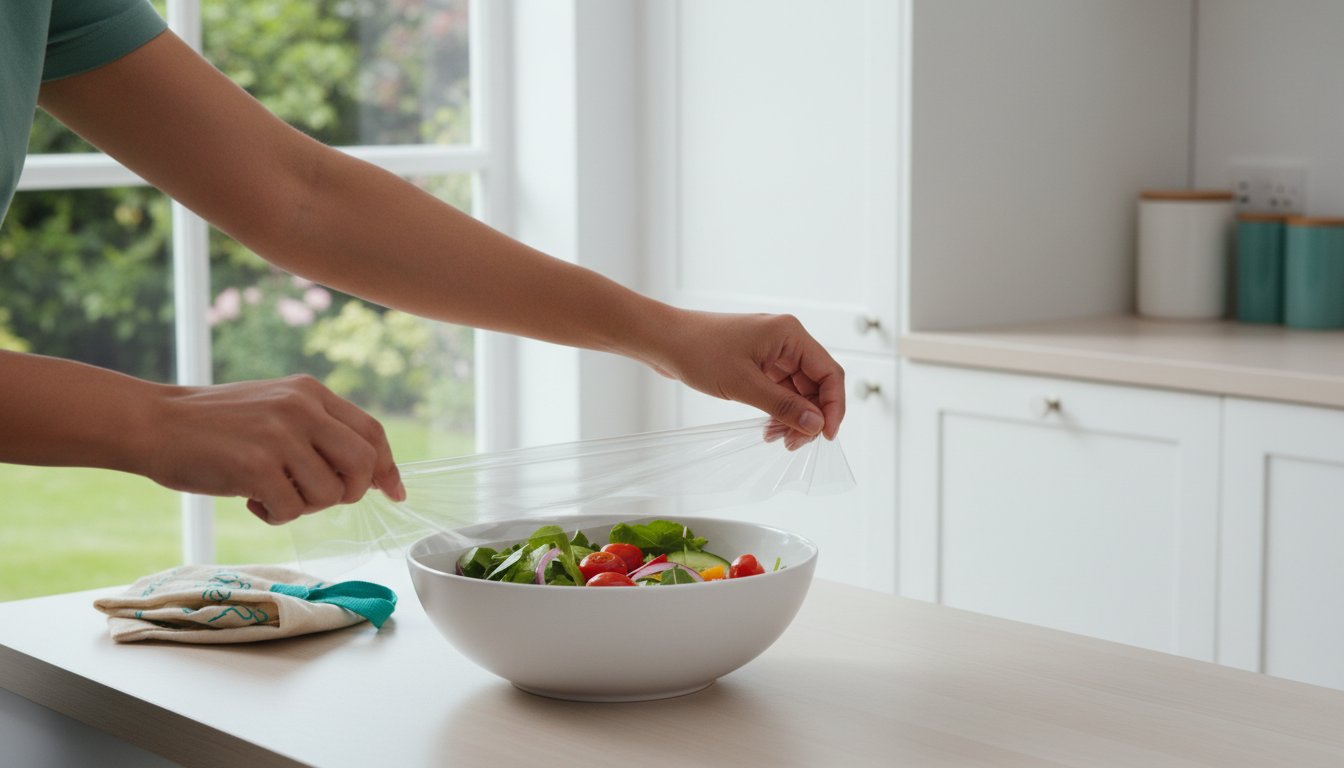
- Step 2: Activate the tension. Stretch the film slightly as you pull it across the opening. This physical action activates the elastic memory of the PBAT and PLA blend, allowing it to "snap" onto the edges.
- Step 3: Create a mechanical seal. Press firmly around the entire perimeter of the bowl with your thumb and forefinger. This pressure forces the film into close contact with the surface, maximizing the suction effect.
- Step 4: Store correctly. Keep your roll in a cool, dry cupboard. Excessive heat or humidity can cause the biopolymers to begin their breakdown process prematurely, making the film brittle.
Troubleshooting the 'No-Cling' Issue
If you find the film isn't sticking as expected, condensation is often the culprit. When you wrap warm leftovers, the rising steam creates a microscopic layer of water on the rim that breaks the static bond. It's better to let your food reach room temperature before sealing. For stainless steel containers, which have lower surface energy than glass, use the self-cling technique. Simply pull a longer piece of film and wrap it entirely around the bowl so the material overlaps and sticks to itself. You'll also notice that compostable film becomes slightly less elastic in the freezer. This is a natural property of plant-based polymers, so it's best to apply the wrap at room temperature before placing the item in sub-zero storage.
Maximising Shelf Life in the Kitchen
Because these products are designed to return to the earth, they're naturally more sensitive to environmental factors than traditional plastics. Avoid leaving your roll in direct sunlight or near the oven where high temperatures can degrade the material's flexibility. We recommend following a 'first-in, first-out' rule for your kitchen supplies to ensure you're always using the freshest stock. You should always keep the roll in its original box to protect the delicate edges of the film and maintain the integrity of the cutting blade. If you're ready to upgrade your kitchen with high-performance essentials, you can explore our range of compostable cling film designed specifically for the UK market.
Sinhalite Holdings: Purpose-Driven Cling Film for the UK
Sinhalite Holdings operates with a clear mission to facilitate a seamless transition from traditional plastics to sustainable alternatives. As a dedicated UK specialist, we understand that environmental stewardship must be paired with industrial-grade utility. This is why we've invested heavily in developing a compostable cling film that actually clings, ensuring that the move toward a circular economy doesn't require a compromise in food safety or convenience. Every product in our range undergoes rigorous performance testing to verify its suction, elasticity, and seal integrity. We believe that providing reliable tools is the most effective way to inspire confidence in broader ecological change.
Why Our Performance Stands Out
Our success is rooted in the precise engineering of biopolymer blends that prioritize the end-user experience. While some market alternatives feel brittle or fail to adhere, our film maintains a consistent tackiness that rivals standard polyethylene. This durability makes it suitable for both daily household leftovers and the high-demand environments of commercial catering. Because we maintain a robust national distribution network across the UK, businesses and consumers can rely on a steady supply of high-performance materials. This consistency is vital for maintaining the momentum of the UK’s plastic-free initiatives. Our focus remains on creating a product that feels familiar in function but revolutionary in its impact.
The Sinhalite Ecosystem
Our cling film doesn't exist in isolation; it's part of a wider ecosystem designed to eliminate single-use plastics from the British kitchen. By integrating our film with our compostable caddy bags and food roller bags, you create a unified waste management stream that simplifies the composting process. This holistic approach supports the UK's 2026 "Simpler Recycling" goals by ensuring that food-contaminated packaging can be processed alongside organic waste. Every roll purchased represents a tangible step toward reducing the volume of plastic that enters our local ecosystems. We're proud to act as a steady, dependable ally for those seeking to align their daily operations with modern ethical standards.
The transition to a more responsible future is both achievable and advantageous when you have the right materials at hand. We invite you to switch to cling film that actually works-explore the Sinhalite range today and join a community of innovators dedicated to preserving our local environment. Through collective action and superior product design, we can ensure that the UK remains at the forefront of global environmental responsibility. Choosing a compostable cling film that actually clings is a small decision that leads to a significant, long-term impact on the health of our planet.
Advancing Toward a Sustainable Kitchen
The transition to a plastic-free household is no longer a matter of compromising on quality. We've explored how advanced biopolymer engineering has successfully replaced brittle, underperforming materials with compostable cling film that actually clings. By selecting TUV Austria certified home compostable products and applying the correct tension techniques, you can ensure your food preservation is both effective and environmentally responsible. This small change in your daily routine directly supports the UK's broader shift toward a circular economy.
Sinhalite Holdings remains a dedicated UK-based specialist, providing the tear-resistant biopolymer technology needed to replace single-use plastics permanently. Our commitment to high standards ensures that sustainability and performance always work in tandem. You have the power to align your kitchen operations with modern ethical standards without sacrificing the professional-grade seal you expect.
Upgrade your kitchen with Sinhalite high-performance compostable cling film and join the movement toward a cleaner, more resilient future. Every roll represents a proactive step toward positive change.
Frequently Asked Questions
Does compostable cling film actually stick to glass bowls?
Yes, modern compostable cling film that actually clings is designed to grip smooth surfaces like glass or ceramic through surface tension. While early versions struggled with adhesion, the latest biopolymer blends provide the necessary suction to create an airtight seal. You'll find it performs best when applied to a completely dry rim, allowing the molecular bonds to form without interference from moisture.
Can I use compostable cling film in the microwave safely?
You can safely use these films in the microwave for short reheating periods, provided the wrap doesn't touch the food directly. High temperatures can cause plant-based polymers to soften more quickly than traditional plastics. We recommend leaving a small gap or vent at the corner of the container to allow steam to escape while keeping your microwave clean.
How long does it take for the film to break down in a home compost bin?
It generally takes between 90 and 180 days for certified home compostable film to break down in a domestic bin. The exact duration depends on your local climate and the health of your compost heap, specifically the balance of heat and moisture. In an industrial composting facility, this process is significantly accelerated due to the controlled, high-temperature environment.
Is compostable cling film safe for wrapping acidic foods like lemons?
Yes, these wraps are entirely safe for acidic foods because they're made from chemically stable plant inputs. You can wrap lemons, tomatoes, or vinegar-based dressings without worrying about chemical leaching. Since the material is BPA-free and phthalate-free, it provides a safer alternative for your family while maintaining the integrity of your ingredients.
Why does my compostable wrap feel different to traditional plastic?
The unique feel of compostable wrap is due to the absence of synthetic plasticisers and the use of natural starches. It often has a slightly softer, more matte texture compared to the high-gloss finish of traditional PVC. This difference in tactile quality is a sign that you're using a material designed to return to the earth rather than persist as waste.
Can I freeze food wrapped in compostable cling film for long periods?
You can use it for freezing, though the material's elasticity naturally decreases as the temperature drops. It remains effective for several months of storage if you apply the seal at room temperature before freezing. For the best results, ensure the film overlaps itself to create a mechanical bond that resists the drying effects of cold air.
What happens if compostable film accidentally ends up in the recycling bin?
If compostable film enters the plastic recycling stream, it acts as a contaminant and is usually diverted to landfill or incineration. Modern UK sorting facilities are not yet equipped to process biopolymers alongside traditional PE or PET plastics. To support a circular economy, always dispose of your wrap in a home compost bin or a dedicated food waste caddy.
Is there a difference between biodegradable and compostable cling film?
Yes, compostable films are held to much higher verification standards than those simply labeled as "biodegradable." A compostable cling film that actually clings must prove it breaks down into nutrient-rich soil within a specific timeframe. In contrast, biodegradable products may simply fragment into microplastics, which causes long-term damage to the local environment and water systems.