
Most facility managers believe that choosing a sustainable waste solution means accepting a compromise on strength, but durability in modern compostables is a matter of molecular blending rather than just thickness. You've likely dealt with the frustration of split bags and leaking food waste caddies that undermine your hygiene standards and waste staff time. It's a common struggle when searching for puncture resistant compostable garbage bags that can actually handle the rigours of a commercial environment without failing at the worst possible moment.
The good news is that you don't have to choose between operational efficiency and environmental stewardship. This guide reveals how to transition to high-performance refuse sacks that match the durability of plastic without the environmental cost. We'll explore how to identify bags with high tensile strength, ensure your organisation stays compliant with the Simpler Recycling legislation that began on March 31, 2026, and maintain impeccable hygiene. By understanding the intersection of modern innovation and natural processes, you can implement scalable solutions that support a cleaner, greener future for your business.
Key Takeaways
- Understand how molecular elasticity in PBAT and corn starch polymers provides superior durability compared to the outdated logic of traditional plastic thickness.
- Identify the essential certifications, such as EN 13432 and TUV Austria, to distinguish genuine performance from vague "biodegradable" claims.
- Discover how to select puncture resistant compostable garbage bags that maintain high hygiene standards and structural integrity in demanding commercial environments.
- Learn how transitioning to compostable liners helps your organisation navigate the 2026 Simpler Recycling legislation while mitigating the impact of the UK Plastic Packaging Tax.
- Align your daily operations with long-term ESG targets by implementing scalable, eco-friendly alternatives that support a circular economy.
The Engineering Behind Puncture Resistant Compostable Garbage Bags
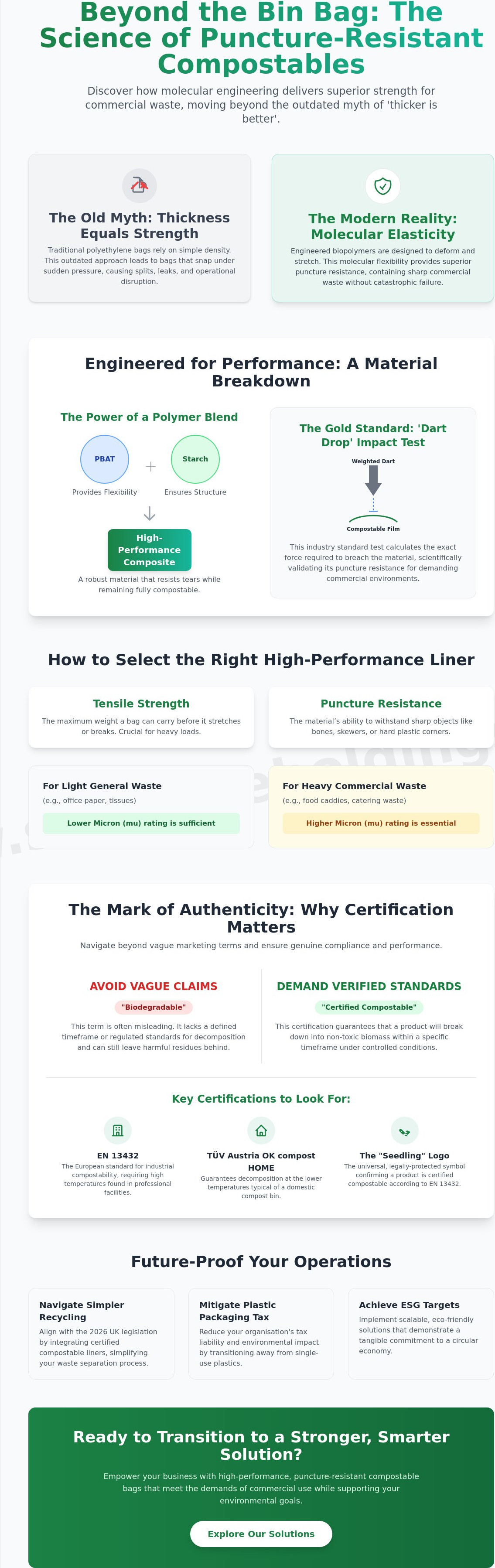
Traditional waste management relies on the "thicker is better" philosophy, but this logic fails when applied to bioplastics. Puncture resistance in Biodegradable and compostable bags is actually a result of molecular elasticity rather than simple density. Unlike conventional polyethylene, which often snaps under sudden pressure, modern compostable polymers are engineered to deform and stretch. This mechanical property is what allows puncture resistant compostable garbage bags to withstand the sharp edges of commercial waste without catastrophic failure.
The industry measures this capability using the "Dart Drop" impact test. By dropping a weighted dart from a fixed height onto the film, engineers can calculate the exact force needed to cause a breach. This test represents the gold standard for durability. Sinhalite Holdings prioritises these metrics to eliminate the common "splitting" issue that plagues budget liners, ensuring that your staff don't face messy clean-ups during waste transport.
To better understand the durability and performance of these materials, watch this helpful video:
The Role of PBAT and Mater-Bi in Durability
PBAT serves as a critical component because it provides the necessary flexibility to resist piercing. When we blend this with GMO-free starch, we create a composite material that maintains its structural integrity even when stressed. This specific molecular blend is why our compostable garbage bags provide a reliable barrier. The presence of high-grade resins ensures the material remains tough while still being fully compatible with organic waste processing. Because these blends are specifically designed for industrial strength, they offer a viable alternative to single-use plastics.
Tensile Strength vs. Puncture Resistance
Understanding the difference between holding weight and resisting sharp objects is essential for any procurement team. Tensile strength refers to how much weight a bag can carry before it elongates or breaks. Puncture resistance specifically addresses the material's ability to resist being pierced by objects like bones, skewers, or hard plastic. When choosing your supplies, consider these factors:
- Light Waste: Lower micron (mu) ratings are sufficient for paper and soft tissues where piercing is unlikely.
- Heavy Commercial Waste: Higher micron ratings are necessary to provide the resilience required for food waste caddies containing dense or sharp materials.
Selecting the correct puncture resistant compostable garbage bags involves matching the micron thickness to the specific physical demands of your waste stream to ensure maximum hygiene and safety.
Selection Criteria: Evaluating Strength and Certification Standards
Identifying the right waste solution requires looking beyond marketing slogans to verify technical certifications. Using high-quality puncture resistant compostable garbage bags is only effective if the material is genuinely compatible with your waste processing route. While "biodegradable" suggests an item will eventually break down, it lacks a defined timeframe or safety standard. In contrast, certified compostable materials must meet rigorous criteria, such as the ASTM D6400 standard or the European EN 13432. These ensure the material decomposes into carbon dioxide, water, and biomass without leaving toxic residues.
Decoding TUV Austria and OK compost HOME
The TUV Austria OK compost HOME mark is especially significant for smaller organisations. It guarantees that the material will break down in a home compost bin at lower temperatures, whereas "Industrial" certification requires the heat of a professional facility. As we move into the era of Simpler Recycling in 2026, accurate labelling is more than just an ESG goal; it's a regulatory necessity. Always check for the "seedling" logo on every roll to ensure you aren't purchasing a "fake" eco-product that contains hidden plastics. Choosing verified products is the only way to avoid greenwashing and ensure your sustainability efforts are meaningful.
Sizing and Micron Ratings for Commercial Use
Commercial waste streams vary significantly in their physical demands. An 80L sack used for light office paper doesn't require the same resilience as a 140L heavy-duty liner used in a warehouse or industrial setting. As capacity increases, the micron (mu) rating must follow to maintain the integrity of your puncture resistant compostable garbage bags. This prevents the dreaded "bin juice" leaks that compromise hygiene and safety during transport. In professional culinary environments, strength must be paired with containment, which is why many chefs now prioritise odour control commercial food waste bags to maintain a clean workspace.
Selecting the right specifications ensures your transition to sustainable practices is both seamless and commercially viable. You can explore our full range of certified liners to find the perfect match for your facility's requirements.
Scaling Sustainability: Integrating High-Performance Liners into UK Operations
Transitioning to puncture resistant compostable garbage bags is a strategic fiscal move as much as an environmental one. The UK Plastic Packaging Tax places a significant financial burden on organisations using traditional plastic packaging with insufficient recycled content. By adopting certified compostable alternatives, businesses can effectively remove these specific tax liabilities from their operational costs. These high-performance liners also play a vital role in achieving corporate ESG targets, providing a transparent way to demonstrate environmental stewardship to stakeholders and clients alike.
Logistical efficiency depends on reliability. When refuse sacks maintain their integrity during council collection or industrial processing, the entire waste stream remains streamlined. Sinhalite Holdings acts as a visionary partner for organisations seeking scalable solutions that don't compromise on durability. We provide the industrial-grade tools necessary to ensure your waste management practices are both responsible and highly effective.
The ROI of Durability in Waste Management
A single split bag creates a cascade of hidden expenses. When a liner fails, it leads to immediate hygiene hazards and increased labour costs for intensive cleanup. Waste contractors frequently ask, do compostable bags contain plastic, because they require certainty that the materials are safe for organic processing. Opting for "cheaper" budget liners often results in staff double-bagging to prevent leaks, which doubles your material consumption and waste. Investing in puncture resistant compostable garbage bags ensures that one bag performs its duty, protecting your bottom line and your facility's standards.
Transitioning Your Organisation to Compostables
Moving away from single-use plastic requires a methodical approach to ensure operational continuity. We suggest a simple three-step plan for a successful transition:
- Waste Audit: Identify all current plastic bag usage points and assess the volume and weight of the waste produced.
- Specification Matching: Select compostable sacks with the specific micron ratings and tensile strength required for those waste streams.
- Staff Integration: Roll out the new liners with clear guidance on disposal routes to comply with the March 2026 Simpler Recycling regulations.
Choosing high-standard, UK-supplied sacks allows your business to lead the circular economy with confidence. We're here to support your journey toward a cleaner, greener future. Contact Sinhalite Holdings to explore bespoke packaging and waste solutions tailored for your specific operation.
Leading the Transition to a Plastic-Free Future
Adopting a circular economy model is no longer a distant goal but a practical reality for modern organisations. We've explored how molecular engineering and strict certification standards have transformed the reliability of waste liners. By choosing puncture resistant compostable garbage bags, you ensure that your facility remains clean and compliant while avoiding the financial impact of the UK Plastic Packaging Tax. Aligning your procurement with these high standards protects both your staff and the planet by eliminating the risk of split bags and contamination.
Sinhalite Holdings acts as a specialist UK supplier dedicated to providing the commercial and household sectors with the tools needed for meaningful change. Our solutions are engineered for high tensile strength and carry both OK compost HOME and Industrial certifications. This rigorous testing ensures that every sack performs under pressure without compromising your environmental integrity. It's time to replace outdated single-use plastics with durable, responsible alternatives that support a sustainable legacy.
Explore our range of high-performance compostable solutions to discover how easy it is to upgrade your waste management systems. The path to a cleaner, greener future is built on these deliberate, responsible choices; we are here to help you lead the way.
Frequently Asked Questions
Are puncture resistant compostable bags as strong as traditional plastic?
Modern bioplastic blends are engineered to match the structural integrity of traditional polyethylene through molecular elasticity. While conventional plastic often snaps under sudden pressure, the PBAT and corn starch blends used in puncture resistant compostable garbage bags allow the material to deform and absorb impact. This mechanical property ensures that the bags remain intact even when loaded with heavy or irregular commercial waste, providing a reliable alternative to single-use plastics.
What happens if a compostable garbage bag gets wet?
These bags are designed to be moisture-resistant and won't dissolve upon contact with liquids or damp food waste. The material maintains its structural integrity throughout the standard collection cycle, even in humid environments. However, because they are organic, prolonged exposure to high moisture and microbial activity will eventually initiate the composting process. This is why regular waste collections are recommended to maintain the highest hygiene standards in professional settings.
Can I use these heavy-duty sacks for garden waste with sharp twigs?
You can certainly use our high-performance sacks for garden waste, as they are specifically engineered to resist piercing from organic debris. The elasticity of the polymer blend allows the film to stretch around sharp objects like twigs or thorns instead of puncturing immediately. For heavy-duty applications involving significant amounts of garden waste, selecting a sack with a higher micron rating ensures the bag handles both the physical weight and the sharp edges without failing.
How do I store compostable bags to ensure they don't lose their strength?
To maintain maximum performance, you should store your compostable bags in a cool, dry place away from direct sunlight. High temperatures and UV exposure can prematurely weaken the molecular bonds of the bioplastic, which reduces its shelf life and durability. When kept in stable, dark conditions, these puncture resistant compostable garbage bags typically maintain their full industrial strength for up to twelve months from the date of manufacture.