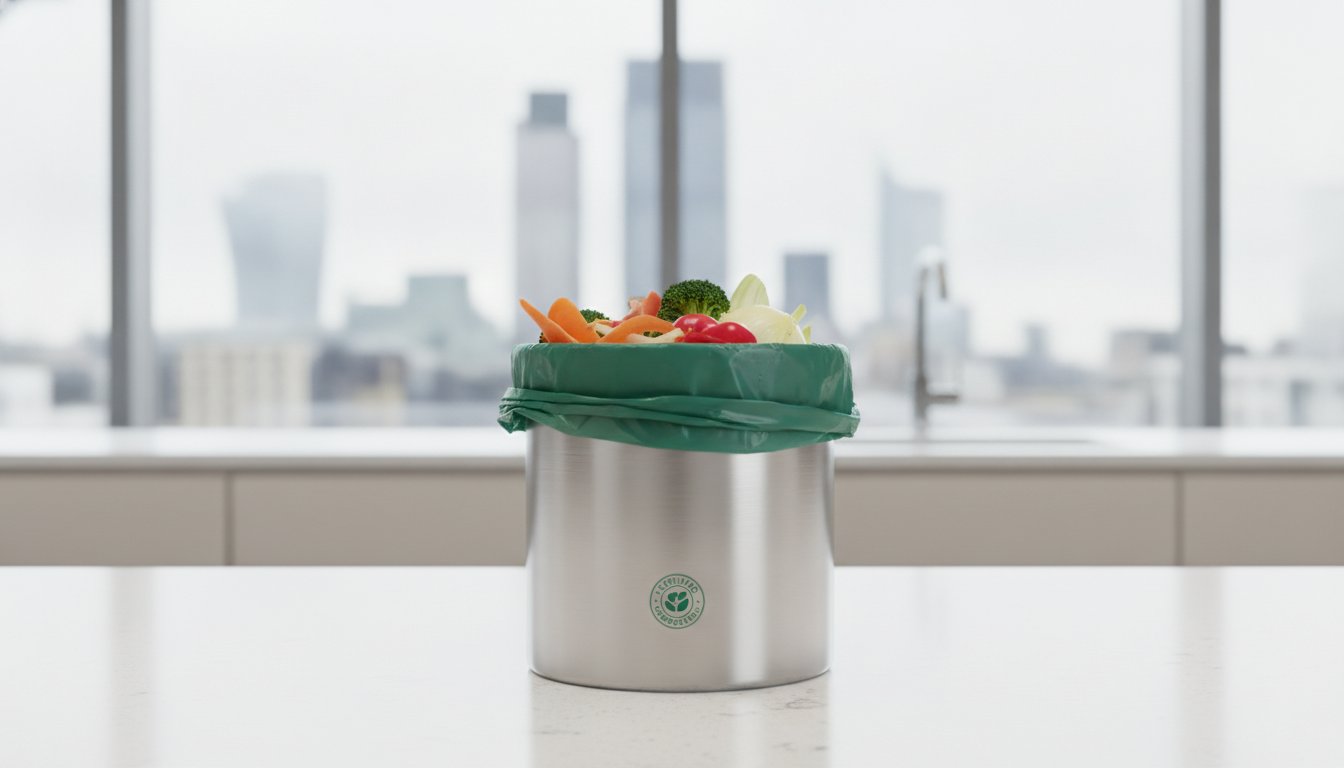

The very plastic bags you use to contain kitchen waste are likely the reason your bin room smells so bad. You're probably tired of dealing with split liners, leaking fluids, and the persistent hum of flies that accompanies traditional waste management. Switching to high-performance odour control commercial food waste bags isn't just a sustainability choice; it's a functional necessity for modern hygiene. With UK landfill taxes rising to £130.75 per tonne in April 2026, the pressure to segregate food waste efficiently and cleanly has never been higher.
We understand that a transition to more responsible practices must be both achievable and advantageous for your business. This guide will show you how to eliminate foul smells and improve kitchen hygiene using advanced compostable liners designed specifically for the UK commercial sector. We'll examine how breathable technology prevents anaerobic rot, ensures full compliance with evolving regulations, and provides the durability your team needs to maintain a pristine workspace without the mess of traditional plastic.
Key Takeaways
- Identify the biological triggers of kitchen smells by understanding how trapped moisture and anaerobic decomposition create foul-smelling gases in traditional plastic.
- Learn to implement a structured five-step management plan, beginning with a precision waste audit to ensure your sack capacity matches your operational output.
- Deploy high-performance odour control commercial food waste bags to facilitate moisture transmission, which keeps waste drier and significantly reduces bacterial growth.
- Verify that your chosen liners meet the EN13432 standard for compostability to ensure full compliance with 2026 UK waste regulations.
- Evaluate the technical specifications of Mater-Bi and PBAT-based materials to find the ideal balance between high-tensile durability and ecological responsibility.
The Science of Odour: Why Commercial Food Waste Smells
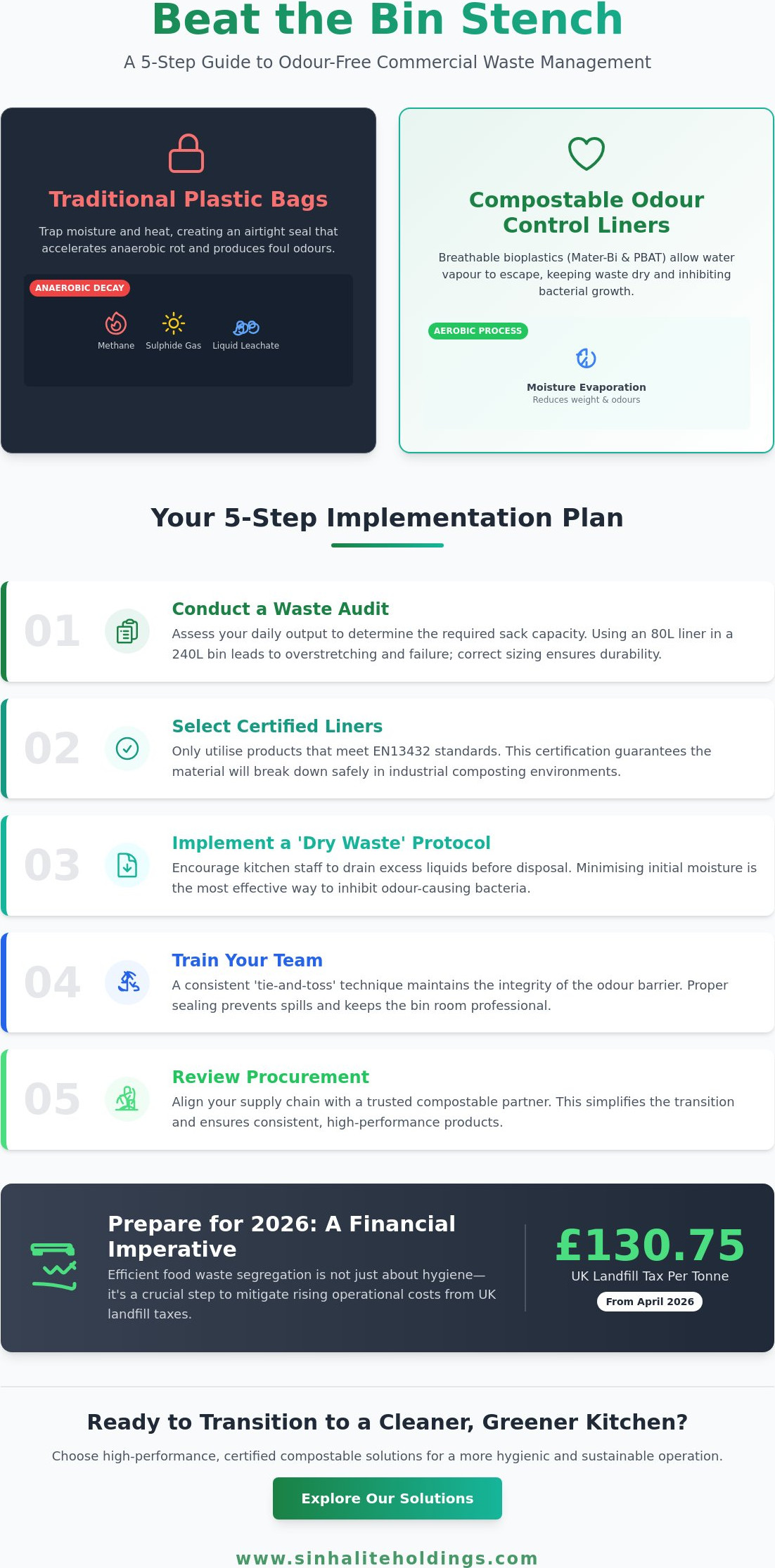
Odours in a commercial kitchen aren't just a nuisance; they're a biological signal that your waste management system is failing. Most foul smells result from anaerobic decomposition. This occurs when organic matter is deprived of oxygen, forcing bacteria to produce pungent gases like methane and hydrogen sulphide. The science of food spoilage dictates that once waste hits the 48-hour threshold, microbial activity accelerates rapidly, especially in high-temperature environments. Standard plastic liners exacerbate this by creating an airtight seal that traps heat and condensation.
This is why high-performance odour control commercial food waste bags are essential for modern hygiene. They utilize breathable bioplastics that allow moisture to evaporate, keeping the contents aerobic and significantly slowing down the rot process. When you remove the liquid environment that bacteria love, you fundamentally change the chemical reaction occurring inside your bin.
To better understand how modern technology manages organic materials, watch this helpful video:
Moisture Management vs. Air-Tight Sealing
Traditional polyethylene liners create a 'greenhouse effect' inside your bins. This trapped humidity leads to the production of leachate, which is the dark, smelly liquid that pools at the bottom of containers. By contrast, compostable liners allow water vapour to escape. This evaporation doesn't just reduce smells; it also decreases the total weight of the waste. Since moisture accounts for a large portion of food waste mass, using breathable odour control commercial food waste bags can lead to more manageable bin rooms and potentially lower collection costs over time.
Identifying the Source: Common Commercial Culprits
The intensity of the smell often depends on the specific waste profile of your business. High-protein items like meat and dairy produce the most offensive nitrogen-based gases during decay. High-moisture scraps, such as vegetable peelings, provide the hydration bacteria need to thrive. Cross-contamination between these streams in a poorly ventilated bin room creates a perfect storm for pest attraction. Implementing a dedicated system ensures these materials are managed in a way that prioritises both commercial hygiene and environmental responsibility.
How to Deal with Smelly Commercial Food Waste: A 5-Step Guide
Transitioning to a more responsible waste management model requires a methodical approach that links operational efficiency with environmental stewardship. You can achieve a cleaner workspace and support systemic change by following a structured plan. Implementing the right tools ensures that your facility remains hygienic while meeting modern sustainability standards.
- Conduct a waste audit: Assess your daily output to determine the required sack capacity. Using an 80L liner in a 240L bin often leads to overstretching and failure, whereas the correct size ensures durability.
- Select certified liners: Only utilise products that meet EN13432 standards. This certification guarantees the material will break down safely in industrial composting environments without leaving harmful residues.
- Implement a 'dry waste' protocol: Encourage kitchen staff to drain excess liquids before disposal. Minimising moisture inside your odour control commercial food waste bags is the most effective way to inhibit the bacteria that cause foul smells.
- Train your team: A consistent 'tie-and-toss' technique maintains the integrity of the odour barrier. Proper sealing prevents spills and ensures that the bin room remains a professional environment.
- Review procurement: Aligning your supply chain with a trusted compostable partner simplifies the transition and ensures consistent product performance.
Optimising Collection Frequency for 2026 Regulations
With UK landfill tax rising to £130.75 per tonne in April 2026, efficiency is now a financial imperative. You should align your kitchen workflows with your collection cycles to prevent waste from stagnating. Breathable liners offer a distinct advantage here. They allow for slightly longer storage without attracting pests because they keep the waste surface dry and stable. For detailed daily maintenance strategies, consult our comprehensive guide on how to keep a food waste bin from smelling.
Integrating Liners into Your ESG Strategy
Sustainability is a core commercial requirement that demands transparent action. Adopting principles for the Sustainable Management of Food allows your organisation to track the reduction in single-use plastic through measurable procurement. Switching to compostable solutions provides a tangible metric for your annual ESG reports. It demonstrates a commitment to a circular economy, proving that your business acts as a responsible innovator in the transition toward a cleaner, greener future.
Selecting the Best Odour Control Commercial Food Waste Bags
High-volume kitchens require more than just a simple container; they need a high-performance barrier that supports operational flow. When procuring odour control commercial food waste bags, durability is the primary metric for success. Unlike standard refuse sacks, these liners must withstand punctures from bones and sharp organic waste while maintaining structural integrity under heavy loads. Adopting rigorous Food Waste Management Strategies requires a shift toward materials that facilitate industrial composting without failing in the bin room.
To ensure your facility remains hygienic and compliant, your selection should prioritise several technical factors:
- High-tensile strength: Look for liners designed to stretch rather than snap, especially for larger 90L to 240L bins.
- Advanced materials: Ensure the material is Mater-Bi or PBAT-based to allow the moisture transmission discussed in earlier sections.
- Verified certifications: Always check for the TUV Austria 'OK compost' mark to ensure the product is truly compostable.
- Efficient dispensing: Choose 'on-a-roll' formats to help staff maintain speed during peak service hours.
Technical Standards: EN13432 and Beyond
The 'OK compost INDUSTRIAL' mark is the gold standard for commercial waste processing. It confirms that the liner will break down completely within 12 weeks in a professional composting facility. Thickness, often measured in microns, matters less than material elasticity in the context of food waste. A thinner, high-quality bioplastic often outperforms a thicker, brittle alternative. For a deeper understanding of how these materials differ from traditional synthetics, you can read our guide on do compostable bags contain plastic.
The Sinhalite Advantage: Heavy-Duty Performance
Sinhalite Holdings provides a range of puncture-resistant compostable garbage bags specifically engineered for the rigours of the UK commercial sector. We act as a steady, dependable ally for organisations seeking to align their daily operations with modern ethical standards. By choosing our reinforced liners, you ensure that your transition to sustainable practices is both practical and scalable. We invite you to view our full range of commercial compostable solutions and take the next step toward a cleaner, greener future for your business.
Advancing Toward a Circular Commercial Kitchen
Hygiene and sustainability are no longer separate goals. By understanding the biology of decay and implementing moisture-wicking technology, your business can eliminate foul smells while meeting 2026 regulatory demands. Choosing the right liners ensures that your kitchen staff can maintain a pristine environment without the risk of leaks or punctures. This strategic shift transforms a daily chore into a measurable contribution to your corporate environmental goals.
Integrating high-performance odour control commercial food waste bags into your daily operations is a practical step toward a more responsible future. Our solutions are fully compliant with EN13432 standards and offer the high-tensile strength required for demanding commercial environments. With specialist UK-wide distribution, Sinhalite Holdings provides the tools you need to transition away from traditional plastic with absolute confidence.
We believe that positive change is both achievable and advantageous for your bottom line. Switch to high-performance compostable waste bags today and join a growing community of businesses committed to a cleaner, greener industry. Your transition starts with a single, responsible choice.
Common Questions About Commercial Food Waste Management
How do compostable bags help with odour control compared to plastic?
Compostable bags control smells by allowing moisture to evaporate through the breathable bioplastic material. Traditional plastic creates an airtight seal that traps heat and condensation, forcing organic matter to rot without oxygen. This anaerobic process produces the foul gases often associated with kitchen waste. By using breathable odour control commercial food waste bags, you keep the waste drier and significantly slow down the bacterial decay that causes offensive scents.
Can compostable liners handle heavy, wet commercial food waste?
High-performance compostable liners are engineered specifically for the rigours of a professional kitchen environment. Modern bioplastics offer high-tensile strength that rivals traditional polyethylene, ensuring they don't split under the weight of wet scraps or heavy organic loads. While these materials are breathable to manage moisture, they remain completely leak-proof. This durability prevents the messy bin room spills that often lead to lingering hygiene hazards and pest issues in high-volume settings.
What is the best way to prevent pests in a commercial bin area?
Eliminating the chemical attraction is the most effective way to keep flies and rodents away from your waste storage. Pests are drawn to the signals of rotting food, so maintaining an aerobic environment with odour control commercial food waste bags is a crucial preventative step. You should also ensure all bags are tied securely using a consistent 'tie-and-toss' method and that bins are cleaned regularly to remove any residual organic matter.
Are all commercial food waste bags compatible with UK council collections?
Compatibility depends entirely on the bag's certification and the specific requirements of your waste processor. Most UK councils and private contractors require liners to meet the EN13432 standard, which proves they are suitable for industrial composting. It's vital to check for the 'OK compost INDUSTRIAL' mark before procurement. Bags that don't meet these criteria may be treated as contamination, potentially leading to additional collection fees or the rejection of your organic waste stream.