
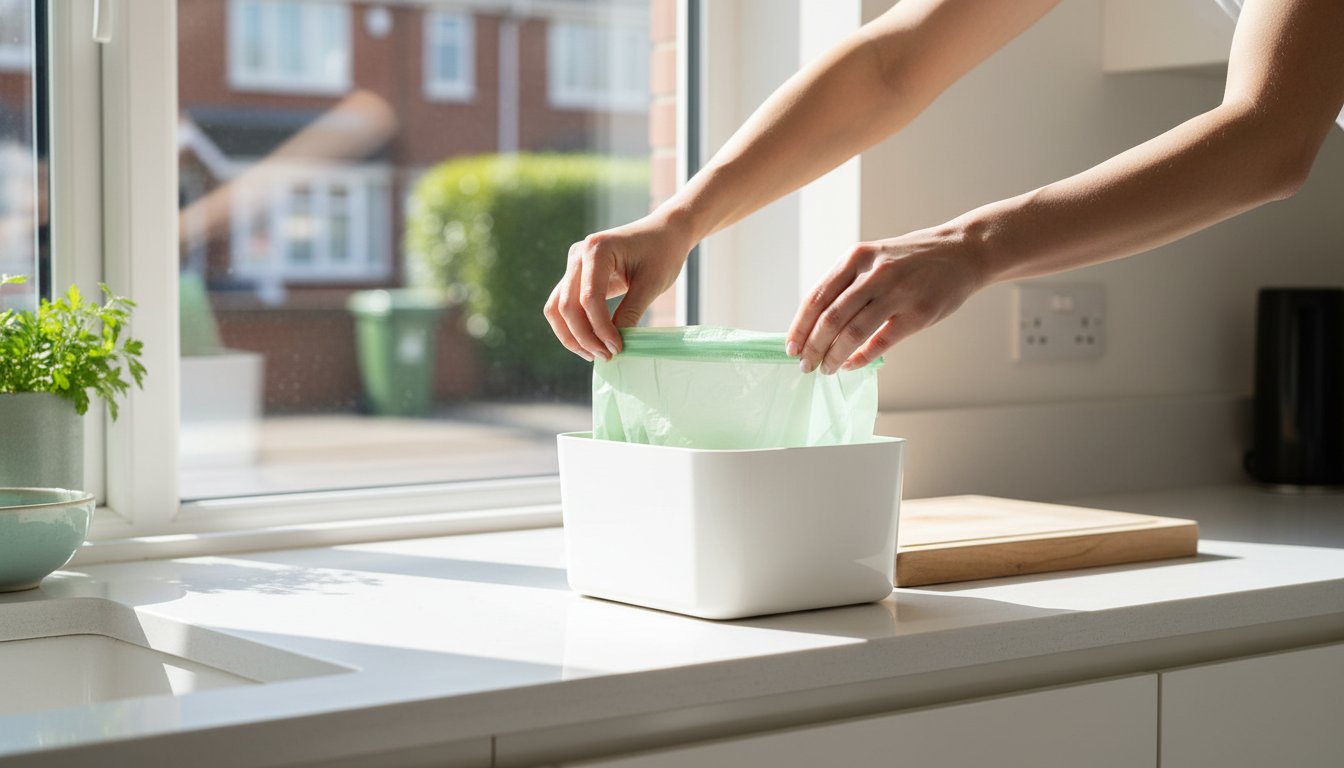
Did you know that food waste currently accounts for over 30% of the average household bin in England, and in areas like West Sussex, that figure climbs as high as 40%? This staggering volume of organic material is why the UK government's "Simpler Recycling" reforms mandate weekly food waste collections for every household by March 31, 2026. As these new rules approach, many residents and business owners are asking: do councils provide food waste bags or is the responsibility shifting to the individual? While some local authorities offer a starter roll to encourage participation, there is no national requirement for them to provide free liners on an ongoing basis.
It's understandable if you feel confused by the varying policies across different regions, especially when a lack of quality liners can lead to messy bins and unpleasant odours. We believe that a successful transition to a circular economy relies on having the right tools for the job. This guide will help you understand the 2026 mandate and show you how to secure a reliable supply of high-performance compostable liners for your home or business. We will explore the postcode lottery of council provisions, explain the EN 13432 certification standard, and provide practical steps to ensure your waste management is both compliant and environmentally responsible.
Key Takeaways
- Prepare for the 2026 "Simpler Recycling" deadline by understanding the new legal requirements for mandatory weekly food waste collections across England.
- Clarify the postcode lottery regarding whether do councils provide food waste bags and find out what happens when your initial starter roll is exhausted.
- Explore effective strategies for procuring compliant liners, including the traditional "tie-a-bag" signal and utilising local community distribution points.
- Gain the technical knowledge to distinguish between standard plastics and high-performance compostable caddy bags that meet the EN 13432 gold standard.
- Position your organisation as a leader in sustainability by adopting scalable, compostable alternatives that drive the transition toward a cleaner circular economy.
Council Food Waste Collection Rules in 2026: The National Framework
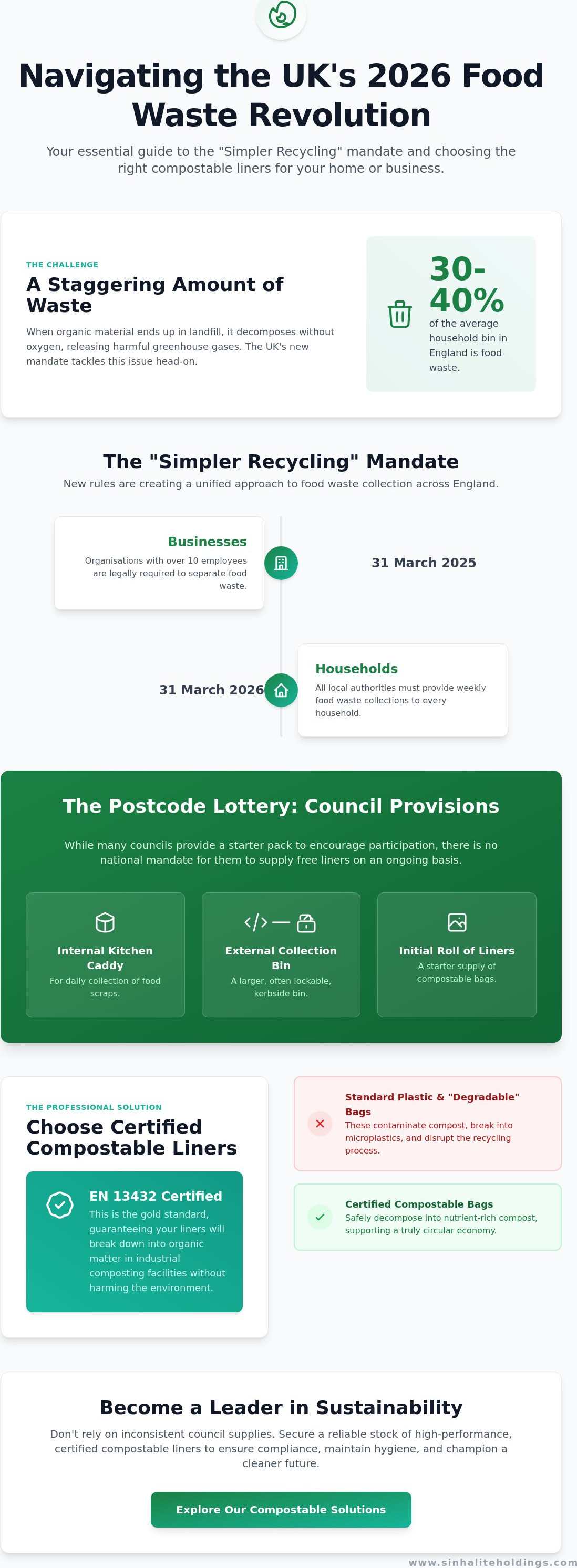
The UK government's "Simpler Recycling" reforms represent a pivotal shift in how we manage organic resources. By March 31, 2026, every local authority in England must provide weekly food waste collections to all households. This legislation aims to reduce the environmental impact of Food waste in the United Kingdom, which currently contributes significantly to greenhouse gas emissions when left in landfill. As these reforms take shape, a recurring concern for many is whether do councils provide food waste bags on a permanent basis to support this transition. Standardisation is the primary goal; the government wants to end the current postcode lottery that leaves many residents and businesses confused about what they can actually recycle.
To better understand how these systems operate on a local level, watch this helpful guide from Richmond Council:
The 2026 Mandate for Households and Businesses
While the 2026 deadline applies to residential services, commercial entities face an even tighter timeline. Since March 31, 2025, businesses with more than ten employees have been legally required to separate their food waste. This proactive approach ensures that organic material is diverted to anaerobic digestion facilities rather than being wasted. For many organisations, maintaining hygiene during this transition is a priority. Learning how to keep a food waste bin from smelling is essential for workplace compliance and employee comfort.
Understanding Your Local Authority’s Provision
A common question among residents and facility managers is: do councils provide food waste bags? Currently, there's no national mandate requiring councils to supply these liners for free. While many authorities provide a starter pack to encourage participation, the provision of bags varies significantly across the country. Typically, a council starter pack includes:
- A small internal kitchen caddy for daily scrap collection.
- A larger, lockable external bin for kerbside collection.
- An initial roll of compostable liners to get you started.
Once these initial supplies are finished, many councils expect users to procure their own high-quality compostable food waste bags. This shift encourages a greater sense of responsibility and ensures that the liners used meet strict environmental standards for processing.
How to Get More Food Waste Bags: Refill Options and Rules
Once you've utilised your initial starter pack, the question of how to maintain a steady supply of liners becomes paramount. While the overarching UK government food waste policy sets the framework for collection, the logistics of bag distribution remain local. Many residents and facility managers wonder, do councils provide food waste bags on a recurring basis, and the answer often depends on your specific borough's budget and operational strategy. Understanding these local nuances is the first step toward a seamless waste management routine.
Where to Find Council Refills
Securing more bags usually involves one of three common methods. First, the "tie-a-bag" signal is widely used across many English boroughs. Simply tie an empty liner or a specific tag to the handle of your external bin on collection day to alert the crew that you require a new roll. Alternatively, physical collection points remain a staple of community support. You can often find free rolls at libraries, leisure centres, and council offices. Finally, many modern authorities provide online portals where you can request home delivery of replacement bags. We recommend visiting your local authority’s website directly to confirm which of these services they currently support.
When Council Provision Isn’t Enough
Relying solely on council refills may present challenges, particularly for high-volume commercial users or households with significant organic waste. Council-issued liners are typically designed for standard residential use and may lack the durability required for heavy, wet, or sharp food scraps. For businesses, a split bag leads to hygiene failures and increased cleaning costs. This is why many forward-thinking organisations choose to invest in puncture resistant compostable garbage bags to ensure reliable performance. Taking control of your own supply chain ensures you never run out during critical operations. To ensure your facility remains compliant and clean, you might browse our range of high-performance compostable liners designed for industrial strength and environmental integrity.
Beyond the Starter Pack: Choosing Superior Compostable Liners
While the initial question of do councils provide food waste bags is a practical starting point, the focus for businesses must shift toward the long-term integrity of their waste streams. Relying on basic council provisions often leaves commercial entities with liners that fail under the pressure of high-volume food preparation. Choosing a superior compostable liner isn't just about convenience; it's a strategic decision that supports the transition to a circular economy. High-performance liners ensure that food waste reaches processing facilities without contaminating the stream with traditional plastics.
Verification and Standards
The EN 13432 standard is the essential requirement for industrial composting, ensuring that a liner will fully biodegrade within 12 weeks without leaving harmful residues behind. Unfortunately, the market is often saturated with misleading "degradable" or "oxo-biodegradable" products that simply break down into microplastics. It's vital to investigate do compostable bags contain plastic before making a procurement decision, as greenwashing can compromise your entire recycling batch. Truly compliant liners will feature clear certification logos, providing the transparency your ESG reporting requires.
Performance factors are equally important when moving beyond council-issued rolls. Commercial environments require liners with superior thickness and leak resistance to prevent the messy failures that lead to increased labour costs. When you compare professional-grade liners to standard domestic options, the difference in split prevention becomes clear. Integrating these high-quality compostable SKUs into your broader sustainability strategy demonstrates a commitment to innovation and responsible business practices.
Professional Solutions for Modern Waste
For commercial kitchens and busy office environments, the performance of a liner is non-negotiable. Premium compostable caddy bags offer enhanced durability, which is a critical factor in preventing bin contamination and unpleasant odours. These high-performance tools allow businesses to scale their organic waste collection without the risk of failures common with thinner, lower-quality alternatives.
At Sinhalite Holdings, we act as a dedicated partner for organisations seeking to align their operations with the 2026 mandate. By integrating our industrial-strength compostable solutions, you demonstrate a commitment to environmental stewardship that goes far beyond basic compliance. Our range of compostable garbage bags and food waste liners provides the durability needed for professional settings while ensuring every scrap of waste contributes to a cleaner, greener future.
Leading the Way Toward a Plastic-Free Future
The transition toward mandatory weekly food waste collections by 2026 represents a landmark moment for environmental stewardship in the UK. We've explored how the national framework aims for consistency, yet the practical reality of whether do councils provide food waste bags remains subject to local discretion and budget constraints. This uncertainty highlights the importance of securing a dependable supply of liners that meet the rigorous EN 13432 and OK compost HOME standards. By choosing high-performance alternatives, you protect the integrity of the waste stream and support the broader move toward a circular economy.
Sinhalite Holdings is a UK-based specialist dedicated to providing the tangible tools required for this evolution. Our puncture-resistant designs are specifically engineered to handle the demands of commercial kitchens and busy households alike, offering a level of reliability that standard council-issued bags often lack. We invite you to explore our professional range of high-performance compostable caddy bags to find the perfect fit for your operational needs. Together, we can turn the challenge of new regulations into an opportunity for lasting, positive change.
Frequently Asked Questions
Is it mandatory to use liners in my food waste caddy?
No, it isn't legally mandatory to use a liner, but it is highly recommended for maintaining hygiene and operational efficiency. Many councils allow loose food waste, but this often leads to residues and odours that require frequent cleaning of your internal caddy. Using a certified compostable liner ensures the container remains clean and simplifies the transfer of waste to your external bin, making the entire recycling process more manageable and pleasant.
Can I use ordinary plastic carrier bags for my food waste collection?
No, you must avoid using standard plastic carrier bags because they contaminate the composting process and won't be accepted by collection crews. Traditional plastics don't break down in anaerobic digestion facilities; instead, they fragment into microplastics that ruin the quality of the resulting biofertiliser. Most authorities require certified compostable liners to ensure the organic material is processed safely and effectively as part of a sustainable circular economy.
What happens if my council does not provide free food waste bags?
If your local authority doesn't provide free liners, you are responsible for sourcing your own compliant alternatives. While some residents ask, do councils provide food waste bags indefinitely, many authorities only offer a starter roll to launch the service. In these cases, you should purchase high-quality compostable caddy bags that meet the required UK standards to ensure your waste is collected without issues or hygiene concerns.
How can I tell if a food waste bag is truly compostable and council-approved?
You can verify a bag's suitability by looking for the EN 13432 certification logo or the OK compost HOME seedling mark on the packaging. These symbols guarantee the product has undergone rigorous testing to prove it biodegrades fully without leaving harmful residues. When checking if do councils provide food waste bags that meet these standards, always look for these industrial-grade certifications to ensure your liners are genuinely environmentally responsible and accepted by your local facility.


