UK households discard approximately 1.7 billion pieces of plastic every week, and traditional food wrap remains one of the most difficult materials to manage because it's effectively impossible to recycle. You've likely felt the frustration of trying to reduce your environmental footprint while worrying that sustainable alternatives won't actually seal your food properly. Finding high-quality compostable clingfilm uk solutions shouldn't feel like a gamble against greenwashing or subpar performance.
We believe that true environmental stewardship requires products that match industrial strength with ecological integrity. This guide provides the clarity you need to transition to a plastic-free kitchen with absolute confidence. You'll learn how to identify authentic EN 13432 certifications, understand the implications of the £228.82 per tonne Plastic Packaging Tax, and discover plant-based wraps that offer the reliable seal you expect. It's time to replace outdated materials with innovative tools that protect both your food and our planet's future.
Key Takeaways
- Understand the structural limitations of traditional PVC and LDPE films that prevent effective recycling within current UK infrastructure.
- Examine how advanced PBAT and PLA polymers enable compostable clingfilm uk to deliver the same high-performance seal and stretch as conventional plastic.
- Identify the rigorous EN 13432 standards required to verify genuine compostability and protect your household from misleading greenwashing claims.
- Determine the optimal disposal routes for your eco-wraps by distinguishing between industrial composting requirements and home-compostable certifications.
- Adopt a holistic approach to sustainable food storage by integrating a full range of plant-based essentials into a seamless, circular kitchen operation.
The Environmental Crisis of Traditional Plastic Clingfilm in the UK
Modern food preservation relies heavily on materials that the planet simply cannot process. Traditional clingfilm is a primary offender, typically manufactured from Polyvinyl Chloride (PVC) or Low-Density Polyethylene (LDPE). These substances are complex pollutants that persist in the environment for centuries. While they offer temporary convenience, their molecular structure ensures they remain a permanent burden on our ecosystems. Transitioning to compostable clingfilm uk is no longer a niche lifestyle choice; it's a necessary systemic shift toward responsible consumption and environmental stewardship.
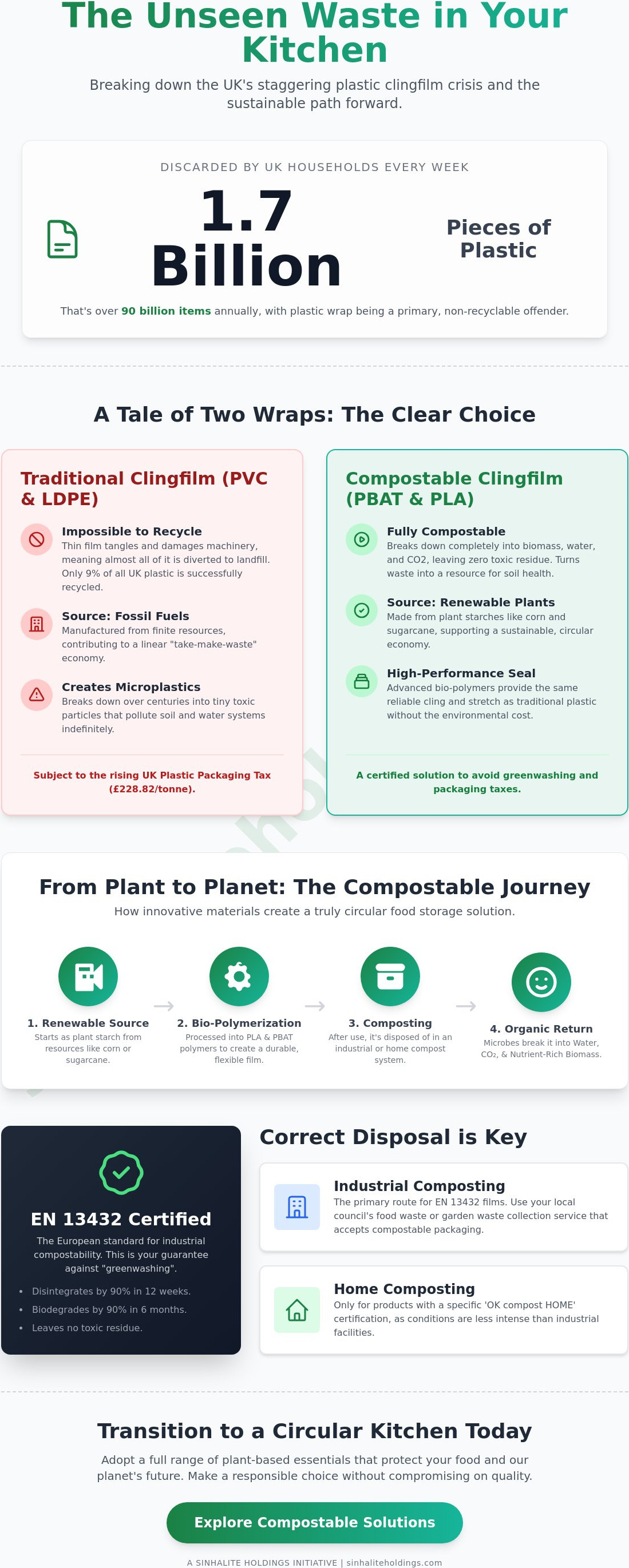
UK recycling infrastructure is currently ill-equipped to handle thin-film plastics effectively. Data from 2025 shows that only 9% of the 5 million tonnes of plastic used in the UK was successfully recycled. When traditional wrap enters a standard recycling facility, its physical properties cause significant operational failure. The material is too light to be sorted by infrared sensors and too flexible to stay on conveyor belts. Instead, it tangles around rotating machinery, leading to costly downtime and equipment damage. This mechanical incompatibility means that almost all traditional clingfilm is diverted to landfill or incineration.
Why LDPE and PVC are problematic for UK households
The risks of traditional plastics extend beyond waste management into the home. PVC wraps often require chemical additives to achieve their famous "cling," and there is ongoing concern regarding how these substances might interact with food during storage. This chemical legacy represents a fundamental flaw in traditional food storage. Relying on these materials reinforces a linear "take-make-waste" model that offers no long-term utility. By utilizing materials rooted in Bioplastic technology, households can move toward a circular model where food wrap becomes a resource for soil health rather than a permanent pollutant.
The scale of the UK plastic wrap problem
The magnitude of the plastic crisis is staggering. UK households discard approximately 1.7 billion pieces of plastic weekly, which totals 90 billion items annually. This volume directly undermines national environmental targets and contributes to the growing microplastic legacy in our soil and waterways. As the UK Plastic Packaging Tax rises to £228.82 per tonne in April 2026, the economic and ethical cost of traditional plastic continues to climb. Sinhalite Holdings provides the necessary tools to break this cycle. We offer high-performance, certified compostable clingfilm uk that allows families to maintain their kitchen standards without compromising their commitment to the planet. Responsible innovation is the only viable path toward a sustainable future.
The Science of Compostable Clingfilm: PBAT and PLA Explained
The transition to a sustainable kitchen requires an understanding of the chemistry that makes it possible. High-quality compostable clingfilm uk is not simply "green plastic." It's a sophisticated blend of Polylactic Acid (PLA) and Polybutylene Adipate Terephthalate (PBAT). PLA serves as the structural foundation; it's a renewable resource derived from fermented plant starch, often corn or sugarcane. While PLA provides the necessary tension, PBAT is the essential biodegradable polymer that grants the film its flexibility and durability. This combination ensures the wrap performs under pressure without the environmental cost of traditional synthetics.
These materials function through a deliberate molecular breakdown process. When placed in a composting environment, heat and moisture trigger microbes to consume the carbon chains. Unlike traditional PVC, which fragments into permanent microplastics, these polymers convert entirely into water, carbon dioxide, and nutrient-rich biomass. This ensures that your food storage choices leave zero toxic residues in the soil. The urgency for such innovation is highlighted in the government's Plastic waste briefing, which details the persistent challenges of managing non-biodegradable films within our current systems.
Performance through responsible innovation
Many users wonder if plant-based wraps can match the "cling" of traditional LDPE. Through precise material engineering, the molecular structure of compostable clingfilm uk mimics the electrostatic properties of plastic. This allows the wrap to create a secure seal on glass, ceramic, and stainless steel surfaces. There's also a functional advantage: breathability. Compostable films often possess a higher moisture-vapour transmission rate than airtight PVC. This characteristic prevents condensation buildup, which helps maintain the crispness of vegetables and extends the shelf life of stored produce.
Material integrity and shelf life
Because these products are designed to biodegrade, they possess a different lifecycle than "forever" plastics. A roll of compostable film typically remains stable for 12 to 18 months before the natural degradation process begins. To preserve the integrity of your wrap, we recommend storing rolls in a cool, dry place away from direct sunlight. This ensures the film retains its stretch-to-break ratio and sealing strength until the moment it reaches your compost bin.
As a responsible innovator, Sinhalite Holdings prioritizes material transparency to empower our partners. We ensure every product meets rigorous performance standards while maintaining a purely circular lifecycle. You can explore our full range of certified compostable kitchen essentials to begin your transition toward a more sustainable operational model today.
Performance vs. Plastic: Does Compostable Clingfilm Actually Work?
A common misconception persists that choosing sustainable materials involves a sacrifice in utility. Many people assume that eco-friendly wraps are inherently weak or flimsy compared to their petroleum-based counterparts. However, when we evaluate high-performance compostable clingfilm uk solutions, the data suggests otherwise. Modern material science has allowed us to engineer plant-based films that match, and in some cases exceed, the mechanical properties of traditional Low-Density Polyethylene (LDPE).
The "stretch-to-break" ratio is a critical metric for any food wrap. Traditional LDPE is prized for its extreme elasticity, but it often lacks the structural integrity required for heavy-duty kitchen tasks. In contrast, the PBAT and PLA blends used in certified compostable films provide a robust balance of elongation and puncture resistance. While a traditional wrap might thin out and tear when stretched over sharp container edges, compostable film maintains a consistent thickness. This durability ensures that your food remains protected without the need for multiple layers of material, reducing overall consumption.
The "Stickiness" Test: Securing your food
Success in food preservation depends on the quality of the seal. Traditional wraps rely on migratory plasticizers to achieve their tackiness, but compostable clingfilm uk utilizes optimized surface tension mechanics to adhere to containers. This allows the film to form a reliable bond with various surfaces, including glass, ceramic, and stainless steel. It doesn't tangle as easily as PVC, which reduces waste during application and makes the wrapping process more efficient for the user. The seal strength of PBAT-based wraps is engineered to provide a secure, airtight bond through optimized surface tension mechanics.
Microwave and Freezer Safety
Temperature resistance is where many inferior wraps fail. Our compostable films are designed to handle the thermal expansion and contraction common in modern kitchens. In the freezer, the material remains flexible rather than becoming brittle like PVC, which prevents cracks and freezer burn. For microwave use, it's essential to follow clear safety guidelines: ensure the film doesn't touch the food directly and leave a small gap for steam to escape. This prevents pressure buildup while maintaining the moisture needed for even heating. Sinhalite Holdings maintains a commitment to rigorous performance testing, ensuring every roll meets these industrial standards for safety and reliability. You don't have to choose between a plastic-free kitchen and a functional one; responsible innovation has bridged the gap.
UK Certification and Disposal: EN 13432 and Home Composting
Choosing the right materials is only half the battle; ensuring they reach the correct waste stream is what completes the circular cycle. For any compostable clingfilm uk solution to be considered legitimate, it must adhere to the EN 13432 standard. This is the gold standard for compostability in the UK and Europe. It requires the material to disintegrate within 12 weeks and completely biodegrade within six months under industrial composting conditions. Without this certification, there's no guarantee that a product won't leave behind synthetic residues or heavy metals that compromise soil health.
The distinction between "Home Compostable" and "Industrially Compostable" is a critical point of clarity for UK households. Industrial composting facilities operate at high temperatures, usually between 55°C and 60°C, which accelerates the breakdown of tougher biopolymers. Home composting relies on ambient heat and a less controlled microbial environment. If a wrap is only certified for industrial use, it won't break down effectively in a garden heap. Always verify the specific logo on the packaging to ensure your disposal method matches the material's requirements.
Understanding the UK Composting Infrastructure
Most UK local authorities now provide dedicated food waste collections, but the processing methods vary by region. Many councils utilize Anaerobic Digestion (AD), a process that breaks down organic matter to produce biogas and bio-fertilizer. While AD is excellent for food scraps, some compostable films are better suited for In-Vessel Composting (IVC). It's a good idea to check your local council's guidelines regarding compostable liners and wraps. Sinhalite products meet stringent UK-recognised standards, ensuring they're designed for compatibility with professional organic waste processing systems.
Spotting "Fake" Eco-Claims
While many brands use eco-friendly language, greenwashing remains a persistent challenge. Avoid products labeled as "degradable" or "oxo-degradable." These are often just traditional plastics with additives that cause them to fragment into microplastics faster, which is actually more damaging to the environment. Genuine products will always display a certification number and a recognized logo, such as the Seedling mark or the TÜV AUSTRIA "OK compost" icons. If a brand cannot provide a specific certification code, it's a significant red flag regarding the product's integrity.
To ensure your kitchen transition is both effective and ethical, follow this simple verification checklist:
- Search for the EN 13432 certification code on the box.
- Confirm if the film is rated for home composting or industrial facilities.
- Check for the absence of "oxo-degradable" claims.
- Verify that the manufacturer provides transparent sourcing information.
To begin your transition with a partner you can trust, view our certified compostable range and discover how professional standards lead to practical environmental results.
Transitioning to a Circular Kitchen with Sinhalite Holdings
Transitioning to a circular kitchen is a journey of intentional choices. It's about moving beyond simple waste management toward a model of regenerative consumption. Sinhalite Holdings acts as your dedicated partner in this transition, providing the tangible tools needed to align your daily operations with modern ethical standards. By choosing compostable clingfilm uk, you've already taken a significant step toward reducing the 90 billion pieces of plastic discarded annually in Britain. However, the true power of environmental stewardship lies in the cumulative impact of a fully integrated, plastic-free system.
The long-term benefits of this alignment extend far beyond your kitchen bin. By adopting compostable clingfilm uk and other plant-based essentials, you contribute to a system that enriches our soil rather than polluting our oceans. This proactive approach ensures that your household or business remains ahead of shifting environmental expectations while maintaining the highest standards of food safety and freshness. We believe that positive change is achievable when high-performance technology meets a deep-seated commitment to the planet.
Beyond Clingfilm: A Systemic Approach
A circular kitchen functions best when every component works in harmony. For example, using compostable caddy bags alongside eco-film ensures that food scraps and their coverings can be processed together without contamination. This systemic approach eliminates the need for sorting mixed materials, which is one of the primary hurdles in UK waste processing. Our heavy-duty garbage bags and bin liners offer the same industrial-grade strength as our films, ensuring that your transition to sustainable materials never compromises on durability. When you replace all kitchen disposables with plant-based alternatives, you create a seamless flow from food preparation to nutrient-rich compost. This shift directly supports the UK's goal of managing the 9.5 million tonnes of food waste generated each year more effectively.
The Future of Sustainable Food Storage
The UK is moving toward a waste-free food culture, driven by both consumer demand and legislative changes like the EU Packaging and Packaging Waste Regulation (PPWR) becoming mandatory in August 2026. We believe that innovation is the catalyst for this change. Our commitment to transparency and integrity means we never sacrifice performance for the sake of a "green" label. Instead, we provide products that meet the highest industrial standards while respecting natural processes. By joining our community of responsible innovators, you aren't just buying a product; you're investing in a visionary approach to resource management.
The path to a sustainable future is paved with practical, high-performance solutions. We invite you to lead this change within your own home or business. Explore our full range of compostable solutions today. and take the final step toward a truly circular kitchen.
Securing a Sustainable Future for UK Food Storage
The transition from traditional LDPE and PVC films to responsible alternatives is a vital step in addressing the UK plastic crisis. We've explored how advanced material science allows for a seamless shift toward circularity without sacrificing the industrial strength required for effective food preservation. By adopting compostable clingfilm uk solutions, you ensure that your kitchen operations align with the highest environmental standards. Every choice to utilize EN 13432 certified materials represents a commitment to a future free from persistent microplastics and toxic residues.
Sinhalite Holdings stands as your visionary partner in this journey toward sustainable waste management. Our entire product range is engineered to be PFAS-free and microplastic-free, providing the tangible tools needed for systemic change. Choosing these innovative solutions is a proactive decision that benefits both your household and the wider ecosystem. It's time to replace outdated materials with high-performance, plant-based alternatives that support a healthier planet.
Join the mission for a plastic-free UK with Sinhalite’s compostable essentials. Together, we can build a resilient, waste-free food culture that serves as a model for generations to come.
Frequently Asked Questions
Is compostable clingfilm as sticky as regular plastic wrap?
High-performance compostable clingfilm uk options utilize advanced surface tension mechanics to adhere to containers effectively. While traditional wraps rely on chemical plasticizers to achieve tackiness, plant-based alternatives use the natural properties of PBAT to create a secure seal on glass, ceramic, and stainless steel. It provides a reliable bond without the toxic residue associated with PVC. This ensures your food remains fresh while you transition to a more responsible, circular kitchen model.
Can I put compostable clingfilm in my home compost bin?
You can only place it in a home bin if the packaging specifically displays the "Home Compostable" certification. Standard EN 13432 certified films are often designed for industrial facilities where higher temperatures accelerate the breakdown process. Home heaps operate at lower temperatures; therefore, using the wrong material may result in incomplete degradation. Always check for the TUV AUSTRIA "OK compost HOME" logo to ensure compatibility with your garden system.
How long does it take for compostable clingfilm to decompose in the UK?
Under industrial composting conditions, certified materials must disintegrate within 12 weeks and completely biodegrade within six months. In a home compost environment, this timeline usually extends to 12 months depending on the moisture and heat levels of your pile. These specific timeframes are mandated by the EN 13432 standard. This ensures the material returns to the earth as nutrient-rich biomass rather than persisting as a pollutant in the ecosystem.
Is compostable clingfilm safe to use in the microwave?
Most certified compostable films are safe for microwave use when you follow specific safety protocols. You should ensure the film doesn't touch the food directly and leave a small corner open for steam to escape. This prevents pressure buildup during the heating process. Because these materials are plant-based, they don't leach the chemical additives often found in traditional PVC wraps, making them a safer choice for thermal food preparation.
What is the difference between biodegradable and compostable clingfilm?
The term "biodegradable" is a broad descriptor without a fixed timeframe, whereas "compostable" is a regulated standard requiring breakdown into non-toxic components. Many "degradable" plastics simply fragment into permanent microplastics, which causes significant environmental harm. In contrast, certified compostable clingfilm uk products must meet rigorous EN 13432 testing. This guarantees that the material leaves zero toxic residues in the resulting compost, supporting a truly circular economy.
Does compostable clingfilm contain any microplastics or petroleum?
Authentic compostable films are engineered to be entirely free from traditional petroleum-based plastics and don't produce microplastics. They're manufactured from renewable plant starches and biodegradable polymers like PBAT and PLA. These materials are designed to be consumed by microbes at the end of their lifecycle. Choosing certified products ensures that your kitchen waste contributes to soil health rather than adding to the systemic plastic pollution currently affecting UK ecosystems.
Can I use compostable clingfilm for freezing food long-term?
Compostable film performs exceptionally well in freezing conditions because it remains flexible at low temperatures. Unlike traditional PVC, which can become brittle and crack in the freezer, plant-based polymers maintain their integrity and provide a protective barrier against freezer burn. This durability ensures that your food stays preserved for several months. It's an excellent tool for those seeking to maintain a plastic-free household without compromising on long-term storage capabilities.
Where can I buy certified compostable clingfilm in the UK?
You can source high-performance, certified products directly from Sinhalite Holdings. We specialize in providing 100% plant-based solutions that meet the rigorous EN 13432 standards required for UK waste processing. Our range is designed for both household and commercial use, offering a reliable path to eliminating single-use plastics. By choosing a dedicated UK supplier, you ensure that your food storage habits support a visionary and responsible approach to environmental stewardship.