

Could your choice of sustainable packaging be unintentionally supporting industrial genetic modification? Many procurement officers and sustainability leads are asking are all bioplastics GMO-free, only to find that the answer is more complex than a simple yes or no. It's understandable to feel frustrated when "bio-based" labels don't provide the full story about agricultural origins. You want to make responsible choices that align with your brand's values, yet the fear of greenwashing often creates a barrier to meaningful progress.
We believe that transparency is the foundation of a truly circular economy. This guide provides the clarity you need to navigate the intersection of biotechnology and environmental stewardship. You'll discover how to distinguish between GMO feedstocks and GMO-free final polymers, ensuring your transition to compostable alternatives remains ethically sound. We'll also examine how the 2026 EU regulations on New Genomic Techniques and US state-level standards, such as California’s SB 343, are reshaping the global market. By the end of this article, you'll have the confidence to select high-performance, non-GMO materials that protect both the planet and your corporate reputation.
Key Takeaways
- Understand the critical distinction between bio-based carbon content and agricultural farming methods to avoid common misconceptions about material origins.
- Discover why the answer to whether are all bioplastics GMO-free is often no, particularly regarding traditional corn-based PLA common in the global market.
- Identify high-performance alternative feedstocks like potato starch and cellulose that offer greater non-GMO availability for your sustainable packaging requirements.
- Master the sourcing process by prioritising suppliers who provide batch-specific documentation and carry recognised seals such as Non-GMO Project Verified.
- Gain the practical knowledge needed to confidently implement compostable solutions like garbage bags and food roller bags without compromising your ethical standards.
The Bio-Based Misconception: Why 'Natural' Doesn't Always Mean GMO-Free
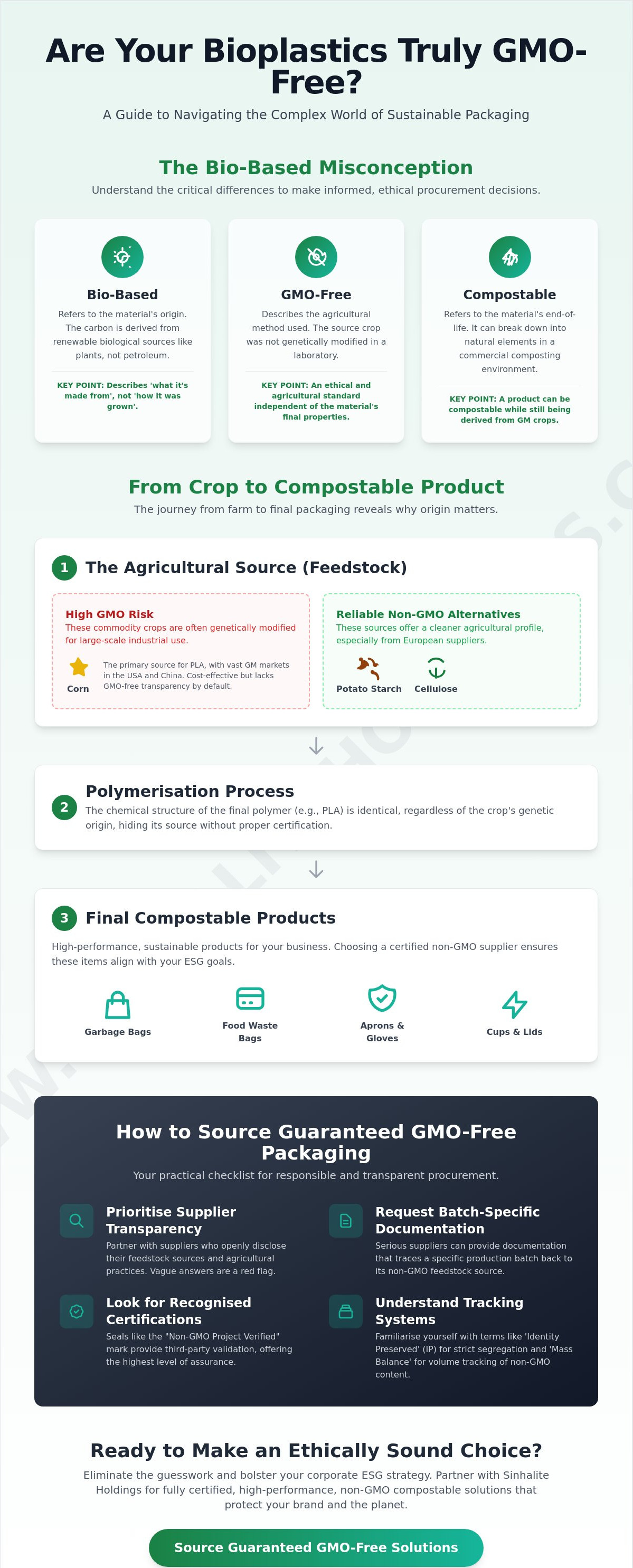
Understanding the terminology is the first step toward responsible procurement. Bioplastics are defined as materials derived from renewable biological sources, such as corn, sugarcane, or cellulose, rather than finite petroleum reserves. However, a common misconception exists that because a material is 'bio-based', it's inherently free from genetic modification. The reality is that 'bio-based' simply describes the origin of the carbon within the polymer. It doesn't dictate the agricultural methods used to grow the feedstock.
When businesses ask are all bioplastics GMO-free, they're often surprised to learn that many industrial-scale bioplastics are sourced from commodity crops. While these materials offer a significant reduction in carbon footprint compared to traditional plastics, they don't automatically align with non-GMO standards. This distinction is vital for organisations that view sustainability as a holistic commitment encompassing both material science and agricultural integrity.
To better understand this concept, watch this helpful video:
In 2026, the industry relies on the 'Identity Preserved' (IP) system to maintain clarity. This rigorous tracking protocol separates genetically modified (GM) and non-GM crops throughout the industrial processing chain. It's also vital to recognise that compostability and GMO-free status are independent variables. A compostable caddy bag or shopping bag can be fully biodegradable while still being derived from GM feedstocks. Choosing one doesn't automatically guarantee the other.
The Chemistry vs. The Crop
The polymerisation process creates a final material where the chemical structure is identical, regardless of whether the source plant was genetically modified. Polylactic Acid (PLA), which holds a 29% market share in 2026, illustrates this clearly. Because the final plastic doesn't contain detectable genetic material, many producers default to commodity GM corn to achieve the scale and cost efficiency required for global supply chains. This makes it difficult to distinguish the origin without specific certification.
Why GMO-Free Status Matters for ESG
Choosing GMO-free sourcing is a proactive step for organisations looking to bolster their corporate ESG strategies. It links packaging choices directly to broader biodiversity goals by supporting agricultural practices that avoid transgenic crops. Staying informed about innovations in bioplastic technology 2026 allows businesses to identify suppliers who prioritise transparency. This level of detail ensures that items like food roller bags or garbage bags meet both functional requirements and ethical standards.
Identifying GMOs in the Supply Chain: From GM Corn to PLA
Identifying the source of your packaging requires looking beyond the polymer name and into the global agricultural markets. Polylactic Acid (PLA) currently stands as the most prevalent bioplastic, yet its production heavily relies on the vast bioplastics from GM corn markets in the United States and China. This industrial reliance explains why the question are all bioplastics GMO-free remains a central concern for modern procurement. Fortunately, the European market provides greater access to non-GMO alternatives such as potato starch, sugar beet, and cellulose, which offer a cleaner agricultural profile.
Mater-Bi technology represents a significant step forward by utilising non-GM vegetable oils and starches to create high-performance films that don't compromise on durability or strength. To manage these complex supply chains, many manufacturers adopt a "mass balance" approach, which is a bookkeeping method used to track the volume of non-GMO content throughout the manufacturing process to ensure accurate reporting for large batches. This system allows for transparency even when materials from various sources are processed in the same facility.
Feedstocks at High Risk for GMOs
Industrial bioplastic production is currently dominated by GM corn and soy due to their abundance and established infrastructure. Even when the primary plant source is non-GM, the fermentation process used to create lactic acid can sometimes involve genetically modified microorganisms. This adds another layer of complexity for businesses seeking absolute purity in their material sourcing and highlights the need for rigorous supplier vetting.
The Rise of Non-GMO Alternatives
Innovation is driving a shift toward second-generation feedstocks, such as agricultural waste and corn husks, which bypasses the GM seed debate entirely. High-quality compostable household Clingfilm can now be engineered from these non-GM starches, providing a responsible alternative for food service and retail. By choosing suppliers who prioritise these advanced feedstocks, organisations ensure their transition to a circular economy is built on ethical foundations. Explore our range of certified compostable solutions to see how these innovations translate into practical, scalable products for your organisation.
How to Source Guaranteed GMO-Free Compostable Packaging in 2026
Securing a truly sustainable supply chain requires moving beyond generic "eco-friendly" claims. Because we've established that the answer to are all bioplastics GMO-free is often no, procurement teams must adopt more rigorous verification protocols. Prioritising suppliers who provide full supply chain transparency and batch-specific documentation is the most effective way to ensure your materials align with your environmental standards. This level of detail allows you to trace the journey of your products from the field to the finished film.
When evaluating potential partners, look for the "Non-GMO Project Verified" seal or European equivalents like the "Ohne Gentechnik" label. These certifications provide independent verification that the feedstocks haven't been genetically engineered. Additionally, ensure that every product meets OK compost HOME or TUV Austria standards. These certifications guarantee end-of-life safety, confirming that the material will break down without leaving harmful residues in the soil. Consulting with specialists like Sinhalite Holdings can help you vet the raw material origin of your compostable sacks and liners with confidence.
Critical Certifications to Look For
The TUV Austria "Bio-based" star system is a vital tool for 2026. This system indicates the percentage of renewable content in a product, helping you understand the material's feedstock integrity. In the UK, the Soil Association plays a pivotal role by certifying organic bioplastics. Since organic standards strictly prohibit the use of genetically modified organisms, this certification serves as a reliable proxy for GMO-free status. These labels provide the industrial pragmatism needed to support your visionary sustainability goals.
Questions to Ask Your Packaging Supplier
To ensure your organisation isn't accidentally supporting GM farming, use these direct questions during your next procurement review:
- Can you provide a certificate of analysis for the specific batch of feedstock used in these bags?
- What is the exact geographical origin of the starch or vegetable oils used in this material?
- Does your supply chain utilise an Identity Preserved (IP) system to prevent GM contamination?
- Are any chemicals in compostable plastics used during the processing of this product derived from GM microorganisms?
- What percentage of the final product is derived from second-generation agricultural waste?
By asking these targeted questions, you move the conversation from theory to practical application. This ensures that your transition to compostable solutions is both ethically sound and commercially robust. Taking these steps today reinforces your commitment to a circular economy while protecting your brand from the risks of greenwashing.
Empowering Your Sustainable Packaging Transition
Transitioning to a circular economy requires more than just replacing plastic; it demands a deep understanding of the agricultural roots of your materials. While this guide has clarified that the answer to are all bioplastics GMO-free is nuanced, the path to ethical procurement is clear. By prioritising second-generation feedstocks and rigorous third-party certifications, your organisation can avoid supporting industrial genetic modification while enjoying the performance benefits of modern compostables.
Choosing the right partner is essential for verifying these complex material standards. As a specialist UK supplier, Sinhalite Holdings provides the expert guidance needed for ESG-compliant packaging transitions. We focus on high-performance, responsibly sourced materials that meet strict TUV Austria standards. This ensures your commitment to the environment is reflected in every caddy bag and food roller bag you deploy across your operations.
Explore our range of fully certified compostable packaging solutions and take a proactive step toward a cleaner, greener future for your organisation. Together, we can build a world where high standards of utility and ecological integrity go hand in hand.
Frequently Asked Questions
Is PLA bioplastic always made from genetically modified corn?
No, PLA is not always derived from genetically modified crops, although a significant portion of the global supply originates from GM corn markets in the US and China. Many European producers utilise non-GM feedstocks such as sugar beet or potato starch to meet regional demand for purity. To ensure your material is non-GMO, you must select suppliers who employ Identity Preserved systems to verify and segregate crops throughout the production cycle.
Can a bioplastic be organic if it is not GMO-free?
A bioplastic cannot be certified organic if it involves genetically modified organisms at any stage of its production. Organic standards, including those governed by the Soil Association in the UK, maintain a strict prohibition against GMOs. Consequently, an organic certification provides a reliable guarantee that the raw materials for items like compostable shopping bags are grown using natural agricultural methods without transgenic intervention.
Does the composting process destroy GM DNA in bioplastics?
The high-heat polymerisation process used to manufacture bioplastics typically eliminates all detectable genetic material before the product even reaches the composting stage. While the composting process itself breaks down the material into water, carbon dioxide, and biomass, the question of whether are all bioplastics GMO-free relates to agricultural sourcing rather than final residues. The resulting compost is considered safe and free from transgenic DNA traces.
How can UK businesses verify a "GMO-free" claim on compostable bags?
UK organisations can verify these claims by requesting batch-specific certificates of analysis and looking for recognised seals such as "Non-GMO Project Verified" or the "Ohne Gentechnik" label. These third-party certifications provide the necessary transparency to back up environmental marketing. Partnering with a dedicated supplier ensures your compostable garbage bags and liners are supported by rigorous documentation that aligns with your corporate ESG and biodiversity objectives.


