The most popular reusable sandwich wraps might actually be the least practical choice for a truly hygienic kitchen. Many people find that while they want to reduce their environmental impact, sandwiches often dry out in simple paper or require the constant "faff" of scrubbing greasy beeswax. Finding an effective eco friendly food wrap for sandwiches shouldn't mean sacrificing food quality or convenience for the sake of the planet.
We believe that modern environmental stewardship requires tools that are as high-performing as they are responsible. This guide helps you discover the most practical and truly sustainable alternatives to traditional plastic film that keep your food fresh without the maintenance. You'll learn how to navigate the 2026 regulatory shift, including the EU Packaging and Packaging Waste Regulation that becomes applicable on August 12, 2026, and why certified compostable clingfilm is the superior choice for a leak-proof, zero-waste lunchtime.
Key Takeaways
- Learn to distinguish between misleading labels and verified certifications like EN 13432 to ensure your packaging truly supports ecological restoration.
- Discover why high-performance compostable films provide the most practical eco friendly food wrap for sandwiches by delivering a hygienic, maintenance-free experience.
- Master the double-fold wrapping technique to preserve moisture so your lunch doesn't dry out before you're ready to eat.
- Understand how the 2026 regulatory changes empower you to make informed decisions about the lifecycle of your food storage materials.
- Identify the material properties that allow plant-based wraps to achieve the same reliable adhesion as traditional clingfilm.
The Evolution of Eco-Friendly Food Wrap for Sandwiches
The way we store our daily meals has undergone a radical transformation. For decades, the priority was purely functional. We looked for barriers that kept air out and moisture in. If we examine the history of food packaging, it's clear that the introduction of thin-film plastics like PVC revolutionized convenience. However, this convenience came with a hidden price that we can no longer ignore. We're now witnessing a shift toward an eco friendly food wrap for sandwiches that doesn't just protect the meal but also protects the ecosystem. This evolution reflects a growing understanding that our household choices have global consequences.
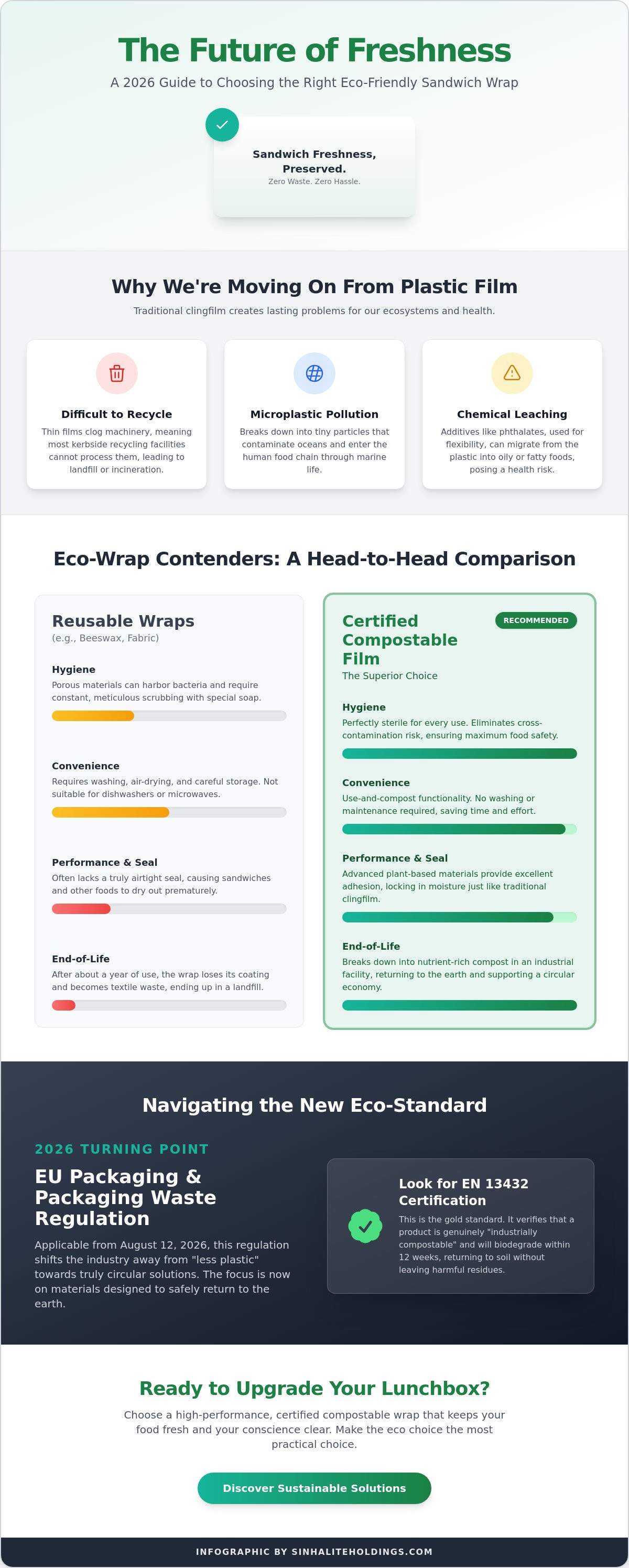
2026 marks a definitive turning point for kitchen essentials. With the EU Packaging and Packaging Waste Regulation becoming generally applicable on August 12, 2026, the industry is moving away from "less plastic" toward truly circular solutions. This means choosing materials designed to return to the earth rather than linger in landfills for centuries. We've moved beyond early alternatives like beeswax wraps, which, while useful, often lack the airtight seal needed for long-term freshness. The new standard involves advanced bioplastics that offer the performance of plastic with the footprint of a plant.
To better understand how these sustainable materials compare to traditional options, watch this helpful video:
Why Traditional Plastic Wrap is Failing Our Oceans
Traditional clingfilm made from PVC and LDPE presents a significant challenge for UK waste management systems. These thin films are notoriously difficult to recycle at the kerbside. Most sorting facilities simply can't process them. Consequently, they often end up in the ocean or as environmental litter. Once in the water, they shed microplastics that eventually enter the UK food chain through marine life. There's also the persistent concern of chemical leaching. Phthalates used to make plastic flexible can migrate into oily or fatty foods during storage. This creates a food safety risk that many families are no longer willing to accept in their homes.
The Rise of the Conscious Lunchbox
Modern consumers are driving a massive surge in demand for zero-waste school and office lunches. It's no longer just about avoiding a single plastic bag; it's about a holistic approach to food storage. UK policy is accelerating this change. As of April 1, 2026, the Plastic Packaging Tax rate has increased to £228.82 per tonne for packaging with less than 30% recycled content. This makes sustainable options more competitive. There's a profound psychological benefit to maintaining a plastic-free kitchen. It fosters a sense of responsibility and forward-looking optimism. By choosing a high-quality eco friendly food wrap for sandwiches, individuals feel empowered to contribute to a sustainable future every single day. We're seeing a transition where the eco choice is finally becoming the most practical choice.
Comparing the Contenders: Reusable vs. Compostable Wraps
Selecting the right eco friendly food wrap for sandwiches requires a balance between environmental goals and daily practicality. While the market offers several paths to sustainability, the primary contenders fall into two categories: reusables and compostables. Each serves a distinct purpose, but their performance in a busy kitchen varies significantly. Reusable options often appeal to those seeking a long-term investment; however, they introduce maintenance rituals that don't always align with modern lifestyles. Conversely, compostable films provide the familiar utility of traditional wrap while ensuring the material safely returns to the earth after a single use.
Hygiene remains a critical factor in this comparison. Fabric-based wraps can harbor bacteria if not cleaned meticulously with cold, soapy water. This is particularly concerning when you're dealing with high-risk ingredients. When considering alternatives, it's helpful to review FDA safety concerns for recycled plastics to understand the complexities of food-contact materials. While reusables avoid plastic, their porous nature means they aren't always the most sterile choice for every meal. The cost-per-use of a reusable wrap might seem lower over a year, but this calculation often ignores the hidden environmental cost of the water and detergent required for daily washing.
Beeswax and Cloth Wraps: The Pros and Cons
Beeswax wraps are excellent for breathable items like artisanal sourdough or hard cheeses. They offer a charming, tactile experience. However, they struggle with "messy" sandwiches containing tuna, egg, or mayonnaise. These fillings can stain the fabric and leave odors that are difficult to remove without damaging the wax coating. The "washing up" factor is a genuine hurdle. You can't use hot water, as it melts the barrier. Eventually, even the best-maintained cloth wrap reaches the end of its life, requiring you to strip and re-wax the fabric or dispose of it entirely.
Compostable Clingfilm: The Best of Both Worlds
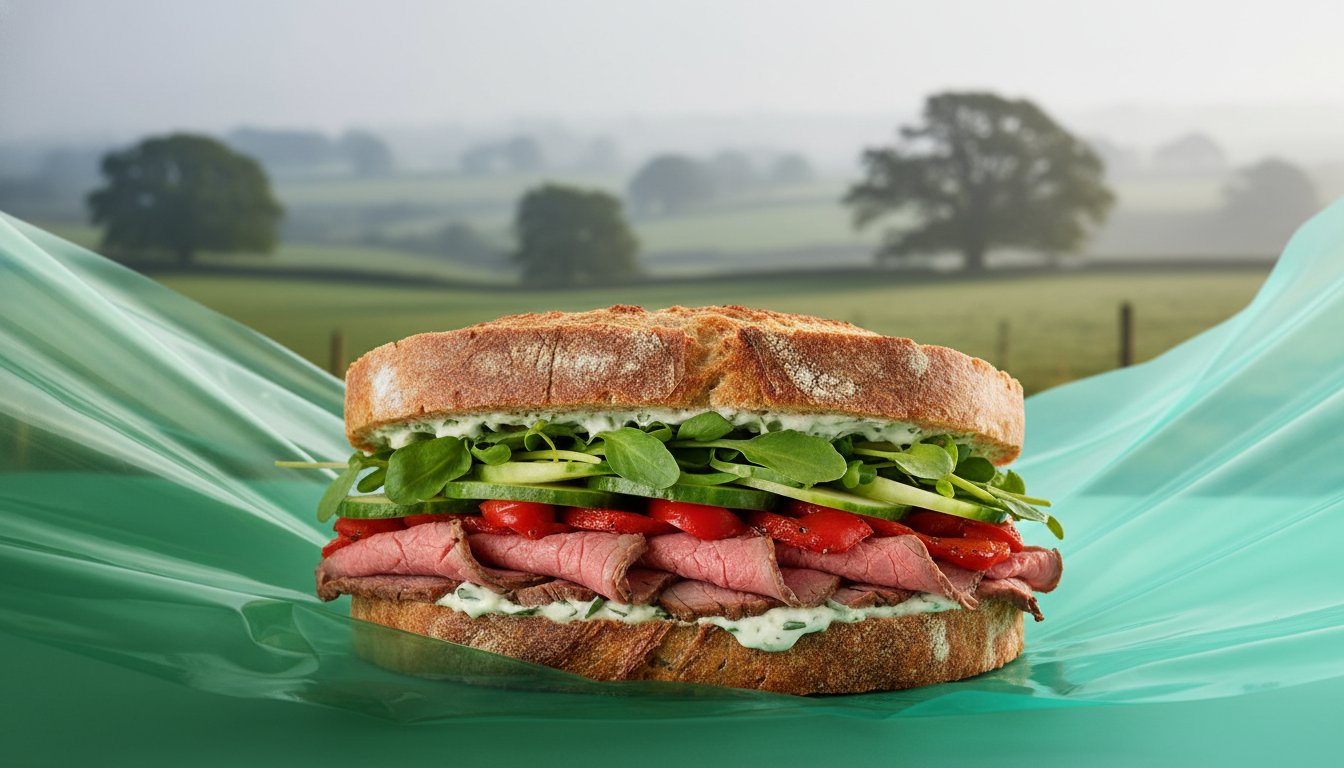
For high-volume households, compostable clingfilm represents a superior operational choice. It maintains the essential "cling" factor that keeps air out and moisture in. This ensures your sandwich doesn't become stale by midday. It eliminates the risk of cross-contamination because each wrap is fresh and sterile. The true advantage lies in its end-of-life cycle. Instead of adding to the "washing up" pile, the film goes directly into your organic waste bin. This process returns vital nutrients to the soil through industrial or home composting facilities. If you're looking for a solution that combines high-performance sealing with zero maintenance, exploring compostable household clingfilm offers a seamless transition to a plastic-free routine. This approach supports a circular economy without complicating your daily schedule.
Key Performance Factors: What to Look for in 2026
Selecting a high-performance eco friendly food wrap for sandwiches requires looking beyond the packaging design and into the material science. In 2026, the most effective wraps utilize a sophisticated blend of PLA (Polylactic Acid), PBAT, and cornstarch. While PLA provides structural integrity derived from renewable sources like corn or sugarcane, it can be quite brittle on its own. PBAT is a biodegradable polymer that provides the necessary flexibility for clingfilm. This specific combination ensures the wrap adheres tightly to your food without tearing, effectively replicating the functional properties of traditional LDPE plastics without the environmental cost.
The balance between breathability and airtightness determines whether your lunch survives the morning. A wrap that is too porous leads to dry bread; conversely, one that is completely non-breathable can result in the "soggy sandwich" syndrome if the fillings are even slightly warm. Modern bioplastics are engineered to offer a semi-permeable barrier. This allows for just enough gas exchange to keep the bread fresh while maintaining a moisture seal that prevents the contents from leaking. Achieving this equilibrium is what separates professional-grade compostable films from basic paper alternatives.
Decoding Eco-Labels and Certifications
Navigating the UK market requires a sharp eye for greenwashing. Many products use the term "biodegradable" as a marketing tool, but this label is often misleading because it doesn't specify a timeframe or required conditions for breakdown. To ensure you're using a truly sustainable eco friendly food wrap for sandwiches, look for third-party certifications that verify the manufacturer's claims.
- OK compost HOME: This TUV Austria certification guarantees the material will break down in a backyard compost heap at lower temperatures within a reasonable timeframe.
- EN 13432: This is the European standard for industrial compostability, requiring the product to disintegrate within 12 weeks in a controlled, high-heat environment.
- Seedling Logo: A marks that indicates compliance with European bioplastic standards, providing a visual cue for authentic, tested materials.
Durability and Strength for Daily Commutes
A wrap must be resilient enough to survive a morning commute inside a backpack or briefcase. Puncture resistance is essential when you're wrapping crusty baguettes or sandwiches with sharp edges. High-quality compostable films are engineered for high tensile strength, meaning they stretch significantly before failing. This durability extends to temperature stability. A reliable wrap maintains its seal and structural integrity when moved from a cold refrigerator to a warm summer picnic. It doesn't become brittle in the cold or lose its "cling" when the temperature rises. This consistency provides peace of mind, ensuring your food remains protected regardless of the environment or the length of your journey.
Practical Guide: Using and Disposing of Your Wrap
Transitioning to an eco friendly food wrap for sandwiches is a functional choice that requires a slight adjustment in technique to achieve professional results. While traditional plastic relies on chemical adhesives, high-quality compostable films utilize physical tension and surface contact to create a seal. This means that how you apply the wrap directly impacts the longevity of your food. By mastering a few simple methods, you can ensure your lunch remains as fresh as the moment it was prepared while fulfilling your commitment to environmental stewardship.
Storage requirements vary based on the structure of your meal. Sliced bread benefits from a tight, airtight seal to prevent starch retrogradation, which causes staleness. Conversely, crusty rolls or baguettes require a wrap that allows for minimal gas exchange so the crust doesn't become chewy. If you find your wrap isn't adhering as expected, it's often due to surface moisture or extreme temperature differences. Ensure your hands and the container or food surface are dry; bioplastics perform best when they can make direct, clean contact with the surface area.
The 4-Step Sandwich Wrap Technique
Achieving a leak-proof seal is a matter of geometry and air management. Follow these steps for the best results:
- Centering: Place your sandwich in the middle of a sheet that provides at least three inches of overhang on all sides.
- The Primary Seal: Bring the top and bottom edges together, folding them over twice to create a "double-fold" seam.
- Hospital Corners: Fold the side edges inward at a 45-degree angle, similar to wrapping a gift, to prevent fillings from escaping.
- Air Expulsion: Gently press down on the wrap before the final seal to remove excess oxygen, which slows down the oxidation of ingredients like avocado or lettuce.
Composting Your Wrap at Home
The true advantage of a certified eco friendly food wrap for sandwiches is its ability to integrate back into the natural cycle. In a home composting environment, these wraps act as a carbon-rich material. For optimal breakdown in the UK climate, ensure your compost heap maintains a healthy balance of nitrogen-rich "green" waste, such as vegetable scraps. While industrial standards like EN 13432 require disintegration within 12 weeks, home composting times can vary based on seasonal temperatures. If you don't maintain a garden bin, these wraps are perfectly suited for your local council food waste caddy. To simplify your transition to a zero-waste kitchen, you can secure our high-performance compostable household clingfilm to start protecting your meals more responsibly today. This systematic approach ensures that every component of your lunchtime routine supports a circular economy.
Why Sinhalite Holdings Leads the Sustainable Wrap Market
Sinhalite Holdings operates with a profound sense of purpose and environmental stewardship. We focus on systemic change by providing tools that make a circular economy accessible to every household. While some competitors prioritize aesthetic reusables, we recognize that high-performance eco friendly food wrap for sandwiches must provide the same utility as traditional materials to be truly effective. Our commitment to 100% certified compostable materials ensures that every product we offer supports environmental restoration without requiring a sacrifice in food safety or convenience. By linking our core values to practical outcomes, we provide a steady and dependable path toward more responsible daily habits.
Our operational philosophy centers on the belief that a transition to sustainable practices should be both achievable and advantageous. We don't just offer an alternative; we provide a superior functional experience. Our performance guarantee ensures that our clingfilm delivers the adhesion and strength necessary for a busy kitchen. This reliability builds confidence, making the move away from traditional plastics a logical and seamless choice for families across the UK. It's about providing industrial pragmatism for the modern home.
Innovation Rooted in Responsibility
True innovation links a philosophical "why" to a functional "how." Our compostable clingfilm provides an airtight seal that rivals conventional plastic, ensuring that your meals remain fresh and hygienic throughout the day. This performance is critical for anyone transitioning to a zero-waste lifestyle. We also produce compostable food roller bags, which offer the durability needed for bulk meal prep and diverse storage needs. These solutions allow you to maintain your existing routines while significantly reducing your environmental footprint. Our products are designed to be tough, versatile, and entirely compatible with natural processes.
Your Partner in Environmental Stewardship
Choosing the right partner for your kitchen essentials is a significant step toward a better future. We act as an authoritative expert, guiding households through the complex landscape of sustainable packaging with calm confidence. By selecting our professional-grade eco-solutions, you directly support the UK’s transition to a plastic-free future. This choice reduces your household carbon footprint by replacing fossil-fuel-based films with materials that return vital nutrients to the soil. We believe positive change is achievable through the use of tangible, high-quality tools. You can explore the Sinhalite range of compostable sandwich wraps and kitchen essentials to find the most practical eco friendly food wrap for sandwiches for your daily needs. Our steady approach ensures that your transition to responsible practices is both successful and lasting.
Securing a Greener Future for Your Kitchen
The transition to a more responsible lunchtime is both achievable and essential for a sustainable future. We've seen how modern material science allows us to replace traditional plastics with high-performance bioplastics that don't compromise on freshness or hygiene. By selecting a certified eco friendly food wrap for sandwiches, you ensure that your daily habits support a circular economy where waste becomes a resource. This shift represents a profound commitment to environmental stewardship that begins in the heart of your home.
Our products are TUV Austria OK compost HOME Certified, which means they're designed to break down safely in domestic composting environments. Because our range is 100% Plastic-Free and Vegan Friendly, you can trust that your food storage aligns with the highest ethical standards. We provide UK-wide delivery on all sustainable kitchen essentials to make this transition as seamless as possible for every household. Performance and purpose now go hand in hand.
Switch to a greener lunch with our Certified Compostable Clingfilm
Every small choice you make contributes to a significant systemic change. We're proud to be your steady ally as you build a cleaner, more visionary kitchen for the generations to come.
Frequently Asked Questions
Is compostable sandwich wrap as strong as regular cling film?
High-performance bioplastics match the functional strength of traditional LDPE film. These materials utilize a sophisticated blend of polymers that provide the necessary stretch and puncture resistance to secure your meal. This ensures your eco friendly food wrap for sandwiches won't tear when stretched over container edges or crusty bread; it provides a reliable barrier that maintains its integrity during transit.
Can I put compostable food wrap in my garden compost bin?
You can place these wraps in a garden bin only if they carry the "OK compost HOME" certification. While industrial-grade materials require the high heat of municipal facilities to break down, home-certified films are specifically engineered to disintegrate at lower temperatures. If you're unsure, check the packaging for the TUV Austria home logo to ensure it's compatible with domestic heaps.
How long does it take for eco-friendly sandwich wrap to decompose?
Disintegration typically occurs within 12 weeks in an industrial facility as per the EN 13432 standard. In a domestic UK compost heap, the process usually takes between six and twelve months depending on the seasonal temperature and moisture levels. Maintaining a healthy balance of green and brown waste in your bin accelerates this natural breakdown and returns nutrients to the soil.
Is compostable clingfilm safe for use in the microwave?
Most compostable films are not recommended for high-heat microwave use because bioplastics have lower melting points than traditional PVC. While they're excellent for cold storage and room-temperature transport, excessive heat can cause the material to lose its structural integrity. It's best to transfer food to a microwave-safe container before heating to ensure both food safety and the best performance.
What is the difference between biodegradable and compostable wraps?
The primary difference lies in certification and timeframe. "Biodegradable" is a broad term that lacks a specific legal timeframe for breakdown, whereas "compostable" refers to a material that meets rigorous standards like ASTM D6400 or EN 13432. These certifications guarantee the material will return to the earth as nutrient-rich soil within a set period without leaving toxic residues or microplastics behind.
Do compostable sandwich wraps contain any harmful chemicals or PFAS?
Certified compostable wraps must meet strict safety standards that prohibit harmful concentrations of "forever chemicals" like PFAS. Under the 2026 EU Packaging and Packaging Waste Regulation, all food-contact packaging must comply with rigorous limits on these substances. This ensures your kitchen remains free from the chemical leaching associated with older plastic films, protecting both your health and the environment.
Can I reuse compostable clingfilm if it is still clean?
These films are primarily designed for single-use applications to maintain the highest standards of food hygiene. While it's possible to reuse a clean piece for dry items like nuts or crackers, the material is intended to be composted after its initial use. This process ensures a sterile environment for your eco friendly food wrap for sandwiches while supporting a zero-waste lifecycle through natural disposal.
Does compostable wrap keep bread from going stale as well as plastic?
Modern compostable wrap is engineered to provide an effective moisture barrier that keeps bread fresh for hours. It creates a semi-permeable seal that prevents the starch from drying out while allowing just enough gas exchange to avoid condensation. This balance ensures your lunch remains fresh from the morning prep until the moment you eat; it effectively replicates the protective qualities of plastic.