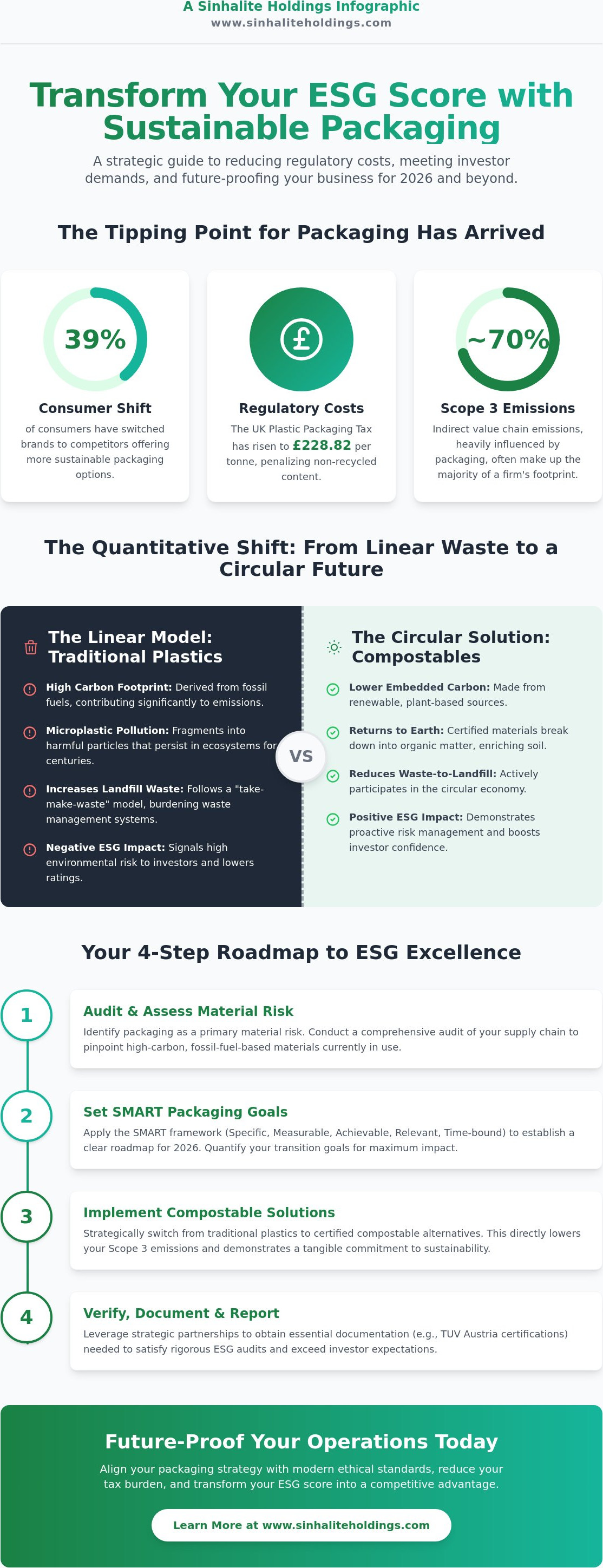
Did you know that 39% of consumers have already switched brands because a competitor offered more sustainable packaging? As 2026 unfolds, the pressure from both the market and regulators has reached a critical point. With the UK Plastic Packaging Tax now at £228.82 per tonne, improving ESG score with sustainable packaging is no longer just an environmental initiative; it's a vital financial and strategic necessity. You likely feel the weight of vague reporting requirements and the difficulty of measuring Scope 3 emissions while investors demand tangible proof of progress.
We understand that this transition can feel complex, but aligning your operations with modern ethical standards is both achievable and advantageous. This guide will show you how to transform your packaging strategy into a measurable ESG asset through strategic goal setting and compostable innovation. We'll provide a clear roadmap for setting packaging goals, examine how compostable solutions reduce environmental impact, and offer the insights needed to secure improved ESG ratings for your investor relations.
Key Takeaways
- Identify why packaging represents the most accessible opportunity to enhance your environmental rating and reduce regulatory tax burdens.
- Learn to evaluate packaging as a material risk and manage the critical impact of Scope 3 emissions on your corporate footprint.
- Quantify the transition from traditional plastics to certified compostables as a primary strategy for improving ESG score with sustainable packaging.
- Establish a clear roadmap for 2026 by applying the SMART framework to your packaging audits and operational goals.
- Discover how strategic partnerships provide the essential documentation needed to satisfy rigorous ESG audit requirements and investor expectations.
Understanding the Link Between Packaging Waste and ESG Ratings
ESG scores serve as a definitive measure of a company's resilience to long-term environmental and social risks. While many operational factors influence these ratings, packaging often represents the most accessible "low-hanging fruit" for improving ESG score with sustainable packaging. It offers a visible, measurable way to demonstrate a shift from the traditional "take-make-waste" linear model toward a truly circular economy. By addressing how products are contained and shipped, businesses can make immediate, impactful changes to their environmental profile.
The urgency for this transition is driven by a tightening regulatory framework within the United Kingdom. As of April 1, 2026, the UK Plastic Packaging Tax has increased to £228.82 per tonne for any plastic packaging that doesn't contain at least 30% recycled content. This makes Sustainable packaging a strategic priority for maintaining profitability and investor confidence. Adopting compostable alternatives isn't just about compliance; it's about leading a visionary change that aligns corporate growth with ecological health.
To better understand this concept, watch this helpful video:
The Environmental Pillar: Beyond Carbon Neutrality
The "E" in ESG goes far beyond simple carbon offsetting. Your packaging choices directly dictate your waste-to-landfill metrics and your contribution to persistent microplastic pollution. Compostable materials provide a functional solution that protects biodiversity and supports soil health. Unlike traditional polymers that fragment into harmful particles, certified compostable materials return to the earth as organic matter. This proactive approach ensures your brand is perceived as a dedicated advocate for a better future rather than a contributor to ecological degradation.
Social and Governance: The Hidden Packaging Metrics
Packaging also plays a vital role in the Social and Governance pillars. From a social perspective, utilizing sustainable materials improves brand trust and demonstrates a commitment to consumer safety. It shows that you value the health of the communities you serve. In terms of governance, transparency in the supply chain is paramount. Relying on verified certifications, such as TUV Austria, provides the necessary documentation for ESG audits. This level of rigor ensures your claims are backed by industrial pragmatism and prevents the significant reputational risks associated with greenwashing. By choosing compostable solutions, you provide the tangible tools needed to align your operations with modern ethical standards.
Evaluating Materiality: How Sustainable Packaging Impacts Your Reporting
Materiality assessments are the foundation of any robust ESG strategy. They identify which environmental and social factors genuinely influence your company's value and operational longevity. For businesses handling physical goods, packaging is rarely a peripheral concern; it's a primary material risk. By improving ESG score with sustainable packaging, you address a highly visible aspect of your operations that investors and regulators scrutinize. Replacing high-carbon, fossil-fuel-based plastics with compostable alternatives demonstrates a proactive commitment to risk mitigation and long-term viability.
Scope 3 Emissions and the Supply Chain
Many organisations struggle to reduce their Scope 3 emissions effectively. Scope 3 emissions are the indirect value chain impact that often constitutes 70% of a firm's footprint. Since your supplier's carbon intensity becomes your own, the materials you procure for daily tasks are critical. Switching to compostable consumables, such as plant-based clingfilm or caddy bags, significantly lowers the "embedded carbon" of your operations. This strategy aligns with EPA guidelines on sustainable packaging regarding life-cycle management and responsible sourcing.
Waste Diversion Targets and Circularity
Circularity is now a baseline reporting requirement rather than a secondary goal. Setting measurable targets for diverting food-soiled packaging from incineration is a practical way to meet these demands. Traditional plastics contaminated with organic matter are notoriously difficult to recycle and often end up in landfills. Compostable liners and wraps simplify this process by allowing both the packaging and the food waste to be processed together in anaerobic digestion (AD) facilities.
This synergy transforms a waste management challenge into a circular success story. Using specific data from these transitions helps satisfy Task Force on Climate-related Financial Disclosures (TCFD) reporting requirements. It provides the quantitative proof of progress that institutional investors now expect. When you track the reduction in plastic tonnage and the increase in organic waste diversion, you create a compelling narrative of operational excellence. This methodical approach ensures that your sustainability goals are not just aspirational but are grounded in tangible, auditable results that strengthen your market position.
The Quantitative Shift: Plastic vs. Compostable Alternatives in ESG Terms
Transitioning from traditional low-density polyethylene (LDPE) to compostable biopolymers represents a fundamental shift in corporate reporting. Traditional plastics carry a heavy environmental tax that extends far beyond the initial transaction. In contrast, improving ESG score with sustainable packaging involves selecting materials that integrate seamlessly with natural cycles. While LDPE remains cheap to produce, its long-term cost includes environmental remediation and rising waste disposal levies. Businesses must look beyond the initial purchase price to understand the full cost of compostable bags vs plastic for business in their ROI analysis.
Reputational integrity is equally vital to your governance score. Using non-certified "degradable" plastics often leads to accusations of greenwashing, which can devastate an ESG rating. Investors look for transparency and adherence to best practices for ESG goals in packaging. Relying on vague claims without scientific backing creates a governance liability that modern audits will quickly expose. Choosing certified compostable solutions ensures that your environmental claims are substantiated by rigorous testing and international standards.
Performance Standards and ESG Reliability
Durability is a core sustainability metric. If a bag fails and spills its contents, it creates additional waste and operational delays. Sinhalite's puncture-resistant sacks are engineered to provide industrial-grade strength, ensuring that green goals don't compromise daily efficiency. This reliability is backed by OK compost HOME and INDUSTRIAL certifications. These labels provide the verifiable data required for rigorous ESG audits. They prove that your materials meet high standards of utility and ecological safety, allowing you to report progress with absolute confidence.
Investor Expectations for Plastic Reduction
Institutional investors are increasingly tracking "plastic-free" milestones as we move through 2026. There's a clear correlation between reduced plastic reliance and lower ESG risk premiums. For instance, switching to compostable food roller bags in commercial settings provides a tangible data point for plastic reduction targets. It demonstrates a commitment to systemic change. By replacing fossil-fuel-based consumables with plant-based alternatives, companies signal to the market that they're prepared for a low-carbon future. This proactive stance effectively de-risks your operations in the eyes of shareholders and positions your brand as a leader in responsible innovation.
Step-by-Step: Setting Corporate Sustainability Goals for Your Packaging Strategy
Setting corporate sustainability goals requires a methodical approach that moves beyond high-level philosophy into practical, industrial application. By improving ESG score with sustainable packaging, businesses can provide the transparent, auditable data that 2026 investors demand. This process begins with internal alignment and ends with results that satisfy both ethical standards and financial reporting requirements. It's about bridging the gap between a visionary outlook and the tangible tools needed to reach it.
Phase 1: The Audit and Baseline
Quantifying your current impact is the essential first step. You must conduct a comprehensive baseline packaging audit to identify high-impact plastic usage across all departments. This involves calculating your annual plastic tonnage and identifying "problematic" materials, such as traditional films that hinder food waste recycling. By mapping your current waste streams, you can pinpoint exactly where leakage occurs. This data-driven foundation allows you to replace high-carbon materials with functional, compostable alternatives that support a circular economy.
Phase 2: Defining SMART Milestones
Applying the SMART framework ensures your packaging goals are Specific, Measurable, Achievable, Relevant, and Time-bound. For example, a company might commit to: "Transition 100% of kitchen cling film to compostable alternatives by Q4 2026." Aligning these milestones with the UN Sustainable Development Goals, particularly Goal 12 for Responsible Consumption and Production, adds global weight to your local efforts. Setting interim targets allows you to demonstrate consistent ESG progress to board members while establishing clear KPIs for waste diversion and carbon footprint reduction.
Phase 3: Implementation and Monitoring
Successful implementation depends on selecting certified partners to ensure your supply chain maintains its integrity. Utilizing digital tracking tools allows you to monitor the real-time impact of your transition on overall ESG scores. Effective monitoring requires quarterly data reviews to adjust for supply chain fluctuations. Engaging stakeholders across procurement, marketing, and operations ensures total buy-in, making the transition a collaborative success. This steady, reassuring pace of change builds a persuasive narrative of corporate responsibility that resonates with both consumers and shareholders.
If you're ready to begin your transition and secure your 2026 targets, explore our range of certified compostable packaging solutions to find the right materials for your audit requirements.
Future-Proofing Operations: Partnering for Long-Term ESG Excellence
Achieving excellence in corporate responsibility is not a static milestone but a continuous process of refinement and adaptation. As your business works toward improving ESG score with sustainable packaging, the role of your supply chain partners becomes increasingly critical. Expert suppliers do more than just provide products; they offer the essential documentation and verified certifications required for rigorous ESG audits. This transparency ensures that your environmental claims are resilient against scrutiny and aligned with international reporting standards.
Moving beyond basic bag replacements allows your organisation to address more complex waste streams. Innovating with specialised solutions, such as compostable clingfilm and heavy-duty sacks, demonstrates a sophisticated approach to material management. For firms looking to deepen their implementation, consulting our commercial compostable cling film UK strategy guide provides a comprehensive framework for 2026 and beyond. Sinhalite Holdings remains dedicated to supporting UK firms as they navigate these transitions, providing the tangible tools needed to turn visionary goals into operational reality.
Continuous Improvement in Sustainable Packaging
ESG is a journey that requires consistent stewardship rather than a single intervention. Annual goal reviews are necessary to ensure your packaging strategy remains effective as your business scales. Staying ahead of UK environmental legislation, including anticipated changes in 2027, prevents reactive decision-making and protects your market position. Establishing robust feedback loops between waste management teams and procurement departments ensures that the materials you buy actually fit your local disposal infrastructure. This methodical approach ensures that improving ESG score with sustainable packaging remains a core driver of your long-term value.
The Visionary Partner Advantage
Choosing a visionary partner gives your business a distinct advantage in a competitive market. We integrate modern innovation with natural processes to deliver products that never sacrifice utility for the sake of sustainability. Our commitment ensures that durability and strength are maintained throughout your eco-transition, providing reliable performance in demanding commercial environments. It is possible to protect the planet while maintaining high operational standards. We invite you to align your operations with modern ethical standards with Sinhalite and secure a more responsible future for your brand.
Securing Your 2026 ESG Vision through Strategic Innovation
The transition toward a circular economy represents a fundamental shift in how businesses manage their environmental footprint. By identifying packaging as a material risk and setting SMART milestones, your organisation provides the auditable data that institutional investors demand. This methodical approach ensures that operations remain resilient against tightening UK regulations and the rising costs of traditional plastic waste. Packaging is no longer a peripheral concern; it's a strategic lever for long-term growth and corporate integrity.
Sinhalite Holdings provides the tangible tools needed for improving ESG score with sustainable packaging. We specialise in OK compost HOME certified materials and pioneer PBAT and Mater-Bi technologies to ensure that durability is never sacrificed for ecological health. Our team offers dedicated UK-wide support for commercial sustainable transitions, helping you navigate the complexities of Scope 3 reporting with absolute confidence. It's time to align your corporate values with practical, industrial solutions that deliver measurable results.
Partner with Sinhalite Holdings to achieve your 2026 ESG goals and lead your industry toward a more responsible future. We believe that positive change is entirely achievable when you have a steady, dependable ally by your side.
Frequently Asked Questions
How does sustainable packaging directly improve my ESG score?
Adopting responsible materials directly enhances the Environmental (E) pillar by reducing waste-to-landfill metrics and lowering carbon intensity. Improving ESG score with sustainable packaging provides investors with tangible proof of risk mitigation. It also strengthens the Governance (G) pillar by demonstrating supply chain transparency and adherence to international safety standards. These measurable improvements signal to the market that your business is prepared for a low-carbon economy.
What are the most important certifications to look for in compostable packaging?
You should prioritise TUV Austria’s OK compost HOME and INDUSTRIAL certifications. These labels ensure that materials break down safely without leaving persistent microplastics or toxic residues. These verified standards provide the auditable data required for ESG reporting. Relying on recognised certifications protects your brand from the reputational risks associated with unsubstantiated environmental claims and ensures compliance with 2026 regulatory frameworks.
Can switching to compostable bags help with Scope 3 emission reporting?
Yes, switching to plant-based materials significantly reduces your Scope 3 emissions. Since these indirect emissions often constitute 70% of a firm's total footprint, your supplier's carbon intensity is vital. Replacing fossil-fuel-based plastics with compostable alternatives lowers the embedded carbon within your value chain. This transition provides a clear, data-driven narrative for your annual sustainability reports and satisfies investor demands for comprehensive carbon management.
Is compostable packaging durable enough for commercial use in 2026?
Modern compostable technology offers the same level of utility and strength as traditional plastics. Innovations in PBAT and Mater-Bi blends have created puncture-resistant sacks and high-performance clingfilm designed for rigorous industrial environments. These products maintain their integrity during transport and storage. You don't have to sacrifice operational efficiency to meet your green goals; high standards of durability remain a baseline expectation for professional-grade compostables.
How do I set realistic sustainability goals for a small to medium-sized UK business?
Start by conducting a baseline audit to quantify your current annual plastic tonnage. Apply the SMART framework to set specific, measurable targets, such as transitioning 100% of your kitchen consumables to compostable versions by a set date. This methodical approach allows you to demonstrate consistent progress to stakeholders. Focus on high-impact areas where plastic reduction also avoids the £228.82 per tonne UK Plastic Packaging Tax.
What is the difference between biodegradable and compostable in ESG terms?
The term "biodegradable" is often too vague for rigorous ESG reporting because it lacks a defined timeframe or specific environmental conditions. In contrast, "compostable" materials must meet strict standards to break down into organic matter within a set period. Using certified compostable products prevents greenwashing and ensures your governance data is reliable. Investors prefer the precision of compostable certifications over the ambiguous claims associated with general biodegradability.
Will investors penalise my company for the higher cost of sustainable packaging?
Institutional investors increasingly view sustainability as a primary indicator of long-term financial resilience. While some materials may have a higher unit price, 74% of consumers are willing to pay more for sustainable products according to a 2025 industry report. Furthermore, the reduction in regulatory taxes and the improvement in brand loyalty often create a positive ROI. Investors typically reward companies that de-risk their operations through proactive environmental stewardship.
How can I avoid greenwashing when reporting on my packaging goals?
Avoid broad, emotive language and focus on substantiated, third-party data. Use specific metrics, such as the exact tonnage of plastic diverted from landfills through improving ESG score with sustainable packaging initiatives. Always cite recognised certifications like OK compost HOME to validate your claims. Transparency is the foundation of ESG integrity; providing clear evidence of your material choices ensures your reporting remains beyond reproach during professional audits.