With the UK Plastic Packaging Tax reaching £228.82 per tonne this April, the financial burden of traditional plastic has officially outpaced its convenience. You've likely faced the operational headache of alternatives that fail to stick or leave your team confused about the difference between industrial and home composting certifications. It's frustrating when your commitment to the environment is undermined by products that simply don't perform under pressure or fail to meet rigorous audit requirements. We believe that choosing a more responsible path shouldn't mean sacrificing the efficiency of your professional kitchen.
This guide demonstrates how implementing high-performance commercial compostable cling film UK can secure your regulatory compliance and significantly reduce your carbon footprint for 2026 ESG reporting. We'll explain the practical impact of the latest landfill tax rates and the necessity of BS EN 13432 certification for passing modern audits without disruption. You'll discover a clear strategy for integrating compostable solutions that meet the highest standards of durability and strength while supporting a truly circular economy.
Key Takeaways
- Identify why traditional PVC and PE wraps have evolved into operational liabilities under the 2026 UK carbon audit framework.
- Examine how plant-based innovations provide the essential stretch and adhesion required for high-volume professional kitchens.
- Evaluate the performance of commercial compostable cling film UK to ensure your food preservation standards don't fall below professional requirements.
- Gain clarity on modulated EPR fees and the logistical benefits of aligning with industrial composting standards.
- Learn to implement high-performance compostable solutions that bridge the gap between industrial pragmatism and ecological responsibility.
The Shift in UK Food Service: Why Plastic Film is Now a Liability
Traditional plastic film is no longer a neutral choice for British hospitality. As we approach the mid-point of the decade, the presence of conventional PVC and PE wraps in a professional kitchen signals a disconnect from modern environmental stewardship. These materials, once the industry standard for food preservation, have become operational liabilities that complicate waste management and hinder corporate responsibility goals. The transition to commercial compostable cling film UK is not merely an aesthetic choice; it is a fundamental shift in how businesses manage their environmental footprint.
For UK businesses, the 2026 carbon audit is a pivotal moment. Single-use plastic wraps are now scrutinized as significant contributors to Scope 3 emissions, making them a primary target for reduction. Consumers in the British hospitality sector are increasingly observant, often demanding transparent, plastic-free supply chains before they commit their loyalty. What was once considered an optional green initiative is now an essential component of a resilient business strategy. Integrating responsible storage solutions allows your brand to lead with integrity while maintaining the high standards of food safety your clients expect.
To see these innovations in action within a professional environment, watch this helpful overview:
The Environmental Cost of Traditional Cling Film
The legacy of oil-based films is one of persistent microplastic contamination. In commercial waste streams, traditional cling film often fragments into smaller particles that bypass filtration systems and enter the wider ecosystem. Because these films are frequently contaminated with food residue, they are notoriously difficult to recycle, often ending up in landfill despite a business's best efforts. This reality directly conflicts with the UK's 2050 Net Zero commitment, which requires a systemic reduction in fossil-fuel-derived products. By Understanding the Technology behind plant-based alternatives, businesses can move toward materials that harmonize with natural processes rather than disrupting them.
Why Visionary UK Businesses are Making the Switch Now
Proactive leaders recognize that waiting for total regulatory bans often results in rushed, costly transitions. By adopting commercial compostable cling film UK today, you enhance your brand reputation as a responsible innovator. This early adoption prepares your operations for increasingly strict local authority waste management protocols that prioritize organic waste diversion. Aligning your procurement with the future of sustainable packaging in the UK ensures your kitchen remains compliant, efficient, and respected in an evolving market. It's a logical step that links your core values to practical, high-performance outcomes.
What is Commercial Compostable Cling Film? Understanding the Technology
Understanding the science behind commercial compostable cling film UK is essential for procurement managers who prioritize both performance and environmental responsibility. Unlike traditional plastics derived from crude oil, these films are engineered from renewable, plant-based resources. They're designed to disintegrate and biodegrade fully within specific composting environments, leaving no toxic residues behind. By 2026, bioplastic technology has advanced to a point where these films mimic the molecular structure of traditional polymers, providing the elasticity and "cling" required for professional kitchen use.
The term "biodegradable" often causes confusion in the British market. It's a broad term that implies a material will eventually break down, but it lacks a specific timeframe or safety standard. In contrast, "certified compostable" is a technical distinction that ensures the material breaks down within a set period under controlled conditions. Selecting a high-quality commercial compostable cling film UK involves recognizing how these plant-based blends perform in high-moisture environments, ensuring your food stays fresh without the environmental cost of fossil-fuel plastics.
Breaking Down the Materials: PLA, PBAT, and Mater-Bi
High-strength films often utilize a sophisticated blend of materials like polylactic acid (PLA) and polybutylene adipate terephthalate (PBAT). Mater-Bi®, a leading brand of bioplastic, integrates corn starch and vegetable oils to create a film that is both durable and flexible. These components allow for a level of "breathability" that traditional PVC often lacks, which can help regulate moisture and extend the shelf life of fresh produce. Many professionals still ask: Do compostable bags and films contain plastic?. The answer lies in the distinction between persistent fossil-fuel polymers and these innovative, plant-based alternatives.
Certifications Every UK Procurement Manager Must Know
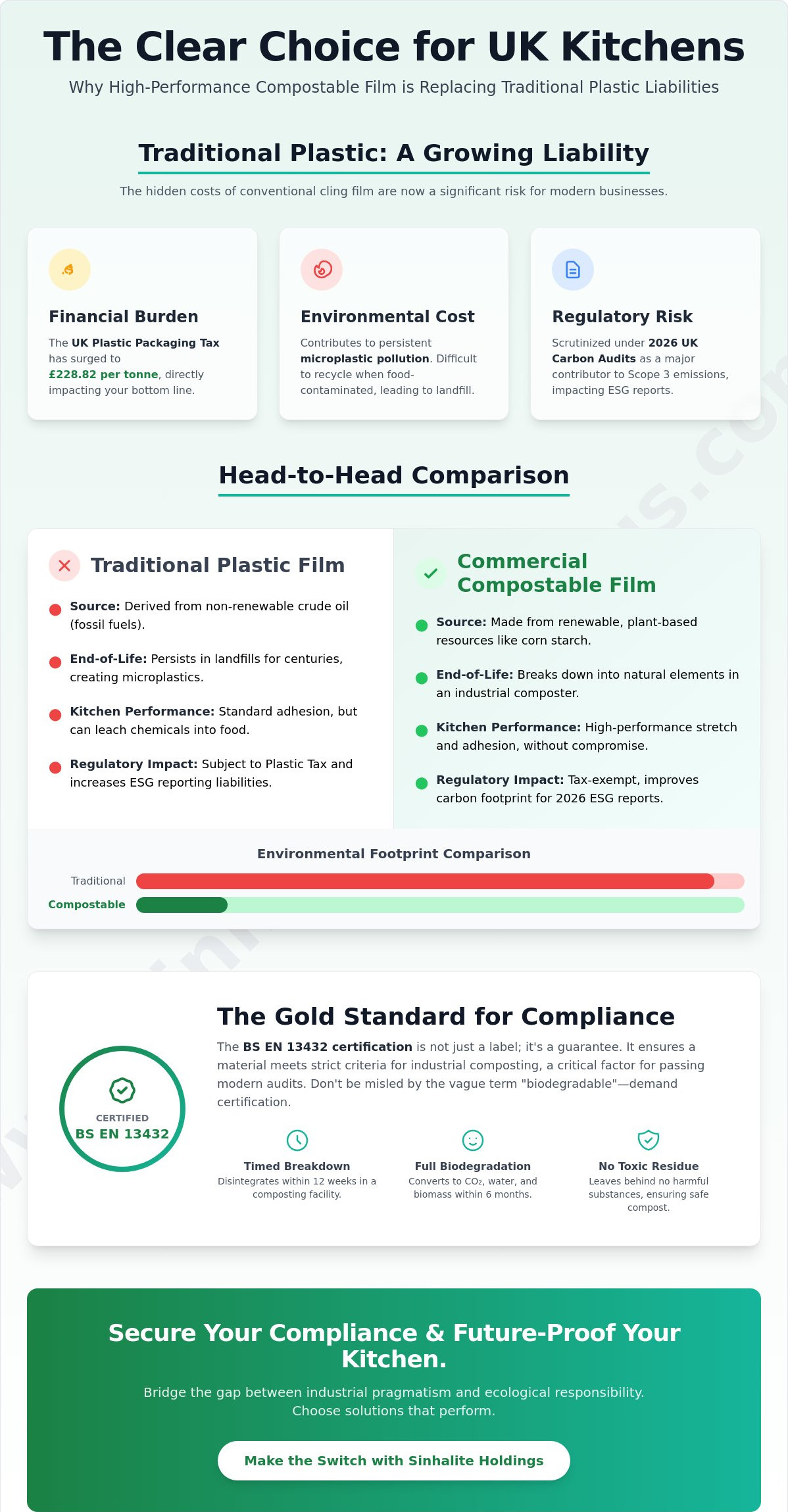
To maintain integrity in your supply chain, you must look for the BS EN 13432 standard. This is the definitive benchmark for industrial compostability in the UK. It guarantees that the wrap will break down in a commercial facility within 12 weeks. You should also distinguish between "OK compost HOME" and "TUV Austria Industrial" certifications. While home-compostable films are excellent for smaller operations, industrial certification is typically required for large-scale commercial waste collections. Always verify the specific certification number provided by your supplier to ensure you are investing in genuine innovation. If you're ready to upgrade your supplies, exploring the commercial range from Sinhalite Holdings is a practical starting point for your transition.
Performance Comparison: Compostable vs. Traditional Plastic Film
Achieving operational excellence in a professional kitchen requires tools that perform under pressure without compromising integrity. The shift to commercial compostable cling film UK often brings questions about whether plant-based materials can truly match the utility of fossil-fuel polymers. Modern bioplastic engineering has successfully bridged this gap, offering tensile strength and puncture resistance that withstand the rigours of high-volume food preparation. While traditional PVC film relies on synthetic plasticizers for flexibility, compostable alternatives utilize natural resins to achieve a similar level of durability and protection.
Oxygen Transmission Rates (OTR) are a critical metric for food shelf life that procurement managers must evaluate. Traditional plastic wraps often create a complete barrier that can lead to anaerobic spoilage in certain fresh produce. In contrast, many compostable films possess a slightly higher OTR, which allows for better moisture regulation. This "breathability" is particularly advantageous for extending the life of vegetables and fruits, as it prevents the buildup of condensation that often leads to premature mould growth. By matching the OTR to your specific inventory needs, you can reduce food waste while meeting your sustainability targets.
The 'Stickiness' Factor: How to Use Bioplastic Wrap Correctly
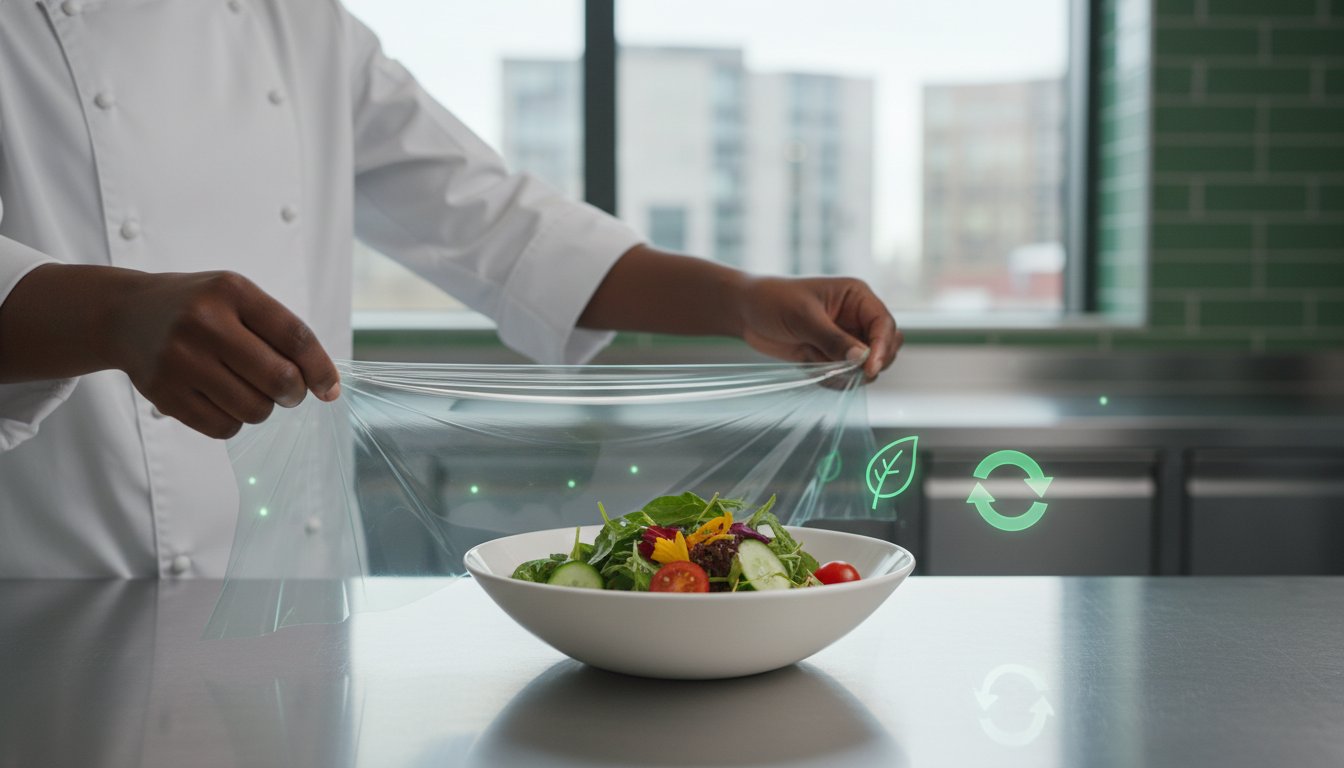
One of the most common hurdles in transitioning to sustainable wrap is the perceived lack of adhesion. Traditional film uses static electricity and chemical additives to "cling," whereas commercial compostable cling film UK relies on molecular cohesion. This means the material performs exceptionally well when applied to itself or smooth surfaces like ceramic and glass. When working with stainless steel gastronorm pans, it's helpful to ensure the rim is dry and to apply a slight stretch to the film. This tension activates the plant-based polymers, creating a reliable, airtight seal that maintains food safety standards throughout the service cycle.
Microwave and Freezer Safety Standards
Safety in extreme temperatures is where plant-based technology truly excels. Most certified compostable films are rated for deep-freeze storage, remaining flexible at temperatures as low as -40°C without becoming brittle or cracking. This prevents freezer burn more effectively than some lower-grade plastic wraps. For reheating, these films offer impressive heat resistance, often safe for microwave use without the risk of chemical migration. Unlike PVC, which can leach phthalates into hot, fatty foods, compostable wraps are derived from non-toxic vegetable sources. This ensures that your commitment to the environment also translates to a higher standard of purity for the food you serve.
- Tensile Strength: Comparable to 12-15 micron traditional film.
- Freezer Performance: Maintains integrity without cracking at sub-zero temperatures.
- Chemical Safety: Free from BPA, phthalates, and persistent microplastics.
- Surface Compatibility: Optimized for glass, ceramic, and self-adhesion.
Navigating UK Regulations and Commercial Disposal Logistics
Operating a professional kitchen in 2026 requires a sophisticated understanding of the UK's evolving regulatory framework. As of 1 April 2026, the Plastic Packaging Tax (PPT) has risen to £228.82 per tonne, impacting any packaging with less than 30% recycled content. While compostable materials like PLA are currently subject to this tax, the strategic value of commercial compostable cling film UK extends far beyond immediate procurement costs. By aligning your operations with organic waste streams, you prepare your business for a future where traditional, non-recyclable films become increasingly expensive to manage and dispose of.
Managing a "closed-loop" system in a high-volume environment depends heavily on staff engagement and clear protocols. Contamination remains the primary challenge for commercial composting facilities; a single piece of traditional PVC film can cause an entire batch of organic waste to be rejected. Training your team to distinguish between film types is essential for maintaining the integrity of your waste stream. We've found that implementing colour-coded disposal stations and clear signage helps kitchen staff make the right choice instinctively, ensuring that your investment in sustainable materials actually reaches its intended destination.
UK Plastic Packaging Tax and Financial Incentives
The financial landscape for packaging has shifted significantly with the full implementation of Extended Producer Responsibility (EPR) fees. In the 2026-2027 period, the base EPR fee for plastic is £423 per tonne. Although compostable films often attract higher fees due to their classification as non-recyclable in standard streams, the long-term ROI is found in waste diversion. With standard landfill tax rates now at £130.75 per tonne, diverting food-contaminated wrap into composting streams offers a logical pathway to reducing overall operational overheads. Proactive adoption is a practical way to explore our certified compostable range and secure your supply chain against future legislative tightening.
Commercial Waste Management: Industrial vs. Home Composting
It's vital for procurement managers to understand that commercial compostable cling film UK typically requires industrial processing to meet decomposition targets. Most professional-grade wraps are certified to the BS EN 13432 standard, meaning they are designed to break down within 12 weeks in a controlled, high-temperature environment. You should verify that your waste collection contract specifically includes "certified compostable packaging" alongside food waste. Many UK Anaerobic Digestion (AD) plants are now optimizing their processes to handle these materials, allowing your business to contribute to the production of nutrient-rich compost or renewable energy rather than contributing to landfill growth.
- Plastic Packaging Tax: £228.82 per tonne for non-compliant materials.
- Landfill Tax: £130.75 per tonne for standard commercial waste.
- Compliance Standard: BS EN 13432 for industrial compostability.
- EPR Base Fee: £423 per tonne for plastic packaging.
Implementing Sustainable Packaging with Sinhalite Holdings
Transitioning to a circular business model is a journey that requires a dedicated partner. At Sinhalite Holdings, we recognize that the move toward commercial compostable cling film UK is a significant operational decision for hospitality and catering leaders. We don't just provide products; we offer bespoke supply solutions tailored to the unique demands of high-volume kitchens. By choosing a partner focused on environmental stewardship, you ensure your business remains at the forefront of the UK's green transition while maintaining the durability and performance your team expects.
Integrating responsible packaging into your broader ESG and CSR strategy is a powerful way to communicate your values to stakeholders. Modern investors and consumers prioritize brands that demonstrate a clear commitment to systemic change. By replacing traditional plastics with certified compostable alternatives, you provide tangible proof of your dedication to a better future. This proactive approach helps mitigate the risks associated with evolving regulations while positioning your brand as a visionary leader in the British hospitality sector.
Visionary Partnership for a Circular Economy
Our commitment to high-performance, non-toxic food storage is the foundation of everything we do. We believe that professional kitchens shouldn't have to choose between operational efficiency and ecological responsibility. Our film is engineered to provide the strength and adhesion required for rigorous commercial use without the harmful chemical residues associated with traditional PVC. To further support your goals, our commercial dispensers are designed to reduce waste and improve kitchen efficiency, ensuring every roll of commercial compostable cling film UK is used to its full potential. This holistic approach supports the UK's transition to a truly circular economy where materials are valued and waste is designed out of the system.
Get Started: Auditing Your Commercial Packaging Needs
The first step toward a seamless transition is a thorough audit of your current plastic usage. You'll need to calculate the volume of film required for your daily operations to ensure a consistent supply chain. We recommend conducting performance trials to see firsthand how our plant-based materials handle your specific menu items and storage conditions. This empirical approach builds confidence among your kitchen staff and ensures a smooth integration into existing workflows. If you're ready to align your operations with modern ethical standards, the next step is simple. You can Contact Sinhalite Holdings for a commercial consultation to discuss your specific requirements and request samples for your next service.
- Volume Assessment: Review your monthly procurement data for traditional wrap.
- Staff Training: Prepare your team for the slight handling differences of bioplastic.
- Trial Period: Test film adhesion on your specific gastronorm and ceramic surfaces.
- Waste Alignment: Confirm your organic waste collection can accept BS EN 13432 materials.
Securing Your Operational Future in the Circular Economy
The transition toward sustainable operations is no longer a distant goal but a present-day necessity for any resilient British business. We've explored how navigating the complexities of the 2026 Plastic Packaging Tax and Extended Producer Responsibility fees requires more than just a change in supplier; it demands a shift toward materials that harmonize with natural systems. By choosing commercial compostable cling film UK, you secure your compliance with BS EN 13432 standards while ensuring your kitchen staff have the high-performance tools they need to maintain food safety and quality. This choice represents a logical step toward linking your operational "how" to your environmental "why."
Our solutions prove that environmental responsibility doesn't require a compromise on utility. With products that are fully EN 13432 certified, PFAS-free, and safe for both microwave and freezer use, your operation can lead the way in the British hospitality sector. We provide the reliable, UK-wide commercial supply needed to make this transition seamless and advantageous for your brand's long-term reputation. It's time to align your daily workflows with your core values of stewardship and innovation. Switch to High-Performance Commercial Compostable Cling Film Today and join a growing community of businesses dedicated to a cleaner, more responsible future.
Frequently Asked Questions
Is commercial compostable cling film as sticky as PVC wrap?
Compostable film provides excellent adhesion through molecular cohesion rather than synthetic plasticizers. While it feels different to the touch, commercial compostable cling film UK creates a reliable seal when applied with slight tension to smooth surfaces like glass or ceramic. It's particularly effective when wrapped around itself to secure gastronorm inserts or prep bowls during busy service periods.
Can I use compostable cling film in a commercial microwave?
Yes, most professional-grade compostable films are safe for microwave use during standard reheating cycles. Unlike traditional PVC, which can leach harmful chemicals into fatty foods when heated, plant-based films maintain their structural integrity without releasing toxic residues. You should always verify the specific temperature rating on the product packaging to ensure it meets your kitchen's specific reheating protocols.
How long does it take for commercial cling film to break down in the UK?
In an industrial composting facility meeting BS EN 13432 standards, the film is designed to disintegrate within 12 weeks. It fully biodegrades into water, CO2, and biomass, leaving no persistent microplastics behind. This process requires the controlled heat and microbial activity found in professional organic waste processing plants currently operating across the UK.
Does compostable wrap help prevent freezer burn on meat?
High-quality compostable wrap is highly effective at preventing freezer burn due to its superior moisture-regulating properties. It remains flexible at temperatures as low as -40°C, ensuring a tight seal that protects protein fibres from dehydration. This natural breathability helps maintain the texture and quality of meat during long-term cold storage better than some low-density plastics.
Is compostable cling film exempt from the UK Plastic Packaging Tax?
No, compostable plastics are currently subject to the UK Plastic Packaging Tax. As of 1 April 2026, the rate is £228.82 per tonne for any packaging that doesn't contain at least 30% recycled content. While this impacts procurement costs, many businesses find the long-term ESG benefits and waste diversion savings justify the investment in responsible materials.
What happens if compostable film ends up in the standard recycling bin?
If compostable film enters the standard plastic recycling stream, it acts as a contaminant and can lead to entire batches of material being rejected. Because it's designed to break down, it cannot be processed alongside traditional PE or PET plastics. You must ensure your team places commercial compostable cling film UK only into dedicated organic waste or industrial composting bins.
Are there toxic chemicals in plant-based commercial wraps?
Plant-based wraps are engineered to be non-toxic and are typically free from PFAS, BPA, and phthalates. They are derived from renewable resources such as vegetable oils and corn starch, making them a safer choice for direct food contact in professional settings. This purity is a key advantage for businesses looking to eliminate chemical migration risks in their food service operations.
Do I need a special dispenser for commercial compostable film?
Most commercial compostable films are compatible with standard professional dispensers, though using a dedicated system can improve efficiency. Because bioplastic can have different stretch characteristics, using a dispenser with a sharp, clean cutting edge prevents snagging and reduces material waste. It's wise to test your current equipment with a sample roll to ensure a seamless integration into your workflow.