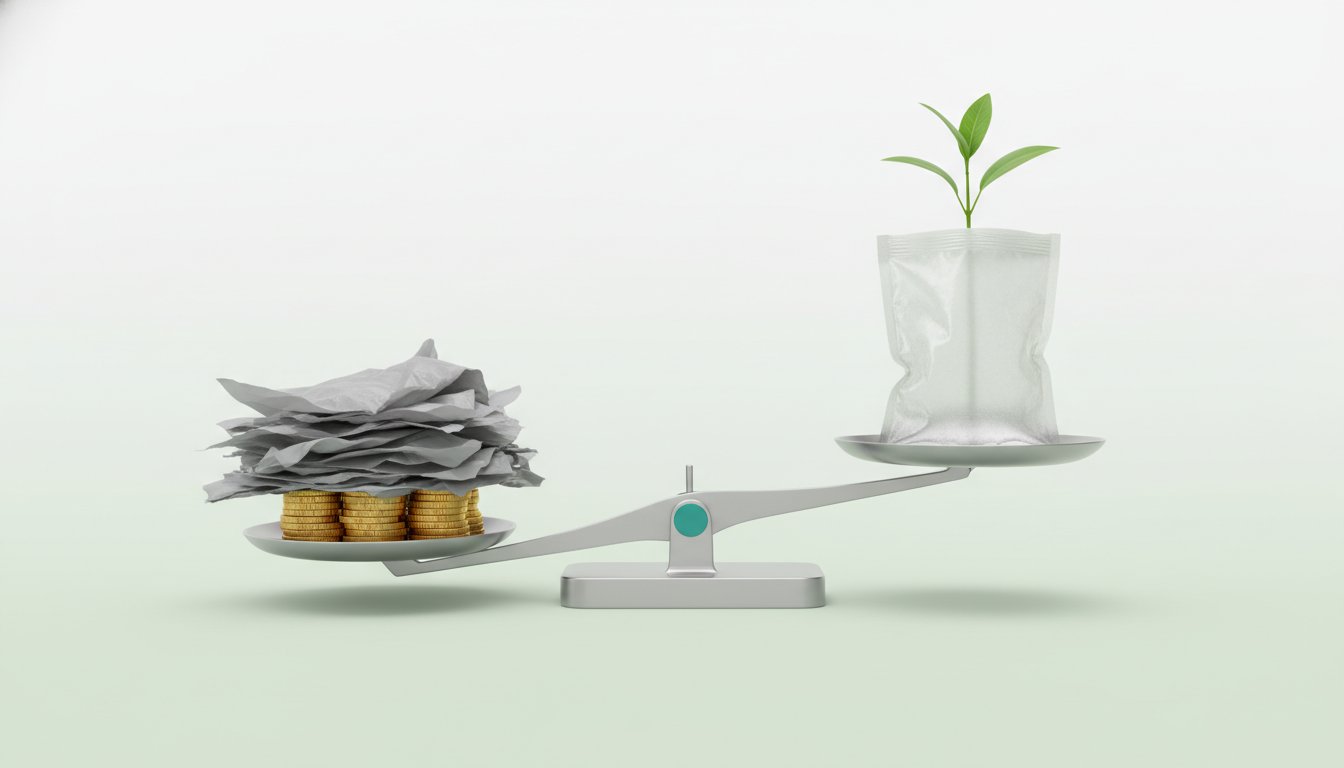
Could your commitment to "cheap" plastic be the very thing eroding your 2026 profit margins? While a standard plastic bag might still carry a lower unit price on paper, the true cost of compostable bags vs plastic for business has shifted dramatically under new UK regulations. As a responsible leader, you likely feel the weight of the £228.82 per tonne Plastic Packaging Tax and the increasing pressure from a public that no longer tolerates single-use waste. Moving toward sustainable stewardship is no longer just an ethical choice; it's a strategic financial necessity.
We understand that making this transition requires more than just good intentions. It requires a clear, evidence-based look at the balance sheet. This article promises to reveal the comprehensive financial justification for switching to compostable packaging by exploring tax savings, waste efficiencies, and brand value. You'll gain a thorough understanding of the 2026 UK environmental standards and how the total cost of ownership often favors the sustainable choice. We will provide a logical breakdown of the current ROI, helping you align your operations with modern ethical standards without sacrificing industrial performance.
Key Takeaways
- Understand how the 2026 UK Plastic Packaging Tax of £228.82 per tonne transforms traditional polythene into a significant financial liability for your operations.
- Evaluate the true cost of compostable bags vs plastic for business by looking beyond initial unit prices to include waste efficiency and long-term brand equity.
- Discover why modern plant-based polymers provide the durability needed for high-performance shopping and garbage bags without compromising on tensile strength.
- Learn how switching to certified compostable solutions can strengthen your ESG reporting and help your business secure more favorable green investments.
- Identify the critical UK-compliant certifications, such as EN 13432, that ensure your packaging procurement meets the highest standards of transparency and environmental integrity.
The Shifting Economics of Commercial Packaging in 2026
The UK packaging landscape has reached a definitive turning point. For decades, traditional polythene dominated the market due to its low upfront price, but that era of "cheap" plastic has ended. Today, the cost of compostable bags vs plastic for business involves a complex calculation that extends far beyond the initial invoice. As a visionary partner, Sinhalite Holdings recognizes that high-performance alternatives, such as compostable shopping bags and caddy bags, are no longer just ethical choices. They're essential tools for operational resilience and financial stability. We believe that a transition to responsible packaging is not only achievable but provides a distinct competitive advantage for those willing to lead.
Relying on petroleum-based plastics now creates a significant financial vulnerability. While the unit price of a plastic bag might seem lower on the surface, the hidden regulatory and social costs are mounting. Forward-thinking companies are moving toward a Total Cost of Ownership (TCO) model. This approach evaluates the entire lifecycle of a product, from initial procurement to final disposal. By choosing biodegradable and compostable bags, businesses can mitigate the risks associated with a rapidly changing legislative environment and volatile oil prices. It's a shift from reactive spending to proactive investment.
To better understand the technical differences and financial implications of these materials, watch this helpful comparison:
The Impact of the UK Plastic Packaging Tax
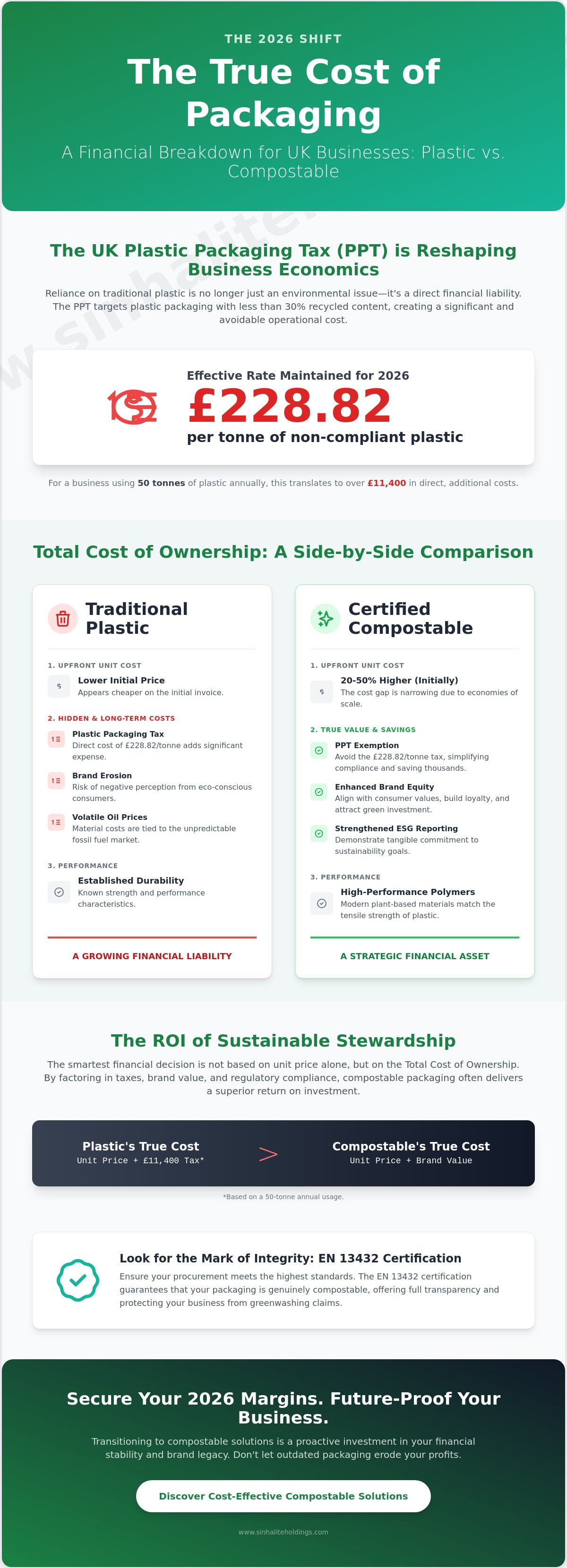
Effective April 1, 2026, the UK Plastic Packaging Tax (PPT) has been maintained at a rate of £228.82 per tonne. This levy specifically targets plastic packaging that contains less than 30% recycled content. While the tax applies to many synthetic polymers, the strategic shift to certified compostable solutions allows businesses to streamline their waste streams and avoid the escalating costs of traditional plastic disposal. For a mid-sized enterprise utilizing 50 tonnes of conventional plastic annually, the PPT alone adds over £11,400 in direct costs. Transitioning to compostable alternatives doesn't just lower this tax burden; it simplifies compliance with increasingly stringent environmental reporting standards.
Consumer Sentiments and the Cost of Inaction
The price of sticking with plastic isn't only found in government levies. It's found in the erosion of your brand's value. Current UK market data indicates a profound shift in consumer behavior, with a vast majority of shoppers actively seeking plastic-free brands. Choosing to remain with traditional materials carries the risk of "brand erosion," where your business is perceived as out of touch with modern ethical standards. Investing in compostable food roller bags or garbage bags is a proactive step toward building customer loyalty. It demonstrates that your operations are aligned with the values of your clientele, turning a necessary packaging expense into a powerful asset for long-term retention.
Direct Cost Comparison: Compostable vs Plastic Unit Prices
When evaluating the cost of compostable bags vs plastic for business, the initial unit price is often the primary focus for procurement teams. It's a reality that plant-based alternatives currently command an upfront premium, with some bio-polymers costing 20-50% more than their petroleum-based counterparts. This price variance exists because the fossil fuel industry has benefited from decades of infrastructure development that bio-polymers are only now beginning to match. However, as we move through 2026, these economies of scale are rapidly narrowing the gap. For industries like hospitality and food retail, where the Ecological and social costs of plastic bags are most visible to the consumer, the price difference has become marginal compared to the value of brand alignment.
The marketplace is shifting toward a model where the higher unit price of compostable materials is offset by their operational advantages. While traditional plastic relies on volatile oil prices, plant-based polymers offer a more stable long-term pricing outlook. We see this most clearly in sectors with high turnover, such as grocery and food service. In these environments, the transition to compostable food roller bags or shopping bags is often the most cost-effective way to meet sustainability targets without disrupting the customer experience. By choosing materials designed for a circular economy, you're investing in a future where your packaging costs don't fluctuate with the global energy market.
Volume Procurement and Bulk Discounts
Strategic sourcing is the most effective way to manage the transition to sustainable packaging. By utilizing wholesale channels, businesses can significantly reduce the per-unit burden of responsible materials. Wholesale partners like Sinhalite Holdings offer streamlined procurement for essential items like compostable shopping bags and caddy bags. Beyond the purchase price, consider the operational efficiency of storage. While plastic is inert, compostable bags require cool, dry conditions to maintain their integrity over a 12-month shelf life. Opting for 'on-a-roll' delivery formats further optimizes this process by reducing shipping volumes and simplifying in-store handling.
The Hidden Costs of Traditional Plastic
The perceived savings of "cheap" plastic disappear when you factor in the backend of the supply chain. UK businesses are facing a steady climb in waste collection fees for non-recyclable materials. Landfill levies continue to rise as the government incentivizes carbon reduction. Plastic disposal fees are projected to rise significantly by 2027 as the UK government further incentivizes the transition toward a circular economy. When you combine these rising overheads with the £228.82 per tonne Plastic Packaging Tax, the financial logic for staying with traditional polythene begins to crumble. Switching to compostable solutions allows your business to exit this cycle of escalating fees and regulatory penalties.
Performance Analysis: Durability and Operational Efficiency
A common misconception persists that sustainable packaging is inherently weaker than its petroleum-based predecessors. Many procurement officers worry that switching to plant-based materials will lead to split seams, leaking waste, and frustrated customers. However, the industrial reality of 2026 tells a different story. When analyzing the cost of compostable bags vs plastic for business, you must account for the high performance of modern biopolymers. Advanced materials like PBAT (polybutylene adipate terephthalate) and Mater-Bi now offer tensile strength and puncture resistance that rival, and often exceed, traditional low-density polyethylene (LDPE).
This structural integrity is a vital component of your financial strategy. High-performance compostable shopping bags and garbage bags eliminate the need for "double-bagging," a wasteful practice common with inferior plastic products. By providing a reliable, heavy-duty solution, you reduce the total volume of packaging required for each transaction. This efficiency directly lowers your per-use expenditure. Additionally, compostable liners are naturally breathable. This characteristic allows moisture to evaporate from organic waste, reducing the weight of the refuse and preventing the anaerobic conditions that cause unpleasant odors in commercial environments.
Reducing Waste Contamination Fees
Operational savings extend into the waste management phase of your business cycle. Utilizing certified compostable caddy liners ensures that your organic waste streams remain free from synthetic pollutants. UK composting facilities are increasingly strict about contamination, often imposing significant "rejection fees" on loads containing traditional plastic fragments. By ensuring your liners are truly plant-based, you avoid these penalties and support a cleaner circular economy. If you're concerned about material composition, it's helpful to understand the science behind do compostable bags contain plastic to ensure your procurement meets strict environmental standards.
Hygiene and Labour Savings
The transition to leak-proof compostable sacks also generates tangible labour savings. Traditional plastic bags often fail under the weight of wet waste, leading to spills that require intensive manual cleaning of commercial bins. These cleaning tasks consume staff time, water, and expensive chemical detergents. Sinhalite’s heavy-duty garbage bags are engineered to maintain their integrity even in demanding industrial settings, keeping bins cleaner for longer. By reducing the frequency of bin washing and the labour associated with managing unhygienic waste areas, your business can reallocate resources toward more productive activities. It's a pragmatic approach that proves environmental responsibility and operational excellence are perfectly compatible.
Calculating the ROI of Your Sustainability Strategy
Measuring the return on investment for sustainable packaging requires looking beyond the immediate procurement cycle. When you integrate the cost of compostable bags vs plastic for business into a comprehensive ESG (Environmental, Social, and Governance) report, you transform a line-item expense into a measurable asset. High ESG scores aren't just for public relations; they're increasingly vital for securing green business loans or attracting institutional investment. Financial institutions now view environmental stewardship as a proxy for competent risk management, making your choice of compostable shopping bags a signal of long-term corporate health.
The "OK compost" certification acts as a powerful marketing tool in both B2B and B2C sectors. It provides an immediate, visual shorthand for reliability and integrity. TUV Austria certification adds measurable value to a business’s green credentials by providing a globally recognized, third-party verification that ensures packaging meets the rigorous EN 13432 standard for industrial compostability. This level of transparency builds deep trust with a customer base that's increasingly skeptical of vague environmental claims. It turns your packaging into a silent brand ambassador that reinforces your values with every transaction.
The Marketing Value of "Plastic-Free"
UK businesses that have successfully removed single-use plastics often experience a notable uptick in customer retention and brand advocacy. In a competitive market, the "plastic-free" label serves as a premium differentiator. When you're justifying the procurement budget to stakeholders, it's essential to frame the switch as an investment in brand equity. For example, adopting commercial compostable cling film UK solutions shows a commitment to sustainability that extends into every facet of your operations. This holistic approach resonates with conscious consumers and can lead to higher lifetime customer value, offsetting the initial price difference of the materials.
Future-Proofing Against Pending Legislation
Waiting for a mandate is a risky financial strategy. While the 2026 Plastic Packaging Tax is the current focus, further restrictions on non-recyclable polymers are expected as the UK moves toward its 2050 net-zero targets. Early adopters of compostable garbage bags and food roller bags avoid the supply chain shocks and price spikes that occur when industries are forced to transition overnight. By refining your sustainable procurement processes now, you gain a first-mover advantage and ensure your operations remain compliant as standards evolve. Sinhalite Holdings provides the steady guidance and high-performance tools needed to navigate these regulatory shifts without compromising your bottom line.
Ready to align your business with the future of responsible packaging? Discover how our certified solutions can strengthen your brand at Sinhalite Holdings.
Implementation: Sourcing Cost-Effective Compostable Solutions
Executing a successful transition to sustainable packaging requires a methodical approach to sourcing and supply chain management. While the financial logic of the cost of compostable bags vs plastic for business is clear, the practical application depends on identifying verified suppliers that meet stringent UK standards. It's essential to prioritize partners that hold the EN 13432 certification, which ensures the material will break down as intended in industrial composting environments. Sinhalite Holdings streamlines this journey for UK commercial entities by acting as a steady, dependable ally, providing the high-performance tools needed to align operations with modern ethical expectations.
Choosing between "OK compost HOME" and industrial-only certifications is a strategic decision that affects your brand’s transparency. Home-compostable certifications suggest a material that breaks down at lower temperatures, offering more flexibility for end-users and reducing the burden on municipal waste systems. Beyond certification, you must evaluate the reliability of your supply chain to prevent costly stock-outs. A resilient procurement strategy involves working with established partners who understand the UK market, ensuring that your shopping bags and caddy liners are available exactly when your operations require them.
Choosing the Right Product for Your Sector
Material efficiency is a primary driver of cost-effectiveness. Tailoring the thickness and composition of your packaging to specific waste types prevents the financial waste associated with over-specifying. For example, a dry retail environment requires different tensile properties than a commercial kitchen managing heavy, wet organic waste. In the food service sector, finding compostable cling film that actually clings is a vital step in maintaining hygiene without reverting to traditional plastics. Adopting a "one size fits all" mentality often leads to overspending, whereas a precision-based approach ensures you only pay for the performance your business actually needs.
Next Steps for Your Procurement Team
The path to a plastic-free future begins with a thorough waste audit. This process identifies the high-impact areas where replacements will yield the most significant regulatory and social returns. Once these areas are identified, your team should begin trialing Sinhalite’s compostable food roller bags and heavy-duty garbage sacks to verify their performance in your specific operational environment. This hands-on testing phase builds confidence among staff and stakeholders alike, proving that environmental responsibility doesn't come at the expense of durability. After your audit is complete, we invite you to contact us for a bespoke commercial quote that reflects your specific volume requirements and sustainability goals.
Additionally, if your business operates in the supplement, health, or dry food sectors, you may require a partner capable of handling your specific packaging needs with precision; find out more about specialized contract packing services that support your sustainability journey.
Securing Your Business’s Future in a Circular Economy
Transitioning to sustainable packaging is a proactive investment in your company’s resilience. By moving beyond the initial unit price, you can successfully navigate the £228.82 per tonne Plastic Packaging Tax while building deeper trust with a conscious UK audience. We’ve explored how the total cost of compostable bags vs plastic for business ultimately favors those who prioritize long-term brand equity and operational efficiency over short-term savings. Modern bioplastics provide the high-level durability required for industrial use, ensuring that your commitment to the planet never compromises your daily performance.
As a specialist UK supplier since 2018, we provide the expertise needed to future-proof your procurement strategy. Our range features puncture-resistant bioplastic technology and carries respected TUV Austria and OK compost HOME certifications. These tools empower your team to meet 2026 standards with confidence and integrity, transforming a regulatory requirement into a competitive advantage.
Explore Sinhalite’s Full Range of Commercial Compostable Solutions to find the right fit for your sector. Together, we can build a more responsible and profitable future for your business and the environment.
Frequently Asked Questions
Are compostable bags always more expensive than plastic for businesses?
While the initial unit price of compostable bags is typically higher than traditional plastic, the total cost of ownership tells a different story. When you factor in the UK Plastic Packaging Tax and the marketing value of sustainable practices, the cost of compostable bags vs plastic for business becomes much more competitive. Responsible procurement allows you to avoid regulatory penalties while building long-term loyalty with an environmentally conscious customer base.
Do compostable bags qualify for the UK Plastic Packaging Tax exemption?
Most compostable bags currently don't qualify for an exemption from the UK Plastic Packaging Tax. As of April 2026, the tax of £228.82 per tonne applies to all plastic packaging containing less than 30% recycled content, including compostable and biodegradable varieties. However, using these materials simplifies your waste streams and supports a circular economy, which can reduce separate waste management overheads and improve your overall ESG performance.
Will compostable bags split under the weight of commercial waste?
High-quality compostable bags are engineered with advanced biopolymers like PBAT to ensure they don't split under heavy commercial loads. These materials provide excellent puncture resistance and tensile strength, matching the performance of traditional low-density polyethylene. By choosing specialist products like Sinhalite’s garbage bags, your business can manage heavy or wet waste without the need for double-bagging, which reduces overall material consumption.
How much can a business save by switching to compostable liners?
Savings from switching to compostable liners are primarily realized through reduced operational overheads and waste processing efficiencies. By ensuring organic waste is collected in certified liners, businesses avoid the expensive "contamination fees" often charged by composting facilities for loads containing traditional plastic. Additionally, leak-proof designs reduce the labour costs and chemical expenses associated with cleaning commercial bins, leading to a more streamlined waste management process.
What is the shelf life of compostable bags in a commercial warehouse?
Compostable bags typically have a shelf life of approximately 12 months when stored in optimal warehouse conditions. To maintain their structural integrity, it's essential to keep them in a cool, dry environment away from direct sunlight. This ensures the biopolymers don't begin the natural degradation process prematurely. Planning your procurement cycles around this timeframe allows for a steady supply of high-performance packaging without the risk of material failure.
Can compostable bags be used for hot food or acidic items?
Specific compostable solutions, such as food roller bags and clingfilm, are designed to handle a variety of food types, including acidic items. These products maintain their integrity and provide an effective barrier for food preservation. While bioplastics are highly resilient, we recommend checking the specific heat tolerances for each product to ensure they meet your kitchen's operational requirements, especially for direct contact with very hot surfaces.
How do I verify if a compostable bag is genuinely plastic-free?
You can verify the composition of your packaging by looking for internationally recognized certifications such as EN 13432 or the TUV Austria "OK compost" logos. These marks confirm the product has undergone rigorous testing to ensure it breaks down completely without leaving harmful microplastics behind. Choosing a transparent supplier that provides clear documentation of these standards is the most reliable way to ensure your procurement is genuinely plastic-free.
What happens to the cost if my business buys compostable bags in bulk?
Purchasing in bulk significantly lowers the per-unit cost of compostable bags vs plastic for business. Wholesale ordering allows procurement teams to benefit from economies of scale, making sustainable alternatives more accessible for high-volume operations. By partnering with a specialist supplier for bulk orders of shopping bags or garbage sacks, your business can achieve its environmental targets while maintaining a disciplined approach to its packaging budget.