You might be surprised to learn that despite decades of recycling efforts, standard household cling film remains virtually impossible to recycle through UK kerbside collections. It's a persistent source of waste that often ends up in landfill or our oceans, even when we have the best intentions. Finding a high-performance plastic free cling film alternative UK residents can trust shouldn't mean compromising on food safety or that essential airtight seal. You likely feel that your commitment to a greener home is undermined by products that simply don't disappear, and you're right to want a better way.
This 2026 guide is designed to help you navigate the transition toward a more responsible, circular kitchen. As the UK introduces stricter measures like the eco-modulation of packaging fees, choosing the right materials has never been more important. We'll explore the most effective options available today, from reusable wraps to advanced compostable films that meet the rigorous BS EN 13432:2000 standard. You'll learn how to identify genuine replacements that handle everything from leftovers to raw meat safely and effectively. By understanding these performance metrics, you can systematically reduce your household plastic waste without sacrificing the functionality your kitchen requires. The future of food preservation is purposeful, and it's more accessible than you think.
Key Takeaways
- Understand why traditional PVC and LDPE films are incompatible with UK recycling systems and how to transition toward materials that support true environmental stewardship.
- Evaluate the most effective plastic free cling film alternative uk options by comparing the functional seal strength of reusable wraps against high-performance compostable films.
- Discover the science behind plant-derived bioplastics that successfully mimic the electrostatic properties of traditional wrap while ensuring a safe, non-toxic food storage environment.
- Master the identification of genuine eco-credentials, such as the BS EN 13432 certification, to distinguish reliable compostable products from misleading greenwashing claims.
- Implement a systematic approach to kitchen sustainability by integrating industrial-strength compostable solutions into your daily food preservation and waste management routines.
Why the UK is Ditching Traditional PVC Cling Film
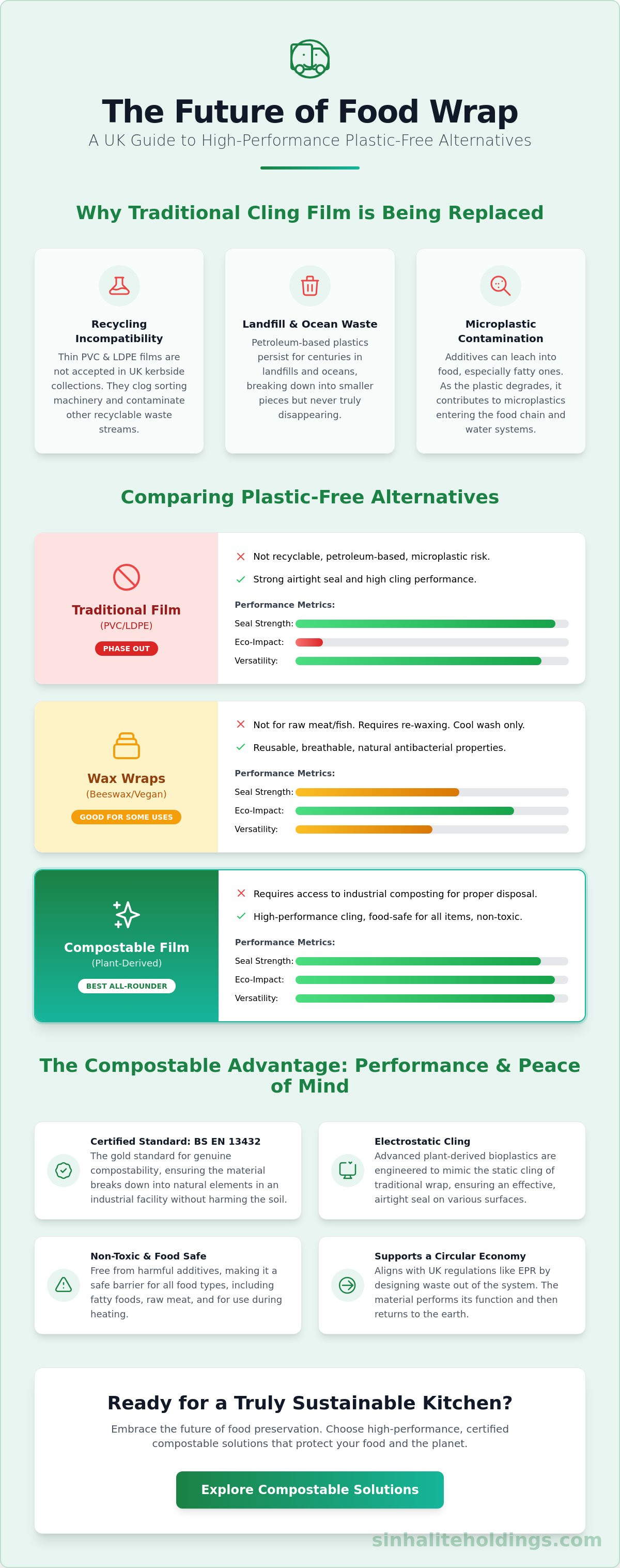
The UK is witnessing a significant shift in how households manage food preservation. For decades, Traditional PVC Cling Film was the default choice for its convenience and cling properties. However, the environmental cost of Polyvinyl Chloride (PVC) and Low-Density Polyethylene (LDPE) is becoming impossible to ignore. When these materials enter UK landfills, they don't simply disappear; they persist for centuries, potentially leaching additives into the surrounding soil. Most UK kerbside recycling schemes cannot process thin-film plastics because they clog sorting machinery and contaminate other waste streams. This functional failure has fueled the demand for a genuine plastic free cling film alternative uk residents can use with confidence.
Moving toward a plastic-free kitchen involves more than just swapping brands. It requires a fundamental move away from petroleum-based polymers toward plant-derived solutions. True sustainable alternatives prioritize circularity, ensuring that the product performs its duty and then returns to the earth without leaving a permanent chemical footprint. This movement is about choosing materials that are engineered for the future, rather than those that linger as a legacy of the past.
The Problem with Microplastics in Food Storage
Beyond the waste issue, there's a growing concern regarding how traditional plastics interact with our food. Research suggests that certain additives in traditional wrap can leach into fatty foods, especially during heating or long-term storage. As these plastics fragment over time, they contribute to the microplastic load in UK water systems, eventually entering the food chain. This realization has shifted consumer focus toward non-toxic, food-grade barriers. British households now prioritize materials that protect both their families and the natural ecosystems we all depend on. We don't just want a wrap that sticks; we want a wrap that's safe.
UK Plastic Regulations and 2026 Standards
The regulatory landscape in the UK is tightening to reflect these environmental priorities. From 1st April 2026, the Plastic Packaging Tax rate will increase to £228.82 per tonne for packaging that doesn't meet specific recycled content thresholds. Additionally, the Extended Producer Responsibility (EPR) scheme is introducing a "Red, Amber, Green" rating system to penalize hard-to-recycle materials. These changes are driving a systemic shift toward a circular economy where waste is designed out of the process.
Sinhalite Holdings operates at the forefront of this transition. By providing professional-grade compostable cling film and food roller bags, we help households align with these modern standards. Our focus remains on high-performance utility that supports a circular economy. We believe that ecological responsibility and kitchen efficiency must coexist. By choosing certified compostable materials, you aren't just following a trend; you're participating in a necessary evolution of our domestic habits.
Comparing the Best Plastic-Free Cling Film Alternatives
Selecting a plastic free cling film alternative uk residents can rely on involves balancing immediate performance with long-term ecological impact. While traditional film is being phased out due to the UK's Plastic Packaging Tax and shifting consumer ethics, any replacement must still keep food fresh. The ideal solution depends on your specific kitchen habits and the types of food you store regularly. Performance is measured by seal strength, breathability, and the ability to retain moisture without leaching chemicals.
Beeswax and Vegan Wax Wraps
These wraps are crafted from organic cotton infused with beeswax or plant-based waxes. They offer a breathable barrier that is particularly effective for bread and hard cheeses. Because they are natural and possess inherent antibacterial properties, they add an aesthetic charm to the fridge. However, they aren't a universal fix. You cannot use them with raw meat or fish due to hygiene risks, as they can only be washed in cool water. Over time, they require "re-waxing" to maintain their seal, which adds to the maintenance routine and total cost of ownership.
Silicone Lids and Stretch Covers
Silicone offers a high degree of durability and can be used indefinitely if cared for properly. These covers create an airtight seal on smooth-rimmed containers and are entirely dishwasher safe. They represent a significant upfront investment but offer a low cost-per-use over several years. Their primary limitation is flexibility. They require specific container sizes to work effectively and don't conform well to irregular shapes like a half-cut squash or a large roasting tin.
Compostable Cling Film: The Direct Replacement
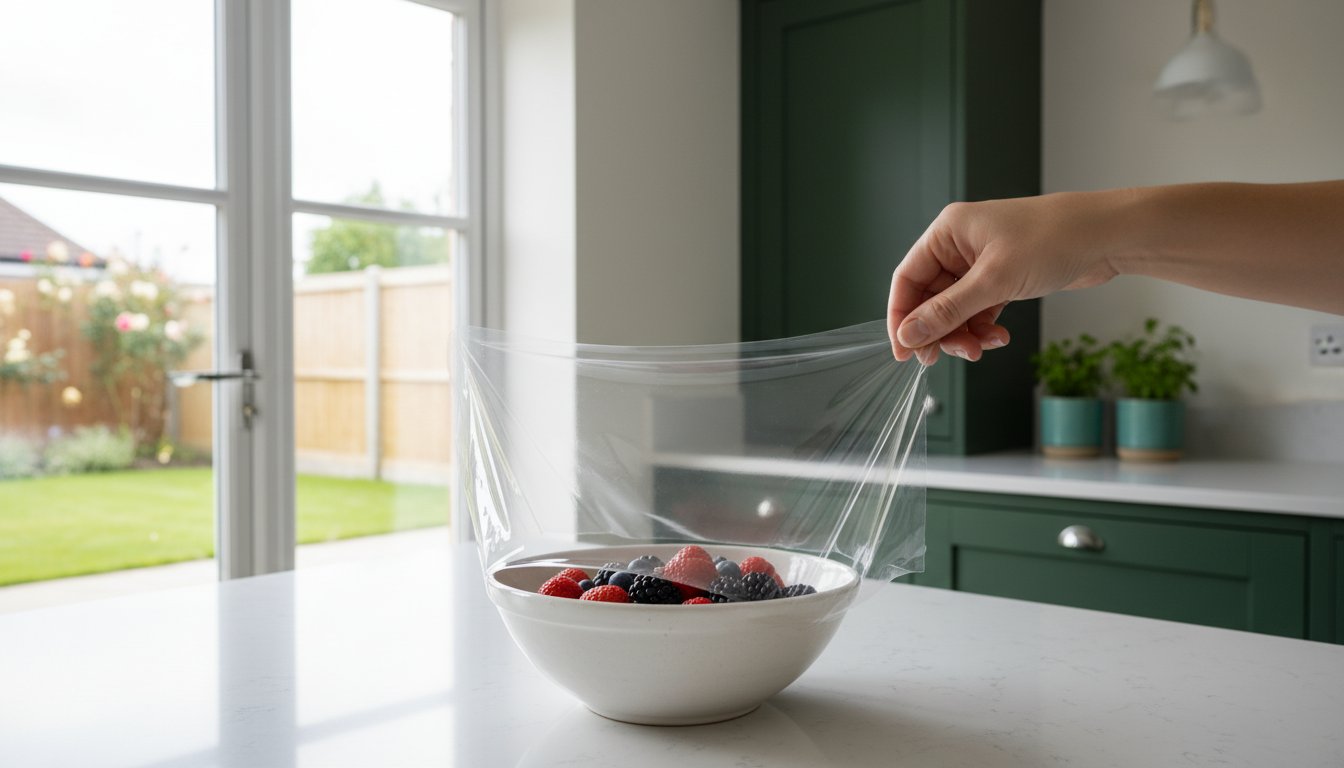
For many, a compostable film provides the most seamless transition. It offers the familiar "cling" performance and electrostatic properties of traditional wrap without the environmental burden. Unlike wax wraps, these films are perfectly safe for all food types, including high-fat items and raw meat. They are a hygienic, single-use solution that returns to the soil through home composting or food waste bins. If you need a versatile tool that handles awkward shapes and maintains moisture retention, our compostable household clingfilm provides the industrial-strength performance required for a modern circular kitchen.
When evaluating these options, consider the specific needs of your household. Reusables like silicone have a higher initial price point but pay for themselves over time. Compostable films offer the lowest barrier to entry and the highest level of convenience for busy families. For high-acid foods like citrus or tomatoes, compostable films and silicone lids generally outperform wax wraps, which can be degraded by acidic juices. Balancing these materials allows you to eliminate plastic waste systematically while ensuring every meal remains fresh and safe.
The Science of Compostable Cling Film: Performance Without Plastic
Modern bioplastic engineering has transformed the feasibility of the plastic free cling film alternative uk market. By moving away from petroleum-based polymers, manufacturers now utilize advanced molecular structures that offer comparable utility to traditional wraps without the environmental legacy. This shift isn't merely a change in raw materials; it's a sophisticated recalibration of how we preserve food. The performance of these films relies on the synergy between plant-derived components that mimic the behavior of synthetic plastics while remaining fully compostable under BS EN 13432:2000 standards.
The "cling factor" that consumers expect from traditional wrap is achieved through the inherent electrostatic properties of bioplastic blends. Unlike older eco-friendly versions that often felt stiff or brittle, 2026 advancements in polymer processing have created films that are exceptionally thin yet remarkably strong. These materials provide a reliable seal on glass, ceramic, and stainless steel, ensuring that your food remains protected from air exposure and external contaminants.
PBAT and PLA: The Building Blocks of Eco-Film
The structural integrity of modern compostable film depends on two primary biopolymers: PBAT and PLA. PBAT (Polybutylene adipate terephthalate) is the component responsible for flexibility and stretch; its molecular chains allow the film to conform to irregular shapes without tearing. This is reinforced by PLA (Polylactic Acid), typically derived from renewable UK-grown sugar beet or corn starch, which provides the necessary barrier strength. Because these building blocks are plant-derived, they don't contain phthalates or BPA, ensuring a non-toxic interface for all food types.
Breathability and Food Preservation
One of the most significant advantages of bioplastic is its superior oxygen transmission rate compared to traditional PVC. While standard plastic wrap can cause vegetables to "sweat" and spoil due to trapped moisture, compostable films allow for a controlled gas exchange. The microscopic pores within the bioplastic matrix facilitate an optimal balance of moisture and gas, preventing the anaerobic conditions that lead to rapid decay.
Performance testing in 2026 indicates that these films also excel in temperature-sensitive environments. They maintain their pliability in domestic freezers down to -20°C, which helps prevent the brittle fracturing that often causes freezer burn. For those who prioritize convenience, these films are now rated safe for microwave reheating up to 85°C. This dual-purpose capability ensures that you don't have to sacrifice modern kitchen efficiency to meet your sustainability goals.
Buyer’s Guide: What to Look for in a Plastic-Free Wrap
Choosing a plastic free cling film alternative uk households can trust involves more than just reading the front of the box. As the market expands, it's increasingly common to encounter products that use vague environmental claims to appeal to eco-conscious shoppers. Ensuring your kitchen supplies align with a truly circular economy requires a discerning look at technical specifications and third-party verifications. Performance shouldn't be a secondary concern; the right alternative must offer the durability and seal strength necessary to prevent food waste effectively.
When assessing your options, pay close attention to the physical attributes of the film. Roll length and thickness, measured in microns, are key indicators of value and utility. A thinner film might seem more eco-friendly, but if it lacks the structural integrity to hold a seal, it fails its primary purpose. High-performance alternatives typically range from 10 to 12 microns, providing a balance of flexibility and strength that mimics traditional wrap without the use of petroleum-based polymers.
Decoding UK Eco-Certifications
The most critical benchmark for any compostable product in the UK is the BS EN 13432:2000 standard. This certification guarantees that the material will break down in an industrial composting environment within 180 days without leaving harmful residues behind. You should look for the 'Seedling' logo or TUV Austria's 'OK Compost' marks to verify these claims. It's vital to distinguish between 'Home Compostable' and 'Industrially Compostable' labels. While both are superior to plastic, home compostable films are engineered to degrade at the lower temperatures found in domestic garden heaps. Treat the term 'biodegradable' with caution; without a specific certification, it often lacks a defined timeframe for decomposition and can be a hallmark of greenwashing.
Practical Features for Busy Kitchens
A sustainable product must still function seamlessly within a fast-paced domestic environment. A high-quality serrated cutting edge integrated into the box is essential for precision and reducing material waste. Evaluate the 'tackiness' of the film to ensure it adheres properly to common kitchen surfaces like ceramic, glass, and stainless steel. Unlike traditional plastic, genuine compostable films have a finite shelf life, usually between 12 and 18 months. This expiry date exists because the material is designed to eventually return to the earth, which is a testament to its ecological integrity. If you're ready to implement these standards in your home, you can view our range of certified compostable household clingfilm to find a solution that balances industrial-strength performance with genuine sustainability.
Transitioning to a Circular Kitchen with Sinhalite Holdings
Sinhalite Holdings serves as a strategic bridge between industrial-grade performance and domestic sustainability. We understand that for a plastic free cling film alternative uk households must rely on to be successful, it cannot sacrifice utility for its eco-credentials. Our mission is to provide the tangible tools necessary for a systemic shift in how we manage kitchen waste. By integrating professional-grade materials into everyday routines, we empower individuals to meet the evolving environmental standards of 2026 with confidence. This transition is a logical progression that aligns your daily habits with the broader goal of environmental stewardship.
Switching to a circular model is a methodical process rather than a radical disruption. Our range extends beyond just film to include essential items like compostable caddy bags and food roller bags. This comprehensive approach ensures that every aspect of food storage and waste disposal supports a healthier ecosystem. When you choose Sinhalite, you're investing in a future where high standards of strength and durability are naturally aligned with ecological integrity. We take the responsibility of innovation seriously, so you can focus on the efficiency of your kitchen.
The Sinhalite Quality Guarantee
Our commitment to performance-oriented materials defines our operational philosophy. Every product in our catalogue undergoes rigorous testing to ensure it meets the BS EN 13432:2000 standard for compostability. We don't believe in compromising on strength. This dedication to excellence is why our professional-grade films are increasingly preferred by eco-conscious caterers and busy households across the UK. We ensure that our materials provide the barrier protection and seal integrity you expect from traditional products while maintaining a non-toxic, plant-derived profile.
Next Steps for Your Plastic-Free Journey
The transition begins with a simple kitchen audit. Identify your highest-use plastic items and prioritize their replacement with certified compostable alternatives. This systematic approach allows you to reduce your household plastic waste without feeling overwhelmed. For maximum impact, ensure you dispose of Sinhalite products correctly. While our films are designed to return to the earth, placing them in designated food waste bins or well-maintained home compost heaps ensures they break down efficiently. Small, methodical changes at the household level contribute significantly to national waste reduction goals and the reduction of microplastic pollution.
Your journey toward a more responsible kitchen is both achievable and advantageous. By choosing high-performance, plant-based tools, you are participating in a necessary evolution of our domestic habits. Ready to start? You can Browse our range of certified compostable cling film to find the perfect fit for your circular kitchen and begin making a tangible impact today.
Building a Sustainable Legacy in Your Kitchen
The shift toward a plastic-free home is a meaningful commitment to environmental stewardship. By moving beyond traditional PVC and LDPE, you're actively reducing the volume of non-recyclable waste entering UK landfills. Choosing a certified plastic free cling film alternative uk residents can rely on ensures that your food remains fresh while your kitchen operations support a circular economy. This transition doesn't require you to sacrifice performance for purpose.
Our range of compostable solutions is designed to bridge the gap between industrial-strength utility and domestic sustainability. Every roll is EN 13432 Certified, Plant-Based & Petroleum-Free, and utilizes High-Cling Performance Technology to meet the demands of a modern kitchen. We believe that small, purposeful actions create the foundation for significant national progress. It's time to align your daily habits with your values and contribute to a cleaner future for the United Kingdom.
Switch to Professional-Grade Compostable Cling Film Today and take the next step in your sustainability journey with confidence.
Frequently Asked Questions
Does plastic-free cling film actually stick to bowls?
Yes, high-quality compostable films are engineered to mimic the electrostatic properties of traditional plastic. They provide a secure seal on glass, ceramic, and stainless steel surfaces. While older eco-alternatives often struggled with adhesion, 2026 advancements in polymer processing ensure these films maintain a reliable grip. This ensures your food remains protected from air exposure without the need for petroleum-based adhesives or harmful plasticizers.
Can I use compostable cling film in the microwave?
You can use certified compostable cling film for microwave reheating, provided the product is specifically rated for high temperatures. Most modern bioplastic films are safe for use up to 85°C. It's important to avoid direct contact between the film and high-fat foods during heating to prevent the material from melting. Always check the packaging for specific microwave safety symbols to ensure the film meets domestic safety standards for thermal stability.
Is compostable wrap safe for wrapping raw meat and fish?
Compostable wrap is perfectly safe and hygienic for wrapping raw meat and fish. Unlike reusable wax wraps, which cannot be washed in hot water, compostable film is a single-use product that prevents cross-contamination. Its moisture-retention properties help maintain the freshness of proteins while providing a reliable barrier against external bacteria. This makes it a superior plastic free cling film alternative uk households can use for all food groups safely.
How long does it take for compostable cling film to disappear in a home bin?
Certified home-compostable films typically break down within 180 days in a well-maintained garden compost heap. The exact timeframe depends on factors like temperature, moisture levels, and microbial activity within the bin. If your film is certified under BS EN 13432:2000, it's guaranteed to biodegrade without leaving toxic residues or microplastics behind. In colder winter months, the process may take slightly longer as microbial activity naturally slows down.
What is the difference between biodegradable and compostable film?
The primary difference lies in certification and the timeframe for decomposition. "Biodegradable" is a broad term that implies a material will eventually break down, but it doesn't specify how long it will take or what it will leave behind. "Compostable" materials, however, must meet strict standards like EN 13432. This ensures they break down within a specific window and return to the earth as nutrient-rich organic matter without leaving harmful chemical residues in the soil.
Can I put compostable cling film in my council food waste bin?
Most UK councils accept certified compostable films in food waste bins, but you should verify the specific rules for your local authority. Many industrial composting facilities process these materials alongside food scraps to create agricultural-grade compost. However, some councils still exclude film-like materials to prevent confusion with traditional plastic. Checking your council's website ensures your waste is routed to the correct processing facility for optimal environmental impact and circularity.
Does eco-friendly cling film keep food as fresh as regular plastic wrap?
Eco-friendly compostable film often keeps produce fresher for longer than traditional PVC wrap. This is because bioplastics possess a higher oxygen transmission rate, which prevents moisture from becoming trapped and causing vegetables to "sweat." By facilitating a controlled gas exchange, these films help maintain the natural crispness of salads and vegetables. They provide a reliable plastic free cling film alternative uk families can use to reduce food waste systematically and effectively.
Where can I buy bulk compostable cling film in the UK?
You can purchase high-performance, professional-grade compostable cling film directly through Sinhalite Holdings. We provide bulk options tailored for both domestic kitchens and professional catering environments. Our products are engineered for industrial-strength durability while remaining fully petroleum-free. By sourcing directly from specialists, you ensure that your kitchen supplies meet the highest UK environmental standards while benefiting from a consistent, reliable supply of circular economy materials.