
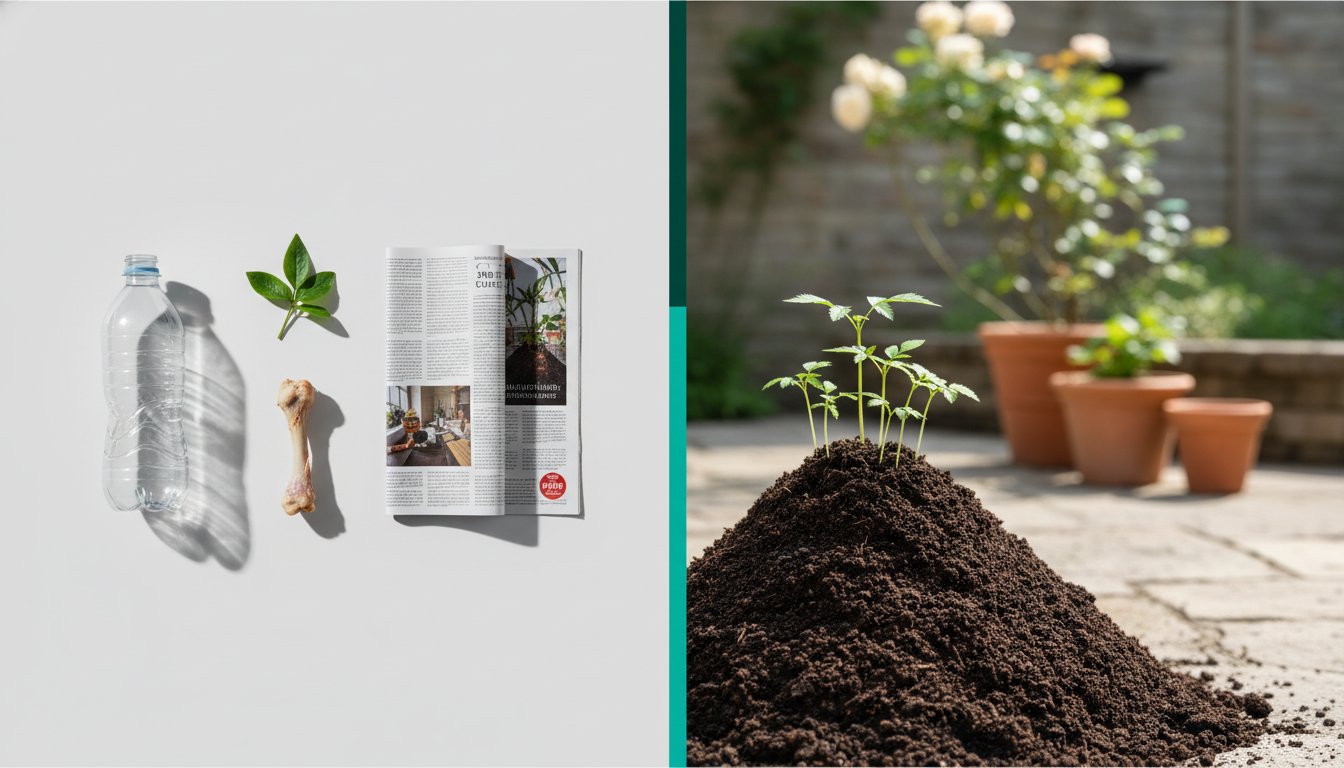
Successful composting is an act of biological stewardship where what you exclude is as vital as what you include. With the implementation of the "Simpler Recycling" legislation on 31 March 2026, many UK households are now managing food waste more intentionally than ever before. However, a single mistake can transform a productive heap into a breeding ground for pests or a source of soil contamination. Knowing exactly what not to put in your home compost is the first step toward creating a high-quality organic fertiliser that supports a truly circular economy.
It is frustrating when a well-intentioned effort to reduce waste results in unpleasant smells or attracts unwanted visitors like rats and flies. You likely want to feel confident that your garden soil remains free from microplastics and harmful pathogens. This guide provides absolute clarity on which materials to avoid to ensure your pile remains healthy and odour-free. We will examine the specific items that belong in your council-collected food waste bin rather than your garden heap, helping you master the art of responsible waste management with precision and purpose.
Key Takeaways
- Understand the biological requirements of an aerobic system to ensure your organic waste transforms into nutrient-rich fertiliser rather than a source of unpleasant odours.
- Identify exactly what not to put in your home compost to safeguard your garden from pathogens, persistent pests, and the long-term threat of microplastic contamination.
- Learn to distinguish between traditional single-use plastics and high-performance alternatives like certified compostable household clingfilm and food waste bags.
- Implement practical strategies to maintain cleaner collection systems by using durable, compostable liners that reduce the need for harsh chemical cleaning agents.
- Align your organisational waste management practices with 2026 UK standards to support a circular economy and enhance your commitment to environmental stewardship.
The Science of Exclusion: Why Certain Materials Ruin Home Compost
Home composting is a deliberate, managed aerobic process. It relies on oxygen-breathing microorganisms to transform organic matter into nutrient-rich humus. To succeed, you must maintain specific biological conditions where oxygen, moisture, and temperature remain in balance. Understanding the science of composting helps you avoid common pitfalls that lead to failure. Maintaining a healthy bin requires a clear understanding of what not to put in your home compost to prevent biological interference. When you introduce the wrong materials, you disrupt the critical carbon-to-nitrogen ratio. This imbalance stalls decomposition and can lead to a heap that is either too dry to break down or too wet to breathe.
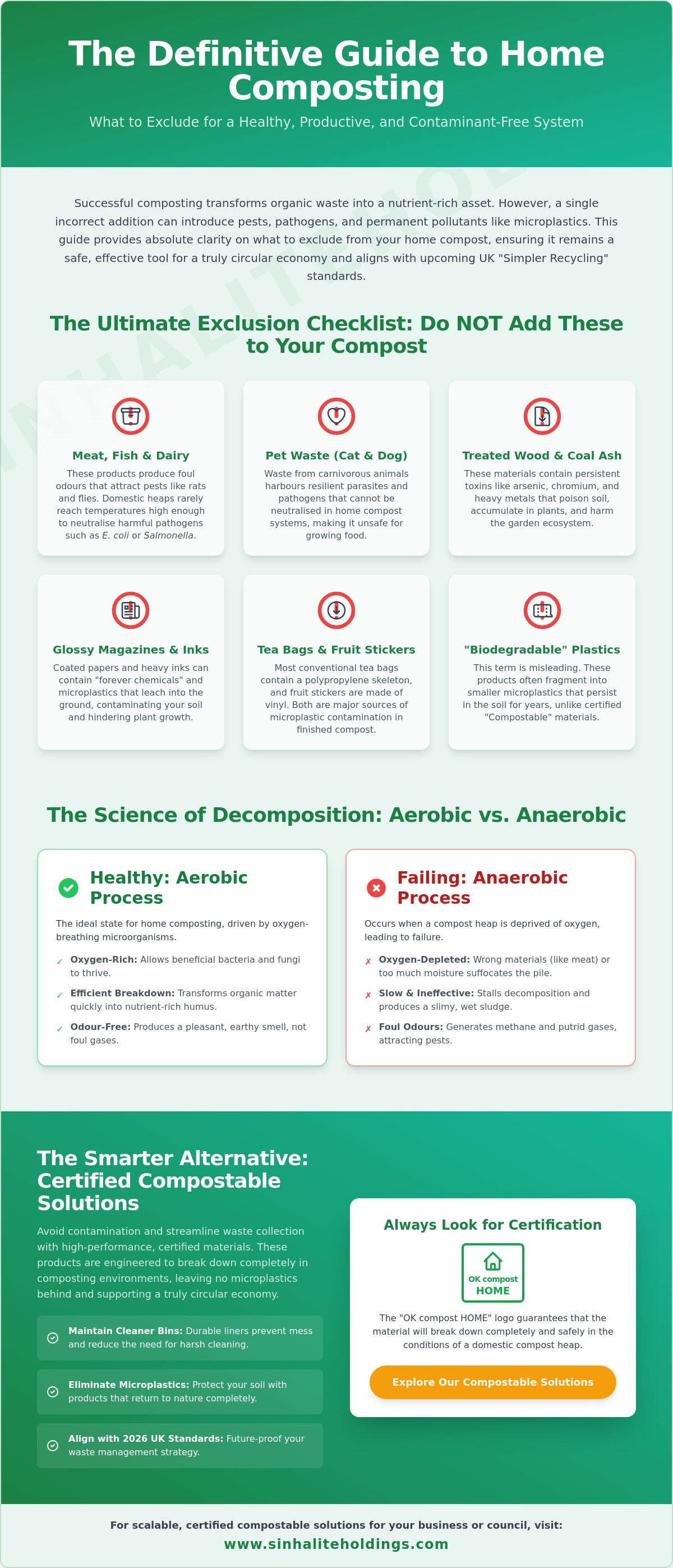
Anaerobic digestion occurs in a failing home compost heap when oxygen is depleted, causing bacteria to produce methane and foul-smelling gases instead of healthy soil.
To better understand the fundamentals of a healthy heap, watch this helpful video:
Pathogens and Pests: The Danger of Meat and Dairy
Meat, fish, and dairy products are highly problematic in domestic bins. They break down slowly and produce putrid odours that act as a beacon for vermin like rats and flies. Domestic heaps rarely reach the sustained high temperatures found in industrial facilities, meaning they cannot neutralise bacteria like E. coli or Salmonella. Including these animal by-products creates a significant health risk and compromises the safety of your future harvest.
Chemical Contaminants and Persistent Toxins
Identifying what not to put in your home compost also involves screening for hidden toxins that resist natural decay. Treated wood contains arsenic or chromium, while coal ash is concentrated with heavy metals that poison the soil. Glossy magazines often use inks and plastic coatings that contain "forever chemicals" which leach into the ground. These substances don't just disappear; they accumulate in your plants and can hinder long-term growth. You should also avoid synthetic fibres from vacuum dust or dryer lint, as these introduce microplastics into your garden ecosystem. Focusing on pure, organic inputs ensures your finished compost remains a safe, productive asset.
The Checklist: What Not to Put in Your Home Compost
Maintaining a pristine compost system requires more than just adding vegetable scraps. You need a definitive checklist of what not to put in your home compost to avoid long-term soil damage. While some items seem harmless, they often introduce persistent pollutants. For example, pet waste from carnivorous animals like cats and dogs is strictly prohibited in compost used for growing food. These materials harbour resilient parasites that domestic heaps cannot neutralise. You should also be wary of glossy papers or "lookalike" plastics that mimic organic textures but fail to break down safely.
To ensure your system remains productive, always look for the "OK compost HOME" logo on any packaging. This certification guarantees that the material will break down in domestic conditions. Using high-quality compostable caddy bags helps streamline this process, providing a reliable way to transport food scraps without risking contamination from traditional plastic liners.
The Invisible Plastics: Tea Bags and Fruit Stickers
Most conventional tea bags are a hidden source of contamination. They often contain a plastic skeleton made of polypropylene to prevent the bag from bursting in hot water. Similarly, tiny fruit stickers are frequently made of vinyl or plastic. These small items are a major source of microplastics in finished compost. Following expert advice from Garden Organic, it is best to remove these stickers and opt for loose-leaf tea or certified plastic-free bags to keep your soil clean.
Biodegradable vs. Compostable: Avoiding the Trap
The terms "biodegradable" and "compostable" are not interchangeable. A biodegradable plastic bag might eventually break down, but it often simply fragments into smaller plastic pieces that persist in the soil for years. In contrast, certified home compostable products are designed to disintegrate completely without leaving toxic residues. To understand the technical nuances of these materials, you can read more about whether do compostable bags contain plastic. Identifying what not to put in your home compost means rejecting anything that lacks a clear, home-compostable certification, as these items disrupt the circular economy you're trying to build.
Optimising Your System: Practical Solutions for a Cleaner Bin
Achieving a high-quality organic fertiliser requires a disciplined approach to bin management. By integrating certified home compostable products into your daily operations, you can simplify waste segregation and ensure that your efforts yield a nutrient-dense harvest. Sinhalite Holdings supports UK businesses and households in this transition by providing high-performance alternatives that align with environmental stewardship. Using the correct liners significantly reduces the need for harsh chemical cleaning agents, as they contain messes and prevent residues from bonding to the bin surface. This shift in purchasing behaviour is a fundamental step toward a functional circular economy.
Certified Home Compostable Essentials
Innovation in material science has led to the development of compostable cling film that actually clings, allowing for efficient food preparation without the legacy of plastic waste. For kitchen waste, certified caddy liners are indispensable; they prevent leaks and are entirely safe for the sensitive biological environment of a worm farm. For larger tasks, Sinhalite’s range of puncture-resistant compostable garbage bags provides a robust solution for garden waste, ensuring that even heavy debris doesn't compromise the integrity of your collection system.
Maintaining Bin Hygiene and Odour Control
Preventing unpleasant smells is a common concern when deciding what not to put in your home compost. Odours typically arise when the pile becomes too wet or lacks oxygen, leading to the anaerobic conditions discussed earlier. To maintain a healthy balance, you must layer "greens" like vegetable scraps with "browns" such as cardboard or dried leaves. According to UK council guidelines on composting, maintaining the right mix is essential for aerobic decomposition. If you find your collection point is becoming a nuisance, refer to our guide on how to keep a food waste bin from smelling. Regular aeration and a strict adherence to what not to put in your home compost will ensure your system remains an asset to your garden rather than a liability.
Cultivating a Resilient Future Through Circular Waste Management
Mastering the biological balance of your heap ensures that organic waste becomes a valuable asset rather than a source of contamination. We have identified the critical importance of maintaining aerobic conditions and the necessity of excluding pathogens and persistent microplastics. Having a clear understanding of what not to put in your home compost allows you to produce high-quality fertiliser that truly enriches the earth. This knowledge empowers your organisation to lead by example in the transition toward a more sustainable and responsible waste management model.
Sinhalite Holdings is your dedicated partner in this journey, serving as an expert UK-based sustainable packaging supplier. Our high-performance plant-based materials are TUV Austria OK compost HOME certified, ensuring they break down safely within your system. We provide the tools necessary to eliminate single-use plastics from your operations without compromising on durability or utility. Our commitment to innovation ensures that every product supports the health of your soil and the integrity of the circular economy.
Take the next step in your environmental commitment by choosing solutions designed for a cleaner tomorrow. Switch to certified home compostable solutions today and contribute to a healthier, plastic-free UK. Together, we can build a future where waste is no longer a burden but a beginning.
Frequently Asked Questions
Can I put citrus peels and onions in my home compost?
Yes, you can include citrus peels and onions in your home compost, provided they are added in moderate quantities. Their high acidity can slow down the decomposition process if they dominate the pile; additionally, their antimicrobial properties may affect the worm population in vermicompost systems. Balancing these items with plenty of carbon-rich "browns" ensures the biological activity remains stable and productive for your garden.
Are "biodegradable" bin liners safe for my garden compost heap?
No, "biodegradable" bin liners are often unsuitable for domestic heaps because they are frequently designed to fragment into smaller plastic pieces rather than fully return to the earth. To ensure safety, you must use liners specifically certified as "OK compost HOME." This distinction is a vital part of understanding what not to put in your home compost, as it prevents the introduction of persistent synthetic residues into your nutrient-rich fertiliser.
Why can’t I put cat or dog poo in the compost?
You must exclude cat and dog waste because it contains resilient pathogens and parasites, such as Toxocara or Salmonella, that domestic heaps cannot neutralise. Unlike industrial facilities, home systems don't reach the high, sustained temperatures required to kill these harmful organisms. Using contaminated compost on food crops creates a significant health risk for your household or organisation, undermining the safety of your harvest.
What happens if I accidentally put plastic in my compost bin?
Accidental plastic introduction leads to microplastic contamination that persists in your soil for decades. These fragments don't disappear; instead, they compromise the structural integrity of your finished fertiliser and can eventually enter the food chain through your plants. Identifying what not to put in your home compost early prevents these materials from disrupting the circular economy and damaging the long-term health of your local ecosystem.


