Effective food preservation in 2026 requires a transition from persistent polymers to circular, certified compostable membranes that perform without compromise. You've likely felt the frustration of eco-friendly wraps that fail to cling or the confusion of deciphering whether a product belongs in your food waste bin or the general rubbish. With 86.5 percent of UK adults now making lifestyle changes to protect the environment, the demand for transparency and functional performance has never been higher. Finding a reliable way to buy compostable cling film uk shouldn't feel like a gamble against greenwashing.
This guide empowers you to identify high-performance options that meet the rigorous BS EN 13432:2000 standard; this ensures your kitchen remains plastic-free without losing the convenience you rely on. We'll explore how to verify genuine certifications, navigate the 2026 Simpler Recycling regulations, and clarify exactly where your wrap should go after its final use. By aligning industrial pragmatism with ecological responsibility, you can secure a sustainable kitchen setup that truly works for both the planet and your home.
Key Takeaways
- Understand the transition from persistent polymers to plant-based membranes that support a circular economy.
- Identify the essential BS EN 13432 certification and "OK Compost" logos to ensure your packaging meets UK environmental standards.
- Compare the technical performance of bioplastics, focusing on natural tackiness and oxygen transmission rates for superior food preservation.
- Evaluate sourcing logistics, including roll length and shelf-life constraints, to maintain the integrity of your sustainable storage products.
- Discover how to buy compostable cling film uk from specialists who prioritize industrial-grade durability and transparent manufacturing.
The Shift to Sustainable Storage: Why Buy Compostable Cling Film in the UK?
The transition toward circular kitchen practices is no longer just an ethical preference; it's a structural necessity within the British economy. When you choose to buy compostable cling film uk, you're investing in a breathable, plant-based membrane engineered for a specific biological cycle. Unlike traditional alternatives, these bioplastic materials are derived from renewable resources rather than finite fossil fuels. This shift aligns with the UK’s 2026 waste targets and the expanded Plastic Packaging Tax, which increasingly places the financial and environmental burden of non-recyclable waste on the consumer and manufacturer alike.
To better understand how this transition looks in practice, watch this helpful video:
Transitioning to these advanced membranes helps mitigate the significant methane emissions associated with organic waste trapped in plastic at landfills. By allowing food scraps and their coverings to break down together in industrial composting facilities, we close the loop on resource consumption. This approach reflects a deep commitment to environmental stewardship. Every household purchase becomes a deliberate act of restoration, ensuring that our daily habits contribute to a healthier, more resilient ecosystem.
The Problem with Conventional Plastic Wrap
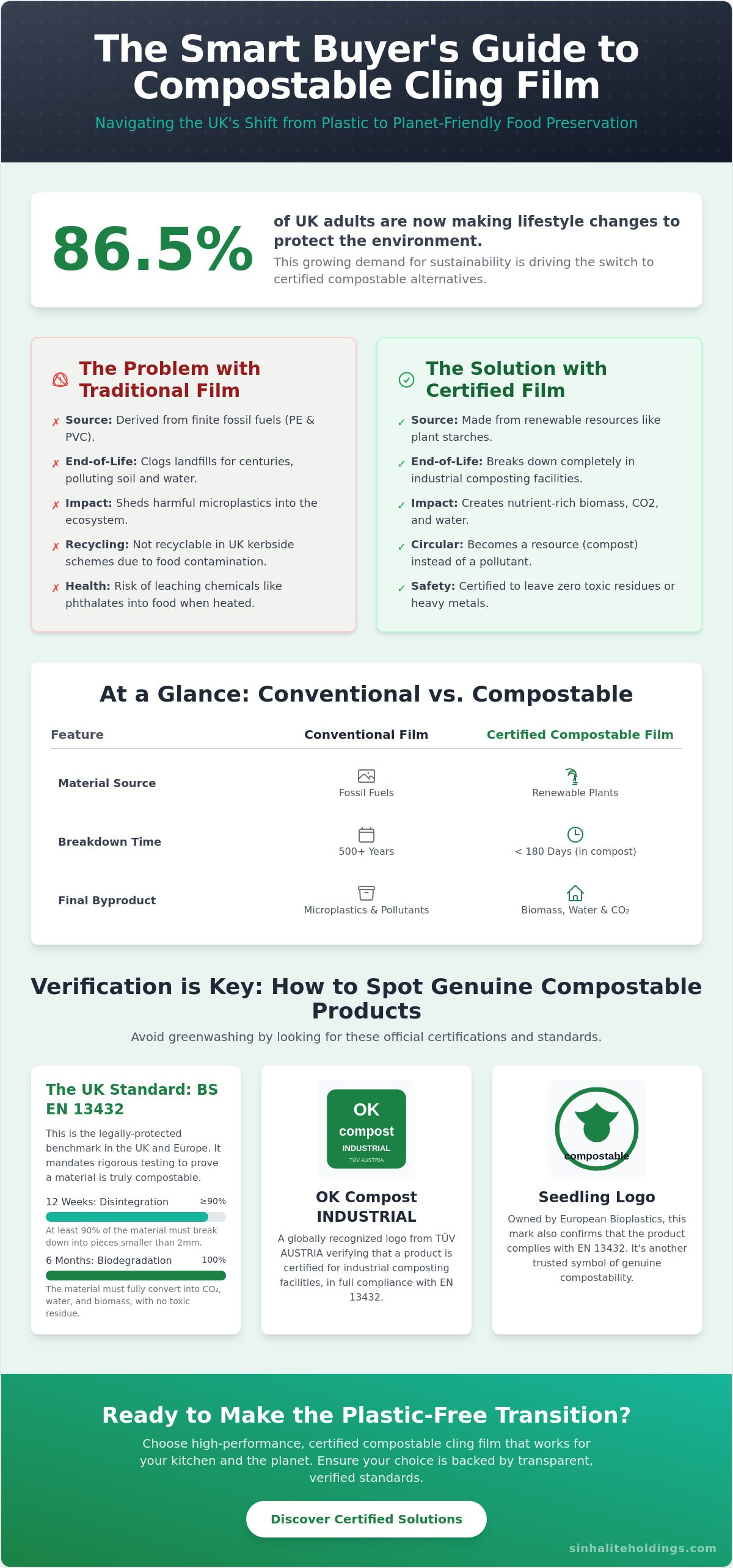
Traditional polyethylene (PE) and polyvinyl chloride (PVC) wraps present a persistent challenge to the UK’s ecosystem. These materials are notorious for shedding microplastics that eventually infiltrate water systems and soil. Because they're thin and easily contaminated by food, standard films are technically unrecyclable in almost all UK kerbside schemes. Beyond the waste issue, heating these plastics can trigger the leaching of phthalates and other chemical stabilizers into your food. This combination of environmental persistence and potential health risks makes the move to plastic-free alternatives an urgent priority for the modern home.
Defining True Compostability for the UK Market
Confusion often arises from the vague use of the term "biodegradable," which lacks a standardized timeframe or safety guarantee. In contrast, "compostable" is a legally protected certification in the UK, ensuring the material leaves zero toxic residue behind. This process involves a controlled degradation that results in nothing but water, CO2, and biomass. It's a precise industrial outcome rather than a random natural occurrence. Compostable film is defined as a material that returns to the earth as nutrient-rich humus within 180 days when processed in a professional composting environment.
Technical Standards: What to Look for Before You Buy
Deciding to buy compostable cling film uk requires more than just reading the front of a box. You must look for specific technical benchmarks to ensure the product performs as promised while upholding environmental integrity. The primary standard in the UK is BS EN 13432:2000. This isn't a mere suggestion; it's a rigorous laboratory protocol. It mandates that the material must disintegrate by at least 90 percent within 12 weeks and biodegrade fully within six months under industrial conditions. This protocol ensures that the film leaves no toxic residues or heavy metals in the resulting soil, providing the assurance that your waste becomes a resource rather than a pollutant.
Crucial Certifications Explained
Verification is key to avoiding greenwashing. Look for the 'OK Compost' logo from TÜV AUSTRIA or the 'Seedling' logo from European Bioplastics. These marks confirm that a third party has validated the product's compliance with EN 13432. It's vital to distinguish between industrial composting and home composting certifications. While industrial standards rely on high-heat facilities, home-certified products break down at lower temperatures in your garden bin. Understanding these distinctions is important because of current compostable packaging infrastructure challenges across the UK. You can verify a supplier's claims by checking their unique license number on the certifier's online database. A reputable brand will display this clearly, allowing you to trace the product back to its source with confidence.
Material Science: From Cornstarch to Kitchen
Modern sustainable films utilize advanced polymers like Mater-Bi and PBAT. These materials provide the natural tackiness required for an airtight seal without the need for harmful chemical adhesives. Unlike traditional plastic, bioplastic is naturally breathable. This characteristic prevents fresh produce from "sweating," which extends the shelf life of fruits and vegetables by maintaining an optimal moisture balance. Puncture resistance is equally critical for industrial pragmatism. We measure this through thickness, typically in microns; a robust micron count ensures the film doesn't tear when stretched over sharp edges or heavy dishes. It ensures the film maintains its structural integrity under tension, which is essential for preventing oxidation and reducing food waste.
Safety remains a top priority during the transition to plastic-free storage. High-quality compostable films are engineered to be heat resistant, making them suitable for microwave use without the risk of melting. Our specific formulations at Sinhalite are completely free from PFAS and BPA, ensuring that no endocrine disruptors migrate into your food. If you're ready to upgrade your kitchen, exploring a range of certified compostable cling film is a logical and rewarding next step in your sustainability journey.
Performance Comparison: Compostable vs. Traditional Cling Film
Modern food preservation requires a balance between structural strength and biological compatibility. When you buy compostable cling film uk, you're choosing a material that mirrors the performance of traditional polymers without the associated environmental legacy. The primary difference lies in the Oxygen Transmission Rate (OTR). While traditional polyethylene creates a near-total barrier that can cause anaerobic spoilage in fresh produce, compostable membranes offer a calibrated OTR. This breathability ensures that moisture doesn't build up, preventing the premature wilting of leafy greens and the growth of mould. It's a functional upgrade that extends the life of your groceries through superior material science.
The "cling factor" also distinguishes these materials. Traditional PVC relies on chemical plasticizers to achieve its stickiness. In contrast, compostable alternatives utilize the inherent molecular tackiness of plant-based resins. This creates a secure, airtight seal around ceramic, glass, and stainless steel containers through physical adhesion rather than chemical additives. The strength and elasticity of these 100 percent compostable membranes ensure they don't snap or tear easily, providing a reliable barrier from the fridge to the freezer.
The Stretch and Seal Test
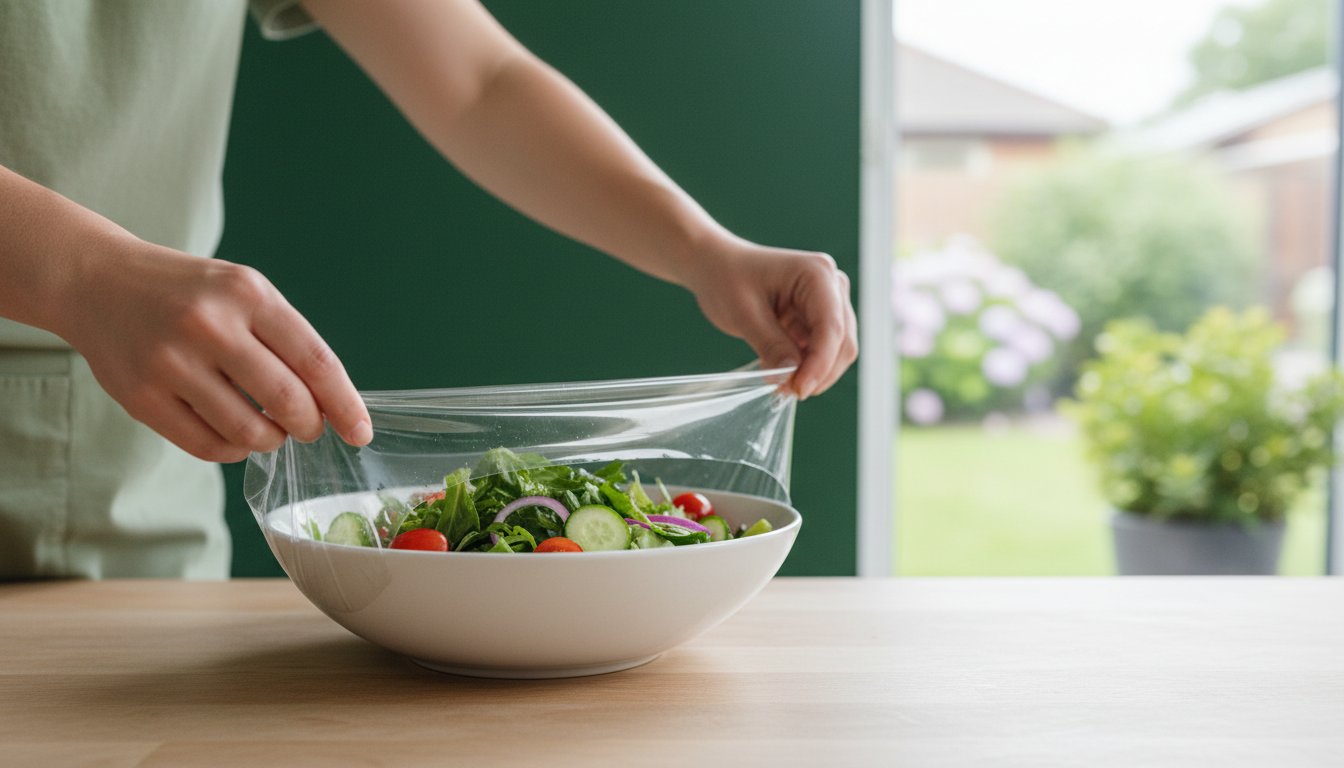
To achieve the best results, use the warmth of your hands to activate the film's natural tackiness against the rim of your container. While standard supermarket PE wrap is often prone to snapping under tension, the tensile strength of high-quality plant-based film allows for significant stretching without compromising the seal. This elasticity makes it particularly superior for wrapping high-moisture vegetables like cucumbers or cut peppers. The material adapts to the food's surface perfectly, maintaining freshness longer than rigid plastic alternatives.
Temperature Resilience: Fridge, Freezer, and Microwave
Many users worry that eco-friendly materials lack the durability to withstand extreme kitchen conditions. Certified compostable film remains stable across a broad temperature range, typically from -20°C in the freezer to 100°C for heating. It won't become brittle in sub-zero temperatures, nor will it melt or dissolve when stored in a humid refrigerator. Certified compostable film is microwave-safe for steam-vented heating. This resilience ensures that your transition to plastic-free storage doesn't require a change in your daily kitchen routine. You can protect leftovers in the freezer and reheat them later with the same confidence you had with traditional wraps.
The UK Buyer’s Guide: Sourcing and Disposal Logistics
When you prepare to buy compostable cling film uk, selecting the appropriate roll length is your first step toward operational efficiency. A 30m roll typically satisfies the needs of a standard household for several months, while a 60m roll offers the industrial pragmatism required for high-volume commercial kitchens. It's vital to remember that bioplastics are engineered for circularity rather than indefinite storage. Unlike traditional plastic that remains chemically stagnant for centuries, compostable film has a functional shelf-life. Stockpiling these products for years is counterproductive; the material can eventually become brittle as it begins its natural, pre-programmed degradation process. Sourcing from a dedicated UK specialist like Sinhalite Holdings ensures you receive fresh, high-performance stock that hasn't been compromised by long-term warehouse storage.
Where to Place Your Used Cling Film
Navigating the disposal journey is the final, crucial stage of environmental stewardship. While our films meet the rigorous EN 13432 standard for industrial compostability, the UK's "Simpler Recycling" framework, which took effect on March 31, 2026, doesn't mandate the collection of compostable plastics by local councils. Most anaerobic digestion plants currently used for food waste treat these films as contaminants. If your local authority specifies a "food waste only" policy for brown bins, you shouldn't include compostable wrap. In such cases, the current responsible path is to place the film in your general waste bin. It'll still break down significantly faster than conventional plastic without leaving persistent microplastics behind. If you're managing a home compost heap, cutting the film into smaller pieces can help accelerate the breakdown, though it requires a healthy, active pile to be fully effective.
Bulk Buying and Economic Pragmatism
Economic logic should support your ethical transitions rather than hinder them. Switching to larger rolls or multi-packs significantly reduces the cost-per-metre, making the shift to sustainable materials a sound financial decision for both homes and businesses. For commercial entities, using certified compostable materials is a proactive way to align with the UK’s Green Claims Code, providing the transparency that modern consumers demand. Sourcing from a UK-based partner also provides logistical advantages, including a reduced transport carbon footprint and more reliable delivery schedules. This steady, dependable supply chain is essential for businesses seeking to maintain high standards of utility while meeting their sustainability targets.
If you're ready to align your daily operations with these modern ethical standards, you can browse our range of certified compostable household clingfilm to find the perfect fit for your requirements.
Sinhalite Holdings: Your Partner in the Plastic-Free Transition
Sinhalite Holdings operates at the intersection of modern innovation and natural processes. We provide the tangible tools required for households and businesses to align their daily operations with contemporary ethical standards. When you buy compostable cling film uk from our range, you're investing in a product defined by industrial pragmatism and high-performance durability. Our commitment to transparency ensures that every roll serves as a dependable ally in your transition away from persistent polymers. We don't believe in sacrificing strength for sustainability. Instead, we engineer solutions that prove a responsible transition is both achievable and advantageous for the long term.
Our expertise isn't limited to food preservation alone. We offer a broader ecosystem of compostable essentials, including caddy bags, shopping bags, and garbage bags. This comprehensive approach makes it easier to buy compostable cling film uk while also addressing other household waste needs through a single, trusted source. We prioritize systemic change over superficial fixes, ensuring that every product we manufacture contributes to a viable circular economy. By avoiding the pitfalls of greenwashing, we provide our partners with the confidence that their environmental stewardship is backed by genuine, certified material science.
We act as an authoritative expert in the bioplastics field, guiding our clients toward choices that benefit both their immediate needs and the planet's future. Our role as a responsible innovator means we're constantly looking toward the future with optimism while providing the practical tools needed to reach it today. This steady, dependable approach has made us a preferred partner for those seeking to move beyond the era of single-use plastics. We're not just selling a product; we're advocating for a better, more responsible way of managing our resources.
Innovation Without Compromise
Specific design features in our cling film ensure a superior seal on glass, ceramic, and stainless steel surfaces. This functionality is achieved through natural molecular tackiness rather than chemical adhesives. To maintain our integrity, we use eco-friendly, recycled cardboard packaging for every product we ship. This attention to detail helps UK businesses meet their ESG goals by providing documented proof of sustainable procurement practices. We believe that high standards of utility and durability should be a baseline for all compostable products. It's about providing performance that matches or exceeds traditional alternatives without the ecological cost.
Join the Vision for a Sustainable UK
Your purchase represents more than a simple kitchen upgrade; it's a contribution to a wider systemic change in waste management. It's a step forward. We've optimized our national distribution to ensure the reliability of every order across the UK. This methodical approach to supply chain management means you can depend on us for consistent quality and timely replenishment. We're committed to helping you navigate the complexities of the 2026 environmental standards with calm confidence and practical solutions.
Secure your supply of 100% compostable cling film from Sinhalite Holdings today.
Leading the Way to a Plastic-Free Kitchen
Transitioning to sustainable food storage is a practical step toward a circular economy. By prioritizing products certified to BS EN 13432 standards, you ensure that your materials meet rigorous environmental benchmarks. High-performance bioplastics now offer the same microwave-safe resilience and high-strength cling as traditional films; this proves that ecological responsibility doesn't require a compromise on utility. When you choose to buy compostable cling film uk from a specialist provider, you're supporting a system designed for long-term impact.
Sinhalite Holdings stands as your dedicated partner in this transition, offering industrial-grade solutions that bridge the gap between innovation and nature. Our focus on transparency and durability helps you navigate the evolving 2026 regulations with ease. It's time to align your household practices with your values.
Switch to 100% Compostable Cling Film – Shop the Sinhalite Range
We believe that small, intentional changes in our daily habits lead to significant collective progress. Embrace the future of food preservation with confidence and join us in building a more resilient, waste-free United Kingdom.
Frequently Asked Questions
Is compostable cling film as sticky as regular plastic wrap?
Compostable wrap achieves a secure seal through the inherent tackiness of plant-based resins. While traditional PVC uses chemical plasticizers to stay sticky, bioplastics rely on physical adhesion. You'll find that a gentle stretch activates the film's natural grip against glass or ceramic rims. This provides the industrial pragmatism needed for an airtight seal without the use of persistent synthetic additives.
Can I put compostable cling film in my garden compost heap?
You should only place the film in your garden bin if it carries a specific "Home Compostable" certification. Many products are designed for industrial facilities where high temperatures accelerate the breakdown process. A standard garden heap often lacks the consistent heat required to meet the EN 13432 disintegration timeline. If you're looking to buy compostable cling film uk for home use, always verify the TÜV AUSTRIA Home Compost label.
Is it safe to use compostable cling film in the microwave?
Certified compostable films are safe for microwave use during steam-vented heating. These materials are engineered to remain stable at temperatures up to 100°C without melting or warping. Because they're free from phthalates and BPA, you won't risk chemical migration into your food. This performance-oriented design ensures that your transition to sustainable storage never compromises the convenience of your daily kitchen routine.
How long does it take for compostable cling film to break down in the UK?
Industrial composting facilities typically process these films into nutrient-rich biomass within 180 days. Under the BS EN 13432 standard, the material must show 90 percent disintegration into fragments smaller than 2mm within just 12 weeks. In a home composting environment, the duration depends heavily on the moisture and temperature of your pile. It usually takes between six and twelve months to fully disappear in a garden setting.
Does compostable cling film contain any hidden plastics or chemicals?
True compostable film is entirely plastic-free and formulated from renewable resources like cornstarch or PBAT. We ensure our products contain no intentionally added PFAS, BPA, or endocrine disruptors. This commitment to transparency is central to our mission of environmental stewardship. By choosing certified membranes, you're avoiding the hidden chemical legacy associated with traditional polyethylene wraps and ensuring your waste returns safely to the earth.
Can I use compostable cling film for freezing meat and vegetables?
You can confidently use compostable film for freezing meat and vegetables at temperatures as low as -20°C. The material remains flexible in sub-zero conditions, preventing the cracking or brittleness often seen in lower-quality alternatives. This durability provides an effective barrier against freezer burn, preserving the texture and nutritional value of your food. It's a reliable choice for long-term storage in any modern, responsible household.
Why is compostable cling film more expensive than traditional plastic?
The price reflects the complex manufacturing processes and high-quality renewable resins required for circularity. Traditional plastic wrap benefits from decades of fossil fuel infrastructure and large-scale subsidies that keep costs artificially low. When you buy compostable cling film uk, you're paying for rigorous third-party testing and a supply chain that prioritizes ecological health. Investing in these materials supports the systemic change needed to move beyond a linear waste model.
What happens if compostable cling film accidentally ends up in a landfill?
If the film ends up in a landfill, it'll still degrade significantly faster than conventional plastic, though it won't benefit the soil. Landfills are anaerobic environments that lack the oxygen needed for efficient composting. While the film won't leave behind microplastics for centuries, it may contribute to methane production if not processed correctly. This is why we advocate for industrial composting to ensure the material reaches its full circular potential.