
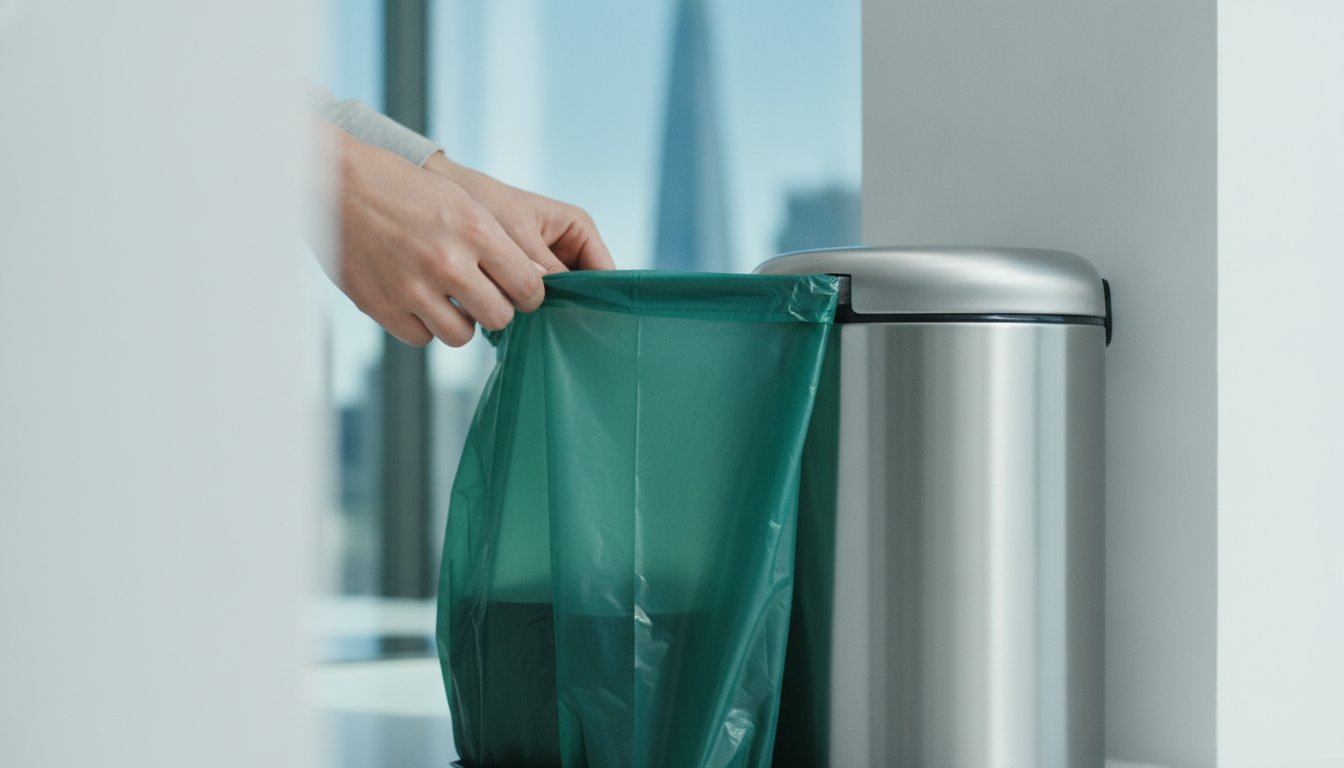
What if the most significant obstacle to your organisation's sustainability goals is currently splitting under the weight of wet waste in your service corridors? Many facilities managers have found that procuring compostable sacks for commercial food waste often leads to more mess than progress when the materials aren't built for industrial reality. It's a frustrating setback when high-level ESG commitments literally leak away because of poor material integrity or confusion over composting standards.
This 2026 procurement guide provides the clarity you need to select high-performance sacks that actually withstand the pressure of 90L to 240L bins. We'll help you distinguish between industrial and home standards while ensuring your supply chain remains fully compliant with the latest UK waste regulations. You'll discover how puncture-resistant, EN13432-certified solutions can transform your waste streams from an operational headache into a streamlined pillar of your corporate responsibility strategy. By aligning your procurement with proven performance, you can ensure your transition to a circular economy is both practical and permanent.
Key Takeaways
- Identify the specific technical benchmarks, including EN13432 certification, that ensure your food waste is processed effectively in industrial composting facilities.
- Discover the essential performance features that prevent leaks and splits, such as puncture resistance and advanced base-sealing techniques.
- Learn how to select durable compostable sacks for commercial food waste that satisfy both operational demands and rigorous ESG reporting requirements.
- Explore the strategic benefits of partnering with UK-based experts to secure a reliable supply of high-quality, plastic-free waste solutions.
Understanding Technical Standards for Commercial Food Waste Sacks
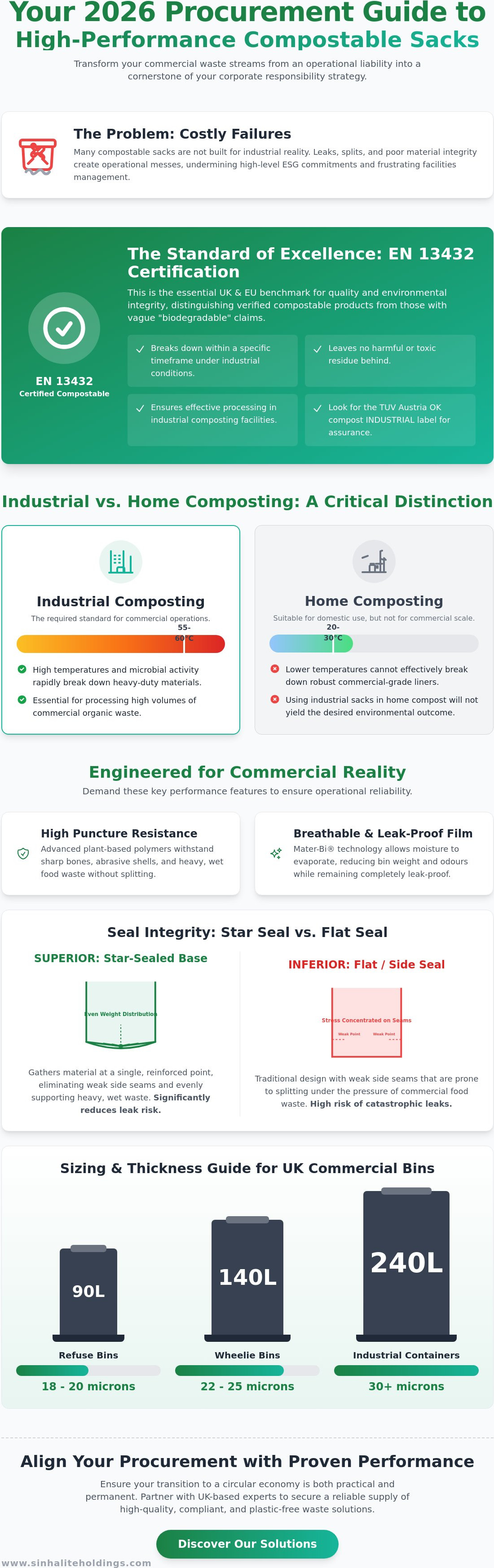
Selecting the right compostable sacks for commercial food waste requires more than a cursory glance at packaging labels. In the United Kingdom, the EN13432 standard represents the essential benchmark for quality and environmental integrity. This certification ensures that a product will break down within a specific timeframe under industrial conditions, leaving no toxic residue behind. Understanding the technical standards for compostable bags is vital for procurement teams who must distinguish between vague claims of biodegradability and verified compostability.
To better understand this concept, watch this helpful video:
Commercial operations generate high volumes of organic matter that require rapid, efficient processing. To meet these demands, modern sacks utilise advanced plant-based polymers such as corn starch and Mater-Bi. These materials are engineered to perform under industrial stress while maintaining their ecological promise. Verification through the TUV Austria OK compost INDUSTRIAL label provides the necessary assurance that your waste management choice aligns with professional processing capabilities.
Industrial vs. Home Composting: What Businesses Need to Know
Commercial kitchens operate at a scale where garden-variety solutions simply fail. Industrial composting facilities maintain temperatures between 55°C and 60°C, which are significantly higher than those found in a domestic heap. These elevated temperatures, combined with specific microbial activity, are required to break down heavy-duty commercial liners effectively. For a deeper technical analysis, you can explore our guide on home compostable vs industrial compostable standards.
The Role of Breathable Materials in Waste Management
Managing food waste is as much about weight control as it is about containment. Breathable plant-based films allow moisture to evaporate from the waste, which naturally reduces the overall weight of the bin contents. This evaporation process is crucial because it prevents the anaerobic conditions that typically result in foul odours. Mater-Bi technology facilitates this essential moisture transfer while remaining completely leak-proof, ensuring a cleaner and more manageable environment for your staff.
Performance Features: Selecting Sacks That Withstand Commercial Stress
Operational reliability in a busy kitchen depends on the physical integrity of your waste management tools. While the previous section established the importance of technical certification, the practical reality of catering involves sharp bones, heavy liquids, and abrasive shells. To avoid the logistical mess of a split liner, procurement officers must prioritise puncture resistant compostable garbage bags that match the intensity of their environment. Global shifts, such as the evolving commercial organics recycling regulations seen in pioneering regions, underscore the need for durable solutions that facilitate seamless waste diversion.
Superior weight distribution is achieved through star-sealed bottoms. This design feature gathers the material at a single point at the base, which eliminates the weak side-seams found in traditional flat liners. By choosing a star-sealed design, you ensure that heavy, wet food waste is supported evenly, significantly reducing the risk of catastrophic leaks during transport to the collection area. For consistent performance, we recommend specific micron thicknesses based on bin capacity:
- 90L Refuse Bins: Aim for 18 to 20 microns to balance flexibility with strength.
- 140L Wheelie Bins: Use 22 to 25 microns to handle the deeper drop and increased weight.
- 240L Industrial Containers: Specify 30 or more microns to ensure the integrity of the sack under maximum load.
Sizing Guide for Standard UK Commercial Bins
Selecting the right compostable sacks for commercial food waste involves matching the liner's dimensions to the specific refuse container. A sack must provide at least 10 to 15cm of overhang to prevent it from slipping into the bin as it fills. In fast-paced hospitality settings, wave-top designs are often preferred over tie-handles because they allow for a secure knot without sacrificing the sack's volume. This small adjustment in design can significantly improve staff efficiency during peak service times.
Managing Moisture and Odour in High-Volume Kitchens
The breathability of plant-based materials is a functional advantage for odour control commercial food waste bags. Unlike plastic, which traps heat and accelerates rot, compostable films allow moisture to escape. You can prevent liners from sticking to the bin by ensuring the container is properly ventilated or by using a bin with an internal grate. Because this process allows moisture to evaporate, it reduces the total weight of the waste, which directly lowers your collection costs. If you're ready to upgrade your facility's efficiency, you can explore our high-performance range of compostable solutions.
Scaling Sustainability: Procurement and Operational Efficiency
Scaling sustainability within a large organisation requires a transition from fragmented purchasing toward a cohesive, performance-driven strategy. Implementing compostable sacks for commercial food waste offers a measurable return on investment by improving corporate ESG ratings and reducing liabilities associated with landfill taxes. With the global market for compostable refuse bags projected to reach $3.9 billion in 2026, the shift toward these materials is no longer a niche choice but a global industrial standard. Sourcing these essential tools from UK-based specialists like Sinhalite Holdings provides the supply chain security needed to maintain operations without interruption.
Bulk procurement remains the most effective method for managing the per-unit cost of sustainable packaging. It's a strategic move to consolidate orders for items such as compostable garbage bags and caddy bags, allowing procurement officers to achieve the scale needed to make green initiatives financially viable. This structured approach simplifies the waste stream for frontline staff. When the system is intuitive and the sacks are reliable, compliance with internal recycling protocols increases naturally.
Integrating with National Waste Collection Frameworks
Your choice of sack must align with the specific requirements of UK waste contractors and local authorities to ensure seamless collection. This integration is the foundation of a circular economy, where organic waste is returned to the soil as high-quality compost rather than being lost to incineration. Maintaining staff buy-in for these initiatives depends on a clean working environment, which is why understanding how to keep a food waste bin from smelling is a critical component of any operational roll-out.
Future-Proofing Your Business Against Plastic Regulations
Upcoming UK legislation regarding mandatory food waste separation will soon require all businesses to implement dedicated organic recycling. Early adoption of certified compostable solutions mitigates the risk of future plastic packaging taxes and ensures your organisation is prepared for stricter environmental audits. Sinhalite Holdings acts as a visionary partner in this transition, providing the high-quality compostable solutions required to navigate an increasingly regulated landscape with confidence.
Leading the Transition to Professional Food Waste Management
Adopting high-performance compostable sacks for commercial food waste is a decisive step toward operational excellence and environmental stewardship. By prioritising materials that meet the rigorous EN13432 and TUV Austria standards, your organisation ensures that waste streams remain clean and fully compliant with evolving UK regulations. Success in this transition depends on moving beyond basic alternatives and selecting sacks engineered for the specific stresses of a busy catering environment.
As a UK-based specialist in high-performance compostable packaging, Sinhalite Holdings provides solutions designed for durability. Our products are specifically engineered for puncture resistance and superior load-bearing capacity; this ensures that your team can manage heavy organic waste without the risk of operational failure. Aligning your procurement strategy with these advanced materials supports a circular economy while protecting your facility from the hidden costs and liabilities of plastic waste.
The path to a sustainable future is paved with practical, scalable choices. Explore the Sinhalite range of heavy-duty compostable sacks for your business today and take command of your corporate responsibility targets. We're here to help you build a more resilient and responsible industrial landscape through innovation and integrity.
Frequently Asked Questions
Are compostable sacks strong enough for heavy commercial food waste?
Yes, modern compostable sacks are engineered with industrial-grade plant polymers that provide high puncture resistance and tensile strength. When you select sacks with appropriate micron thickness and star-sealed bottoms, they easily withstand the weight and moisture of catering waste. These performance features ensure that the bags remain intact during transit, preventing the leaks and splits often associated with inferior alternatives.
What is the difference between biodegradable and compostable sacks for business use?
Compostable sacks are strictly regulated and must meet the EN13432 standard to guarantee they break down completely in industrial facilities without leaving toxic residues. Biodegradable is a much broader and less regulated term that doesn't define a specific timeframe or environmental outcome. For commercial entities, choosing certified compostable products is the only way to ensure full compliance with organic waste processing requirements.
Do compostable commercial sacks have a shelf life?
Yes, because they are made from organic materials like corn starch, these sacks typically have a shelf life of 12 to 18 months. To maintain the performance of compostable sacks for commercial food waste, it's best to store them in a cool, dry location away from direct sunlight. Proper storage prevents the premature breakdown of the material and ensures the sacks retain their load-bearing integrity when they're finally put to use.
Can these sacks be used in standard UK council food waste collections?
Most UK councils and commercial waste contractors accept EN13432-certified sacks because they're compatible with industrial anaerobic digestion and composting systems. These bags are specifically designed to be processed alongside organic matter in high-temperature facilities. You should always verify specific local requirements, but certified compostable liners are the standard choice for professional food waste diversion across the country.
How do compostable liners help with commercial kitchen hygiene?
Using compostable sacks for commercial food waste improves kitchen hygiene by allowing moisture to evaporate through the breathable film. This process prevents the anaerobic conditions that cause foul odours and reduces the buildup of liquids at the bottom of the bin. By keeping the waste drier, these liners make the bins easier to clean and create a more pleasant environment for your kitchen staff.


