What if that faint, cereal-like scent coming from your kitchen drawer isn't a sign of chemical off-gassing, but a confirmation of natural integrity? Many eco-conscious households ask: do compostable bags smell before they even touch a scrap of food waste? It's a valid concern, especially when you're used to the sterile, artificial scent of traditional plastics. That unique aroma is actually a hallmark of bio-polymers derived from renewable sources like corn starch or vegetable oils. It signals that your choice aligns with the rigorous 2026 standards for certified compostability and safety.
We understand that transitioning to responsible practices can feel uncertain when your tools behave differently than the ones you've used for decades. You'll discover why these scents are entirely non-toxic and how they differ from the odours generated by decomposing organic matter. This guide provides expert insights into maintaining a fresh kitchen caddy while adhering to the latest environmental regulations. We'll explore the science behind these sustainable materials and share practical methods to ensure your commitment to the planet doesn't compromise your home's atmosphere.
Key Takeaways
- Understand the origin of the sweet, earthy aroma found in new liners and why it signifies the use of natural, bio-based materials.
- Address the common question, do compostable bags smell because of chemicals, by exploring how heat-treated plant starches create a safe, popcorn-like scent.
- Learn how the inherent breathability of bio-polymers prevents anaerobic rot, helping you distinguish between natural material scents and food waste odours.
- Implement proven ventilation and airflow strategies to maintain a hygienic kitchen environment while using compostable caddy bags.
- Discover how choosing bags with EN 13432 and OK compost HOME certifications ensures structural stability and long-term performance in your home.
Understanding the Scent of New Compostable Bags
When you first introduce sustainable alternatives into your home, the sensory experience often changes. It is common for users to ask: do compostable bags smell differently than the plastic versions they are replacing? This distinct aroma is not a defect; it is a sign of a high-performance material derived from nature. Unlike traditional petroleum-based products, these liners are composed of plant starches and bio-polymers that carry their own inherent characteristics. This mild scent is a natural byproduct of the manufacturing process and serves as a sensory confirmation that the product is rich in plant matter.
Traditional plastic manufacturers often rely on heavy industrial masking agents or synthetic perfumes to hide the acrid scent of polyethylene. In contrast, a high-quality biodegradable bag remains transparent in its composition, allowing the authentic scent of its raw inputs to remain present. Transitioning to these materials represents a shift toward transparency and environmental stewardship, where the "new bag" smell is a hallmark of ecological integrity rather than chemical processing.
To better understand the practical side of managing these materials in your home, watch this helpful video:
Common Descriptors: What Should a Compostable Bag Smell Like?
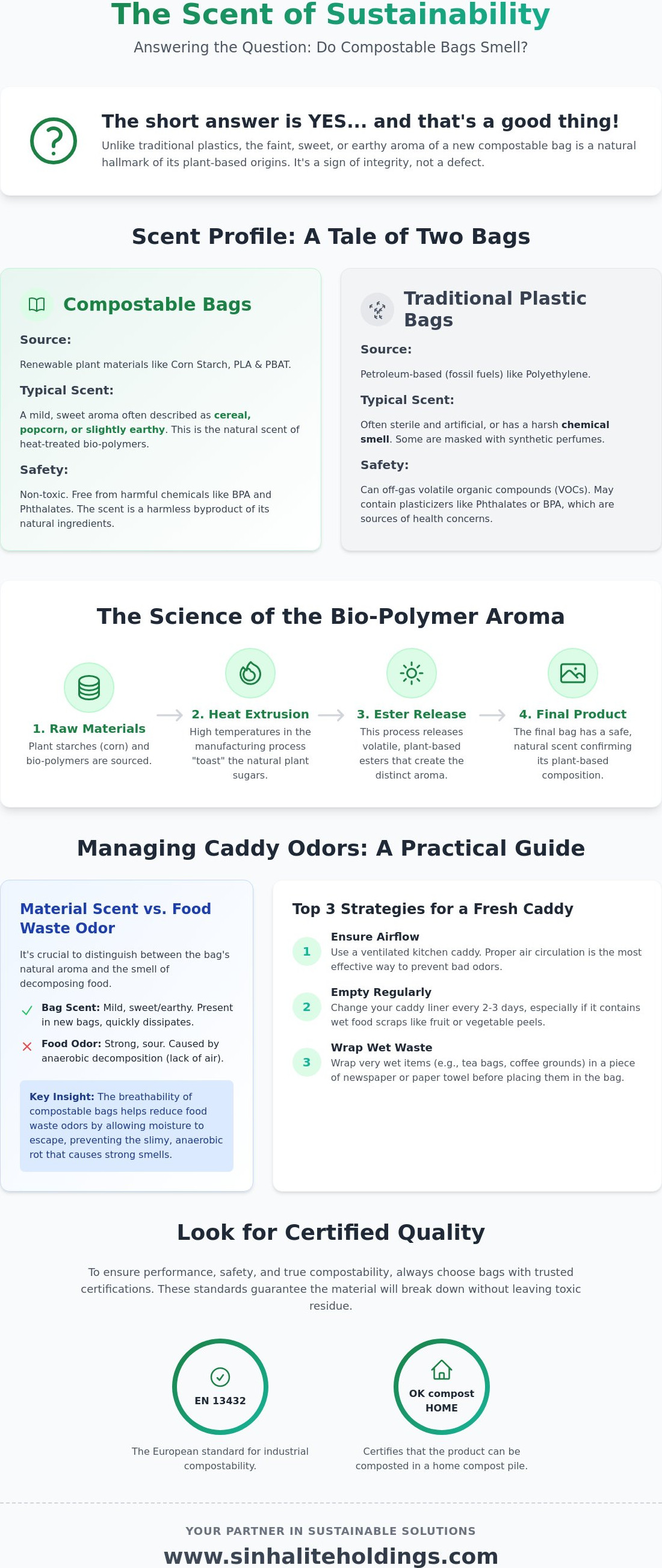
Cornstarch-based liners typically emit a scent reminiscent of cereal or warm popcorn. This occurs because the heat used during the extrusion process slightly toasts the natural sugars found in the starch, creating a sweet, familiar aroma. If the bag utilizes a blend of PBAT and PLA, you might notice a more muted, earthy, or mushroom-like profile. These scents are most concentrated when you first break the seal of a new package. In a sealed box, the volatile compounds naturally released by the bio-based materials have nowhere to go, resulting in a sudden, noticeable puff of "bio-scent" that dissipates quickly once the bag is in use.
Is the Scent Toxic? Safety and Off-Gassing
Concerns regarding off-gassing often stem from experiences with low-grade plastics, yet the scent of a certified compostable liner is fundamentally different. These products are engineered to be free from harmful phthalates and BPA, which are the primary culprits in the toxic "new plastic" smell. While you might wonder do compostable bags contain plastic, the reality is that certified liners are designed to return to the earth without leaving behind microplastics or toxic residues. The absence of synthetic perfumes means you're smelling the raw, honest ingredients of the product. This safety profile is a core reason why these materials are becoming the global standard for responsible waste management.
The Science Behind the "Sweet" Bio-Polymer Aroma
The distinct aroma of a fresh liner is a direct result of its molecular composition. While we've identified the descriptors of this scent, it's vital to understand the chemical interactions occurring during production. When people ask, "do compostable bags smell by design?", the answer lies in the interaction between raw organic inputs and industrial processing. The primary ingredients, usually a blend of cornstarch, Polylactic Acid (PLA), and Polybutylene adipate terephthalate (PBAT), undergo significant thermal changes. As these materials move through the extrusion process, high temperatures essentially "toast" the natural fructose and plant sugars, releasing volatile plant-based esters that settle into the material as it cools.
Humidity plays a secondary role in how we perceive these scents. Because bio-polymers are designed to interact with moisture to facilitate eventual breakdown, high humidity can slightly amplify the release of these natural esters. This is a functional trait rather than a flaw. Global environmental authorities, including the NYC Department of Sanitation, highlight that managing moisture is key to successful composting, and this same principle applies to how these bags behave in your kitchen. If you notice a stronger scent on a damp day in the UK, it's simply the material responding to its environment as intended.
Cornstarch and Fructose: The Foundation of the Scent
Starch-based resins are highly sensitive to oxygen. When a sealed package is first opened, the sudden exposure to air triggers the release of trapped aromatic compounds. This biological reaction is unique to plant-based sugars and is entirely absent in petroleum products. It's also common for different production batches to exhibit varied scent intensities. Since raw agricultural inputs like corn or sugarcane vary based on soil conditions and harvest cycles, the resulting bio-polymers reflect that natural diversity. This variability is a testament to the authentic, renewable origins of the product.
PLA and PBAT: The Modern Bioplastic Blend
PLA is created through the fermentation of plant starch, typically sourced from corn or sugarcane. This process creates a rigid material that carries a light, sugary scent. To ensure the bags have the durability required for domestic use, they're often blended with PBAT. While PBAT is a synthetic bio-polymer, it's fully compostable and lacks the heavy chemical odour associated with traditional polyethylene. This combination creates a stable, breathable barrier that allows moisture to escape while maintaining structural integrity. Choosing high-quality compostable garbage bags ensures that this scientific balance is maintained, providing a performance-driven solution that respects the natural environment.
Material Scent vs. Food Waste Odours: Making the Distinction
Discerning the source of a scent is a vital skill for maintaining a sustainable kitchen. While the initial question of many new users is whether do compostable bags smell, it's often the contents rather than the container that dictate the atmosphere of the room. It's essential to differentiate between the inherent, sweet bio-aroma of the liner and the pungent results of anaerobic decomposition. Traditional plastic liners act as a total barrier, trapping oxygen out and sealing moisture in. This creates a perfect environment for the bacteria that produce foul-smelling gases. In contrast, high-quality compostable materials are engineered for semi-permeability, fundamentally changing how food scraps interact with their environment.
When you encounter a scent in your kitchen caddy, take a moment to identify its profile. The material scent remains consistent, light, and generally pleasant, similar to the cereal notes discussed in previous sections. If the odour is sharp, acidic, or reminiscent of sulphur, you're experiencing the natural breakdown of organic matter. Understanding this distinction empowers you to manage your waste more effectively, ensuring that your transition to eco-friendly practices remains a positive experience for your household.
The Breathability Benefit: Why It Matters for Odour
Bio-polymers are naturally breathable, allowing water vapour to escape through the walls of the bag. This moisture evaporation is a critical functional advantage. When moisture is trapped inside a plastic bag, it pools at the bottom, creating a "sludge" that accelerates rot and intensifies ammonia and sulphur smells. Because compostable liners allow waste to "breathe," the contents tend to dry out rather than liquefy. This aerobic environment significantly reduces the intensity of common waste odours, making the caddy much more hygienic than a traditional plastic bin. By choosing breathable liners, you're opting for a system that works with natural processes rather than fighting against them.
Identifying "Bad" Odours: When to Change Your Liner
Even the most advanced liners have limits when faced with high-nitrogen waste. Scraps like meat, dairy, or cooked leftovers break down rapidly and can produce a vinegar-like or rotten egg smell if left for too long. These are clear indicators of anaerobic rot. It's best practice to monitor these specific signs:
- Sharp Acidity: Indicates that fruit or vegetable scraps are fermenting.
- Sulphurous Notes: A sign that protein-rich foods are decomposing without enough oxygen.
- Condensation on the Caddy Floor: Suggests the bag has reached its moisture-wicking capacity.
Effective Strategies to Manage Caddy Odours in 2026
Maintaining a hygienic kitchen environment is a shared responsibility between the manufacturer's material science and the user's daily habits. While we have established that the sweet bio-aroma is a natural trait, managing the secondary odours from food scraps requires a methodical approach. By implementing specific ventilation techniques and natural neutralisers, you can ensure your transition to sustainable waste management remains seamless and odour-free. These strategies are particularly important in the UK climate, where shifting humidity levels can influence the rate of organic decomposition inside your caddy.
Effective odour management begins with a commitment to airflow. Because bio-polymers are engineered for breathability, any system that restricts air movement will inadvertently lead to the "bad" odours described earlier. When people ask, do compostable bags smell over time, the answer often depends on how much oxygen is reaching the waste. An aerobic environment is your strongest ally in preventing the sharp, acidic scents associated with anaerobic rot.
Optimising Your Kitchen Caddy Setup
The hardware you choose is just as important as the liner itself. A vented caddy, featuring small perforations in the sides or lid, allows the moisture-wicking properties of the bio-polymer to function correctly. This evaporation prevents the accumulation of liquid at the base, which is the primary cause of bin odours. To further enhance this process, place a single sheet of dry newspaper at the bottom of the bag. This acts as a secondary buffer to absorb excess moisture from items like coffee grounds or vegetable peelings.
For a natural deodorising boost, a light dusting of bicarbonate of soda at the bottom of the caddy is highly effective. Unlike harsh chemical bleaches that can interfere with the composting process, bicarbonate of soda is a mineral-based neutraliser that balances pH levels and absorbs acidic odours. This simple addition keeps the caddy fresh without introducing synthetic toxins into your organic waste stream.
Best Practices for Disposal and Storage
Consistency is key to performance. For optimal hygiene, we recommend changing your caddy liner every 2 to 3 days, regardless of how full it is. This frequency prevents high-nitrogen waste from reaching the stage of intense decomposition. If you're looking for more detailed guidance, you can explore our guide on how to keep a food waste bin from smelling to master your daily routine.
Proper storage of your unused liners also impacts their performance. Store your rolls in a cool, dry cupboard away from direct sunlight or steam. Excess humidity in a pantry can prematurely "activate" the natural esters in the material, leading to a stronger bio-scent before the bag is even used. By protecting the integrity of the material from the start, you ensure it performs as intended when it's time to manage your waste. To upgrade your kitchen setup with high-performance liners, explore our range of compostable caddy bags designed for modern environmental standards.
Why Sinhalite Compostable Bags Prioritise Performance and Hygiene
Sinhalite Holdings serves as a dedicated partner for UK households and businesses seeking to align their daily operations with modern ethical standards. We recognise that the transition to a circular economy requires tools that are as reliable as they are responsible. When consumers ask, do compostable bags smell, they're often seeking assurance that environmental stewardship won't compromise the hygiene of their living spaces. Our range of caddy and garbage bags is specifically engineered to address this balance, utilising high-density bio-polymer blends that minimise unwanted aromas while providing the structural integrity needed for heavy food waste.
Our commitment to excellence is reflected in our adherence to the most rigorous international standards. By meeting the EN 13432 requirement, our products are verified to undergo complete biodegradation in industrial composting facilities. This precision in manufacturing ensures that every liner performs consistently, providing a stable barrier that respects both the user's environment and the natural world. We view every bag as a tangible tool for positive change, helping to bridge the gap between visionary ecological goals and practical domestic requirements.
Certified Quality for UK Households
The OK compost HOME certification is a cornerstone of our product philosophy. This designation ensures that our materials maintain their integrity and scent control properties even in the lower temperatures of a domestic compost heap. Puncture resistance is another vital feature of our design. By preventing leaks and tears, our bags stop high-nitrogen liquids from escaping into the caddy, effectively eliminating the primary source of foul odours. These performance standards make our liners a staple in sustainable solutions for the hospitality industry, where durability is non-negotiable.
The Sinhalite Commitment to Transparency
Integrity is at the heart of our operations, which is why we provide a "no hidden plastics" guarantee for all our compostable liners. We believe that transparency in composition leads to better outcomes for the planet and more confidence for the consumer. Our manufacturing process is strictly controlled to ensure that the "bio-scent" discussed in this guide remains mild and consistent across every batch. This reliability allows you to focus on your sustainability journey without worrying about unexpected chemical odours or material failure. To upgrade your waste management system today, explore our full range of compostable caddy bags and liners and discover the benefits of high-performance, plant-based innovation.
Advancing Toward a Greener, Cleaner Kitchen
Transitioning to responsible waste management is a significant step toward a more sustainable future. We've established that the natural aroma of bio-polymers is a positive indicator of plant-based integrity rather than a cause for concern. While it's common to wonder do compostable bags smell, the reality is that these breathable materials actually help prevent the foul, anaerobic odours associated with traditional plastic. By maintaining proper ventilation and choosing high-performance liners, you can ensure your home remains fresh while significantly reducing your environmental footprint.
As a trusted UK specialist in sustainable packaging, Sinhalite Holdings offers the durability and stability your household requires. Our puncture-resistant high-density bio-polymers are designed to withstand the demands of daily waste without leaking or failing. With both EN 13432 and OK compost HOME certifications, you can trust that our products meet the most rigorous global standards for safety and performance. Switch to high-quality, certified compostable liners from Sinhalite Holdings today. Together, we can make a lasting positive impact on our planet through practical, visionary choices.
Frequently Asked Questions
Why do my compostable bags smell like popcorn or burnt sugar?
This aroma is a natural result of the manufacturing process where heat is applied to plant-based resins such as cornstarch. As the materials move through the extrusion phase, the natural sugars effectively caramelise, creating a scent often compared to cereal or popcorn. This fragrance is a hallmark of high plant-matter content and serves as a non-toxic indicator of the product’s renewable origins rather than a chemical defect.
Will the smell of the compostable bag transfer to my food?
No, the light bio-scent of a compostable bag will not transfer to your food items. These materials are chemically inert and designed for high stability during use, ensuring that your produce remains unaffected by the bag’s natural aroma. Products like compostable food roller bags are specifically engineered to meet strict food-contact safety standards, providing a hygienic barrier that maintains the integrity and flavour of your ingredients.
How can I remove the "new bag" scent from my compostable liners?
You can naturally dissipate the "new bag" scent by simply airing out the liners for a few minutes before use. Once the bag is removed from its concentrated packaging and exposed to open air, the volatile plant esters quickly evaporate. Storing your rolls in a well-ventilated, cool area also prevents the scent from building up within the box, ensuring a more neutral experience when you retrieve a fresh liner.
Are compostable bags more likely to smell than traditional plastic bags?
While new compostable bags have a distinct bio-scent, they are actually less likely to develop foul waste odours than traditional plastic. Because these liners are breathable, they allow moisture to evaporate rather than pooling at the bottom of the bin. This prevents the anaerobic rot that causes the intense, lingering smells common in sealed plastic bags. Consequently, many households find their kitchen remains fresher after making the switch.
Is the scent of bioplastic bags a sign of greenwashing or chemicals?
The scent is actually a sign of authentic, plant-based composition rather than hidden chemicals or greenwashing. Unlike petroleum-based plastics that often require synthetic perfumes to mask industrial smells, certified compostable liners remain transparent in their natural state. When people ask, do compostable bags smell because of additives, they're often reassured to learn that the aroma comes directly from renewable inputs like corn starch or sugarcane starches.
What is the best way to stop a compostable caddy bag from smelling in the kitchen?
The most effective method for odour control is ensuring constant airflow around your caddy. Using a vented bin allows the bag’s breathable walls to wick away moisture, which stops food scraps from liquefying and rotting. Additionally, changing the bag every two to three days prevents high-nitrogen waste from breaking down too rapidly. These simple habits work in harmony with the material’s science to maintain a clean, odour-free kitchen environment.
Do compostable bags smell worse when they start to break down?
No, the material itself does not emit a foul odour during the initial stages of biodegradation. Any increase in smell during use is almost always attributed to the decomposition of the organic waste inside the bag rather than the bio-polymer failing. High-quality liners are designed to remain structurally stable throughout their use in the home, only beginning the intensive breakdown process once they reach a high-heat industrial or home composting environment.
Can I use essential oils to mask the smell of my compostable bin liner?
You can use a few drops of essential oils on a cotton ball at the base of your caddy to provide a fresh fragrance. While this is safe for the compost, it's usually unnecessary if you follow proper ventilation practices. If you choose this method, stick to natural oils like lemon or peppermint, as these won't introduce synthetic toxins into your organic waste stream or interfere with the eventual composting process.