The reusable wrap you assume is the most sustainable choice might actually be the least practical for your daily workflow. For many households and businesses, the comparison of beeswax wraps vs compostable cling film boils down to a struggle between environmental ideals and real-world performance. You’ve likely felt the frustration of a wax wrap that refuses to stick to a ceramic bowl or the lingering worry about whether it’s truly hygienic after touching oily foods. While the desire to eliminate single-use plastic is universal, the path to a waste-free kitchen shouldn't involve compromising on food safety or convenience.
We believe that a transition to responsible practices is most successful when the tools are as reliable as the values they represent. This guide explores the critical differences in performance, hygiene, and environmental impact to help you find your ideal plastic-free solution. You'll discover how the 2026 EU Packaging and Packaging Waste Regulation is tightening the rules on green claims and why modern compostable film, certified to EN 13432 standards, offers a hygienic alternative that fits seamlessly into existing operations. We'll examine disposal processes and functional limits to ensure your transition to responsible packaging is both effective and sustainable.
Key Takeaways
- Understand the structural differences between cotton-infused reusables and modern plant-based polymers to select the most effective material for your food storage needs.
- Evaluate the performance of beeswax wraps vs compostable cling film in hygiene-critical environments where raw proteins and high-volume turnover require a sterile, single-use solution.
- Analyse the commercial viability of each option by considering the hidden labour costs of cleaning reusables against the scalable efficiency of certified compostable films.
- Learn how to successfully integrate compostable household clingfilm into your existing food waste caddies to ensure a truly circular and responsible disposal process.
Understanding the Mechanics: Reusability vs. Responsible Disposal
Transitioning away from linear "take-make-waste" models requires a fundamental shift in how we package our food. Traditional PVC and PE plastics persist in the environment for centuries, but modern innovation provides two distinct pathways toward a circular economy. A Beeswax wrap serves as a durable, multi-use barrier made from cotton infused with food-grade wax, resin, and plant oils. Conversely, compostable cling film utilizes advanced plant-based polymers to offer the familiar performance of plastic while ensuring a responsible end-of-life.
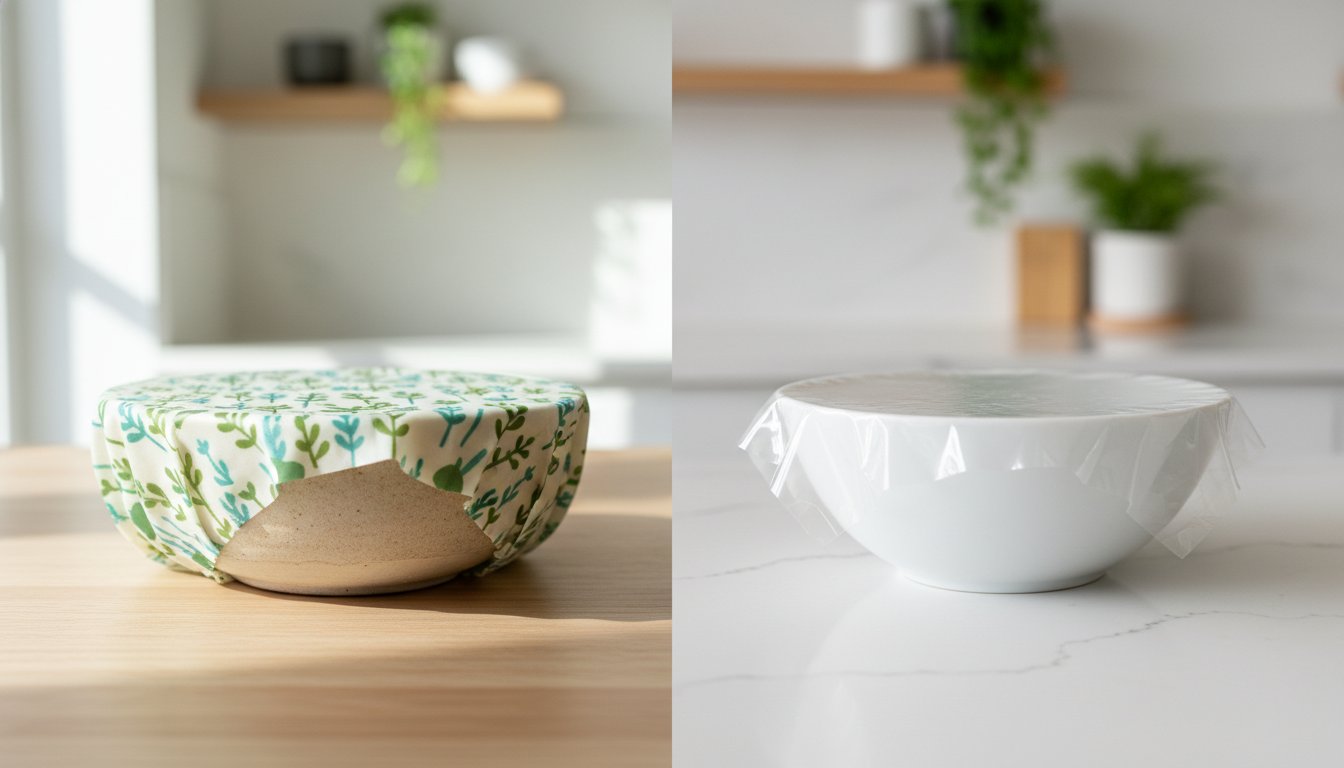
Choosing between beeswax wraps vs compostable cling film involves balancing the benefits of reusability against the efficiency of biodegradable disposables. Both materials represent a significant departure from petroleum-based products, yet they operate on different mechanical principles. While wax wraps rely on the physical properties of natural resins to create a seal, compostable films use molecular engineering to achieve high-performance "cling" without synthetic adhesives.
To better understand this concept, watch this helpful video:
The Lifecycle of a Beeswax Wrap
The manufacturing process involves saturating organic cotton with a blend of beeswax or vegan alternatives, pine resin, and jojoba oil. This creates a breathable yet protective layer that can be reused for up to a year with proper care. Maintenance is straightforward but specific; you must wash them in cold water to prevent the wax from melting. Once the wrap loses its tackiness, it doesn't need to enter a landfill. Instead, you can shred it and add it directly to a home compost bin where it returns to the earth as organic matter.
How Modern Compostable Film Works
Modern biopolymers have revolutionised the industry by providing a scalable solution for high-volume environments. It's vital to distinguish between industrial requirements and home-compostable standards to avoid waste stream contamination. Look for certifications like OK compost HOME or the European EN 13432 standard to ensure the product truly breaks down in garden conditions. A compostable cling film is a plant-based barrier that breaks down into CO2, water, and biomass within 12 months in a home compost heap. This ensures that even if local industrial facilities aren't available, your waste management remains environmentally sound and scientifically verified.
Performance and Hygiene: Why Compostable Film Wins in Busy Kitchens
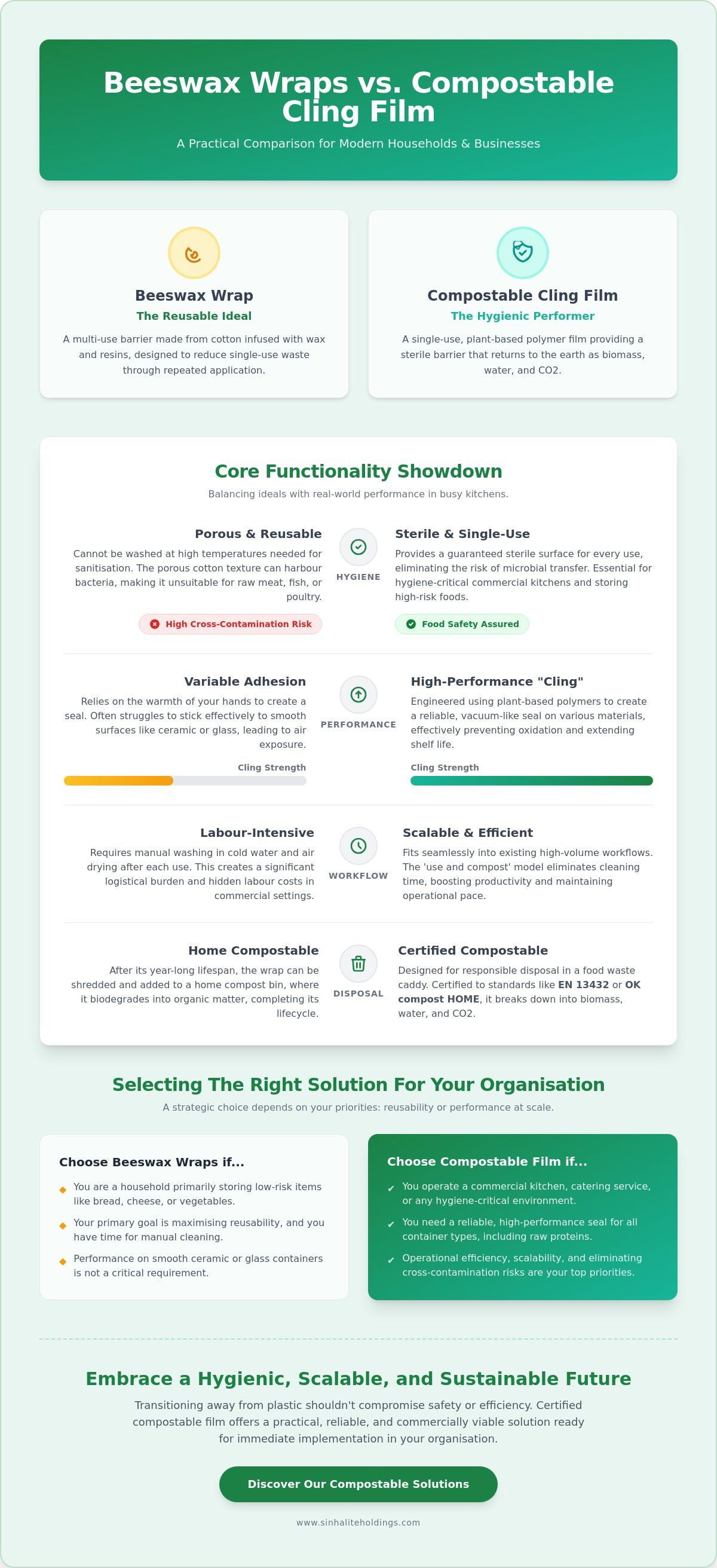
When comparing beeswax wraps vs compostable cling film, the most significant differentiator is often invisible to the naked eye: microbial safety. Reusable wax wraps are excellent for low-risk items, but they present tangible challenges in high-stakes environments. Because they cannot withstand the high temperatures required for sanitisation, they're fundamentally unsuitable for wrapping raw meat, poultry, or fish. Bacterial growth thrives in the porous texture of cotton, making it difficult to guarantee a sterile surface after repeated use.
Performance at scale involves more than just hygiene; it's about kitchen workflow. Washing and drying hundreds of reusable wraps is a logistical burden that most commercial kitchens or busy households can't support. Compostable film provides a vacuum-like seal on glass and ceramic that wax wraps often struggle to replicate. This "cling" factor is essential for preventing oxidation and extending the shelf life of prepared ingredients.
Food Safety and Cross-Contamination
In professional food preparation, the single-use nature of compostable film acts as a critical safety asset. It eliminates the risk of cross-contamination that occurs when reusables aren't perfectly cleaned. There's also a risk of heat-sensitive wax coatings melting or leaching when they touch warm leftovers. For organisations managing large-scale catering, understanding these risks is vital. You can explore more about this in our Commercial Compostable Cling Film UK: The 2026 Business Strategy Guide.
Versatility in Food Storage
While beeswax wraps are excellent for bread and hard cheeses, compostable film is essential for high-moisture vegetables and protein storage. These plant-based films are freezer-safe and microwave-compatible, offering a level of resilience that natural waxes simply don't possess. Transparency is another operational advantage, allowing staff to identify contents quickly in busy fridges without breaking the seal. To ensure these materials are properly managed at end of life, they should be integrated into existing organic waste streams. Adopting high-performance compostable solutions allows your team to maintain rigorous standards without sacrificing environmental integrity.
Strategic Implementation: Selecting the Right Solution for Your Organisation
Choosing the most effective food storage solution requires a balance between environmental responsibility and operational pragmatism. While both options address the global challenge of persistent plastic pollution, the decision between beeswax wraps vs compostable cling film often rests on your specific volume and labour capacity. For high-turnover environments like cafes, delis, or council catering services, the time required to wash, dry, and sanitise reusable wraps can become a significant hidden cost. In these settings, a high-performance compostable film offers the necessary speed and hygiene without the environmental guilt of traditional plastics.
Integrating these materials into your existing waste streams is the final step in a successful sustainability strategy. Certified compostable films are designed to be disposed of alongside food scraps in your organic waste caddy, ensuring they reach industrial composting facilities where they can break down safely. This streamlined disposal process reduces the risk of bin contamination, which is a common issue when staff are forced to navigate complex recycling rules for various plastic types. Sinhalite Holdings provides the scalable tools needed to make this transition both practical and commercially viable.
The Business Case for Compostable Cling Film
Switching to plant-based films allows organisations to meet ambitious ESG goals without disrupting established kitchen workflows. It's a solution that prioritises efficiency; your team can maintain the same pace of service while significantly reducing the company's carbon footprint. This transition avoids the overhead of managing a reusable inventory and ensures a consistent, professional seal every time. For a deeper look at technical specifications and compliance, consult The Ultimate Guide to Compostable Clingfilm in the UK: 2026 Edition.
A Hybrid Approach to Plastic-Free Storage
Many sustainable organisations find success by adopting a hybrid model. This involves using reusable wraps for dry goods like bread and hard cheeses while relying on compostable film for moisture-rich proteins and high-risk ingredients. Clear communication is essential here; educating your team on the correct disposal of each material ensures your sustainability programme remains effective. By choosing the right tool for each specific task, you demonstrate a commitment to both innovation and integrity. Explore our range of high-performance compostable cling film to start your journey toward a cleaner, plastic-free future.
Advancing Toward a Plastic-Free Future
Selecting the most effective tool for food preservation is a vital step in modern environmental stewardship. The comparison of beeswax wraps vs compostable cling film highlights that while reusables serve a purpose for dry goods, high-performance compostable film is the practical choice for hygiene and commercial scalability. By prioritising materials that align with rigorous safety standards and existing waste infrastructure, you ensure your kitchen remains both efficient and ecologically responsible.
Sinhalite Holdings acts as a specialist UK supplier for the commercial and household sectors, providing the tangible tools needed for a seamless transition. Our OK compost HOME certified products utilise tear-resistant, high-cling plant-based technology that mimics traditional performance without the ecological burden. Embracing these innovations allows your organisation to uphold the highest standards of utility while contributing to a cleaner, greener world. Positive change is entirely achievable when we equip our kitchens with solutions designed for the future.
Transition your kitchen to high-performance, compostable cling film today
Frequently Asked Questions
Can you use beeswax wraps for raw meat or fish?
No, you shouldn't use beeswax wraps for raw meat or fish because they cannot be sanitised with hot water. The wax coating melts at high temperatures, which means you can't reach the heat levels required to kill harmful bacteria. For these high-risk proteins, a single-use compostable film provides a sterile barrier that ensures food safety without the risk of cross-contamination.
Does compostable cling film actually stick to glass bowls?
Yes, modern compostable cling film is engineered with advanced plant-based polymers that provide a high-performance seal on glass, ceramic, and stainless steel. Unlike early iterations of eco-friendly wraps, today's versions offer the familiar vacuum-like "cling" required to keep food airtight. This ensures that your ingredients remain fresh while you transition away from traditional petroleum-based plastics.
How long does it take for compostable cling film to disappear in a garden bin?
Certified home-compostable film typically breaks down into water, CO2, and biomass within 12 months when placed in a well-maintained garden compost heap. It's essential to check for the "OK compost HOME" certification to ensure the material is designed for domestic conditions. This standard guarantees the film will degrade effectively without the high-heat requirements of an industrial facility.
Are beeswax wraps more cost-effective than compostable film in the long run?
When evaluating beeswax wraps vs compostable cling film, reusables are often more cost-effective for long-term storage of dry goods like bread and hard cheeses. However, for high-volume environments or moisture-rich foods, the recurring cost of compostable film is frequently offset by the significant time saved on cleaning and drying. The most efficient strategy involves using reusables for specific pantry items and compostable films for everything else.