
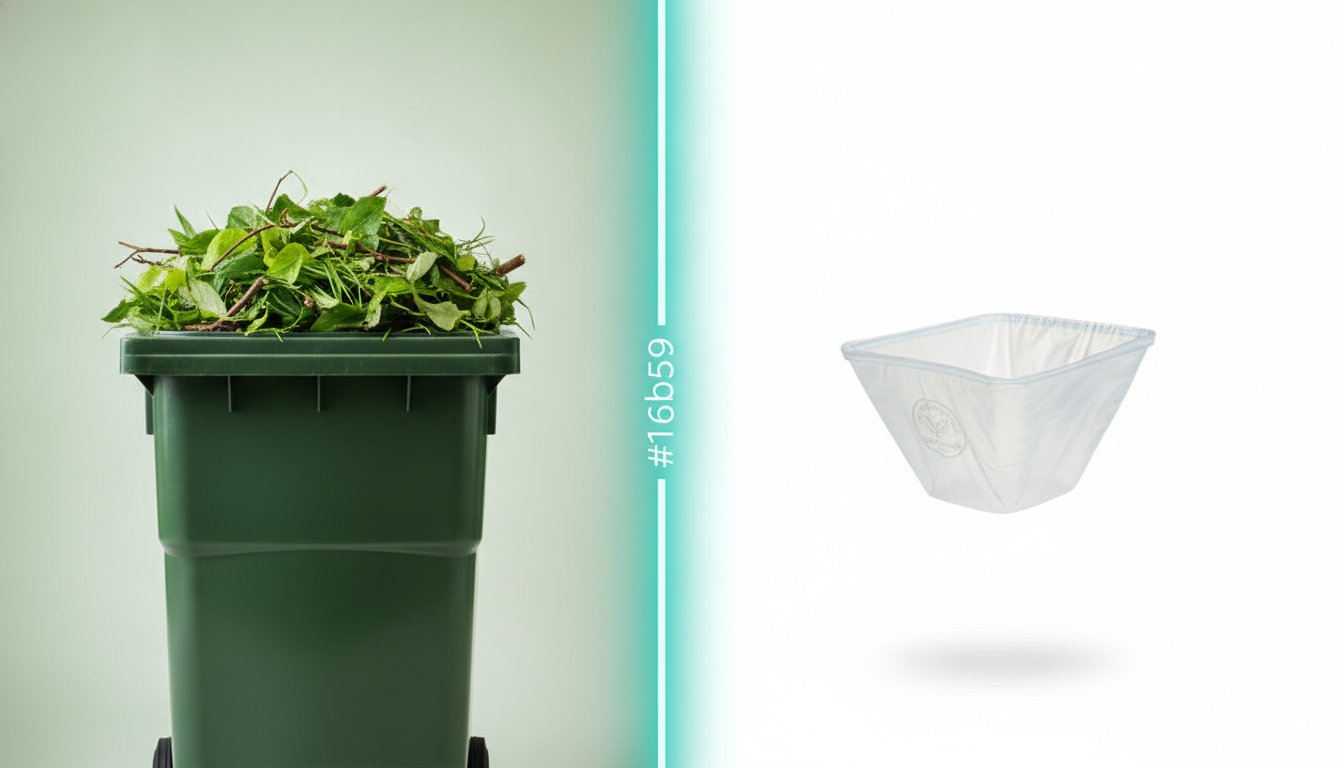
Placing a certified compostable bag into your council garden waste bin might feel like the ultimate green act, but under the UK's 2026 'Simpler Recycling' rules, it's often the very thing that gets your collection rejected. Most of us want to do the right thing for the planet, yet the overlap between "biodegradable" and "compostable" labels remains a source of genuine frustration for businesses and households alike. You shouldn't have to worry about council fines or uncollected bins when you've invested in sustainable alternatives. We understand that navigating these regulations is essential for any organisation committed to environmental stewardship.
This guide clarifies exactly how to handle these materials to ensure your green efforts actually benefit the environment. We'll answer the critical question: can you put compostable plastic in garden waste bin? You'll discover why garden waste is now strictly reserved for natural organic material while food waste caddies remain the proper home for certified liners. By understanding the EN 13432 standard and local authority variations, you can confidently transition to compostable clingfilm, caddy bags, and packaging that support a true circular economy.
Key Takeaways
- Understand why the 2026 'Simpler Recycling' regulations strictly define garden waste as natural organic material, excluding all compostable plastics from these specific collections.
- Learn the technical reasons why you cannot put compostable plastic in garden waste bin collections, as industrial In-Vessel Composting facilities are designed for specific organic profiles.
- Identify the critical exception for certified compostable caddy bags, which are widely accepted in food waste collections but remain restricted in garden waste streams.
- Master the visual cues of environmental compliance by recognising the Seedling logo and EN 13432 standard to ensure your procurement aligns with council requirements.
- Discover how to maximise the ecological impact of your waste strategy by utilising home-compostable solutions, such as compostable household clingfilm, for items that cannot enter municipal streams.
The General Rule: Why UK Councils Restrict Compostable Plastics in Garden Waste
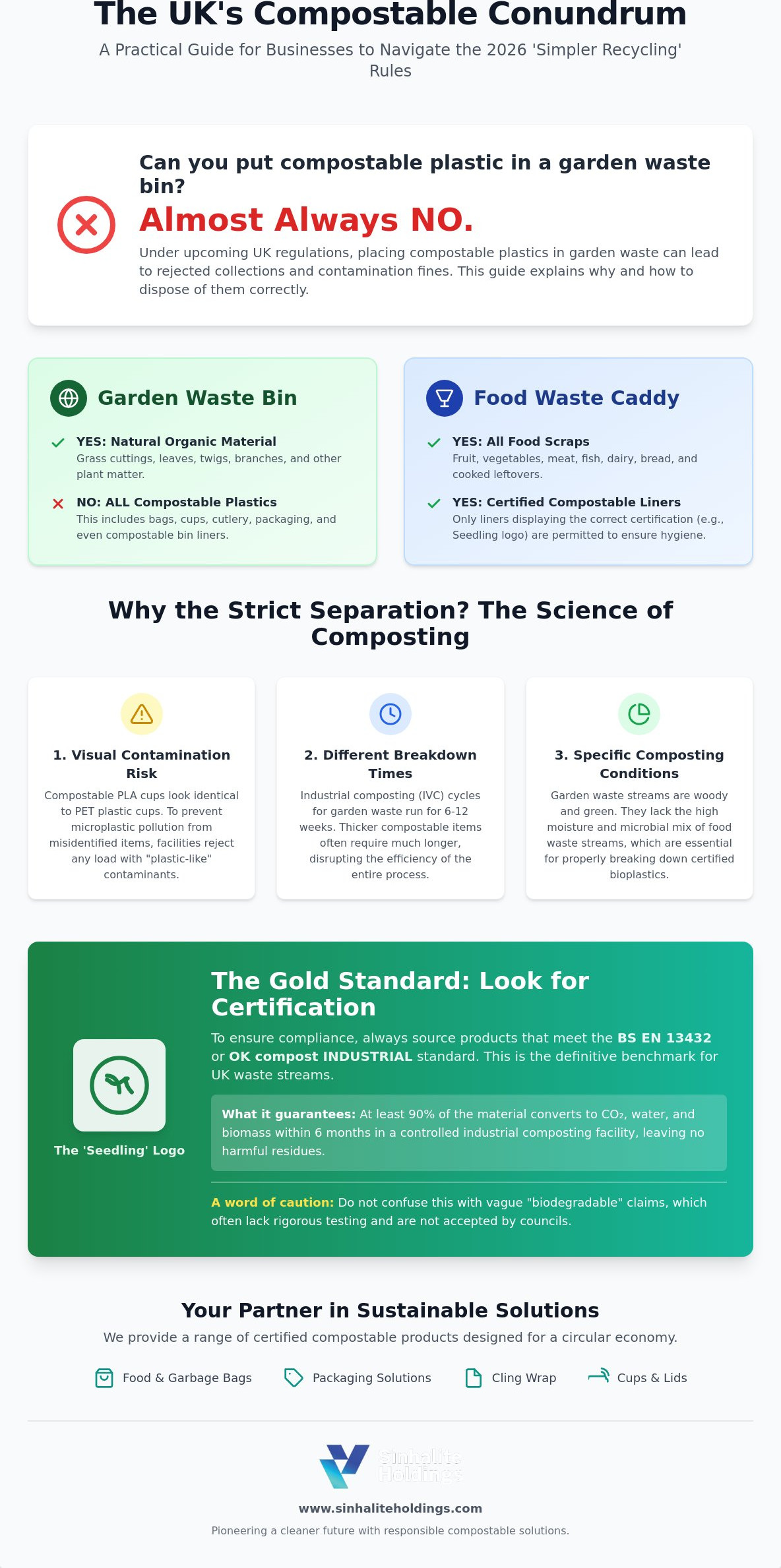
The short answer to whether you can put compostable plastic in garden waste bin collections is almost always no. While these products are designed to return to the earth, municipal facilities are engineered for specific organic profiles. Most UK councils utilise In-Vessel Composting (IVC), which subjects organic matter to high temperatures in a controlled environment. This process is highly efficient for garden clippings but struggles with the complex structure of many Bioplastic items. When non-compostable plastics enter the stream, they degrade the quality of the final compost, often rendering it useless for agricultural use.
To better understand the mechanics of sustainable waste management, watch this helpful video on organic breakdown:
Effective environmental stewardship requires a clear understanding of how materials interact with industrial systems. When businesses and households misplace compostable items, it complicates the recovery of nutrients. We believe that clarity in disposal is just as vital as the innovation behind the products themselves.
The Contamination Crisis: Why Councils Play It Safe
The primary challenge for waste management facilities is visual identification. A cup made from Polylactic Acid (PLA) looks nearly identical to one made from traditional PET plastic. This similarity forces councils to adopt a zero tolerance policy. If a batch contains items that look like plastic, the entire load is often rejected to prevent microplastic pollution. Fragmentable plastics are a particular concern because they break into smaller pieces rather than returning to the earth as nutrients, creating a long term ecological liability.
Processing Times vs. Material Breakdown
Industrial composting cycles typically run for 6 to 12 weeks. While this is sufficient for grass and twigs, thicker compostable items like trays or heavy duty cutlery often require much longer to fully degrade. Garden waste streams are primarily woody and green. They don't provide the high moisture levels found in food waste streams, which are better suited for the breakdown of certified compostable materials. Choosing the right disposal route ensures that your commitment to sustainability leads to a tangible positive impact.
When 'Compostable' is Allowed: The Caddy Liner Exception
While the 2026 regulations define garden waste strictly, food waste collections provide a vital pathway for high-quality compostable materials. Many UK councils now mandate weekly food waste collections as part of a national push toward a circular economy. In these specific systems, compostable caddy bags are often the only permitted "plastic" alternative. They are designed to break down in harmony with food scraps, ensuring that the collection process remains hygienic without introducing permanent pollutants into the nutrient cycle.
These liners are not merely convenient; they are engineered tools for environmental stewardship. By using certified bags, businesses and households can significantly increase the volume of food waste diverted from landfills. However, it's essential to recognise that this permission is specific. It doesn't automatically mean that you can put compostable plastic in garden waste bin collections, even if the material looks identical to a food caddy liner.
Identifying Certified Compostable Standards (BS EN 13432)
The BS EN 13432 standard is the definitive benchmark for UK waste streams. This standard guarantees that at least 90% of the material converts to CO2 within six months in an industrial composting environment. When sourcing supplies, you must look for the Seedling logo or the OK compost INDUSTRIAL certification. These marks provide the assurance that councils require. Don't confuse these with "biodegradable" labels, which are often vague and lack the rigorous testing needed to ensure they won't leave microplastics behind.
Garden Waste vs. Food Waste Bins
A common misunderstanding is that a bag accepted in a food caddy is also suitable for a garden bin. Even with a certified liner, the answer to "can you put compostable plastic in garden waste bin?" often remains no. The reason lies in the processing technology. Food waste is frequently diverted to Anaerobic Digestion (AD) plants. These facilities are calibrated to handle the rapid breakdown of thin, certified liners alongside organic matter to produce renewable energy. Garden waste facilities operate on different timelines and with different microbial loads, meaning they may still view any liner as a contaminant.
We recommend verifying your specific council website for their approved "Certified Compostable" terminology before finalising your waste strategy. For organisations committed to responsible practices, choosing certified compostable products ensures that your sustainability goals align with actual infrastructure capabilities.
Responsible Disposal: Maximising the Impact of Your Compostable Packaging
True environmental stewardship extends beyond procurement; it requires a deep understanding of the end-of-life journey for every material we use. While we've established that the answer to "can you put compostable plastic in garden waste bin" is generally negative for municipal collections, this doesn't diminish the value of these innovations. Instead, it highlights the importance of matching the right product with the correct disposal stream to achieve a genuine circular economy.
One of the most effective ways to bypass municipal restrictions is through decentralised waste management. Utilising compostable household clingfilm and similar home-certified items allows users to take direct responsibility for their waste footprint. These products are designed to break down at the lower temperatures found in garden heaps, making them ideal for onsite solutions that don't rely on industrial infrastructure.
Home Composting: The Best Path for OK compost HOME Products
Products marked with the OK compost HOME logo, such as certain food roller bags, are specifically engineered for domestic or small-scale garden heaps. Unlike industrial counterparts, these items will degrade into nutrient-rich soil within 12 months in a standard home compost bin. To ensure success, maintain a healthy balance of "greens" like nitrogen-rich food scraps and "browns" such as carbon-rich cardboard or wood chips. Turning the pile regularly provides the oxygen necessary for microbes to flourish and break down the bioplastic effectively.
Dealing with Non-Binable Compostables
If your local council currently restricts even certified materials in their collections, you face a strategic choice. For industrially compostable items that cannot enter the garden waste stream, the general waste bin is often the only remaining route. While this feels counterintuitive, these items still offer the advantage of being plant-based rather than petroleum-derived. The long-term solution lies in switching business to sustainable packaging and advocating for standardised UK-wide collection infrastructure by the end of 2026.
To maintain the integrity of our recycling systems, we suggest following this simple "If in doubt, leave it out" checklist:
- Verify Certification: Only place items in food waste bins if they carry the Seedling or OK compost INDUSTRIAL marks.
- Check Council Rules: Confirm if your authority allows any form of compostable plastic in garden waste bin services, as rules vary by region.
- Identify Materials: Never mix traditional plastic or "biodegradable" items with compostable streams.
- Separate Streams: Ensure that woody garden waste remains free from any packaging, even if it's labelled as compostable.
Advancing Toward a Circular UK Economy
The 2026 recycling landscape requires a precise approach to material management to ensure our environmental commitments yield real results. We've established that the answer to the question, can you put compostable plastic in garden waste bin, is ultimately determined by your local authority's specific processing technology. While garden waste streams remain reserved for natural organic matter, food waste collections and home composting systems provide the necessary pathways for certified compostable alternatives to thrive.
By prioritising BS EN 13432 certified products, your organisation can lead the transition away from traditional single-use plastics with confidence. Sinhalite Holdings is a UK specialist in certified solutions, providing the expert guidance needed for commercial and household sustainability. We're committed to supporting the 2026 circular economy goals through innovation and transparency.
It's time to align your operations with modern ethical standards and contribute to a cleaner, greener future. Explore Sinhalite Holdings’ range of certified compostable household essentials to find scalable solutions that protect our planet. Together, we can turn responsible waste management into a powerful driver for positive change.
Frequently Asked Questions
Can I put compostable bags in my food waste caddy?
Yes, you can generally use compostable bags in your food waste caddy as long as they meet the BS EN 13432 standard. These liners are specifically engineered to be processed alongside organic waste in industrial facilities like Anaerobic Digestion plants. It's vital to confirm that your local council permits these liners, as they provide a hygienic way to manage food scraps without introducing microplastics into the final nutrient output.
What happens if I put compostable plastic in the wrong bin?
Placing compostable plastic in the wrong bin leads to immediate contamination and disrupts the circular economy. If you mistakenly think you can you put compostable plastic in garden waste bin collections, the bin may be left uncollected by council teams. In standard recycling streams, bioplastics can ruin entire batches of PET or HDPE because they have different melting points, often rendering high quality recyclables useless for manufacturing.
Is biodegradable the same as compostable for council bins?
No, "biodegradable" and "compostable" are not interchangeable terms in the context of UK waste management. Biodegradable is a vague description with no legally defined timeframe for breakdown, whereas compostable items must meet rigorous criteria for industrial processing. Councils generally only accept items clearly labelled as "Certified Compostable" with the appropriate logos. This ensures the material will fully return to the earth without leaving harmful residues behind.
Can I put compostable cling film in my home compost heap?
You should only put compostable cling film in your home compost heap if it carries the "OK compost HOME" certification. Standard industrial compostable wraps require the sustained high temperatures generated in professional facilities to break down effectively. A garden heap typically operates at much lower temperatures. Using home certified products ensures your domestic composting efforts are successful and don't result in partially degraded fragments in your garden soil.


