
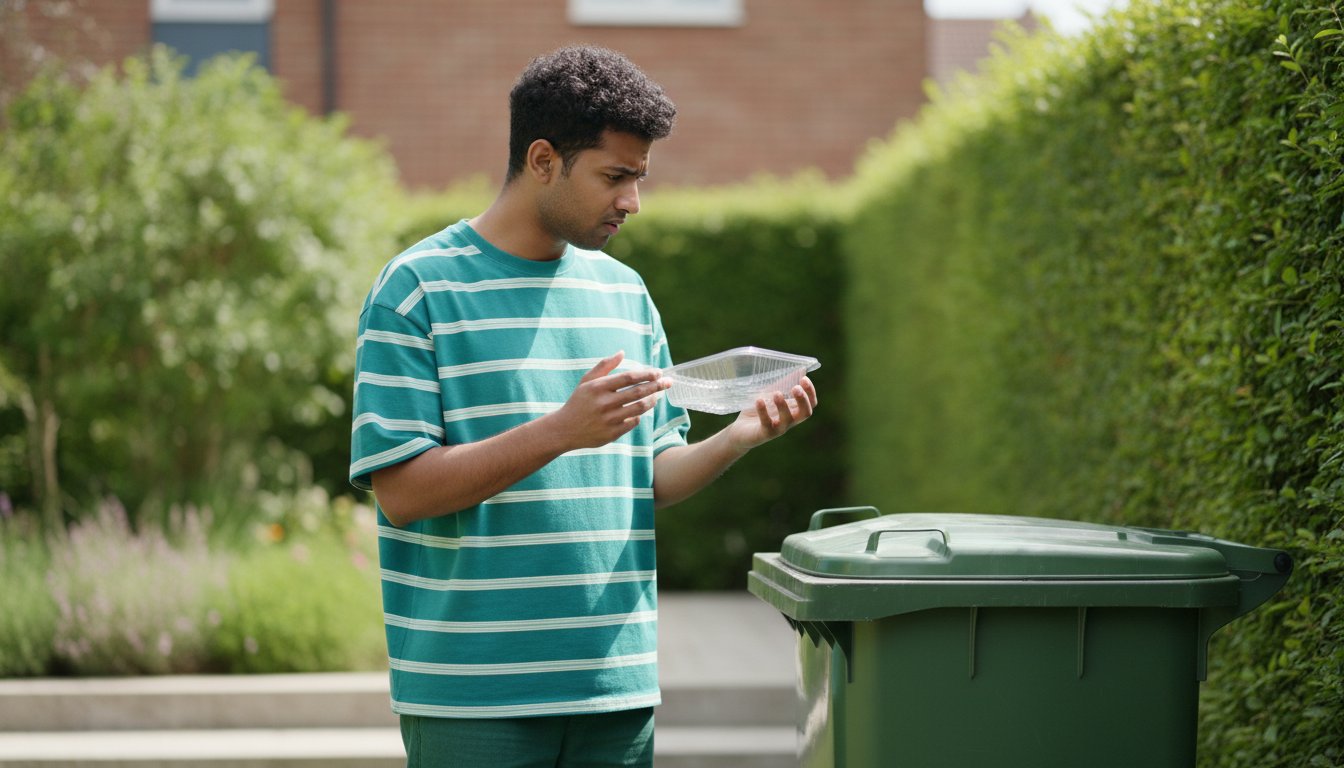
The eco-friendly bag you carefully selected at the store might be the exact reason your local council leaves your garden waste bin uncollected on the pavement. While the "Simpler Recycling" regulations were introduced in March 2026 to standardise UK collections, significant confusion remains regarding organic disposal. You likely want to know: can you put compostable plastic in garden waste bin collections without risking a fine? It's disheartening to see your commitment to sustainability undermined by technicalities, especially when you're trying to reduce your reliance on traditional single-use plastics and contribute to a healthier planet.
We believe that responsible innovation should be accessible and straightforward for every household and business. This guide provides the essential clarity you need to navigate these new rules, ensuring your green efforts lead to genuine environmental impact. You'll discover the definitive "yes/no" for common items, learn which specific certifications are currently council-approved, and understand how products like compostable caddy liners serve as a vital exception in the UK's move toward a circular economy. By the end of this article, you'll have the confidence to manage your waste with precision and purpose, ensuring your transition to compostable alternatives is both effective and compliant.
Key Takeaways
- Understand why municipal in-vessel composting facilities typically reject most compostable plastics to prevent contamination in the organic waste stream.
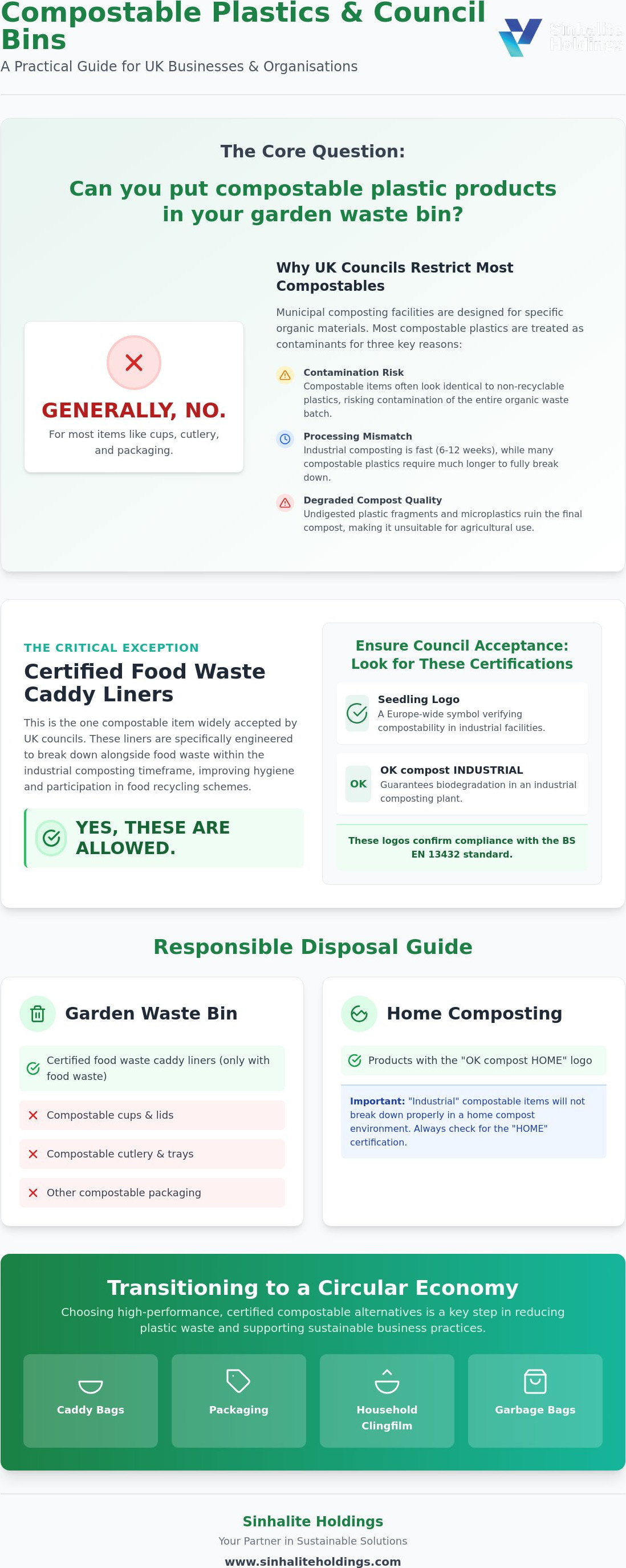
- Learn why you generally cannot put compostable plastic in garden waste bin collections, with the critical exception of certified food waste caddy liners.
- Identify the essential industry certifications, such as the Seedling logo and OK compost INDUSTRIAL, that ensure your compostable bags meet council requirements.
- Discover how to utilise home composting for items marked with the OK compost HOME logo to further reduce your environmental footprint.
- Explore how switching to high-performance alternatives like compostable household clingfilm supports a circular economy while maintaining operational efficiency.
The General Rule: Why UK Councils Restrict Compostable Plastics in Garden Waste
The standard response to whether you can put compostable plastic in garden waste bin collections is a definitive no for almost all UK local authorities. While these materials represent a significant leap in environmental innovation, municipal waste systems are currently ill-equipped to handle them alongside organic garden debris. Items like compostable cutlery, coffee cups, and trays are often flagged as contaminants because they don't align with the specific processing requirements of large-scale facilities.
When non-compostable plastics enter the stream, they degrade the quality of the final compost, often rendering it useless for agricultural use. This risk forces councils to adopt a cautious approach. To understand the broader context of these materials, it's helpful to examine the science of biodegradable and compostable plastics and how they interact with different environments.
To better understand the practicalities of managing organic waste at home or in a business setting, watch this helpful video:
The Contamination Crisis: Why Councils Play It Safe
The primary challenge lies in visual identification. At a sorting facility, a tray made from Polylactic Acid (PLA) looks identical to one made from traditional PET. Because automated and manual sorting teams can't reliably distinguish between the two, entire batches of organic waste are frequently rejected. Additionally, some "fragmentable" plastics merely break down into microplastics rather than fully composting, which poses a long-term threat to soil health and biodiversity.
Processing Times vs. Material Breakdown
Most UK councils utilise In-Vessel Composting (IVC), a process that typically operates on a swift 6 to 12 week cycle. While this is efficient for green garden waste and woody materials, many thick compostable plastics require much longer to break down completely. If these items haven't fully decomposed within the industrial timeframe, they remain as physical debris in the finished product. These operational constraints explain why, when asking can you put compostable plastic in garden waste bin, the answer from most councils remains a firm no for most commercial and residential streams.
When 'Compostable' is Allowed: The Caddy Liner Exception
While the previous section outlined the restrictions on compostable packaging, a significant exception exists for food waste management. Many UK local authorities specifically permit the use of compostable caddy bags to help households and businesses separate organic scraps efficiently. These liners are engineered to break down in tandem with food waste, preventing the mess and odour that often discourage recycling participation. This alignment between material science and waste infrastructure is essential for a high-functioning circular economy. A UK Parliament briefing on this topic highlights that these materials are specifically designed for industrial facilities rather than natural environments, making them a functional tool for municipal waste systems.
Even with these allowances, users often ask: can you put compostable plastic in garden waste bin collections used for green waste? The answer frequently remains no. Green-only streams often follow different processing routes than food caddies, and the introduction of any plastic-like material can trigger a rejection of the entire load. Choosing high-quality, certified compostable caddy bags ensures that your environmental commitment translates into actual ecological benefit without disrupting local collection rules.
Identifying Certified Compostable Standards (BS EN 13432)
The BS EN 13432 standard is the gold standard for UK waste streams. It guarantees that a material will biodegrade by at least 90% within six months in industrial conditions. To ensure your liners are accepted, look for the Seedling logo or the OK compost INDUSTRIAL mark on the packaging. These symbols provide the professional authority councils need to process the material with confidence. You should avoid items labelled merely as "biodegradable," as this term lacks the rigorous, time-bound breakdown requirements of true compostable standards.
Garden Waste vs. Food Waste Bins
It's vital to distinguish between these two streams. Food waste is frequently processed through Anaerobic Digestion (AD), where microorganisms break down organic matter in the absence of oxygen. Certified liners are often compatible with this technology because they are thin and degrade quickly. In contrast, green garden waste bins may go to facilities with stricter input rules. We recommend verifying the specific terminology on your local council's website to ensure your disposal choices align with their current operational capabilities.
Responsible Disposal: Maximising the Impact of Your Compostable Packaging
True environmental stewardship requires more than just selecting better materials. It demands a clear understanding of where those materials end up. As the UK works toward its 2026 circular economy goals, the focus has shifted from simple waste reduction to high-quality resource recovery. While you may still wonder, can you put compostable plastic in garden waste bin collections, the most effective disposal route often depends on the specific item and its certification. For instance, using compostable household clingfilm allows you to maintain food freshness without contributing to the permanent plastic waste that clogs traditional recycling streams.
For commercial entities, switching business to sustainable packaging is a vital step in aligning with modern ethical standards. This transition is most successful when paired with clear internal guidance on disposal. To prevent municipal contamination and ensure your green efforts are not wasted, follow this "If in doubt, leave it out" checklist:
- Verify the presence of the Seedling or OK compost INDUSTRIAL logo.
- Confirm that the item is a food caddy liner, as these are the primary exception for most councils.
- Check your local council's digital waste portal for specific updates regarding 2026 regulations.
- If an item is not explicitly listed as accepted, place it in the general waste bin to avoid contaminating organic batches.
Home Composting: The Best Path for OK compost HOME Products
Products marked with the OK compost HOME logo, such as certain food roller bags, are engineered to break down at lower temperatures. This makes them ideal for domestic garden heaps rather than municipal bins. To ensure these bioplastics decompose effectively, maintain a balanced compost pile with a healthy mix of "greens" like vegetable scraps and "browns" like cardboard or dry leaves. Regular aeration helps microorganisms thrive, turning your waste into nutrient-rich soil for your own garden.
Dealing with Non-Binable Compostables
If your council does not currently accept industrially compostable items in their collections, these products should typically be placed in the general waste bin. While this feels counterintuitive, these items will still break down more safely in landfill than traditional plastics. Your choice to use them remains valuable, as it reduces the demand for oil-based polymers. Collective consumer pressure is also essential. By choosing compostable alternatives now, you signal to policymakers the urgent need for standardised, UK-wide compostable collection infrastructure by the end of 2026.
Leading the Transition to a Circular UK Economy
Navigating the evolving landscape of UK waste regulations requires a proactive approach to material selection. While the specific answer to whether can you put compostable plastic in garden waste bin collections remains a "no" for most packaging, the exception for food caddy liners provides a clear path forward. By focusing on BS EN 13432 certified products, organisations and households ensure their choices directly support municipal processing. Standardising these practices is a fundamental pillar of the 2026 circular economy goals; it turns potential contaminants into valuable organic resources.
Sinhalite Holdings acts as a dedicated UK specialist in providing the tangible tools needed for this transition. We offer expert guidance on commercial sustainability and a comprehensive range of high-performance solutions, including compostable garbage bags and food waste liners. Our commitment to responsible innovation ensures that your move away from single-use plastics is both seamless and impactful. Explore Sinhalite Holdings’ range of certified compostable household essentials to align your operations with the highest environmental standards. We believe in the possibility of positive change, and your immediate action today builds a cleaner, more sustainable future for everyone.
Frequently Asked Questions
Can I put compostable bags in my food waste caddy?
Yes, provided they meet the BS EN 13432 standard and your local council specifically permits caddy liners. These specialised bags are designed to be processed alongside organic waste in industrial facilities. Using certified liners ensures that your food scraps are transformed into high-quality fertiliser rather than being sent to landfill. It's a practical way to support the circular economy while maintaining cleanliness in your commercial or household kitchen environment.
What happens if I put compostable plastic in the wrong bin?
Placing compostable items in the incorrect stream often results in significant contamination. If you ask can you put compostable plastic in garden waste bin collections, the general rule is no, and it may lead to your bin being left uncollected. In recycling bins, bioplastics can ruin batches of polymers like PET. This occurs because compostable materials have different melting points, which compromises the integrity of the recycled resin.
Is biodegradable the same as compostable for council bins?
No, these terms are not interchangeable, and councils generally reject items labelled only as biodegradable. While biodegradable is a broad term describing any material that breaks down over an undefined period, compostable implies a rigorous, time-bound scientific standard. Local authorities require the Seedling or OK compost INDUSTRIAL logos to verify that the material will fully decompose within the specific timeframe of municipal processing cycles without leaving harmful residues.
Can I put compostable cling film in my home compost heap?
You should only put compostable cling film in your home heap if it carries the OK compost HOME certification. Standard industrial versions require the sustained high temperatures of a professional facility to break down properly. Home-certified products, including specific food roller bags and wraps, are engineered to decompose at the lower, more variable temperatures found in a domestic garden bin. This ensures your home-grown compost remains nutrient-rich and free from physical debris.


