Relying on flimsy, generic liners to meet your 2026 sustainability targets is a strategy destined to fail the moment a heavy load of wet waste splits across your facility floor. You likely recognize that the transition to more responsible practices shouldn't come at the cost of operational efficiency or hygiene. Sourcing high-quality commercial compostable waste sacks uk businesses can trust requires a balance of industrial pragmatism and a commitment to rigorous environmental standards.
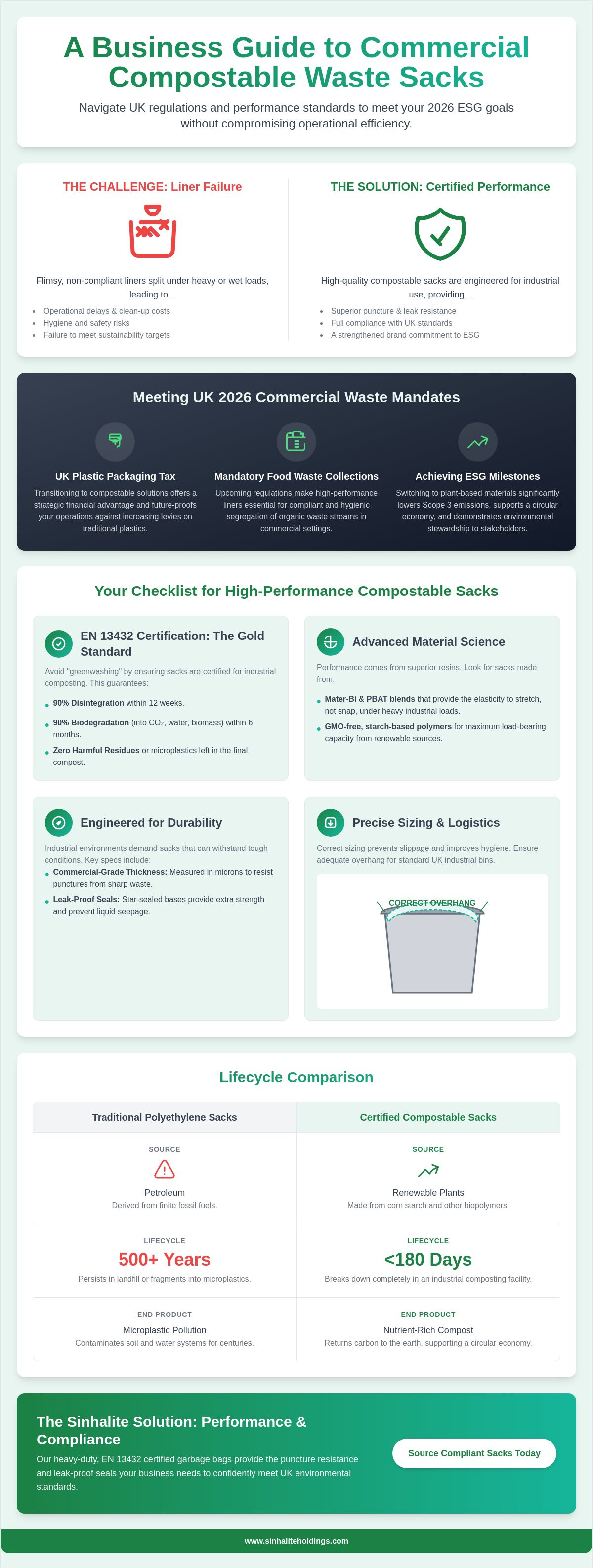
We understand that the confusion between biodegradable and compostable terminology often creates friction when trying to meet corporate ESG targets. This guide will help you discover how to select high-performance, certified compostable waste sacks that align your commercial operations with UK environmental standards. We'll explore the essential technical specifications for puncture resistance, the importance of full EN13432 compliance, and how the right choice can strengthen your brand’s green credentials while maintaining a seamless waste management workflow.
Key Takeaways
- Identify the financial and regulatory incentives within the UK Plastic Packaging Tax that make transitioning to compostable solutions a strategic business advantage.
- Learn how to verify EN13432 industrial standards so your commercial compostable waste sacks uk remain fully compliant with national waste regulations.
- Discover the technical specifications required to prevent liners from splitting, ensuring your team maintains operational efficiency even when handling heavy wet waste.
- Identify the precise sizing and overhang requirements for standard UK industrial bins to improve facility hygiene and waste management logistics.
- Explore how Sinhalite’s heavy-duty garbage bags provide the puncture resistance and leak-proof seals needed to support your brand's commitment to environmental stewardship.
The Strategic Case for Commercial Compostable Waste Sacks in the UK
As we approach 2026, the demand for corporate accountability has moved from optional reporting to operational necessity. Integrating commercial compostable waste sacks uk into your facility management isn't merely a change in procurement; it's a decisive step toward achieving ambitious ESG milestones. By choosing plant-based materials over traditional petroleum-derived plastics, businesses can significantly lower their scope 3 emissions while fostering a circular economy. This transition demonstrates a profound sense of environmental stewardship that resonates with stakeholders and clients alike.
Precision in terminology is vital for any procurement professional. Understanding compostable vs. biodegradable definitions ensures that your business avoids the pitfalls of greenwashing. While "biodegradable" can be a vague marketing term, "compostable" implies a strict adherence to industrial standards. These standards guarantee that the material will break down into nutrient-rich organic matter without leaving harmful residues or microplastics behind.
To better understand how these materials integrate into large-scale systems, watch this helpful video:
Regulatory Compliance and the Plastic Packaging Tax
The UK regulatory landscape is shifting rapidly, and staying ahead of these changes is essential for long-term viability. The government’s commitment to mandatory food waste collections for businesses means that high-performance liners are becoming indispensable tools for compliance. While the UK Plastic Packaging Tax creates financial pressure on traditional polymers, the real strategic advantage lies in future-proofing your operations. Transitioning to certified commercial compostable waste sacks uk now prevents the friction of last-minute adjustments when tighter environmental legislation arrives. It allows your business to align with national waste strategies while potentially reducing the long-term costs associated with conventional waste disposal and landfill levies.
The Environmental Impact of Switching to Bioplastics
Traditional polyethylene sacks persist in the environment for centuries. They often fragment into microplastics that contaminate soil and water systems across the United Kingdom. In contrast, compostable resins offer a lower lifecycle carbon footprint because they are derived from renewable, plant-based sources. These materials are specifically engineered to work in harmony with industrial composting infrastructure. When you utilize certified sacks for organic waste, you support a system that returns carbon to the earth. This choice directly addresses the systemic need to reduce microplastic contamination and supports the health of the UK's natural ecosystems through responsible waste segregation.
Durability and Performance: Solving the 'Splitting' Problem
Facility managers often cite liner failure as the primary reason for resisting sustainable transitions. A bag that splits under the pressure of heavy refuse does more than create a mess. It compromises hygiene and wastes valuable staff time. High-performance commercial compostable waste sacks uk solve this through superior material science. By utilizing advanced resins like Mater-Bi and PBAT, these sacks offer the elasticity needed to stretch rather than snap under industrial loads.
Thickness is typically measured in microns, and for industrial applications, this measurement is non-negotiable. While a domestic bag might be thin, commercial-grade options provide the density required for sharp or wet waste. The Parliamentary briefing on compostable packaging underscores how these material properties are vital for the UK's waste infrastructure. Choosing the right gauge ensures your operations remain clean and efficient while meeting your environmental obligations.
Material Innovations in 2026
The 2026 landscape focuses on GMO-free, starch-based polymers that maximize load-bearing capacity. These innovations mean you can finally move away from the wasteful habit of double-bagging. Tensile strength is the maximum amount of pulling stress a material can withstand before failing or breaking under tension. By prioritizing this metric, you ensure your waste management is both lean and responsible, reducing material consumption without sacrificing bag integrity.
Managing Wet and Heavy Waste Streams
Food waste is heavy and inherently wet. To manage this, commercial compostable waste sacks uk must feature moisture barriers that don't sacrifice the compostability of the material. Sealing technology also plays a role in performance. Star-sealed bottoms distribute weight more effectively than flat seals, reducing stress on the material's weakest points and preventing base punctures. You might wonder, do compostable bags contain plastic? Understanding the specific bioplastic resins involved helps clarify why these bags perform so differently from standard polythene. Exploring advanced compostable waste solutions allows your business to maintain high standards of utility without environmental compromise.
Certifications and Standards: Avoiding the Greenwashing Trap
Integrity in procurement is just as vital as the physical durability of the product. Without verified certifications, a business risks contaminating entire waste streams and incurring significant fines. The European standard EN13432 serves as the definitive benchmark for commercial compostable waste sacks uk professionals must demand. This certification ensures that the material will fully revert to organic matter within a specific timeframe under industrial conditions, leaving no toxic residue behind.
Legitimacy matters. Vague claims of being "eco-friendly" or "green" are insufficient for corporate ESG reporting. Professional procurement requires a commitment to transparency and a deep understanding of the regulatory frameworks that govern bioplastics. By insisting on recognized standards, you protect your business from the reputational damage associated with failed sustainability initiatives.
The EN13432 Standard Explained
To achieve EN13432 compliance, a product must pass four rigorous technical tests. These include biodegradation, where 90% of the material converts to CO2 within six months, and disintegration, ensuring the sack physically breaks down into pieces smaller than 2mm. Additionally, the material must show a total absence of negative effects on the final compost and meet strict limits for heavy metal content. This certification is mandatory for any waste intended for UK industrial composting facilities. Procuring commercial compostable waste sacks uk that carry these marks provides the necessary assurance that your waste management cycle is truly circular.
Spotting and Avoiding Greenwashing
Distinguishing between 'OK compost HOME' and 'OK compost INDUSTRIAL' is a common point of confusion for many facility managers. Home compostable bags are designed for the lower temperatures of a garden heap. In contrast, industrial certifications from bodies like TUV Austria or the BPI indicate the material requires the high-heat environment of a professional facility to break down. Using the wrong bag can lead to rejected waste loads at the processing plant.
Be vigilant against terms like "degradable" or "oxo-degradable." These materials are often conventional plastics with additives that cause them to fragment into microplastics rather than compost. They don't meet UK environmental standards and are widely excluded from professional procurement lists. Use this auditing checklist when evaluating suppliers:
- Verify the License Number: Legitimate products will display a unique certification number that can be checked on the TUV Austria or DIN Certco databases.
- Check for Physical Logos: Look for the "Seedling" logo or the "OK compost" mark directly printed on the sacks.
- Demand Technical Data Sheets: A responsible supplier will provide comprehensive documentation detailing the material's origin and compliance history.
- Avoid Unverified Imports: Non-certified products often fail to break down in UK facilities, leading to increased operational costs and waste contamination.
Sizing and Logistics: Matching Sacks to Industrial Bins
Achieving environmental goals requires more than just high-quality materials; it demands logistical precision. Selecting the correct dimensions for your commercial compostable waste sacks uk ensures that your facility remains hygienic and your waste streams stay contained. In a busy hospitality or warehouse environment, a liner that's too small for its receptacle will inevitably slip. This leads to contamination and increased cleaning labor. Conversely, a bag that's excessively large represents a waste of resources, which undermines the very sustainability it was designed to support.
Standard UK bin dimensions vary significantly between office caddies and external collection points. Finding the correct overhang, typically around 10 to 15 centimeters, is essential to secure the sack against the weight of falling refuse. This prevents the bag from collapsing into the bin, a common cause of leaks and foul smells. You can learn how to keep a food waste bin from smelling by ensuring a tight fit and regular disposal schedules.
Commercial Capacity Guide
80L and 90L sacks are the workhorses of the UK hospitality and office sectors. They handle the daily volume of food prep waste and general office refuse with ease. For larger operations, 140L and 240L liners are designed to line standard UK wheelie bins. These larger formats are essential for managing high-volume organic waste in commercial kitchens or industrial food processing sites. Choosing between a refuse sack and a caddy liner depends on the point of collection. Caddy liners are used for smaller, frequent collections at the source. Refuse sacks are designed for the final consolidation of waste before it's moved to external collection points.
Optimising Waste Collection Logistics
Unlike traditional plastic, compostable sacks are made from organic matter. This means they have a finite shelf life, usually between 12 and 18 months. Storing your stock in a cool, dry place away from direct sunlight preserves the tensile strength we discussed earlier. It ensures the bags perform reliably when they're finally deployed. This methodical approach to storage prevents premature degradation and maintains the integrity of your environmental initiatives.
Optimising your waste collection also involves training staff to recognize the limits of the material. Overfilling a 240L wheelie bin liner can lead to tearing during extraction, regardless of the bag's quality. Coordinating with your waste contractor is equally vital. You must ensure that your compostable streams are directed to industrial composting facilities rather than landfill. This coordination allows your business to realize the full environmental benefit of its procurement choices. Explore our full range of heavy-duty commercial compostable sacks to find the perfect fit for your facility.
The Sinhalite Solution: Heavy-Duty Compostable Garbage Bags
Sinhalite Holdings bridges the gap between environmental responsibility and industrial necessity. We recognize that for a sustainability initiative to succeed, it must perform as well as, if not better than, the status quo. Our range of commercial compostable waste sacks uk businesses rely on is engineered with this philosophy at its core. By focusing on high-performance bioplastic resins, we provide a solution that addresses the physical demands of a busy commercial environment while adhering to the highest ecological standards.
Our heavy-duty compostable garbage bags are designed to withstand the rigours of industrial waste streams. Puncture resistance and leak-proof seals aren't just features; they're essential components that ensure your facility management remains efficient. We support the UK circular economy by providing certified compostable packaging solutions that facilitate the return of organic nutrients to the soil. For high-volume requirements, we offer bespoke supply options tailored to the specific needs of your operation. This approach ensures that your procurement strategy remains resilient, even as waste volumes fluctuate.
Why Sinhalite Holdings is the Preferred Business Partner
Our commitment to innovation means we don't just follow industry trends; we set them. We focus on bioplastics that exceed traditional plastic standards in tensile strength and durability. This visionary approach to sustainable manufacturing ensures that every sack we produce contributes to a cleaner future without compromising on utility. We provide direct access to expert guidance, helping your business handle the complexities of switching to sustainable packaging. We understand that every sector has unique requirements, which is why our distribution network is built for reliability across the United Kingdom. This collaborative approach makes the transition manageable and advantageous for your long-term operational goals.
Integrating our Sacks into Your ESG Strategy
Modern corporate responsibility requires a focus on long-term impact. Integrating Sinhalite products into your waste management workflow directly contributes to Scope 3 emissions reduction targets. Because our sacks are derived from renewable plant materials, they represent a significant step away from fossil-fuel dependence. By replacing conventional liners with our compostable alternatives, you're not just changing a bag; you're fundamentally altering the carbon profile of your operational waste. This tangible change provides verifiable data for your environmental reporting and strengthens your brand’s position as a responsible innovator.
The transition is designed to be seamless. Our sacks fit standard UK bin dimensions perfectly, allowing for an immediate switch without the need for new equipment or complex staff retraining. Our products empower you to meet modern ethical standards with confidence. You can explore our full range of commercial compostable garbage bags to find the right solution for your corporate sustainability journey.
Future-Proofing Your Commercial Waste Strategy
Adopting responsible waste management is no longer a distant goal but a present-day operational requirement. By prioritizing high-performance commercial compostable waste sacks uk businesses can successfully navigate tightening regulations while significantly reducing their environmental footprint. We've explored how the intersection of material science and rigorous certification ensures that sustainability doesn't come at the expense of durability. Choosing sacks with industrial puncture resistance and verified EN13432 compliance protects your facility from the hidden costs of greenwashing and material failure.
The transition to a circular economy is a collaborative effort that begins with the tangible tools used in your daily operations. Sinhalite Holdings remains a dedicated ally in this journey, offering products that are fully EN13432 and TUV Austria certified to meet the highest industrial standards. With our national UK distribution, your business can confidently integrate these solutions across all commercial sectors. It's time to align your procurement with your values and lead the way toward a more resilient future.
Secure your supply of high-performance commercial compostable sacks today and take a decisive step toward your 2026 environmental milestones.
Frequently Asked Questions
Are compostable waste sacks strong enough for heavy commercial food waste?
High-performance commercial compostable waste sacks uk businesses use are specifically engineered to handle the heavy, wet loads typical of industrial kitchens. These products utilize advanced bioplastic resins that offer the tensile strength required to prevent splitting under pressure. While domestic liners may fail, commercial-grade options provide the thickness and elasticity necessary for professional environments.
What is the difference between biodegradable and compostable sacks in the UK?
The primary difference lies in certification and the eventual presence of microplastics. Compostable sacks must meet the EN13432 standard, which guarantees they break down fully into organic matter within an industrial timeframe. Biodegradable is a broader, often unregulated term that doesn't guarantee a lack of toxic residue or the complete disappearance of plastic fragments.
Do commercial compostable bags have a shelf life or expiration date?
Yes, these sacks typically have a shelf life of 12 to 18 months because they are made from organic plant materials. To maintain their integrity, you should store them in a cool, dry place away from direct sunlight. Using stock within this timeframe ensures the bags retain the strength needed for heavy refuse and don't begin to weaken prematurely.
Can I use compostable refuse sacks for general non-food waste?
You can technically use these sacks for general waste, but it isn't the most efficient use of resources. Compostable bags are designed to facilitate the organic recycling of food and garden waste. If sent to landfill with general waste, they won't provide the same environmental benefits as they do when processed in an industrial composting facility.
How do I know if a waste sack is truly EN13432 compliant?
You can verify compliance by looking for the Seedling logo or the OK compost INDUSTRIAL mark directly on the packaging. Every certified product will also display a unique license number. You can check this number against the databases of TUV Austria or DIN Certco to ensure the supplier's claims are legitimate and verified by a third party.
Will compostable liners start to break down inside the bin if the waste is wet?
Modern compostable liners won't immediately break down when exposed to wet waste. They are engineered with moisture barriers that protect the bag's structure for several days. However, for hygiene and material integrity, it's best practice to empty commercial bins every one to three days to prevent the natural decomposition process from beginning in the bin.
Are compostable sacks more expensive than traditional plastic bin liners?
While the initial unit cost of commercial compostable waste sacks uk is often higher than traditional plastic, they offer long-term strategic advantages. They help businesses avoid the financial pressures of the UK Plastic Packaging Tax and reduce the labor costs associated with bin cleaning. The transition also supports broader corporate ESG targets that carry their own long-term value.
Can compostable sacks be sent to standard UK recycling centres?
No, compostable sacks cannot be processed at standard UK plastic recycling centres. They are considered a contaminant in the plastic recycling stream and can ruin entire batches of recycled polymer. These bags must be directed to industrial composting facilities where the heat and microbial activity can break them down correctly into nutrient-rich compost.