

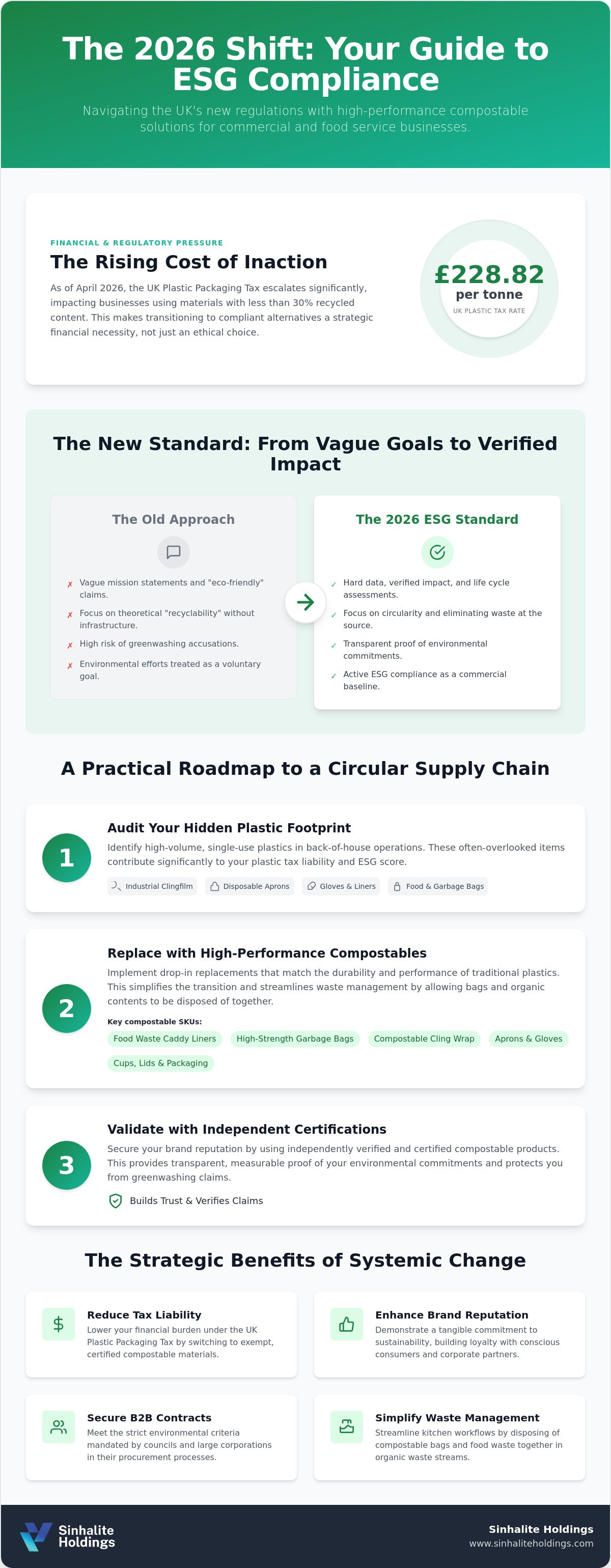
With the UK Plastic Packaging Tax now reaching £228.82 per tonne as of April 2026, the financial cost of operational inertia has never been higher for commercial kitchens and food service providers. You likely feel the pressure of tightening regulations and the constant risk of greenwashing accusations while managing the high volume of hidden plastic waste in your prep areas. Transitioning to high-performance eco-friendly packaging for food businesses uk is no longer just an ethical choice. It's a strategic necessity for maintaining commercial viability and systemic integrity.
We understand that aligning your operations with evolving ESG standards can feel like a complex hurdle, especially when you need to balance industrial durability with environmental responsibility. This guide will show you how to transform your organisation’s environmental impact through circular supply chain strategies and certified compostable solutions. We'll provide a clear roadmap for ESG alignment that reduces your plastic tax liability and builds a verified brand reputation through practical, scalable alternatives like compostable food roller bags and high-strength garbage bags.
Key Takeaways
- Navigate the 2026 regulatory landscape by understanding how mandatory ESG reporting transforms environmental performance from a voluntary goal into a strategic necessity.
- Identify and replace hidden single-use plastics within your supply chain by adopting high-performance eco-friendly packaging for food businesses uk.
- Implement practical, drop-in replacements like certified compostable food roller bags and garbage bags to simplify your transition to a circular operational model.
- Secure your brand reputation by utilising independently verified compostable certifications to provide transparent, measurable proof of your environmental commitments.
- Discover how integrating systemic change into your procurement process reduces plastic tax liability while maintaining the industrial durability your operations require.
Why Improving a Business's Green Credentials is a Strategic Imperative in 2026
Green credentials represent the measurable evidence of an organisation's environmental commitment and performance. In the current market, vague mission statements have been replaced by the need for hard data and verifiable impact. Businesses must now demonstrate their integrity through life cycle assessments and adherence to sustainable packaging principles. As of April 1, 2026, the UK Plastic Packaging Tax has reached £228.82 per tonne for materials with less than 30% recycled content. This financial reality makes the transition to responsible alternatives a critical requirement for maintaining commercial margins.
The landscape has shifted from a narrow focus on carbon footprints to a holistic view of waste management and circularity. UK organisations are now evaluated on how effectively they eliminate waste at the source rather than just how they offset it. For those in the hospitality and catering sectors, adopting eco-friendly packaging for food businesses uk is the most direct way to secure B2B contracts with councils and large corporations that now mandate strict environmental criteria in their procurement processes.
To better understand the practical application of these standards, watch this helpful video:
The Shift from Passive Sustainability to Active ESG Compliance
The 2026 standards require businesses to provide granular data on their plastic reduction efforts. It's no longer enough to claim "recyclability" when the infrastructure for certain plastics remains limited. Current reporting mandates place a heavy emphasis on Scope 3 emissions, which include the environmental footprint of your entire supply chain. If your procurement includes traditional single-use films or bags, it negatively impacts your total ESG score. ESG compliance is the definitive baseline for UK commercial viability in 2026.
Meeting the Demands of the Conscious UK Consumer
A significant majority of UK consumers now actively consider environmental impact when choosing where to spend their money. This shift has created a precarious environment where "green-hushing"-staying silent about sustainability to avoid criticism-can be just as damaging as greenwashing. The solution lies in verified, evidence-based marketing. By integrating eco-friendly packaging for food businesses uk, such as certified compostable clingfilm and caddy bags, you offer tangible proof of your commitment. This transparency drives long-term loyalty and positions your brand as a leader in the transition toward a cleaner, more responsible future.
Transforming the Supply Chain: A Practical Roadmap for Consumable Waste
True operational transformation begins in the back-of-house areas where high-volume consumables often escape the scrutiny applied to customer-facing items. While many organisations focus on takeaway containers, the systemic impact of hidden plastics like prep-area clingfilm and warehouse wrap is substantial. Establishing a circular procurement policy requires a shift from fossil-fuel plastics to bio-based materials that can be processed alongside organic waste. By integrating eco-friendly packaging for food businesses uk into your daily workflows, you remove the complexity of waste separation and reduce your long-term environmental liability.
Implementing these changes doesn't require a total overhaul of your kitchen or prep area layout. Instead, it involves a methodical replacement of existing SKUs with high-performance compostable alternatives. For example, using compostable caddy liners streamlines food waste collection by allowing the bag and its contents to be disposed of together in organic waste streams. This approach ensures that your sustainability efforts are practical, scalable, and resilient against future regulatory shifts.
Auditing Your Hidden Plastic Footprint
A comprehensive waste audit is the first step toward identifying high-volume plastic items that often go unnoticed. Track your usage of industrial clingfilm, aprons, and food roller bags over a typical trading week to understand the scale of your consumable waste. It's essential to evaluate the performance of these items against modern compostable alternatives to ensure that durability isn't sacrificed for sustainability. When selecting new materials, ensure they comply with UK food packaging regulations to maintain strict safety and contact standards. For a detailed breakdown of this process, see our guide on Switching Business to Sustainable Packaging: The 2026 Strategic Guide for UK Organisations.
Implementing High-Performance Compostable Alternatives
Transitioning to compostable commercial clingfilm provides an immediate drop-in replacement for traditional PVC or PE wraps, maintaining the required cling and barrier properties for high-volume food storage. Similarly, heavy-duty compostable garbage bags are vital for organisations managing high organic waste volumes, as they prevent contamination in the composting process. On the shop floor, providing compostable shopping bags and food bags on a roll enhances the customer’s eco-experience while reinforcing your brand's commitment to integrity. Exploring a range of certified compostable solutions allows your business to take decisive action today without compromising on operational efficiency.
Validating Your Progress: Certifications and Long-Term Credibility
Establishing green credentials requires more than just making operational changes. It demands rigorous verification to protect your organisation from the legal and reputational risks associated with greenwashing. In an era where 2026 UK regulations mandate transparency, using independently verified products is the only way to ensure your sustainability claims hold up under scrutiny. Sinhalite Holdings acts as a dedicated partner in this transition, providing the high-performance, TUV-certified solutions needed to secure your business's future as a circular economy leader.
Communicating these efforts to stakeholders should be a methodical process based on evidence rather than marketing fluff. When you integrate eco-friendly packaging for food businesses uk into your procurement, you aren't just buying supplies; you're investing in a verifiable reduction of your environmental footprint. This data becomes a powerful tool for annual sustainability reports, demonstrating a clear path toward a completely plastic-free consumable supply chain by 2030.
Navigating UK Standards: OK compost HOME and TUV Austria
Understanding the technical nuances of certification is vital for effective waste management. Many products are labelled as "biodegradable," which is a vague term that doesn't guarantee a specific timeframe or environment for breakdown. In contrast, "compostable" is a standardised term indicating that a material will fully degrade without leaving toxic residues. For a deep dive into these requirements, read our guide on OK compost HOME Certification Explained: The 2026 Guide for UK Businesses. TUV Austria certification serves as the gold standard for UK business credibility because it provides third-party assurance that products like compostable caddy bags and food roller bags meet the highest ecological benchmarks.
Positioning Your Business as a Circular Economy Leader
Your switch to compostable solutions should be a core pillar of your stakeholder engagement strategy. High-quality items, such as compostable clingfilm and shopping bags, provide a tangible way to inspire staff and engage local communities in your mission. By setting ambitious, long-term goals, you project the persona of a responsible innovator. This assertive approach to eco-friendly packaging for food businesses uk ensures your organisation remains a steady, dependable ally for clients who prioritise ethical standards in their own supply chains.
Securing Your Organisation’s Sustainable Future
The transition to a circular economy is no longer a distant goal; it's a present-day operational requirement. By identifying hidden plastics within your supply chain and replacing them with high-performance alternatives, you protect your organisation from escalating tax liabilities and reputational risks. Implementing eco-friendly packaging for food businesses uk allows you to meet the 2026 ESG standards with absolute confidence. It's a strategic move that aligns your practical daily needs with the profound responsibility of environmental stewardship.
As a specialist UK provider of OK compost HOME and TUV Austria certified products, Sinhalite Holdings offers the expert support needed for seamless commercial ESG transitions. Our range of industrial-strength clingfilm and bags provides the durability your team requires without the ecological cost of traditional plastic. You can take immediate, decisive action toward a plastic-free future while reinforcing your brand’s integrity as a responsible innovator. Explore Sinhalite Holdings' range of certified compostable solutions for your business and lead the shift toward a cleaner, more sustainable UK market.
Frequently Asked Questions
What are the first steps to improving my business's green credentials?
The most effective starting point is a comprehensive audit of your current consumable waste to identify high-volume plastic items. You should focus on hidden plastics in prep areas, such as traditional clingfilm and food bags, which often escape initial scrutiny. Establishing a clear procurement policy that prioritises bio-based materials ensures your transition is systematic and measurable rather than reactive.
How can I avoid greenwashing when marketing my sustainability efforts?
You can avoid greenwashing by using only independently verified products and avoiding vague, unregulated terms like "environmentally friendly" without supporting evidence. It's essential to provide stakeholders with granular data regarding your plastic reduction milestones. Transparency about the certifications your packaging holds builds long-term trust and protects your organisation from the reputational risks of misleading claims.
Are compostable products actually better for the environment than recycled plastic?
Certified compostable materials are superior for organic waste streams because they eliminate microplastic contamination and support a truly circular economy. While recycled plastic reduces virgin material use, it often results in down-cycling and eventual landfill. High-performance compostable alternatives allow for a unified waste stream where items like food roller bags can be processed alongside organic food scraps.
What certifications should I look for when buying compostable packaging in the UK?
You should prioritise products that carry the OK compost HOME and TUV Austria certifications to ensure they meet rigorous ecological standards. These labels guarantee that items like caddy bags will break down safely in specific conditions without leaving toxic residues behind. Choosing eco-friendly packaging for food businesses uk with these verified credentials ensures your business remains compliant with evolving UK environmental standards.
Can switching to compostable bags help my business save money on taxes?
Yes, transitioning to compostable solutions helps you reduce your total liability under the UK Plastic Packaging Tax, which reached £228.82 per tonne in April 2026. By replacing traditional plastic with certified compostable alternatives, you can lower the tonnage of taxable material your organisation manufactures or imports. This strategic shift directly improves your bottom line while simultaneously enhancing your ESG performance scores.
How do I implement a compostable waste strategy in a large organisation?
Implementation requires a phased rollout that begins with high-impact zones like commercial kitchens and warehouse prep areas. Standardising your supply chain with high-quality eco-friendly packaging for food businesses uk simplifies staff training and waste separation processes. Partnering with a specialist supplier ensures you have the consistent, scalable inventory required to maintain operational efficiency across multiple sites or departments.


