
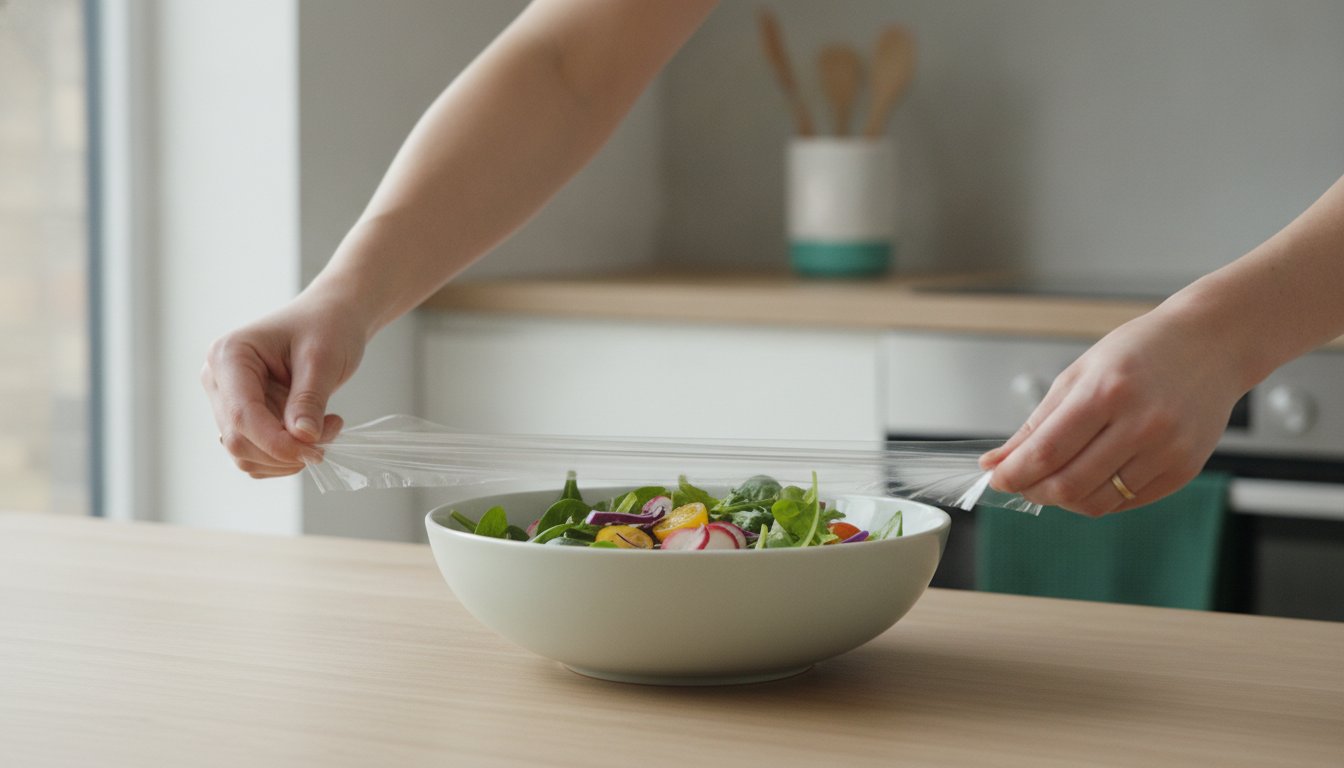
What if the very product you bought to save the planet is actually destined for a landfill because it lacks the right certification? This plant based cling film review 2026 examines why so many eco-friendly wraps fail to stick and how new regulations are finally separating true innovators from clever marketing. Many commercial kitchens and households have felt the frustration of an eco-wrap that refuses to cling to a ceramic bowl, leaving food exposed and leading to unnecessary waste. It's disheartening to invest in sustainability only to find the performance doesn't match traditional PVC.
You will discover the top-performing, truly compostable plant-based cling films of 2026 that balance superior cling-strength with genuine environmental integrity. We'll show you how to identify products that meet the strict EN 13432 or OK compost HOME standards; ensuring your choice actually supports a circular economy. This guide breaks down the best options for UK kitchens, explains the impact of the 2026 Extended Producer Responsibility fees, and helps you select a reliable alternative that protects your food as effectively as it protects the environment.
Key Takeaways
- Identify the specific biopolymer compositions that allow modern plant-based films to match the durability and stretch of traditional plastic.
- This plant based cling film review 2026 reveals how to verify "cling-strength" on various surfaces to prevent food spoilage and maintain kitchen efficiency.
- Learn why the OK compost HOME certification is the essential benchmark for UK businesses looking to simplify their food waste management streams.
- Explore the technical properties that enable certain compostable wraps to withstand microwave heat and freezer conditions without compromising safety.
- Understand how choosing certified compostable solutions helps your organisation align with the latest UK environmental fee structures and sustainability targets.
The State of Plant-Based Cling Film in 2026: Performance vs. Plastic
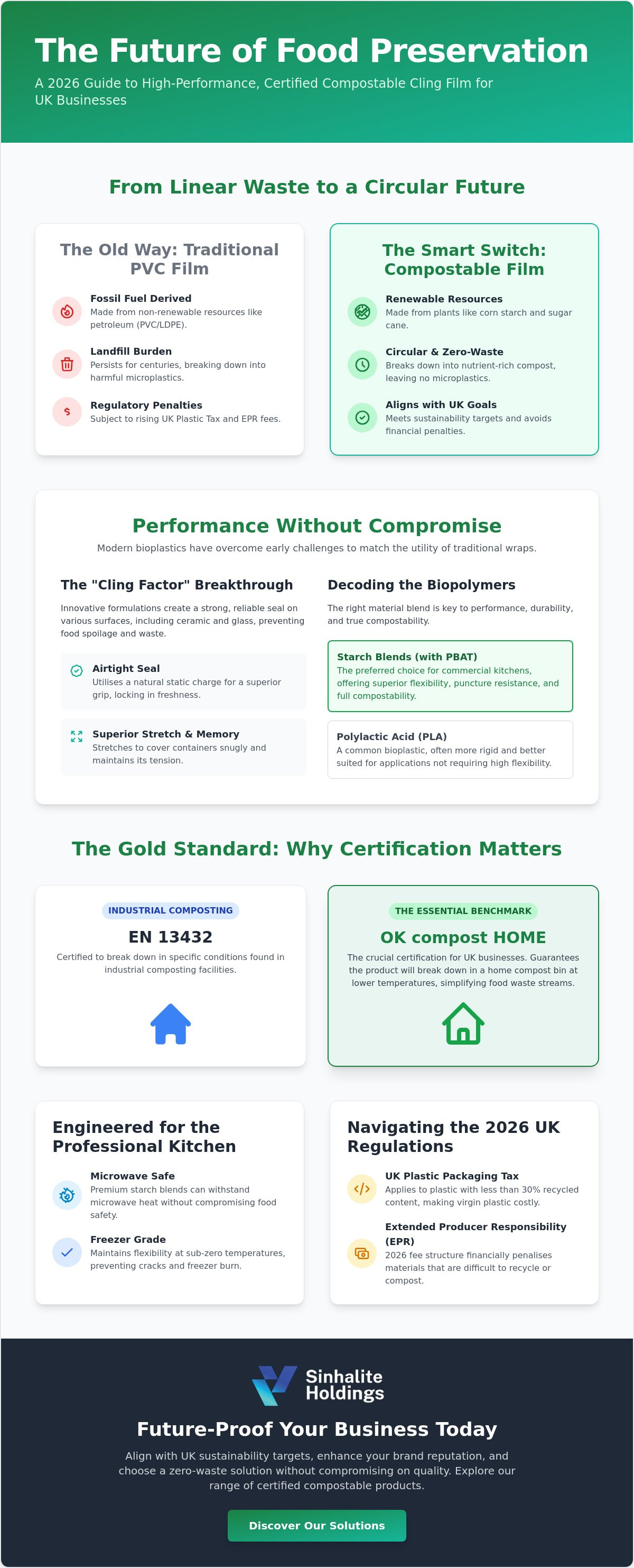
As of June 2026, the definition of sustainable food storage has evolved significantly. Modern plant-based cling film is a high-performance wrap derived from renewable biopolymers, such as corn starch or sugar cane, rather than fossil fuels. This shift away from traditional PVC and LDPE is no longer a matter of preference for UK organisations; it's a strategic necessity to meet carbon reduction targets. This plant based cling film review 2026 highlights how these materials have transitioned from niche alternatives to essential kitchen staples for those prioritising environmental stewardship.
The most significant advancement in recent years is the "Cling Factor" breakthrough. Early iterations of eco-wraps often struggled to adhere to ceramic or glass surfaces, leading to food spoilage and user frustration. Today, innovative formulations have refined the molecular structure of bioplastics to ensure they provide the same airtight seal as conventional plastic. This performance ensures that businesses can reduce their carbon footprint without sacrificing the integrity of their food preservation.
To better understand this concept, watch this helpful video:
Material Innovations: PLA vs. Starch Blends
The science behind these products is what makes the 2026 generation so effective. While Polylactic Acid (PLA) is common, many UK kitchens now prefer starch-based blends for their superior flexibility and "memory" when stretched. These blends often incorporate PBAT to ensure the film remains durable and puncture-resistant while remaining fully compostable. This combination allows the film to perform like a traditional polymer without leaving microplastics behind, making it a practical choice for high-volume commercial use.
The 2026 Regulatory Landscape in the UK
Legislation is a primary driver for this transition. The UK Plastic Packaging Tax continues to apply to packaging with less than 30% recycled content, making virgin plastic increasingly expensive. Additionally, the 2026 fee modulation under the Extended Producer Responsibility framework financially penalises materials that are difficult to recycle. By adopting compostable solutions, organisations align themselves with current UK waste management infrastructure, moving toward a future where single-use actually means zero-waste.
2026 Performance Review: How to Identify High-Quality Compostable Wrap
In this plant based cling film review 2026, we move beyond environmental claims to evaluate the practical utility that defines a successful transition in a professional kitchen. The primary benchmark for any wrap is its "stickiness" or adhesion. While traditional PVC relies on chemical plasticisers to create tackiness, premium bioplastics now utilise a refined molecular structure to achieve a superior seal. You can test this by applying the film to a cold ceramic bowl; a high-quality wrap will immediately bond to the rim without needing excessive manual pressure. If the film slides or requires tape to stay in place, it likely lacks the polymer density required for commercial standards.
Performance isn't just about the seal; it's about how the material behaves under stress. Understanding the environmental trade-offs of different biopolymers is essential when selecting products for specific temperatures. For instance, while some films excel in ambient conditions, only those with heat-resistant starch blends are safe for microwave use. Similarly, freezer-grade compostable wraps must maintain flexibility at sub-zero temperatures. Without this specialised engineering, inferior films become brittle, leading to cracks that cause freezer burn and food waste.
The Adhesion Test: Does It Actually Cling?
Modern bioplastics rely on a natural static charge rather than chemical adhesives to grip surfaces. To achieve a perfect seal with Compostable household Clingfilm, ensure the container's rim is dry and free of oils. Stretching the film slightly as you apply it activates its elastic memory, creating a tighter, more reliable barrier against oxygen. This method ensures your produce remains fresh while maintaining the hygiene standards your organisation demands.
Durability and Puncture Resistance
Tensile strength in 2026 has reached a point where plant-based wraps can match or even exceed the durability of traditional LDPE. High-quality films resist tearing when stretched over sharp-edged containers or bone-in proteins. This puncture resistance is critical for preventing cross-contamination in busy catering environments. If you're looking to implement these high-performance tools in your operations, you can find scalable solutions at Sinhalite Holdings to support your plastic-free transition.
Aesthetic clarity also plays a vital role in retail and front-of-house service. The latest starch-based films offer exceptional transparency, allowing for easy identification of contents. This clarity ensures that your sustainable choices don't hinder the visual appeal of your food presentation, proving that environmental integrity and professional excellence can coexist seamlessly.
Choosing the Right Solution: Certifications and UK Disposal
Selecting the ideal material is only part of the transition. This plant based cling film review 2026 concludes by addressing the critical challenge of disposal. While many products are marketed as eco-friendly, their true value depends on how they integrate with the UK's waste infrastructure. It's a common mistake to assume all bioplastics are handled equally. Understanding the distinction between home and industrial composting is vital for ensuring your sustainability efforts actually reach fruition.
For most residential users and small-scale catering operations, OK compost HOME is the gold standard. This certification guarantees that the film will break down in a standard garden compost heap within a reasonable timeframe. It's an essential distinction because many UK local authorities still exclude compostable plastics from their kerbside food waste collections. By choosing home-certified products, you empower your organisation to manage waste on-site, bypassing the limitations of regional infrastructure.
Decoding Eco-Labels for 2026
Verification is your best defence against greenwashing. When reviewing options, look for the TUV Austria "OK compost" symbols. These labels aren't just suggestions; they represent rigorous testing against European standards. You can find more detail in our guide on the OK compost HOME certification explained. A genuine certification ensures the material leaves no toxic residues or microplastics behind, protecting the soil for future use.
Commercial Implementation for Organisations
Integrating these solutions into a high-volume environment requires a strategic approach. Large organisations find that switching business to sustainable packaging is most successful when paired with staff education. Sinhalite Holdings acts as a dedicated partner in this journey, providing high-quality Compostable household Clingfilm alongside a full suite of solutions like caddy bags and food roller bags. This holistic approach allows businesses to align their daily operations with modern ethical standards while maintaining industrial-grade efficiency. Moving toward a circular economy is a collective responsibility, and choosing the right certified products is the first step toward a cleaner, greener outlook.
Leading the Transition to a Plastic-Free Future
Transitioning to sustainable food storage is no longer a compromise on quality or efficiency. As highlighted in this plant based cling film review 2026, modern biopolymers now deliver the superior adhesion and durability required for demanding commercial environments. By prioritising OK compost HOME certified products, your organisation can bypass the limitations of local waste infrastructure and ensure a truly circular waste stream. This shift not only aligns with the latest UK environmental regulations but also demonstrates a profound commitment to responsible innovation and stewardship.
Sinhalite Holdings acts as your dependable ally in this journey, providing performance-tested biopolymer technology designed to phase out traditional plastics across your operations. As a specialist UK supplier for the commercial and household sectors, we ensure that high standards of utility are never sacrificed for environmental integrity. Explore our range of certified compostable household clingfilm today to see how practical, scalable solutions can transform your sustainability targets into reality. Let's work together to build a future where every kitchen choice supports a healthier, greener planet.
Frequently Asked Questions
Is plant-based cling film actually microwave safe in 2026?
Yes, many high-quality options are microwave safe provided they are engineered with heat-resistant biopolymers. It's essential to check the packaging for specific temperature limits; some films are designed to withstand standard reheating without melting. For the best results, ensure the film doesn't directly touch high-fat foods during heating as this can cause localised hot spots. This performance feature is a key focus in any plant based cling film review 2026.
Can I put compostable cling film in my garden compost bin?
You can only place it in your garden bin if the product is explicitly certified as OK compost HOME. Standard industrial compostable films require the sustained high temperatures of a commercial facility to break down effectively. Home-certified wraps are tested to degrade at lower, ambient temperatures found in domestic heaps. This distinction ensures your waste management practices remain environmentally responsible without leaving persistent residues in your garden soil.
Why does some plant-based cling film not stick to plastic containers?
Plant-based films often struggle with plastic containers because they lack the aggressive chemical adhesives found in traditional PVC. These eco-friendly wraps rely on a natural static charge and molecular tension to create a seal. Since many plastic storage tubs have low surface energy, the film has less to "grip" compared to ceramic or glass. To improve adhesion, ensure the container's rim is completely dry and stretch the film slightly during application.
How long does it take for compostable cling film to break down?
Certified home-compostable films typically break down within 12 to 26 weeks under active composting conditions. The exact timeframe depends on factors like moisture, aeration, and the temperature of your compost heap. In a commercial facility, this process is much faster due to controlled high heat. This predictable degradation is why this plant based cling film review 2026 emphasises verified certifications over vague labels that offer no guaranteed timeframe.


