
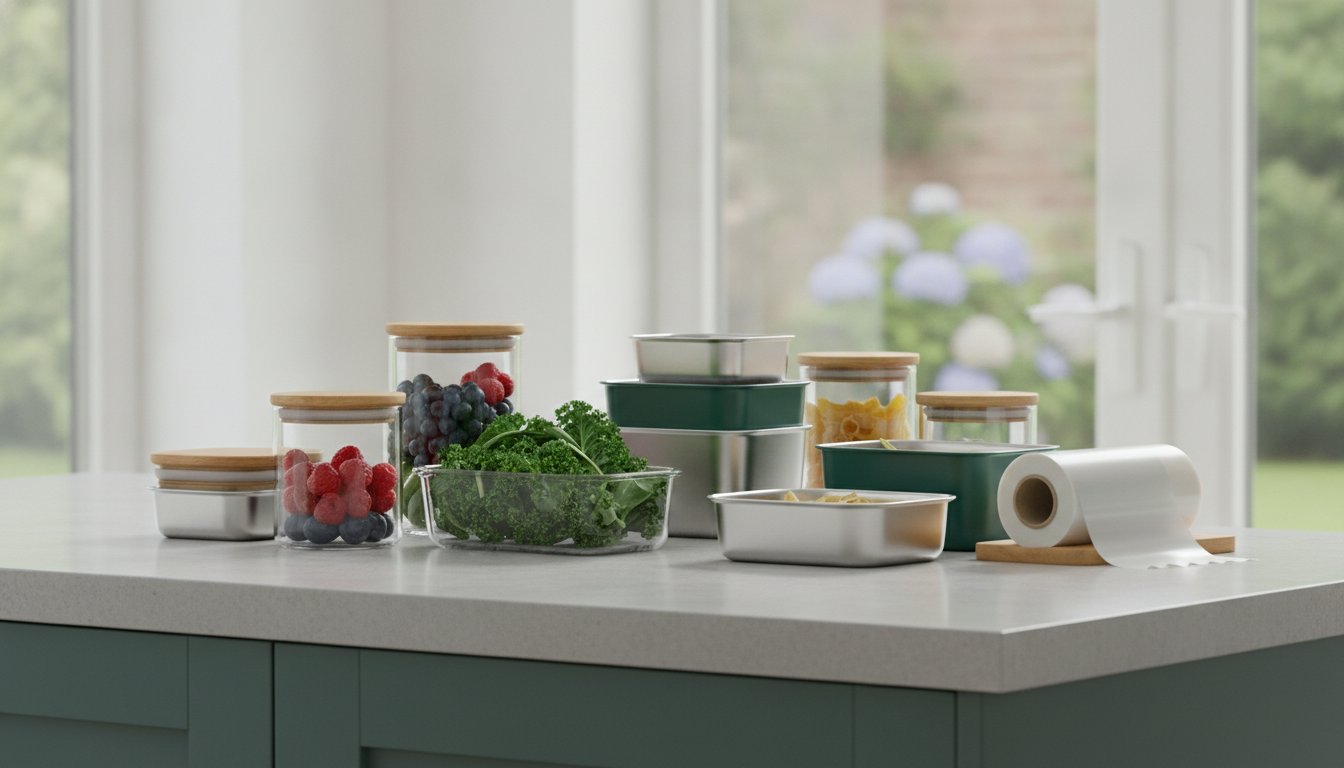
Did you know that food and drink packaging accounts for a staggering 82% of all household plastic waste in the UK? This statistic represents billions of pieces of plastic entering our homes annually, yet the most immediate concern for many is the invisible risk of chemical leaching into our daily meals. Finding high-quality, reliable plastic free food storage uk solutions has become a vital priority for those who value both environmental stewardship and the health of their household.
It's common to feel frustrated by flimsy eco-alternatives that fail to keep produce fresh or by confusing labels that mask "greenwashed" materials. You deserve a kitchen that operates with integrity, using tools that are as durable as they are safe. This guide promises to help you eliminate endocrine disruptors by establishing a simple, scalable waste management system. We will explore a hybrid storage strategy that combines the longevity of glass and steel with the practical innovation of certified compostable clingfilm and food roller bags, ensuring your kitchen remains a non-toxic sanctuary for years to come.
Key Takeaways
- Identify the critical differences between conventional plastics and inert materials to ensure your food storage is free from harmful BPA, phthalates, and PFAS "forever chemicals".
- Evaluate the practical benefits of borosilicate glass and stainless steel to build a durable, high-performance plastic free food storage uk strategy.
- Discover how compostable household clingfilm provides a superior, hygienic seal for raw foods without the risk of chemical leaching or environmental accumulation.
- Learn to optimise fridge management and extend produce freshness by integrating certified compostable food roller bags into your kitchen operations.
- Understand how transitioning to a hybrid storage model supports the circular economy and aligns your organisation with 2026 UK environmental regulations.
The Rise of Non-Toxic Food Storage Containers in the UK
The UK market is currently undergoing a significant transformation as consumers and commercial entities prioritise health alongside environmental impact. True non-toxic food storage refers to containers manufactured without harmful additives such as BPA, BPS, phthalates, and PFAS "forever chemicals." This shift toward plastic free food storage uk solutions isn't merely a trend; it's a necessary response to the growing awareness of how materials interact with our nutrition. By choosing inert substances, we ensure that the integrity of our food remains uncompromised by the packaging that holds it.
While the history of food storage containers shows a long reliance on durability, the modern era has introduced the pervasive risk of microplastics. These tiny particles can compromise food quality and impact long-term health, leading to a demand for materials that respect biological safety. Consequently, visionary organisations are adopting circular economy models that favour materials like glass, steel, and certified compostables. These substances don't shed pollutants into the environment or the food they protect, providing a steady foundation for a more responsible kitchen.
To better understand the practical application of these safe materials, watch this helpful video:
The Chemicals to Avoid: Beyond BPA
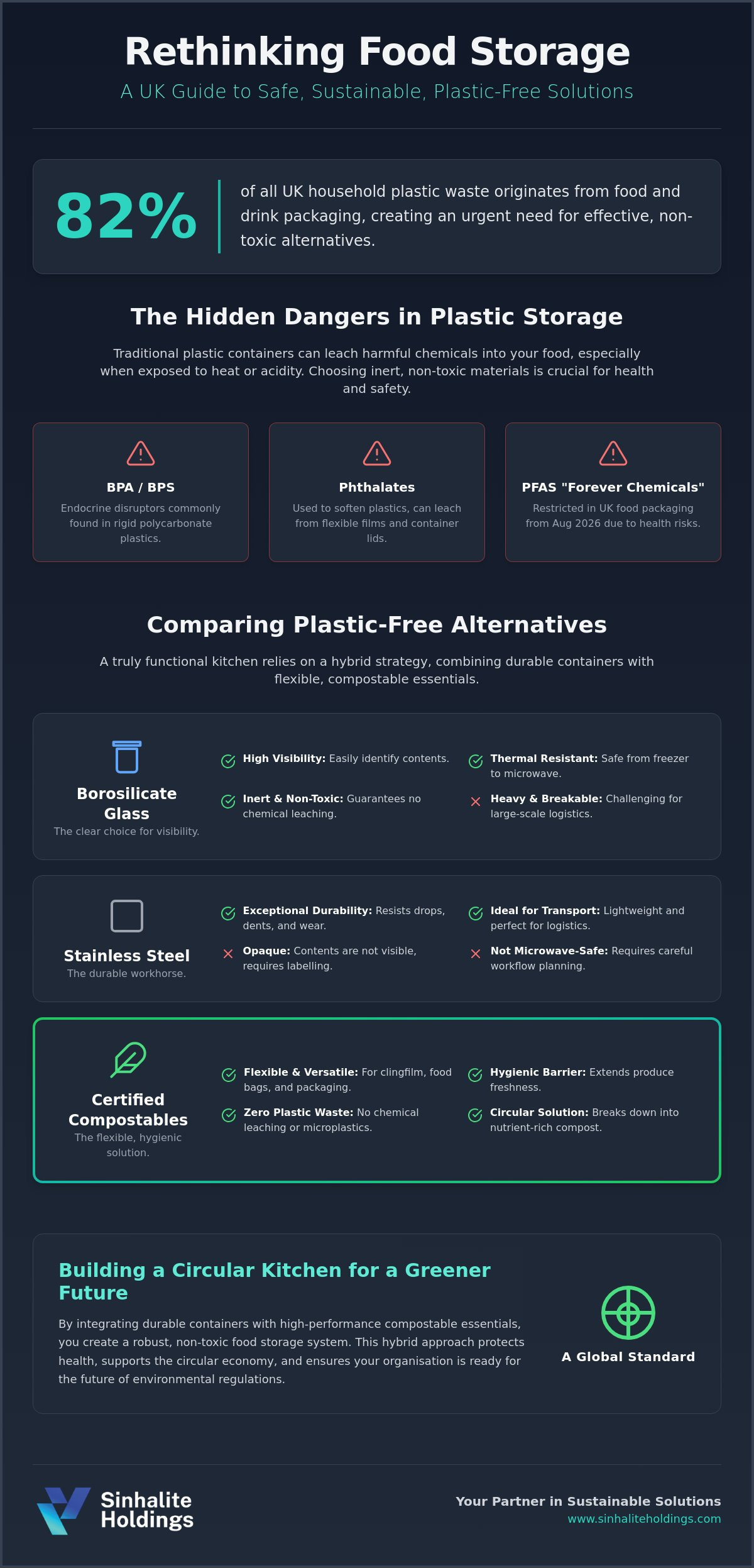
Awareness often starts with BPA, but the risks extend to phthalates and PFAS, which are frequently found in traditional plastic lids and flexible films. Heat and acidity act as catalysts, accelerating the rate at which these chemicals leach from standard containers into your meals. Choosing high-performance alternatives like compostable household clingfilm ensures that your storage remains a barrier, not a source of contamination. This transition is particularly vital for commercial kitchens where large-scale food preparation requires consistent safety standards and reliable hygiene.
Per the EU Packaging and Packaging Waste Regulation (PPWR) standards adopted in the UK from August 2026, PFAS are defined as synthetic substances restricted in food contact packaging due to their persistence in the human body and the environment.
Comparing Plastic-Free Alternatives: Glass, Stainless Steel, and Compostables
Selecting the most effective plastic free food storage uk solutions requires a strategic understanding of material properties and their specific applications. Borosilicate glass remains a premier choice for visibility and thermal resistance, allowing teams to identify contents instantly and move containers from cold storage to the microwave safely. While it's an excellent investment for long-term pantry storage, its weight and susceptibility to breakage can complicate large-scale logistics in high-traffic commercial environments. For these settings, stainless steel provides exceptional durability and is ideal for transport, though its opaque nature and lack of microwave compatibility require careful workflow planning.
A truly functional kitchen relies on a balance between these rigid assets and flexible alternatives. Many professionals find that the best plastic-free containers are often part of a broader system that includes high-performance wraps and bags. While durable containers are excellent for bulk storage, they often struggle to protect oddly shaped produce or provide the airtight, space-saving seals needed for rapid turnover. For organisations looking to upgrade their infrastructure, exploring certified compostable kitchen essentials provides a path toward total plastic elimination without sacrificing convenience.
Durable vs. Flexible Storage: Finding the Balance
Rigid containers alone cannot address every storage requirement. Flexible options are essential for maintaining the shelf life of fresh produce and preventing cross-contamination. For instance, using compostable food roller bags allows for organised fridge management while ensuring that moisture levels are regulated to prevent premature spoilage. This approach is particularly effective for commercial entities facing the 2026 modulated EPR fees, as it replaces "Red" category plastics with responsible, circular materials that don't leave toxic residues behind.
- Glass: Best for visibility, reheating, and acidic foods that might react with metals.
- Stainless Steel: Ideal for transport, freezing, and heavy-duty industrial use where durability is the priority.
- Compostables: The vital link for oddly shaped items, hygiene-sensitive wrapping, and maintaining a high-performance plastic free food storage uk system.
Investing in high-quality glass provides a lasting foundation, but integrating high-performance compostables ensures operational agility. By matching the material to the specific storage duration and food type, businesses can create a system that is both non-toxic and highly efficient.
Implementing a Circular Kitchen with Compostable Solutions
While glass and steel form the backbone of a non-toxic kitchen, they don't always address the "flexible storage" problem. Wrapping irregular items, sealing prep bowls, or managing high-turnover produce requires a material that is both adaptable and safe. Sinhalite Holdings acts as a dedicated partner for businesses seeking a complete plastic free food storage uk system. By using materials that align with UK food contact material regulations, we ensure that safety and performance are never compromised in your professional or domestic kitchen.
Integrating compostable household clingfilm provides a hygienic seal that traditional reusables, such as silicone or beeswax wraps, often struggle to match. Unlike silicone, which can retain persistent odours and remains difficult to recycle in the UK, compostable films offer a clean, single-use convenience that leaves no toxic residue behind. This is particularly vital when handling raw proteins or acidic foods that might otherwise cause chemical leaching from standard plastic wraps.
Why Compostable Clingfilm is the Essential Final Step
Performance is a primary concern for any commercial entity. By 2026, plant-based technology has advanced to ensure that compostable films provide the same "cling" factor as their plastic predecessors. These films grip prep bowls and sandwiches with reliable strength, ensuring freshness without the environmental cost. Transparency is equally important; this is why we emphasise the OK compost HOME certification explained in our guides. It guarantees that the wrap will break down safely in a home compost bin, simplifying disposal for the end user.
Effective waste management is a core pillar of the circular economy. Transitioning to compostable caddy bags and food roller bags allows for better preservation of fresh produce, which directly reduces food waste. Since businesses in England with 10 or more employees have been required to separate food waste since March 2025, these tools provide a practical, scalable way to meet regulatory demands. Sinhalite Holdings bridges the gap between traditional plastic convenience and modern environmental responsibility, providing the tangible tools needed to reach a sustainable, plastic free food storage uk future.
Leading the Transition to a Plastic-Free Kitchen
Transitioning your kitchen to a non-toxic, circular model is a profound step toward long-term environmental stewardship. By moving away from traditional plastics and embracing inert materials like borosilicate glass and stainless steel, you protect the biological integrity of your food. This guide has demonstrated that a high-performance plastic free food storage uk system requires a thoughtful hybrid approach. In this model, rigid containers provide essential durability while certified compostable wraps and bags offer the necessary hygiene for high-turnover items and oddly shaped produce.
Sinhalite Holdings acts as a steady ally in this mission, providing the visionary tools needed to align your operations with modern ethical standards. We're already trusted by UK commercial kitchens to deliver Certified OK compost HOME products that bridge the gap between convenience and responsibility. Our UK-wide national delivery ensures that your organisation can implement these scalable solutions immediately, helping you stay ahead of 2026 regulations while maintaining the highest standards of utility. View our range of certified compostable food storage solutions and discover how a responsible transition can benefit your business today.
We believe in the possibility of positive change, and we're here to provide the tangible tools to help you reach a cleaner, greener future.
Frequently Asked Questions
Are all plastic-free food storage containers microwave safe?
No, microwave safety depends entirely on the material composition. While borosilicate glass is engineered for thermal shock and is perfectly safe for reheating, stainless steel should never be used in a microwave as it reflects energy and can cause damage. Many professionals prefer glass for its versatility, but it's essential to verify specific manufacturer ratings for any flexible covers or films used during the heating process to ensure total safety.
How do I know if my food storage is truly non-toxic?
Identifying non-toxic plastic free food storage uk solutions requires checking for specific material certifications. Truly safe containers are explicitly labelled as free from BPA, BPS, phthalates, and PFAS "forever chemicals." For flexible alternatives, look for UK-certified standards like OK compost HOME, which ensures the material is plant-based and doesn't leach synthetic residues into your food. This verification process is a vital step in maintaining the biological integrity of your nutrition.
Can compostable clingfilm be used in the freezer?
Yes, high-quality compostable clingfilm is designed to withstand freezing temperatures without becoming brittle or losing its seal. This makes it an excellent tool for portioning raw proteins or preserving prep items for later use. Unlike traditional plastic wraps that can crack or peel when frozen, these plant-based films maintain their flexibility. They provide a reliable barrier against freezer burn in both domestic and commercial environments, ensuring your produce remains fresh and safe.
Is stainless steel or glass better for long-term food storage?
Both materials offer distinct advantages depending on the specific storage requirements of your kitchen. Glass is superior for acidic foods and visibility, as it's completely inert and allows for immediate inventory checks. However, stainless steel is often the better choice for light-sensitive ingredients and high-traffic commercial settings where durability is paramount. Integrating both ensures a comprehensive, high-performance system that supports a sustainable kitchen while meeting the highest standards of professional utility.


