
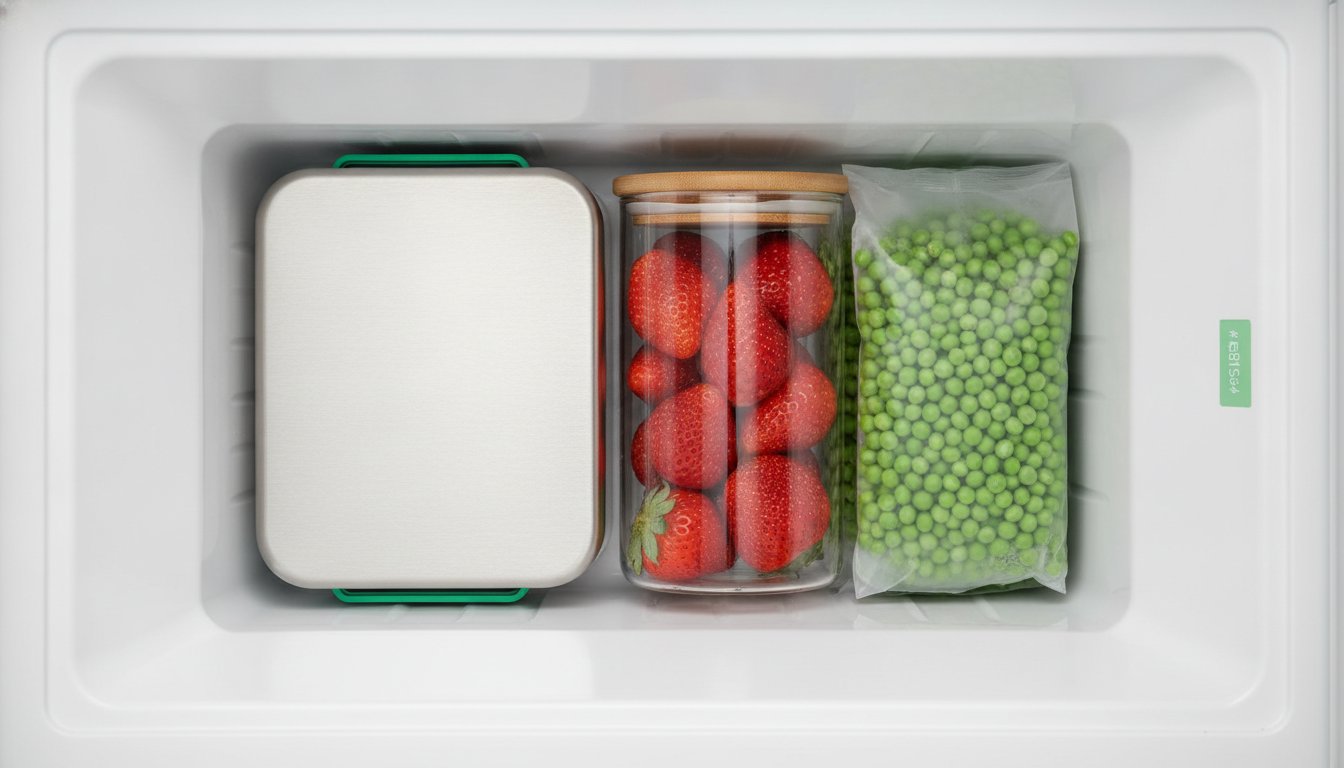
Did you know that the average family loses approximately $1,500 every year to spoiled food? For commercial entities and large organisations, these losses scale significantly, often hidden behind the icy, grey patches of freezer burn that ruin texture and taste. Achieving a resilient, zero-waste kitchen starts with mastering the art of preventing freezer burn without plastic. As 2026 regulations like the EU Packaging and Packaging Waste Regulation (PPWR) and various PFAS bans take full effect, the shift toward sustainable preservation is no longer just an ethical choice; it's a functional necessity for modern operations.
We understand the frustration of seeing high-quality ingredients go to waste because of unreliable storage. You've likely felt the anxiety of plastic chemicals leaching into your food or struggled with "eco-friendly" wraps that fail to maintain an airtight seal in sub-zero temperatures. This guide promises to show you how to protect your food using high-performance, plastic-free alternatives that support a circular economy. We will preview durable systems involving glass and stainless steel, alongside advanced compostable films that deliver industrial-strength protection without the environmental cost. Transitioning to a freezer burn-free system is both achievable and advantageous for your bottom line.
Key Takeaways
- Master the science of sublimation to understand why moisture loss occurs and how to maintain food quality through precise storage techniques.
- Learn how to utilise durable materials like glass and stainless steel to create airtight environments that preserve the integrity of your ingredients.
- Discover the role of high-performance compostable films in preventing freezer burn without plastic, providing a scalable solution for commercial entities.
- Explore how transitioning to compostable storage supports a circular economy by streamlining your organic waste management processes.
What Causes Freezer Burn and Why Plastic Isn’t the Only Answer
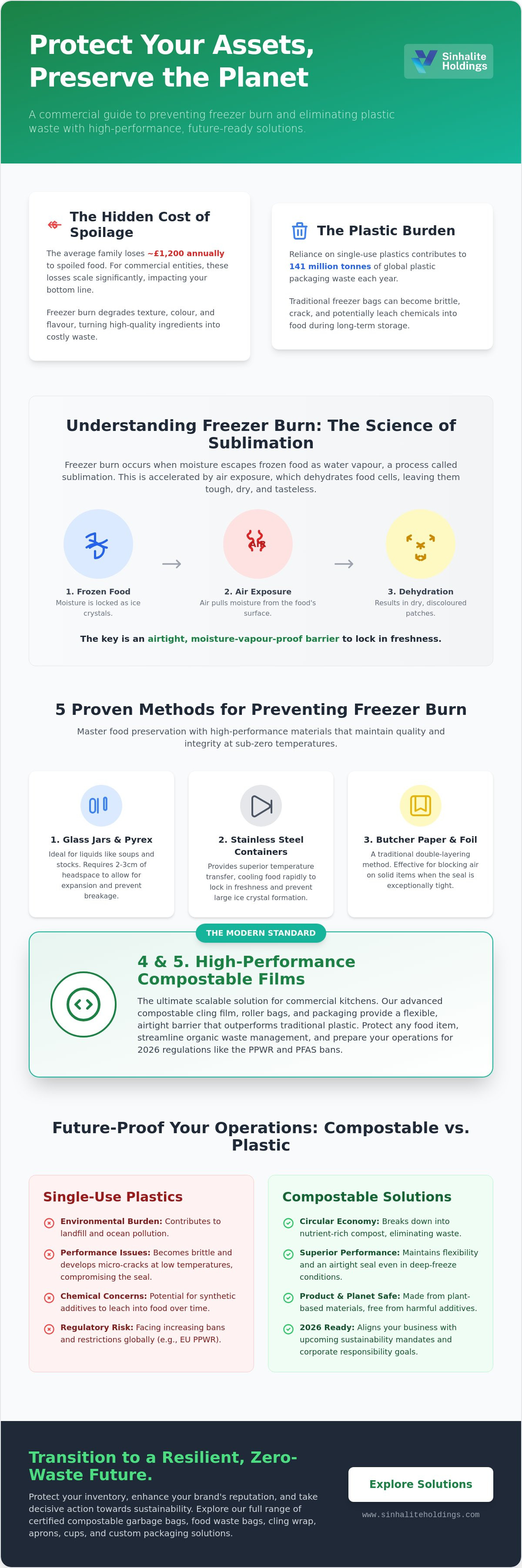
Understanding What Causes Freezer Burn is the first step toward effective food preservation. Scientifically known as sublimation, this process occurs when moisture evaporates from frozen food directly into the dry, circulating air of the freezer. This moisture loss leaves behind characteristic grey or leathery patches. While these dehydrated food cells are technically safe to consume, they significantly degrade the texture, colour, and flavour of your ingredients, leading to costly food waste in commercial kitchens.
To better understand this concept, watch this helpful video:
Many organisations rely on traditional thin plastics to protect their stock, yet these materials are often flawed. Standard plastic films can become brittle and develop micro-cracks at low temperatures, allowing air to penetrate the barrier. For long-term preservation, the objective is to maintain a moisture-vapour-proof environment. This ensures that hydration remains locked within the food, preventing the quality loss that compromises professional standards.
The Science of Sublimation in Food Storage
Air is the primary catalyst for spoilage in the freezer. Large air pockets inside packaging act as a vacuum that pulls moisture out of the food. This is why tight-fitting wraps are frequently more effective than rigid containers. When a container is only half-full, the excess air space accelerates the drying process. Achieving a close, protective fit is essential for preventing freezer burn without plastic while maintaining the integrity of the product.
The Environmental Cost of Traditional Freezer Bags
The reliance on single-use plastic bags contributes heavily to the 141 million tonnes of annual plastic waste generated globally. Beyond the environmental burden, there is growing concern regarding chemical leaching. Storing food long-term in certain plastics can lead to the migration of synthetic additives into the food itself. Adopting responsible, high-performance alternatives allows businesses to protect both their products and their commitment to a sustainable future.
5 Proven Methods for Preventing Freezer Burn Without Plastic
Implementing a robust storage strategy requires selecting the right tools for your specific inventory. You can effectively fend off freezer burn without using plastic by utilising high-performance materials that maintain structural integrity at low temperatures. While glass and stainless steel offer durability, modern compostable films provide the flexibility needed for irregular items. Each method serves a distinct purpose in a professional, zero-waste kitchen.
- Glass Jars and Pyrex: These are ideal for liquids, though they require careful management of expansion to avoid breakage.
- Stainless Steel Containers: This material provides superior temperature transfer, cooling food quickly to lock in freshness and prevent ice crystal formation.
- Beeswax Wraps: Best for short-term use, these natural barriers perform well for solid items like bread or firm cheeses, though they shouldn't be used with acidic foods.
- Butcher Paper and Foil: Traditional double-layering remains a reliable way to block air when other tools aren't available, provided the seal is tight.
- Compostable Cling Film and Roller Bags: This is the modern standard for scalable, airtight protection that fits seamlessly into existing commercial workflows.
Optimising Rigid Containers: Glass and Steel
When freezing soups or stews in rigid containers, you must leave approximately two to three centimetres of headspace. This expansion gap prevents the physical pressure of freezing liquids from cracking the vessel. Choosing wide-mouth jars is a safer operational choice than narrow-neck bottles, as they allow the contents to expand upwards without restriction. For businesses looking to scale these practices, exploring our range of compostable food storage solutions can bridge the gap between rigid durability and flexible efficiency.
The Performance of Flexible Compostable Wraps
A common concern is whether sustainable films can withstand extreme cold without losing their seal. High-quality, certified compostable cling film is engineered to maintain its adhesive properties and barrier strength in sub-zero temperatures, ensuring an airtight seal that doesn't become brittle. To determine the best fit for your specific needs, you may wish to compare beeswax wraps vs compostable cling film. Additionally, compostable food roller bags provide a puncture-resistant barrier that is particularly effective for bulk freezing and protecting large cuts of produce or protein. Transitioning to these flexible solutions allows you to achieve the goal of preventing freezer burn without plastic while maintaining the speed and convenience your operations require.
Transitioning to Compostable Food Storage: A Scalable Solution for 2026
Transitioning to compostable alternatives represents a pivotal shift for organisations aiming to enhance their environmental credentials. For commercial entities, this move is about more than just ethics; it's about operational resilience. By integrating compostable materials into your workflow, you align with the 2026 European Union Packaging and Packaging Waste Regulation (PPWR), which mandates higher standards for recyclability and compostability. This proactive approach ensures your organisation remains ahead of legislative changes while effectively preventing freezer burn without plastic.
The primary advantage of this transition lies in the circular economy model. When you use compostable packaging, food scraps and their wraps can be processed within the same organic waste stream. This eliminates the labour-intensive task of separating plastic contaminants from organic waste, significantly improving back-of-house efficiency. To guarantee true biodegradability, look for certifications such as OK compost HOME or EN 13432. These standards provide the assurance that your storage solutions will break down safely without leaving microplastic residues or harmful "forever chemicals" like PFAS.
Why Businesses are Choosing Compostable Solutions
Commercial prep environments require materials that can withstand rigorous handling. Compostable food roller bags offer the puncture resistance needed for bulk freezing, ensuring that large-scale inventory remains protected from moisture loss. Safety is equally paramount, particularly regarding the migration of synthetic additives. For detailed insights on material performance with specific ingredients, see our guide on wrapping acidic foods in compostable wrap. Switching to compostable household clingfilm is a low-friction change that delivers immediate results in preventing freezer burn without plastic while maintaining professional standards.
Implementing a Zero-Waste Freezer Strategy
Adopting a sustainable preservation system is a structured process. Organisations can follow this three-step framework to ensure a successful transition:
- Audit: Identify all current single-use plastic touchpoints in your freezing and storage processes.
- Trial: Pilot compostable alternatives to verify barrier performance in your specific sub-zero conditions.
- Train: Update disposal protocols to ensure staff correctly divert compostables to the organic waste stream.
Ready to modernise your preservation methods and reduce your plastic footprint? Explore our full range of compostable packaging solutions to begin your transition toward a more responsible and efficient future.
Advancing Toward a Zero-Waste Preservation Strategy
Establishing a resilient storage system requires moving beyond the limitations of traditional materials. By understanding the science of sublimation and adopting high-performance alternatives, your organisation can protect inventory while significantly reducing its ecological footprint. These shifts in operational practice don't just preserve food; they reinforce a commitment to systemic change and long-term sustainability.
Transitioning to certified OK compost HOME solutions ensures that your operations remain compliant with evolving 2026 environmental standards without sacrificing utility. As a specialist UK supplier of sustainable packaging, we provide puncture-resistant and freezer-safe designs that streamline organic waste management and support a circular economy. Mastering the art of preventing freezer burn without plastic is a practical, achievable step toward operational excellence and environmental stewardship.
Discover our range of high-performance compostable clingfilm and food bags to begin your transition today. A cleaner, more efficient future is within reach, and every responsible choice brings your organisation closer to its visionary goals.
Frequently Asked Questions
Is food with freezer burn safe to eat?
Yes, food with freezer burn is safe to consume, although its culinary quality is significantly diminished. The process of sublimation removes moisture, which alters the texture and flavour profile, making ingredients taste dry or leathery. While this doesn't introduce harmful bacteria, most professional kitchens choose to trim the affected areas to maintain their high service standards and ensure consistency across their menu offerings.
Can I freeze food in compostable bags without them splitting?
High-quality compostable food roller bags are specifically engineered to remain flexible and puncture-resistant in sub-zero temperatures. Unlike standard plastics that may become brittle and crack, these certified alternatives maintain their structural integrity throughout the freezing process. This makes them a reliable choice for preventing freezer burn without plastic in high-volume commercial environments where durability and strength are essential for inventory management.
Does glass always break in the freezer?
Glass does not inherently break in the freezer, provided you account for the physical expansion of liquids. By leaving a two to three centimetre headspace and using wide-mouth jars, you allow the contents to expand upwards without putting pressure on the walls of the vessel. Choosing tempered glass also adds a layer of thermal shock resistance, making it a viable and safe long-term storage option for organisations.
How long does food last in compostable wrap compared to plastic?
Food stored in certified compostable clingfilm typically enjoys a shelf life comparable to that of traditional plastic, provided a tight seal is maintained. These films are designed to provide a moisture-vapour-proof barrier that effectively prevents dehydration. While specific durations vary by food type, the performance of these sustainable materials ensures that your inventory remains protected during standard storage cycles, successfully preventing freezer burn without plastic.


