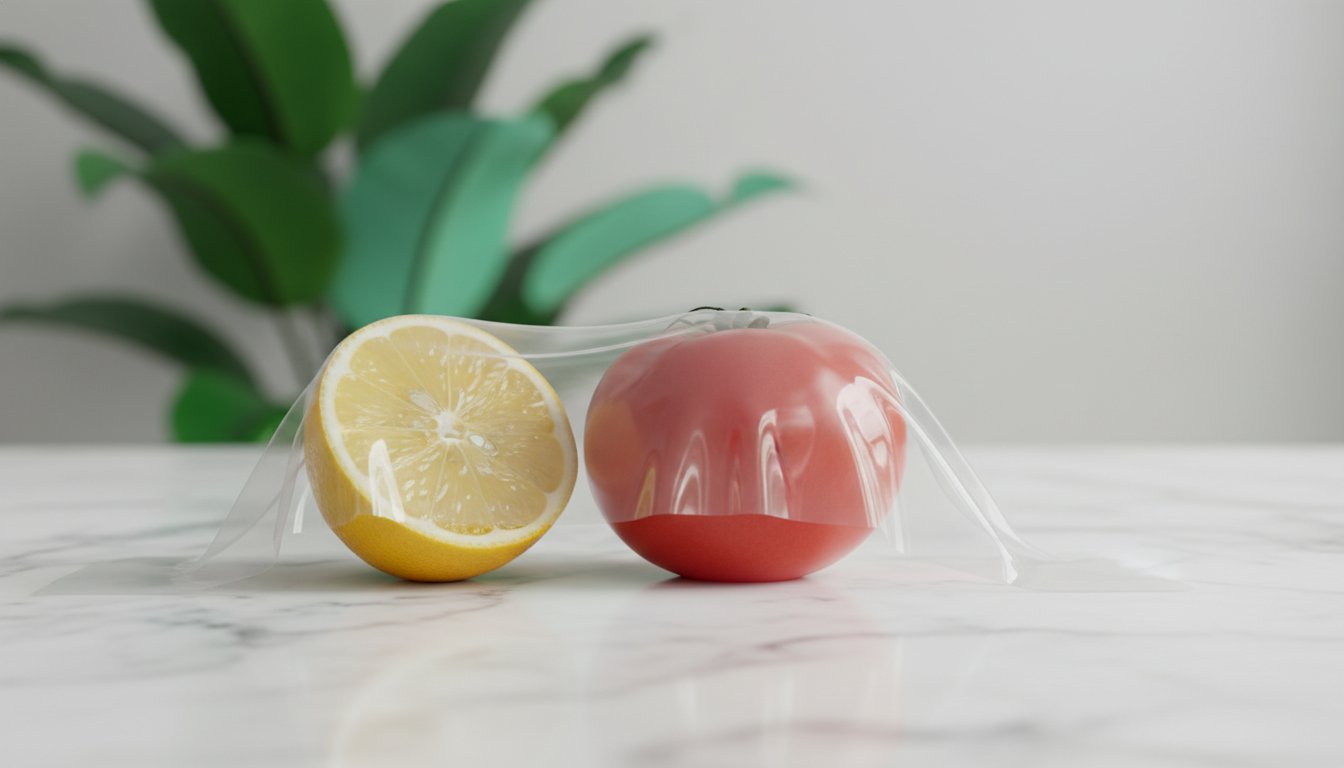
The most acidic ingredients in your kitchen, such as sliced lemons or rich tomato sauces, are often the very items most likely to trigger chemical leaching when stored under traditional PVC plastics. You might worry that switching to eco-friendly alternatives means sacrificing performance, especially when wrapping acidic foods in compostable wrap. It's a common concern that bio-based materials might dissolve or lose their seal integrity when they come into contact with vinegar or citrus. However, the reality of modern material science is far more reassuring for the responsible business owner.
You deserve the peace of mind that comes from knowing your storage solutions are both high-performing and chemically inert. We'll show you why certified compostable clingfilm is the safest choice for maintaining food integrity while meeting the strict UK food safety standards of 2026. This article explores the structural stability of bioplastics and provides the technical assurance you need to transition away from traditional plastics with absolute confidence. By understanding the intersection of natural processes and industrial innovation, you can ensure your kitchen remains both sustainable and safe.
Key Takeaways
- Understand why the molecular structure of bioplastics offers a superior, non-reactive barrier compared to traditional PVC when wrapping acidic foods in compostable wrap.
- Discover how modern compostable clingfilm maintains its structural integrity and seal strength even in high-moisture, refrigerated environments.
- Learn why transitioning to certified compostable solutions is a commercially viable strategy for UK hospitality businesses aiming for 2026 compliance.
- Explore the practical benefits of implementing high-performance eco-wraps to eliminate the risk of chemical migration in professional kitchens.
The Chemistry of Wrapping Acidic Foods in Compostable Wrap
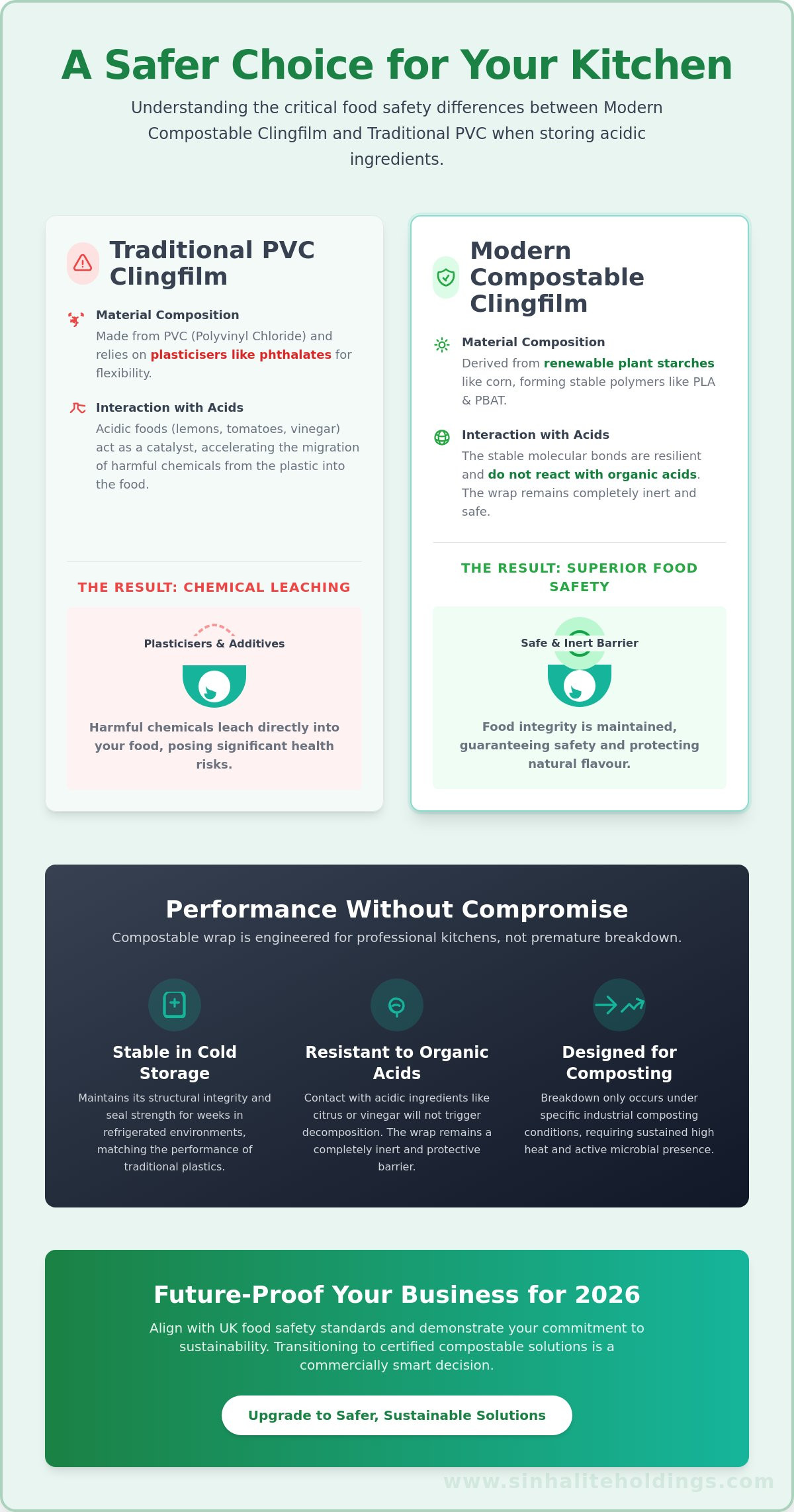
Traditional clingfilm often relies on phthalates and other plasticisers to maintain its cling and flexibility. When these materials come into contact with acidic foods like sliced tomatoes or vinegar-based dressings, the acid acts as a catalyst for chemical migration. This process allows harmful additives to leach directly into the food, raising significant health concerns. Understanding the chemical composition of disposable food packaging materials is essential for any kitchen prioritising consumer safety and long-term health.
To better understand how these sustainable materials behave in real-world conditions, watch this helpful video:
Modern bioplastics like PLA (Polylactic Acid) and PBAT (Polybutylene adipate terephthalate) are engineered with a different molecular philosophy. These materials are derived from renewable plant starches that don't require the toxic chemical stabilizers found in legacy plastics. Because these plant-based polymers are inherently stable, wrapping acidic foods in compostable wrap prevents the migration of endocrine disruptors. The molecular bonds in these wraps are resilient, ensuring they don't shed microplastics or chemicals into your ingredients.
Why Acidic Environments Matter for Food Safety
Acetic and citric acids found in citrus fruits and vinaigrettes can penetrate the surface of low-quality polymers. This interaction often leads to a breakdown of the material's structural integrity. However, high-quality compostable clingfilm uk is specifically tested for chemical resistance against these organic acids. These wraps are designed to remain completely inert; they provide a secure barrier that protects the food's flavour and safety without any risk of contamination. Compostable wraps remain inert in the presence of organic acids because their molecular bonds do not rely on the volatile plasticisers that acids typically target.
Performance and Durability: Does Acid Break Down the Wrap?
A common misconception suggests that compostable materials begin to vanish the moment they touch moisture or acid. This simply isn't true. While these wraps are designed to break down in a composting environment, they require specific conditions; such as high heat and microbial activity; to begin the degradation process. Wrapping acidic foods in compostable wrap is safe for extended refrigerated storage because organic acids like vinegar or lemon juice do not trigger the breakdown of the polymer chain. These wraps are engineered to withstand the rigours of a professional kitchen while maintaining their structural integrity.
Research into sustainable food packaging options highlights that materials like PLA and PBAT provide excellent moisture barriers. In refrigerated environments, compostable clingfilm performs consistently for several weeks, matching the shelf-life expectations of traditional plastics. When comparing beeswax wraps vs compostable cling film for high-acid items, the bioplastic alternative often wins on performance. Beeswax can be sensitive to highly acidic juices which may degrade the wax coating over time, whereas compostable wrap remains completely unaffected by the pH of the food it protects.
For the tightest, vacuum-like seal, apply the wrap at room temperature before moving items into cold storage. The material is most pliable between 15°C and 25°C, allowing it to stretch and grip surfaces effectively. Once cooled in the fridge, the seal remains firm, preventing oxidation and flavour loss in sensitive ingredients. If you are ready to upgrade your storage standards, you can find high-performance compostable household clingfilm designed for these demanding environments.
Seal Integrity and Moisture Barriers
The inclusion of PBAT in the manufacturing process provides the necessary elasticity for a tight seal on ceramic and glass containers. This flexibility ensures that the wrap conforms to the shape of the vessel, creating a reliable barrier against air. Unlike traditional PVC, bioplastics offer a degree of controlled breathability. This prevents "sweating" in acidic vegetables like peppers or tomatoes, which helps extend their freshness and prevents premature spoilage. Using a compostable cling film that actually clings is essential for professional food presentation, ensuring that stored items look as good as they taste while adhering to modern ethical standards.
Implementation in Commercial and Sustainable Kitchens
Commercial kitchens across the UK are currently facing a pivotal shift as sustainability mandates become more rigorous. Implementing a scalable solution for high-volume environments is no longer just an ethical choice; it's a strategic necessity. Utilizing commercial compostable cling film UK allows catering businesses to maintain high standards of hygiene while drastically reducing their plastic footprint. When wrapping acidic foods in compostable wrap on a large scale, delis and professional caterers benefit from a material that matches the performance of PVC without the associated environmental tax or disposal complications.
Switching to these bioplastics simplifies waste management for both councils and private enterprises. By streamlining the disposal process into a single organic waste stream, businesses can avoid the labour-intensive sorting required for traditional plastics. Meeting the 2026 sustainability targets, such as the EU Packaging and Packaging Waste Regulation (PPWR) implementation in August 2026, requires a definitive move away from single-use PVC. This transition ensures that operations remain compliant with upcoming UK and international packaging standards while fostering a cleaner, greener future.
Meeting UK Food Safety and Environmental Standards
For commercial trust, look for certifications such as TUV Austria and OK compost HOME. These labels provide a guarantee that the material has undergone rigorous testing for both safety and biodegradability. These products often align with international benchmarks like the FDA food contact safety standards, which ensure that no harmful substances migrate into food under various storage conditions. Adhering to these standards is vital for maintaining consumer confidence in professional food prep environments.
A common query from procurement officers is do compostable bags contain plastic, and the answer lies in the distinction between petroleum-based polymers and plant-derived bioplastics. Verifying bioplastic purity is straightforward when sourcing from transparent suppliers who provide full certification documentation. For organisations ready to lead the transition toward a more responsible model, Sinhalite Holdings offers a comprehensive range of certified, high-performance professional packaging. Adopting these sustainable alternatives as part of your standard operations ensures your business remains a visionary partner in the global effort to reduce plastic waste.
Securing the Future of Sustainable Food Storage
The transition toward responsible food storage is both a practical operational upgrade and a profound commitment to environmental stewardship. By understanding the molecular stability of modern bioplastics, you can move away from traditional PVC with the total assurance that your ingredients remain pure. Wrapping acidic foods in compostable wrap is a safe, high-performance solution that meets the rigorous demands of the modern kitchen. These advanced materials provide the necessary moisture barriers and seal integrity required to preserve food quality while aligning with the strict sustainability standards of 2026.
Choosing certified solutions ensures that performance is never sacrificed for ecological responsibility. Our clingfilm is TUV Austria food-grade safety compliant and engineered for high-performance cling without the use of harmful plasticisers. It's also certified OK compost HOME for effortless disposal within organic waste streams. Upgrade your kitchen with professional-grade compostable clingfilm from Sinhalite Holdings to lead your organisation toward a cleaner, more sustainable future. Embracing these innovations today builds a reliable foundation for the responsible business practices of tomorrow.
Frequently Asked Questions
Can I use compostable wrap for marinating meat in vinegar or lemon juice?
Yes, you can safely use professional-grade compostable wrap for marinating meat. The bioplastic structure is chemically resistant to the organic acids found in vinegar and citrus. Unlike traditional PVC, which might leach plasticisers when exposed to acidic marinades, compostable alternatives remain stable. This ensures your food maintains its intended flavour profile while providing a secure, leak-proof barrier during the refrigeration process.
Will acidic foods cause the compostable wrap to smell or discolour?
High-quality compostable wrap is designed to be non-porous and resistant to staining or odour absorption. Wrapping acidic foods in compostable wrap, such as tomato-based sauces or pickled vegetables, won't cause the material to yellow or retain lingering smells. The surface remains clear and professional; ensuring that your food presentation stays consistent. This durability is a key reason why many sustainable kitchens are transitioning away from conventional single-use plastics.
Is compostable wrap safe for wrapping cut citrus fruits for long periods?
Compostable wrap is entirely safe for direct contact with cut citrus fruits for standard storage durations. The material's molecular integrity prevents it from breaking down when exposed to citric acid in the fridge. Because these wraps don't contain harmful endocrine disruptors, you can store lemons, limes, and oranges with complete confidence. It's a practical choice for maintaining freshness without the risk of chemical migration often associated with older plastic technologies.
Does the acid in food speed up the composting process of the wrap in my home bin?
Residual acid from food doesn't significantly accelerate the biodegradation of the wrap in a home composting environment. The composting process primarily relies on microbial activity, moisture, and temperature rather than the pH of the food residue. Once you place the wrap in your bin, it'll break down according to its certified OK compost HOME standards. This ensures a reliable lifecycle that supports healthy soil without requiring special treatment for acidic residues.