
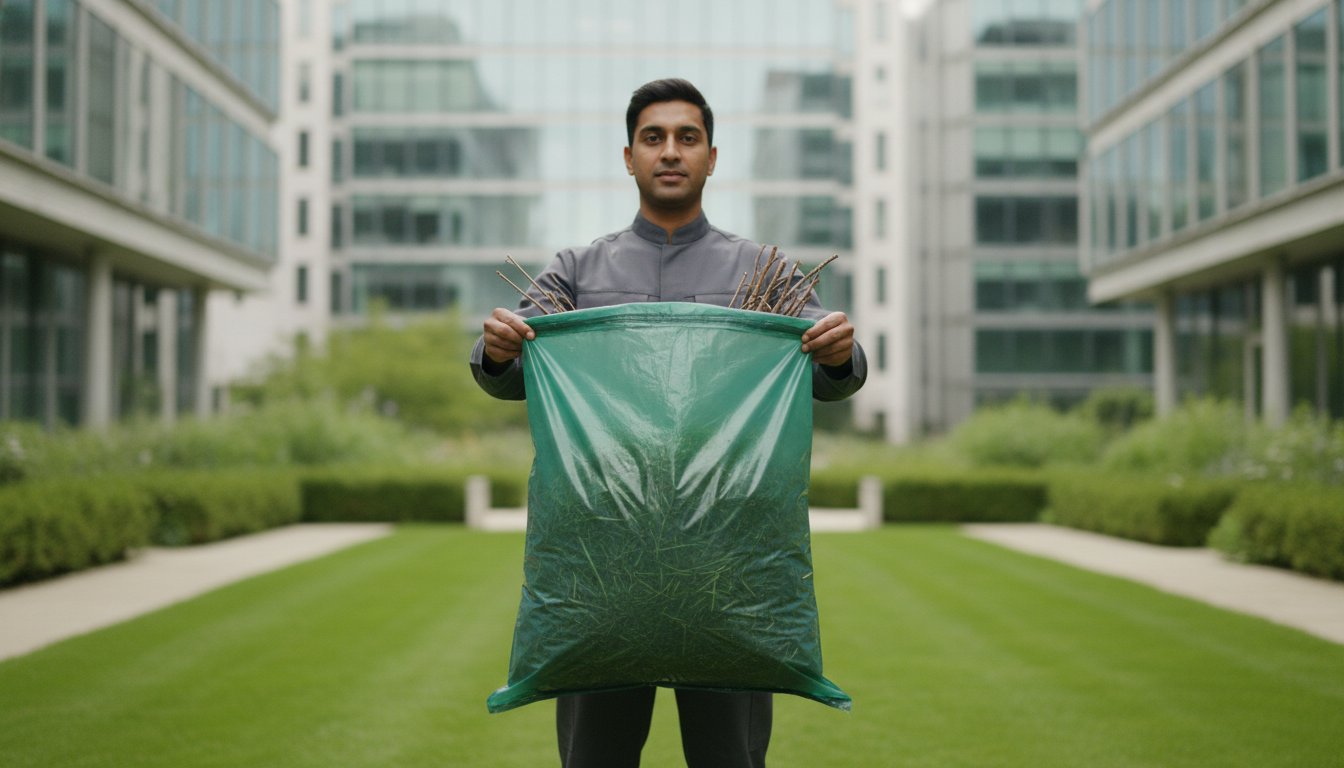
By 2026, the era of choosing between environmental integrity and industrial performance has officially ended. For UK organisations, the challenge is no longer just about adopting green initiatives; it's about sourcing professional tools that perform under the most demanding conditions. If your team has ever faced the frustration of a bag splitting under the weight of wet grass or being shredded by sharp twigs, you know that standard liners are insufficient. Transitioning to heavy duty garden waste sacks compostable options is now a vital step for businesses aiming to align with the UK's circular economy goals while avoiding the rising costs associated with the Plastic Packaging Tax.
We recognise that operational reliability is just as important as your commitment to environmental stewardship. You deserve solutions that offer high-performance, puncture-resistant durability without the risk of plastic contamination in your green waste streams. In this guide, you'll discover how to select sacks that balance industrial strength with environmental responsibility. We will also clarify the 2026 regulatory requirements and explain why modern biopolymer engineering is the key to replacing traditional plastics in professional landscaping and waste management.
Key Takeaways
- Understand why BS EN 13432 certification is the definitive standard for ensuring your garden waste is compatible with UK industrial composting facilities.
- Identify the technical specifications required for commercial performance, including how high-micron biopolymers provide the puncture resistance necessary for heavy duty garden waste sacks compostable reliability.
- Discover how transitioning to professional-grade compostable garbage bags helps your organisation mitigate the financial impact of the 2026 UK Plastic Packaging Tax.
- Learn how standardising on certified compostable solutions reduces plastic contamination, directly supporting the integrity of the UK green waste stream and circular economy goals.
Evaluating Strength and Standards in Heavy Duty Garden Waste Sacks
Defining "heavy duty" in 2026 requires looking past simple micron thickness. For UK organisations, it means a material can withstand the weight of wet organic matter without compromising its environmental integrity. Choosing heavy duty garden waste sacks compostable options ensures that your operations remain efficient and compliant with evolving waste regulations. High-performance biopolymers are engineered to prevent splitting, even when subjected to the high-moisture environments typical of UK landscaping projects.
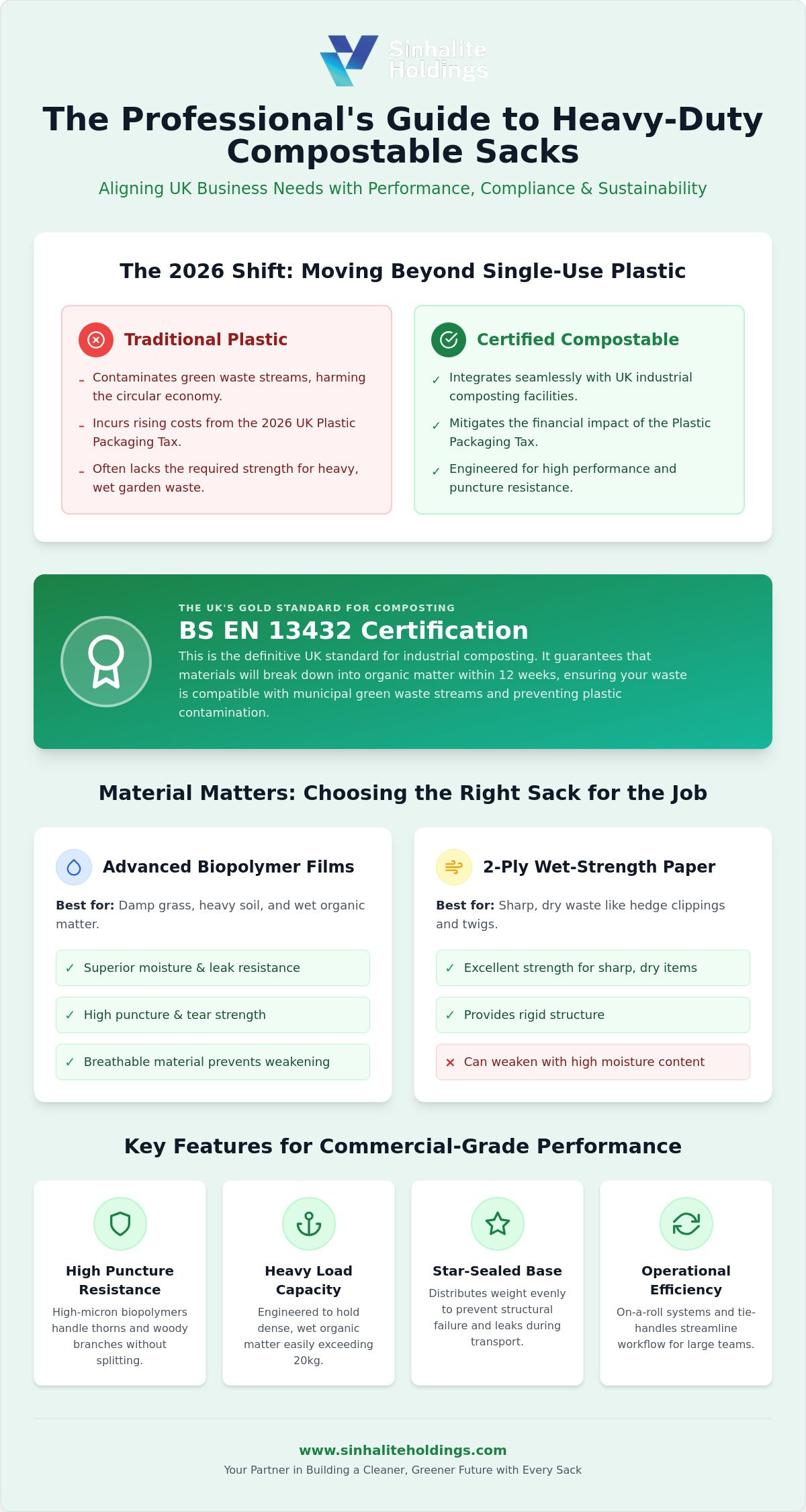
The shift towards certified materials is driven by the need for systemic change. It's vital to distinguish between compostable and biodegradable standards to avoid potential fines or rejected waste loads. While "biodegradable" can be a misleading term, "compostable" materials are certified to break down within a specific window, typically 12 weeks in industrial settings. This precision is what allows organisations to successfully integrate these tools into the circular economy.
To better understand how these professional-grade solutions perform in real-world scenarios, watch this helpful review:
Understanding UK Compostability Certifications
The BS EN 13432 standard remains the benchmark for industrial composting in the UK. While home composting certifications exist, commercial entities should prioritise EN 13432 to ensure compatibility with municipal waste streams. Verifying these logos in your supply chain is a practical step to prevent plastic contamination. It also ensures your compostable garbage bags are recognised by waste processors, facilitating a smoother transition away from traditional plastics.
Material Science: Kraft Paper vs. Compostable Biopolymers
Performance often hinges on material choice. 2-ply wet-strength paper is excellent for sharp, dry waste like hedge clippings. Conversely, advanced biopolymer films excel with damp grass and heavy soil. These films are engineered for moisture resistance while maintaining breathability. This prevents the bag from weakening prematurely due to internal condensation. By selecting the right material for the task, organisations can ensure durability without sacrificing their sustainability goals.
Buying Guide: Key Features for Commercial Grade Garden Sacks
Selecting the right heavy duty garden waste sacks compostable options requires a precise balance between volume requirements and material performance. While domestic users might settle for standard liners, commercial organisations must evaluate specific load-bearing capacities. Choosing between an 80L refuse sack and a 240L wheelie bin liner depends entirely on your collection frequency and the density of the waste. For instance, wet organic matter can easily exceed 20kg in a single container. Ensuring your sacks have a star-sealed base is a technical necessity to prevent structural failure and leaks during transport.
Puncture resistance is equally critical when handling thorny garden waste or woody branches. This is where high-micron biopolymers demonstrate their value over thinner alternatives. By following WRAP guidance on compostable packaging, organisations can better understand the strategic role these materials play in a modern waste stream. High-micron films provide the tensile strength needed to resist tears while maintaining the flexibility required for rapid filling.
Specifying the Right Sack for the Task
Efficiency starts with matching the material to the waste type. Light garden maintenance involving leaves and grass clippings can be managed with standard-grade compostable liners. However, heavy landscaping tasks require reinforced, extra-thick sacks. These high-performance variants are specifically designed to contain soil and branches, reducing the risk of mid-transit splits that cause operational delays.
Operational Efficiency and Handling
For large-scale commercial teams, the method of dispensing is just as important as the sack itself. "On-a-roll" dispensing systems facilitate faster distribution across sites; integrated tie-handles ensure secure containment without the need for separate closures. Implementing these practical features helps streamline your workflow and ensures staff can work safely and effectively. If you're ready to upgrade your operations, exploring a range of compostable garbage bags can provide the durability your team requires.
The Strategic Advantage: Integrating Compostables into UK Waste Streams
Integrating heavy duty garden waste sacks compostable solutions into your waste management strategy is a decision that extends beyond simple operational convenience. It's a proactive step toward systemic efficiency. By eliminating traditional plastic from the green waste stream, organisations directly reduce the risk of contamination in municipal composting facilities. This ensures the resulting end-product is of the highest quality, supporting the UK’s broader circular economy objectives. When the waste and the container are processed as a single organic unit, the entire collection cycle becomes more streamlined and effective.
Financial benefits are equally compelling in 2026. As of April 1, 2026, the UK Plastic Packaging Tax increased to £228.82 per tonne for plastic packaging with less than 30% recycled content. Adopting certified compostable alternatives removes this specific tax liability entirely. When you calculate the total cost of disposal, including landfill fees and potential regulatory penalties for contaminated loads, the return on investment for zero-waste solutions becomes clear. Sustainable procurement isn't just an ethical choice; it's a fiscally responsible one that protects your organisation from rising environmental levies.
Council and Commercial Waste Compliance
The 2026 UK waste regulations mandate stricter separation of organic materials to divert waste from landfills. Organisations that fail to comply face higher modulated fees under the Extended Producer Responsibility (EPR) scheme, which uses a RAG rating system to penalise hard-to-recycle packaging. Implementing compostable sacks simplifies compliance because it removes the need for manual debagging at waste sites. Landscaping firms and councils report that using these sacks allows for a seamless transition from the point of collection to industrial composting, significantly reducing labour costs and improving worker safety.
Partnering with Sinhalite for Sustainable Solutions
Scaling your operations requires a dependable partner who understands the intersection of modern innovation and natural processes. You can enhance your waste management strategy with Sinhalite’s puncture resistant compostable garbage bags, which are designed to meet rigorous industrial standards while maintaining high performance. Our team is dedicated to helping you switch your business to sustainable packaging effectively. By choosing high-quality compostable products, you position your organisation as a leader in environmental stewardship while securing long-term operational resilience in an increasingly regulated market.
Empowering Your Transition to a Circular Economy
Adopting responsible waste management practices is no longer a peripheral goal; it's a core operational necessity for any forward-thinking UK organisation. By prioritising materials certified to BS EN 13432 standards, your team ensures that organic waste remains a valuable resource rather than a source of contamination. We've explored how high-performance biopolymer technology provides the puncture resistance and load-bearing capacity required to handle the most demanding landscaping tasks. Implementing heavy duty garden waste sacks compostable solutions allows you to meet 2026 regulatory demands while effectively eliminating Plastic Packaging Tax liabilities.
As a specialist UK supplier, Sinhalite Holdings is committed to providing the industrial-strength tools needed to scale your sustainability efforts with confidence. Our certified compostable garbage bags are trusted by commercial entities to bridge the gap between high-level environmental stewardship and practical, daily utility. We believe that positive change is achievable when innovation meets integrity. Take the next step in future-proofing your operations and supporting a cleaner, greener outlook for your business. Explore our range of heavy-duty compostable waste solutions today and join the movement toward a waste-free future.
Frequently Asked Questions
Will compostable garden waste sacks split if they get wet?
No, high-quality heavy duty garden waste sacks compostable options are engineered with moisture-resistant biopolymers to prevent splitting. Unlike standard domestic liners, professional-grade versions maintain their structural integrity even when filled with wet grass or damp soil. This durability ensures that organic waste can be transported safely without the risk of premature degradation or mechanical failure during handling. It's a practical solution that balances performance with environmental responsibility.
How long can I store garden waste in a compostable sack before it breaks down?
You can typically store waste for several days; however, it's best to move the sacks to a collection point within one to two weeks. Because these bags are designed to breathe, they allow moisture to escape, which slows the initial breakdown process compared to sealed plastic. Prolonged exposure to high heat and moisture inside the bag will eventually trigger the composting process. Maintaining regular collection schedules ensures the sacks remain strong and easy to handle.
Are these sacks suitable for council green waste collections in the UK?
Yes, most UK councils accept these sacks provided they carry the BS EN 13432 certification for industrial composting. This standard ensures the material will disintegrate within 12 weeks in a commercial facility. It's always advisable for organisations to verify local guidelines. Acceptance criteria for heavy duty garden waste sacks compostable products can vary between different local authorities depending on their specific processing equipment and end-product quality standards.
What is the difference between home compostable and industrially compostable garden bags?
The primary difference lies in the temperature and timeframe required for the material to break down completely. Home compostable bags are designed to degrade in the lower temperatures of a domestic compost heap. Industrially compostable bags require the higher, sustained temperatures found in professional facilities to biodegrade within the certified six-month window. Choosing the correct version ensures your waste management practices align perfectly with your organisation's specific disposal route.


