
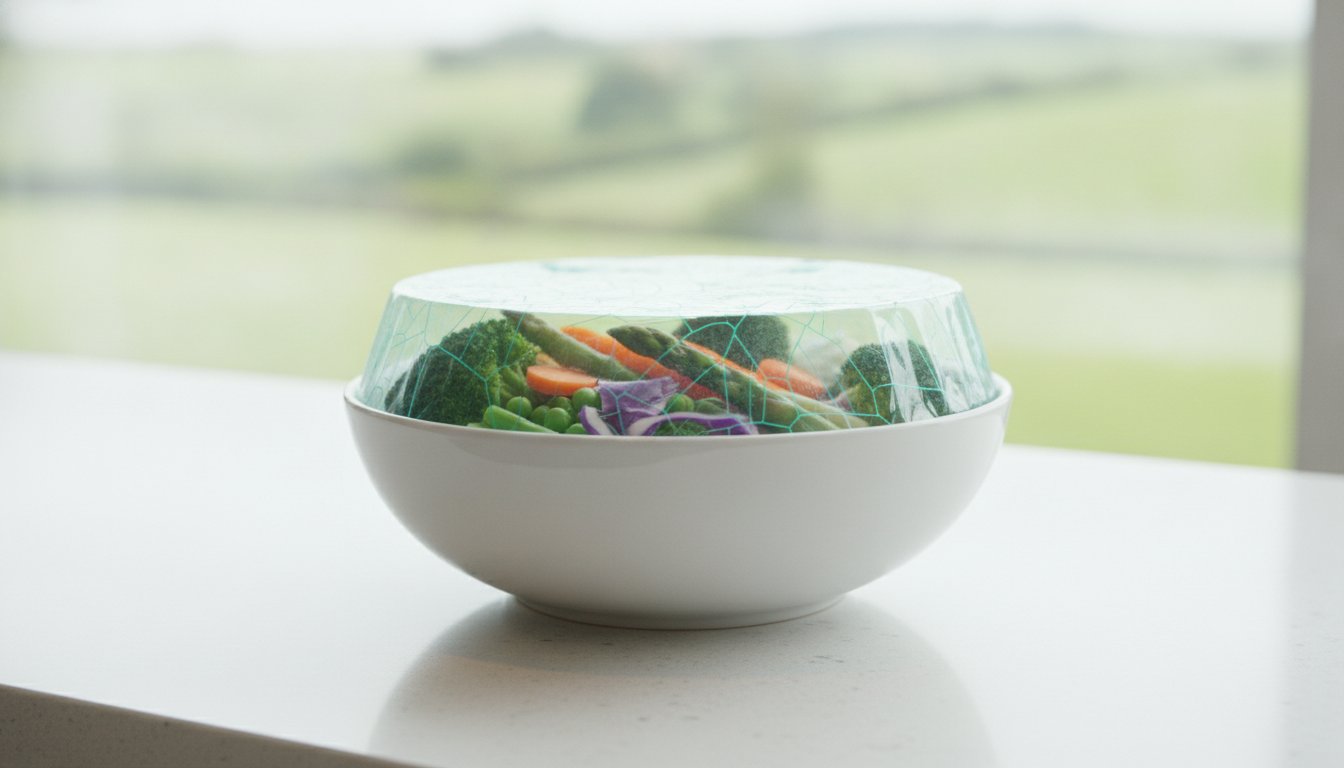
Could the very material you use to keep food fresh be the silent contributor to chemical leaching in your commercial kitchen? Many business leaders and facility managers feel trapped between the convenience of traditional wrap and the valid fear of phthalates or BPA migrating into hot meals. You've probably found that beeswax wraps simply aren't up to the task, often melting under high heat and leaving you without a practical microwave safe cling film alternative for high-volume food prep. It's a frustrating cycle that many organisations are eager to break as we move toward a more circular economy.
It's time to move beyond the compromise of choosing between safety and efficiency. This article will show you how to identify heat-safe, non-toxic, and compostable options that protect both your health and the environment. We'll explore the latest innovations in bioplastics that meet strict 2026 standards, such as California's updated labelling laws. By the end of this guide, you'll have a clear roadmap for integrating high-performance, sustainable wraps that maintain the durability your business requires while significantly reducing your plastic waste footprint.
Key Takeaways
- Learn why traditional plastic wraps pose significant health risks during reheating and how to mitigate chemical migration into oily or fatty foods.
- Evaluate the best microwave safe cling film alternative for your business, comparing the durability of silicone with the practical scalability of compostable films.
- Understand the structural benefits of plant-based materials, which offer natural breathability to prevent soggy food while maintaining high-heat resistance.
- Discover how to align your operational practices with 2026 environmental standards by transitioning to certified compostable solutions.
- Gain a clear understanding of the performance differences between reusable lids and high-quality compostable cling wrap for commercial kitchen efficiency.
Understanding the Risks: Why Traditional Cling Film is Not Microwave Safe
In a professional kitchen, the term "microwave-safe" implies that a material can withstand high temperatures without melting, warping, or leaching harmful substances into food. For many organisations, finding a reliable microwave safe cling film alternative has become a priority as we align with the UK’s 2026 sustainability goals and the transition toward a circular economy. Traditional plastics often fail the safety test. Even products labelled as safe for heating can lose their structural integrity after repeated cycles, leading to microscopic degradation that compromises food quality.
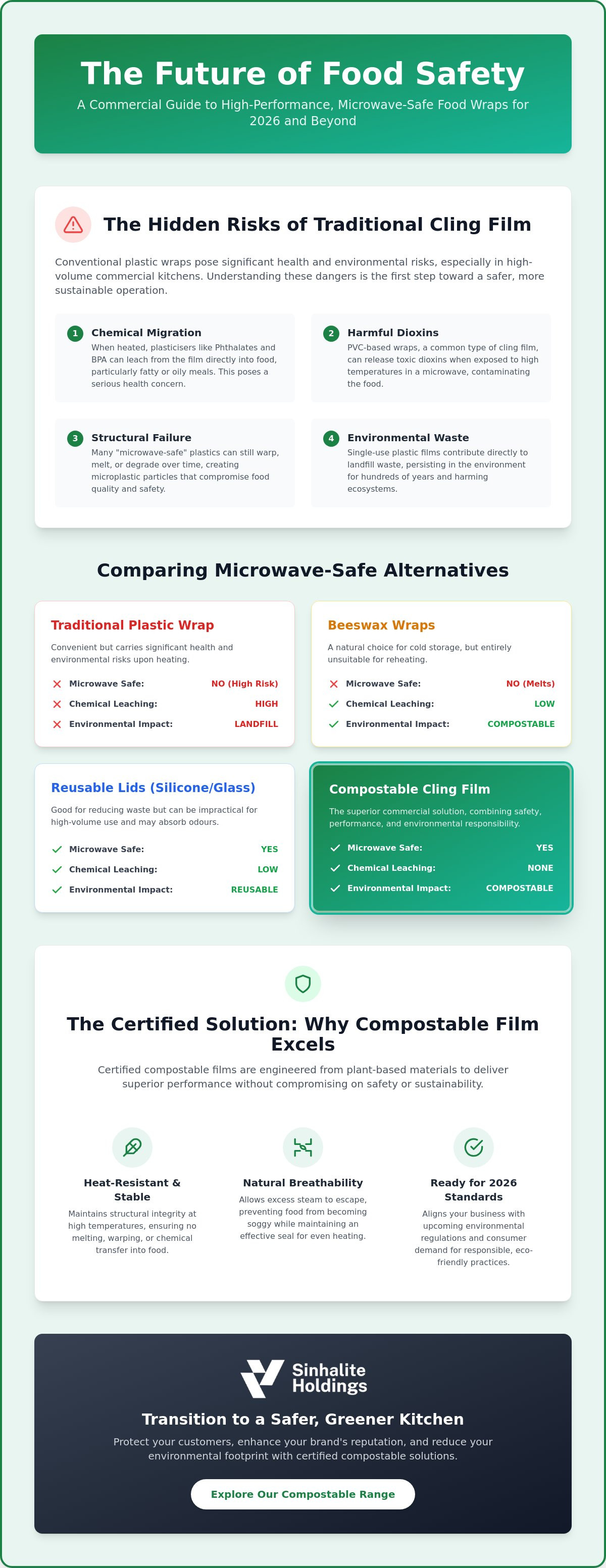
Understanding Plastic wrap composition and safety is essential for responsible procurement. When conventional wrap comes into contact with fatty or oily foods at high temperatures, the risk of chemical migration increases significantly. This process allows plasticisers to move from the film into the meal, a reality that forward-thinking businesses are now actively working to avoid through better material choices.
To better understand the practical challenges of handling traditional films, watch this helpful video:
The Chemical Reality of Heating Plastic
Traditional PVC wraps are particularly problematic because they can release dioxins during high-heat exposure. While "BPA-free" is a common marketing term, it doesn't guarantee safety for every application. Many chemical substitutes used in plastic manufacturing still behave like endocrine disruptors when subjected to microwave radiation. Choosing a certified microwave safe cling film alternative ensures that food prep remains untainted by these synthetic additives, protecting both your customers and your brand's reputation for integrity.
Why Beeswax Wraps are Not a Microwave Alternative
Reusable beeswax wraps are excellent for cold storage, but they're entirely unsuitable for reheating. Wax has a very low melting point. If placed in a microwave, the coating will liquefy, potentially contaminating the food and leaving a difficult residue on kitchen appliances. For businesses needing a scalable, heat-resistant solution, modern compostable films offer the high-performance utility that wax simply cannot provide in a commercial heating environment.
Top Microwave Safe Cling Film Alternatives: A 2026 Comparison
Selecting a microwave safe cling film alternative requires a careful balance between operational efficiency and rigorous safety standards. While the previous section detailed the risks of microwaving plastic, this comparison focuses on practical solutions that meet the demands of modern commercial kitchens. Businesses today need materials that maintain food quality while supporting a transition toward more responsible environmental stewardship.
Reusable Options: Glass, Ceramic, and Silicone
Utilising existing kitchenware is an excellent first step for simple reheating tasks. Inverting a ceramic plate or using a glass lid can reduce immediate waste. However, these methods often fail to provide an airtight seal. Without a proper seal, steam escapes too quickly, which leads to uneven heating and dried-out food. Silicone stretch lids offer a more flexible solution for odd-shaped containers or commercial prep bowls. While durable, silicone is naturally porous. It tends to absorb pungent food odours over time, which can become a concern in professional settings where flavour integrity is paramount.
The Convenience Factor: When Reusables Fall Short
Rigid lids and heavy plates aren't always practical for high-volume environments or irregularly shaped produce. When you need to protect half a squash or seal a large catering tray, a flexible wrap is often superior. Many organisations initially consider beeswax as a natural option. However, as explored in our comparison between beeswax and compostable wrap, wax simply cannot handle the heat of a microwave without melting.
This is where compostable household clingfilm emerges as the high-performance successor to plastic. It offers the same cling and seal quality that chefs rely on to prevent food from drying out, but it does so without the risk of chemical leaching. Transitioning to more responsible practices is achievable when you choose high-quality compostable solutions that prioritise both utility and safety. By integrating these innovative materials, businesses can maintain their speed of service while demonstrating a clear commitment to a cleaner, greener future.
Transitioning to Compostable Cling Film: Performance and Safety Standards
Modern compostable clingfilm represents a significant leap in material science. It maintains its structural integrity under microwave heat, ensuring that your food remains protected without the risk of the wrap melting into the container. One distinct advantage of these plant-based materials is their natural breathability. This characteristic allows a controlled amount of moisture to escape, which prevents excessive steam build-up and ensures food doesn't become soggy during reheating. Finding a high-performance microwave safe cling film alternative is no longer a matter of sacrifice but one of strategic innovation for the modern kitchen.
For commercial entities, adhering to FDA guidance on microwave-safe plastics provides a useful baseline, but moving toward compostable solutions exceeds these standards by removing synthetic polymers from the cycle. This transition is particularly vital when wrapping acidic foods, as the interaction between heat and acidity can accelerate the breakdown of inferior materials. Transitioning to a microwave safe cling film alternative made from certified bioplastics ensures your kitchen remains both compliant and efficient. By adopting these solutions, UK businesses can make tangible progress toward their 2026 net-zero goals while maintaining the highest food safety standards.
Certifications to Look For: OK compost HOME and TUV Austria
To ensure you aren't falling victim to greenwashing, always look for third-party certifications like OK compost HOME and TUV Austria. These labels verify that the material will break down safely in specific environments without leaving toxic residues. This level of transparency is essential across all your packaging, from the wrap used on prep stations to the compostable food roller bags used for bulk storage.
Best Practices for Microwaving with Compostable Wrap
While compostable films are robust, following specific handling techniques will maximise their performance in a commercial setting:
- Leave a small gap: Even with breathable film, leaving a small corner open allows steam to vent safely and prevents pressure build-up.
- Surface adherence: Compostable film clings exceptionally well to ceramic and glass, but ensure the container's rim is dry to achieve the most secure seal.
- Avoid direct contact: It's best to avoid letting the film touch the food directly during high-heat cycles to ensure even cooking and prevent potential sticking.
Advancing Toward a Plastic-Free Professional Kitchen
The shift toward a circular economy requires more than just awareness; it demands the adoption of high-performance tools that align with modern ethical standards. You now understand that while reusables have their place, a certified microwave safe cling film alternative provides the necessary flexibility and seal quality for demanding commercial environments. By choosing materials that maintain their structural integrity without leaching toxins, your organisation can protect both its patrons and its environmental reputation.
Transitioning to responsible practices is a practical step toward long-term operational resilience. As a specialist UK supplier for commercial and household use, we provide solutions that are plastic-free, non-toxic, and certified OK compost HOME. This ensures your food prep meets the highest safety benchmarks for 2026 and beyond. It's an achievable transition that reinforces your commitment to systemic change and responsible stewardship.
Switch to professional-grade compostable clingfilm for your kitchen today to lead the way in sustainable food service. Every intentional choice in your procurement process contributes to a cleaner, greener future for us all.
Frequently Asked Questions
Can you actually microwave compostable cling film without it melting?
Yes, certified compostable clingfilm is specifically engineered to withstand the heat levels typically reached during standard microwave reheating without melting or warping. Unlike some low-quality plastics that can lose their shape under stress, these advanced bioplastics maintain their structural integrity. This reliability ensures that commercial kitchens can maintain a fast pace of service while knowing their food covers will remain secure and functional throughout the heating process.
Is compostable cling film toxic if it touches my food while heating?
No, certified compostable film is completely non-toxic and serves as a safer microwave safe cling film alternative because it contains no phthalates or BPA. Traditional plastics often rely on these synthetic plasticisers, which can migrate into food when heated, especially during contact with fats or oils. Choosing a plant-based, plastic-free solution eliminates this risk of chemical leaching, ensuring that your food remains pure and untainted by industrial additives.
How does compostable wrap compare to traditional plastic for preventing food from drying out?
Compostable wrap provides an excellent seal that matches traditional plastic while offering the added benefit of natural breathability. It clings effectively to glass, ceramic, and metal to trap moisture and prevent food from drying out during the reheating process. This material is a superior microwave safe cling film alternative because it allows excess steam to vent slowly, which prevents food from becoming soggy, a common issue with non-porous traditional wraps.
Can I use compostable cling film in a commercial microwave or oven?
You can safely use compostable cling film in commercial microwaves for reheating and steaming, but it is not suitable for use in conventional ovens. While the material is designed to handle microwave radiation and high steam temperatures, the direct, intense heat of an oven exceeds its melting point. For professional food storage and prep, it's an ideal tool for rapid reheating tasks, provided it isn't exposed to naked flames or oven heating elements.


