

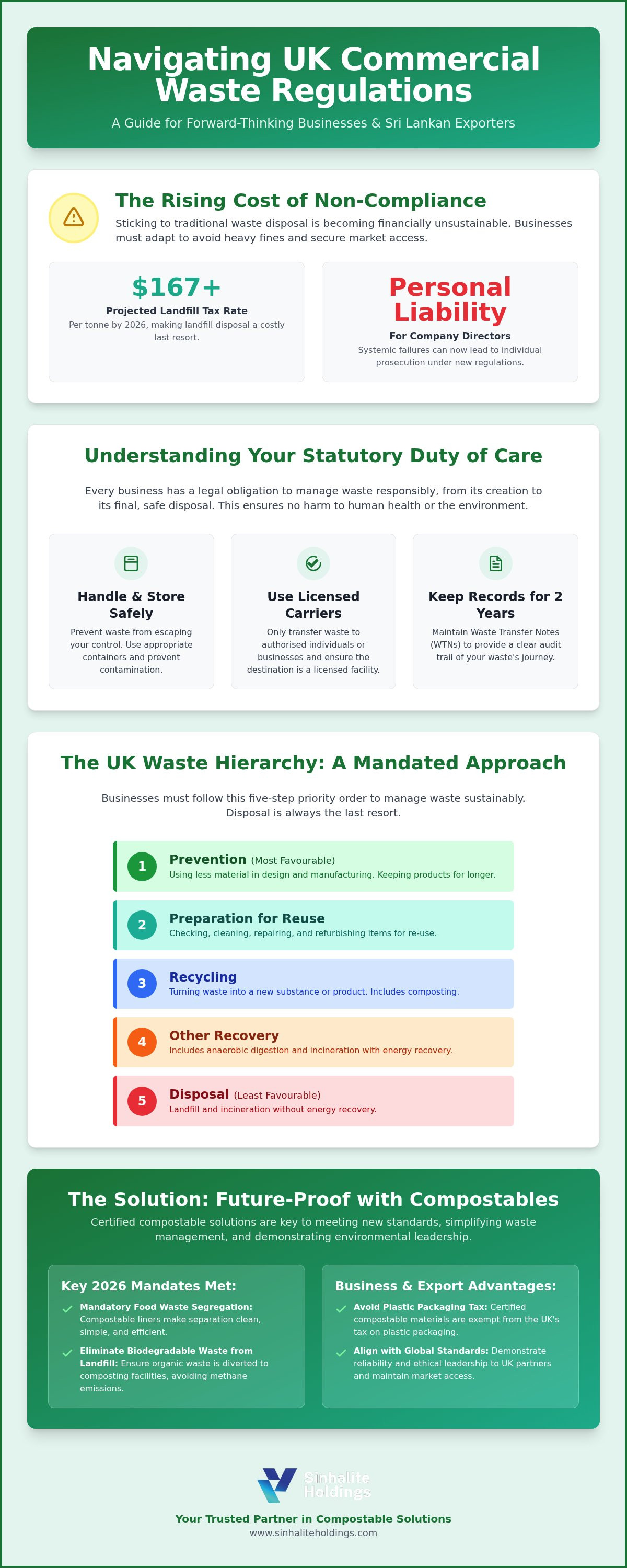
What if your waste management strategy was no longer a financial burden but a clear signal of corporate integrity? With the standard landfill tax rate projected to exceed $167 per tonne by 2026, the cost of sticking to traditional disposal methods is becoming unsustainable. It's understandable for Sri Lankan partners and exporters to feel pressured by the upcoming Simpler Recycling deadlines and the confusion surrounding the Waste Hierarchy. Many organisations worry that failing to adapt will lead to heavy fines or lost opportunities in the British market. By using compostable bags for business waste UK, you can align your operations with the highest environmental standards while securing your path to compliance.
We believe that a transition to responsible practices is both achievable and advantageous for forward-thinking businesses. This guide will help you master the complexities of UK commercial waste law and discover how transitioning to compostable solutions ensures both legal compliance and environmental leadership. We'll preview mandatory food waste segregation rules and explore how certified compostable liners can simplify your waste streams. You'll learn how to reduce your carbon footprint and build a streamlined waste management process that reflects your commitment to a cleaner, greener future.
#Sustainability #Compostable #UKBusiness #WasteManagement #GreenBusiness #SriLankaExports #CircularEconomy #EcoFriendly #SinhaliteHoldings #PlasticFree #WasteCompliance #EnvironmentalLeadership
Key Takeaways
- Understand your statutory Duty of Care, which mandates that businesses manage waste responsibly from production to final disposal and maintain records for at least two years.
- Master the five-step Waste Hierarchy to ensure your business prioritises waste prevention and recycling over landfill disposal as a final resort.
- Learn how using compostable bags for business waste UK can help your organisation meet strict 2026 food waste segregation laws with ease.
- Avoid the financial impact of the UK Plastic Packaging Tax by switching to certified compostable solutions that align with modern environmental standards.
- Discover why choosing OK compost HOME certified materials is essential for future-proofing your operations and demonstrating global environmental leadership.
Understanding the UK Commercial Waste Duty of Care in 2026
The Duty of Care is the statutory obligation for every business to ensure their waste is handled safely and legally from the moment it's produced until its final disposal, preventing any harm to the environment or human health. It's a foundational principle that demands transparency at every stage of the waste lifecycle. For a comprehensive UK waste management overview, it's clear that the responsibility stays with the producer even after the waste leaves their premises. This means you must verify that your waste carrier is licensed and that the destination facility is authorised to accept your specific materials.
Compliance hinges on the legal necessity of Waste Transfer Notes (WTNs). These documents provide a clear audit trail, and you're required by law to keep these records for a minimum of two years. By 2026, the regulatory landscape will become significantly more stringent. Penalties for non-compliance are shifting toward personal liability for company directors, meaning that systemic failures in waste management can result in individual prosecution. Using compostable bags for business waste UK simplifies this process by ensuring that organic waste is easily identifiable and separated from general streams, reducing the risk of cross-contamination that often leads to heavy fines.
To better understand how these sustainable materials function within a commercial setting, watch this helpful video:
The Legal Framework: Environment Act 2021 and 2026 Targets
The Environment Act 2021 serves as the blueprint for the UK's transition to a circular economy. Its core objectives focus on resource efficiency and a drastic reduction in waste sent to landfill. A critical 2026 milestone is the target to eliminate all biodegradable waste from landfill sites. This policy is designed to curb methane emissions and is essential for the UK to meet its Net Zero obligations. Businesses that fail to adapt their procurement strategies now will face escalating costs as landfill taxes rise to approximately $166 per tonne by April 2026.
Compliance for International and Sri Lankan Partners
Sri Lankan exporters and international partners must recognise that alignment with UK packaging and waste standards is no longer optional for maintaining market access. The UK regulations are widely regarded as the global "gold standard" for sustainable operations. By adopting these high standards, Sri Lankan businesses demonstrate ethical leadership and reliability. Proactively integrating compostable solutions, such as using compostable bags for business waste UK, into your export packaging ensures that your products remain attractive to UK retailers who are under immense pressure to reduce their own scope 3 emissions.
Implementing the Waste Hierarchy: From Prevention to Disposal
The Waste Hierarchy is a structured approach that prioritises environmental protection by ranking waste management options based on their ecological impact. It begins with Prevention, the most effective choice, followed by Preparation for Reuse, Recycling, and Other Recovery, with Disposal as the final resort. By 2026, UK businesses and their international partners must actively demonstrate adherence to these steps within their formal waste management plans. This includes the mandatory segregation of dry recyclables like paper, plastic, metal, and glass. A common challenge arises in fast-paced commercial environments, including those managed by Sri Lankan exporters, where food contamination makes traditional plastic recycling difficult. By using compostable bags for business waste UK, you can bridge the gap between operational efficiency and regulatory compliance. The Waste Duty of Care Code of Practice provides the legal foundation for these requirements, ensuring every organisation contributes to a circular economy.
Mandatory Food Waste Segregation in 2026
Starting in 2026, all commercial entities must separate food waste from their general refuse. This change aims to divert organic matter from landfills where it produces harmful greenhouse gases. Implementing compostable caddy bags is a practical way to manage this transition. These liners maintain high hygiene standards while ensuring your food waste stream remains uncontaminated and ready for industrial composting. It's a simple change that significantly reduces the complexity of your waste audits.
The Role of Material Substitution in Waste Prevention
True waste prevention starts at the procurement stage for Sri Lankan manufacturers and exporters. Replacing traditional single-use plastics with compostable clingfilm removes persistent pollutants from your supply chain entirely. Using compostable bags for business waste UK as part of a wider material substitution strategy aligns with the highest tier of the hierarchy and ensures your products meet the strict expectations of UK retailers. For those looking to refine their long-term strategy, switching business to sustainable packaging offers a clear roadmap toward environmental leadership. We invite you to explore our range of commercial compostable solutions to see how innovation can streamline your compliance journey.
Future-Proofing Your Business with Compostable Solutions
Proactive material choice is the most effective way to navigate the escalating costs of environmental regulation. By 2026, businesses that rely on traditional plastics will face higher financial burdens through the UK Plastic Packaging Tax and various local levies. Adopting compostable alternatives allows your organisation to bypass these costs while simplifying waste streams. It's essential to prioritise verified materials, such as those carrying the OK compost HOME certification, to ensure your packaging truly aligns with circular economy principles. This certification provides the transparency required by UK regulators and builds trust with eco-conscious consumers.
Sinhalite Holdings acts as a visionary partner in this transition, providing the tangible tools needed to reach your sustainability targets. Our solutions are designed for scalability, making them ideal for large-scale organisations, municipal councils, and the hospitality sector. Using compostable bags for business waste UK isn't just a compliance tactic; it's a strategic move that positions your brand as a responsible innovator. We offer the durability and performance required for industrial use without sacrificing our commitment to environmental stewardship.
Integrating Compostable Garbage Bags into Commercial Operations
Facility managers and commercial kitchen operators require high-performance tools that can withstand the rigours of daily operations. Our puncture resistant compostable garbage bags provide the necessary strength to handle heavy organic waste without leaks or tears. These bags facilitate easier processing at industrial composting facilities by ensuring that the entire waste unit is biodegradable. Using compostable bags for business waste UK helps your team maintain a clean, efficient workspace while meeting the 2026 mandate for food waste separation.
Strategic Procurement for Global Sustainability
Sri Lankan businesses have a unique opportunity to lead the regional shift toward ethical manufacturing. By adopting Sinhalite Holdings' solutions, exporters can ensure their products are ready for the UK's "gold standard" regulations before they even leave the port. The long-term ROI of investing in responsible packaging is clear: you mitigate future regulatory risks and avoid the high costs of non-compliance. Leadership in sustainability is a choice that pays dividends. Transitioning to compostable solutions today ensures your business remains competitive, compliant, and respected in the global marketplace.
Securing Your Competitive Edge through Sustainable Compliance
Mastering the 2026 waste regulations is a strategic necessity for any business operating within the UK market. We've explored how a clear understanding of the Duty of Care and the rigorous application of the Waste Hierarchy can transform your operational efficiency. By using compostable bags for business waste UK, you simplify the complex task of food waste segregation while actively reducing your exposure to escalating plastic taxes. These choices reflect a deeper commitment to environmental stewardship that resonates with modern consumers and regulators alike.
As a trusted supplier of certified compostable materials, Sinhalite Holdings is dedicated to a plastic-free future. We provide the essential tools that empower your organisation to lead this systemic change. We invite you to Explore Sinhalite Holdings’ full range of UK-compliant compostable solutions and discover how our innovation can support your journey toward total compliance. Transitioning to responsible practices is both achievable and advantageous. With the right partners and a proactive mindset, your business can turn regulatory challenges into a platform for visionary leadership. Let's build a cleaner, greener future together.
#Sustainability #Compostable #UKBusiness #WasteManagement #GreenBusiness #SriLankaExports #CircularEconomy #EcoFriendly #SinhaliteHoldings #PlasticFree #WasteCompliance #EnvironmentalLeadership
Frequently Asked Questions
What are the penalties for breaching commercial waste regulations in the UK?
Breaching commercial waste regulations can result in unlimited fines or criminal prosecution for serious offences. Local authorities and the Environment Agency have the power to issue Fixed Penalty Notices for smaller infractions, such as failing to produce Waste Transfer Notes upon request. Under the new 2026 framework, directors may face personal liability for systemic failures within their organisations. Using compostable bags for business waste UK helps maintain clear, compliant waste streams that reduce the risk of accidental non-compliance during inspections.
Is food waste segregation mandatory for all UK businesses in 2026?
Food waste segregation is mandatory for most organisations by 2026 as part of the Simpler Recycling regulations. Businesses with 10 or more employees must have separate collections in place by 31st March 2025, while micro-firms with fewer than 10 employees have until March 2027 to comply. This requirement applies to all commercial sectors, including hospitality, retail, and manufacturing. Implementing certified compostable caddy liners ensures your organic waste remains separate from general refuse, helping you meet these statutory deadlines with confidence.
How does the UK Plastic Packaging Tax affect my business procurement?
The UK Plastic Packaging Tax applies to plastic packaging produced in or imported into the UK that contains less than 30% recycled plastic. This levy, which is approximately $280 per tonne as of 2024, significantly increases the cost of traditional single-use plastics for your business. Switching to Sinhalite Holdings' compostable solutions allows you to bypass this tax entirely while future-proofing your supply chain. It's a proactive procurement choice that mitigates financial risk and demonstrates environmental leadership to your UK partners.


