

If your organisation’s current packaging is technically recyclable but still shedding thousands of invisible particles into the food chain, can you truly claim to be meeting your 2026 sustainability targets? With the Plastic Packaging Tax now at £228.82 per tonne and the new EPR fee modulation system penalising hard-to-recycle materials, the stakes for UK procurement teams have never been higher. Many businesses find themselves caught between the pressure to innovate and the fear of greenwashing, particularly regarding the complex challenge of avoiding microplastics from packaging. It's a significant hurdle, but it's also an opportunity to lead with integrity.
We understand that transitioning away from traditional polymers requires more than just good intentions; it requires a practical, scalable strategy. This article provides a structured checklist designed to help you identify shedding risks, navigate the latest regulatory requirements, and select high-performance compostable materials that protect your products without compromising the planet. You'll gain a clear action plan to eliminate microplastic risks, ensuring your organisation remains a responsible innovator in a rapidly evolving market. Let's look at the essential steps to secure your corporate green credentials and embrace a cleaner, more circular future.
Key Takeaways
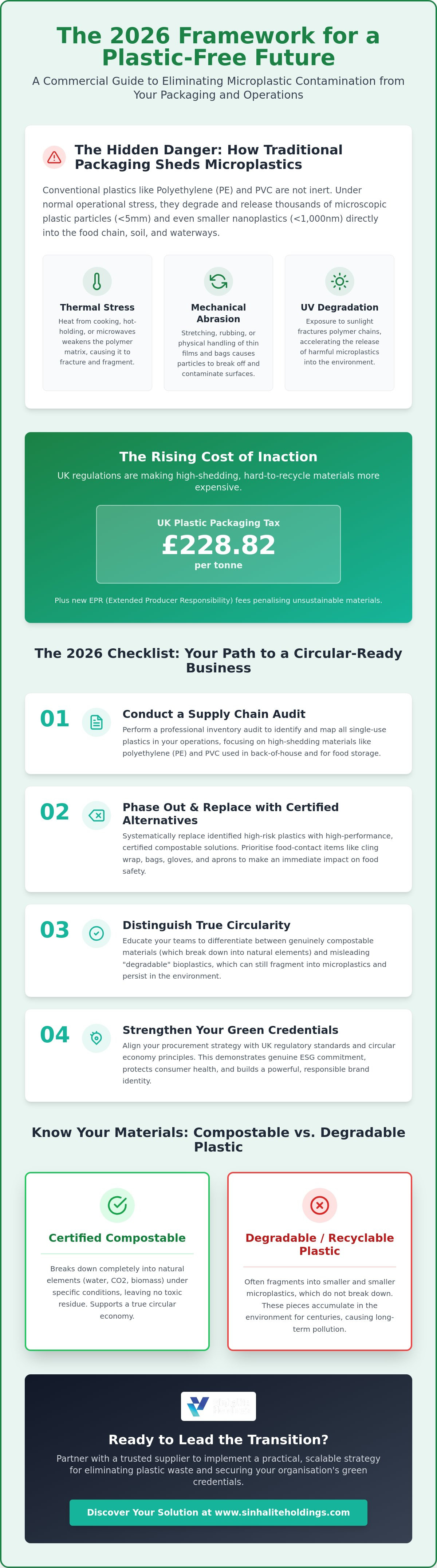
- Understand how operational factors like thermal stress and mechanical abrasion cause traditional polymers to shed invisible particles into the food chain.
- Learn how to conduct a professional inventory audit to identify and phase out high-shedding materials like polyethylene and PVC from your supply chain.
- Implement a structured 2026 framework for avoiding microplastics from packaging by transitioning to certified plant-based storage and disposal solutions.
- Distinguish between truly circular compostable materials and "degradable" bioplastics that often contribute to long-term microplastic accumulation.
- Strengthen your organisation’s green credentials by aligning procurement practices with upcoming UK regulatory standards and circular economy principles.
Understanding the Source: How Packaging Sheds Microplastics
Microplastics are solid plastic particles under 5mm. In commercial food environments, these often arise from the physical degradation of synthetic storage materials. Nanoplastics are particles under 1,000 nanometres that can bypass biological barriers. Effectively addressing Plastic pollution requires a deep understanding of how these materials behave under pressure. For organisations committed to avoiding microplastics from packaging, the first step is recognising that conventional polymers are not inert.
To better understand how these particles affect human health and how to reduce exposure, watch this helpful video:
Three primary catalysts drive the shedding process: thermal stress, mechanical abrasion, and UV degradation. Traditional single-use plastic films and bags are particularly high-risk because their thin structure is easily compromised. When these materials are stretched, heated, or exposed to sunlight, the polymer chains begin to fracture. This results in the release of millions of microscopic fragments into the food they are meant to protect. In the UK, this accumulation isn't just a food safety concern; it's an environmental crisis affecting our soil and waterways.
The Mechanism of Polymer Degradation
Heat from hot-holding or industrial microwave use significantly weakens the polymer matrix of standard clingfilm. This leads to fragmenting, where physical pieces of the plastic detach and remain in the food. This differs from "leaching," which refers to the migration of chemical additives. Fragmenting creates a permanent residue of solid waste. Choosing certified compostable solutions ensures that the material breaks down into natural elements rather than persistent synthetic shards.
Impact on Food Safety and ESG
Reducing microplastic shedding is now a vital component of corporate ESG (Environmental, Social, and Governance) frameworks. UK organisations that prioritise non-shedding materials align themselves with a forward-thinking, responsible business model. This commitment protects consumer health while demonstrating a genuine dedication to a circular economy. It's a proactive approach to risk management that benefits both the brand and the broader ecosystem.
The 2026 Checklist for Avoiding Microplastics in Food Operations
Transitioning from a plastic-reliant model to a circular one requires a methodical approach to procurement. A successful strategy for avoiding microplastics from packaging begins with a thorough audit of your current inventory. Identify high-shedding materials like polyethylene and PVC, which are frequently found in back-of-house operations. Replacing these with plant-based storage solutions ensures that food contact surfaces remain free from synthetic fragments. This shift is not merely a preference; it's a necessary response to the growing evidence in the University of Portsmouth microplastics policy brief, which highlights the urgent need for improved design standards in the UK.
Operational habits must also evolve. Implement strict temperature controls for any remaining plastic-wrapped goods, as heat is a primary driver of polymer breakdown. For disposal, replace traditional bin liners with heavy-duty compostable sacks. These robust alternatives prevent environmental leakage during waste transit, ensuring that your organisation's impact remains positive from procurement to disposal. For businesses ready to lead this change, partnering with a trusted compostable solutions supplier provides the tools needed for a seamless transition.
Priority Swaps for Commercial Kitchens
Commercial kitchens are high-intensity environments where material durability is paramount. Replace traditional plastic wraps with compostable clingfilm uk to maintain food safety without the risk of polymer residue. Additionally, phase out plastic aprons in favour of compostable alternatives. This simple change significantly reduces the volume of synthetic fibres shed during daily service and cleaning routines.
Waste Management and Procurement Standards
Integrity in sustainability requires verification. Ensure that all new packaging acquisitions meet the standards found in the OK compost HOME certification explained guide. This ensures that materials will fully return to the earth rather than fragmenting into persistent particles. Finally, update your procurement contracts to prioritise suppliers who offer plastic-free delivery options. By setting these high standards, your organisation becomes a catalyst for systemic change across the entire supply chain.
Beyond Plastic: Scaling Sustainable Alternatives for a Circular Economy
Achieving a truly circular economy requires a clear distinction between materials that simply disappear from sight and those that safely return to the earth. Many "degradable" bioplastics are essentially conventional polymers with chemical additives designed to accelerate fragmentation. This process often increases the volume of microscopic particles, making avoiding microplastics from packaging even more difficult. In contrast, certified compostable materials are engineered to break down into nutrient-rich organic matter, leaving no synthetic trace behind.
By 2026, the expansion of UK industrial composting infrastructure has made it easier for organisations to manage high volumes of organic waste effectively. Sinhalite Holdings supports this transition by providing high-performance, plant-based alternatives that integrate seamlessly into these waste streams. Following a clear roadmap for switching business to sustainable packaging allows organisations to meet their environmental obligations without compromising on operational efficiency or material durability.
Performance and Integrity of Compostable Materials
A common concern is that sustainable materials lack the utility of their plastic counterparts. However, modern innovations in bio-polymers have solved the "cling" issue in compostable household Clingfilm, providing the same airtight seal as traditional versions. Similarly, modern compostable garbage bags and caddy bags now offer superior puncture resistance and tensile strength. These products ensure that heavy commercial waste is handled securely while remaining entirely plastic-free.
Leading the Transition in the UK
For UK businesses and local councils, the move away from persistent polymers is a defining leadership opportunity. It demonstrates a commitment to transparency and long-term ecological health. By adopting certified, scalable compostable SKUs today, your organisation can lead the charge toward a future where packaging serves its purpose without leaving a permanent footprint. Taking immediate action is the most effective way of avoiding microplastics from packaging while strengthening your brand's reputation as a responsible innovator.
Empowering Your Organisation for a Sustainable 2026
Adopting a proactive stance on material selection is the most effective way to protect both consumer health and environmental integrity. We've explored how identifying high-risk polymers and implementing a structured audit allows for a seamless transition toward circularity. By prioritising these strategic steps, your organisation takes a decisive lead in avoiding microplastics from packaging while securing its reputation as a responsible innovator. Replacing traditional films and bags with high-performance alternatives isn't just a regulatory necessity; it's an investment in a cleaner, more resilient future.
As a UK-based specialist in compostable storage, Sinhalite Holdings provides the industrial-grade tools needed to eliminate plastic waste. Our products carry the OK compost HOME and TUV Austria certifications, ensuring they meet the highest global standards for safety and performance. We remain a trusted partner for councils and commercial entities seeking scalable, reliable solutions that don't compromise on strength or utility. Explore our full range of certified compostable packaging solutions for your organisation and join us in building a world where progress and nature thrive in harmony. The tools for change are ready; the opportunity to lead is yours.
Frequently Asked Questions
What are the main sources of microplastics in commercial food packaging?
The primary sources are the physical breakdown of traditional polymers like polyethylene, PVC, and polypropylene during storage and transport. These materials aren't inert; they fracture easily under mechanical stress or temperature changes. This fragmentation releases millions of invisible particles into the surrounding environment. Identifying these high-risk materials is a fundamental part of avoiding microplastics from packaging across your supply chain.
Can certified compostable packaging still create microplastics?
Certified compostable packaging doesn't create microplastics because it's engineered to biodegrade completely into organic matter. While "oxo-degradable" plastics simply fragment into smaller synthetic shards, materials with OK compost HOME certification must pass strict disintegration tests. This ensures they return to the earth as nutrients rather than persistent pollutants. Choosing these certified solutions provides a reliable path toward a truly circular economy.
How do UK businesses audit their plastic footprint in 2026?
In 2026, UK organisations conduct audits by mapping their packaging inventory against the Extended Producer Responsibility (EPR) rating system. This process involves identifying high-shedding single-use items, such as traditional garbage bags and food roller bags, and assessing their environmental impact. By quantifying these risks, businesses can create a clear timeline for transitioning to plant-based alternatives that meet modern procurement standards and reduce tax liabilities.
Is heat a major factor in microplastic release from food wraps?
Heat is a primary driver of polymer degradation in conventional food wraps and containers. High temperatures from industrial microwaves or hot-holding stations weaken the chemical bonds in plastic films, causing them to shed particles directly into food. Switching to compostable household Clingfilm provides a safer alternative for commercial kitchens. These innovative materials are designed to perform under stress without the risk of fragmenting into the food chain.


