
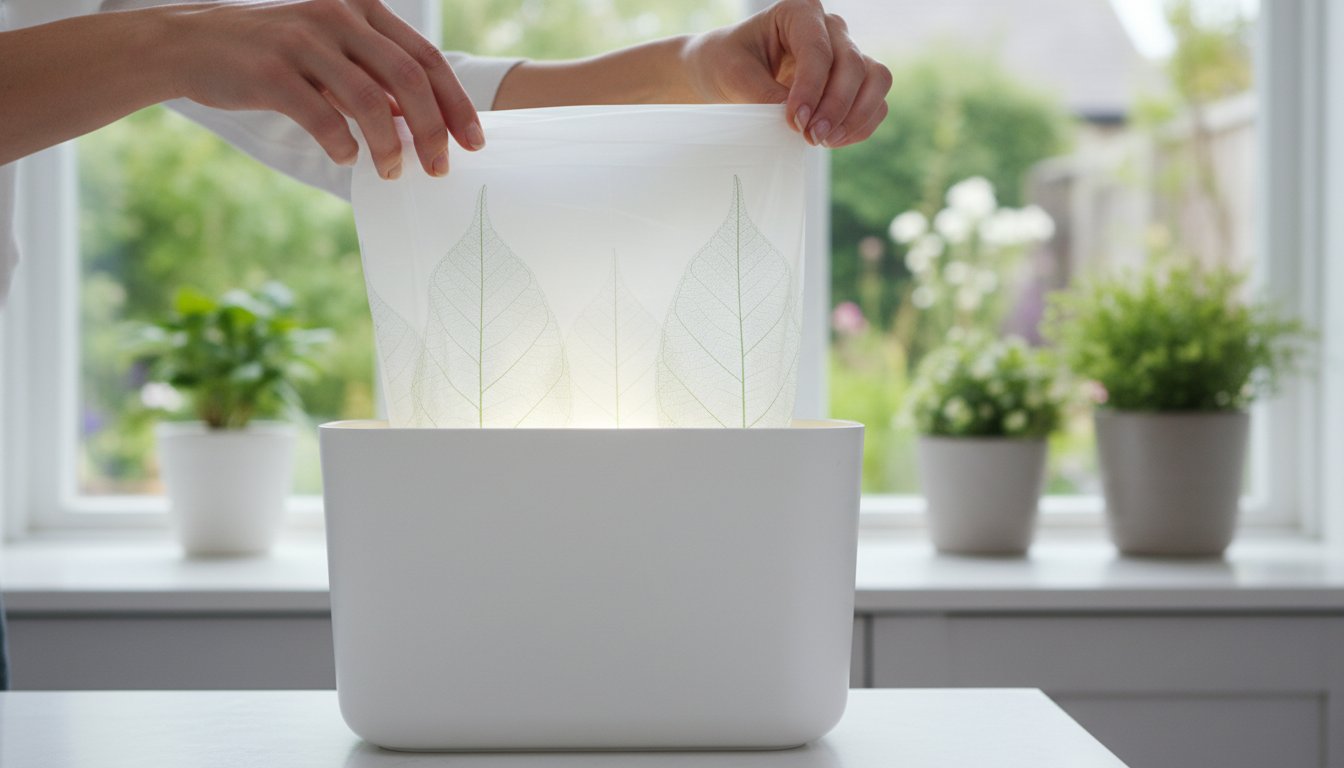
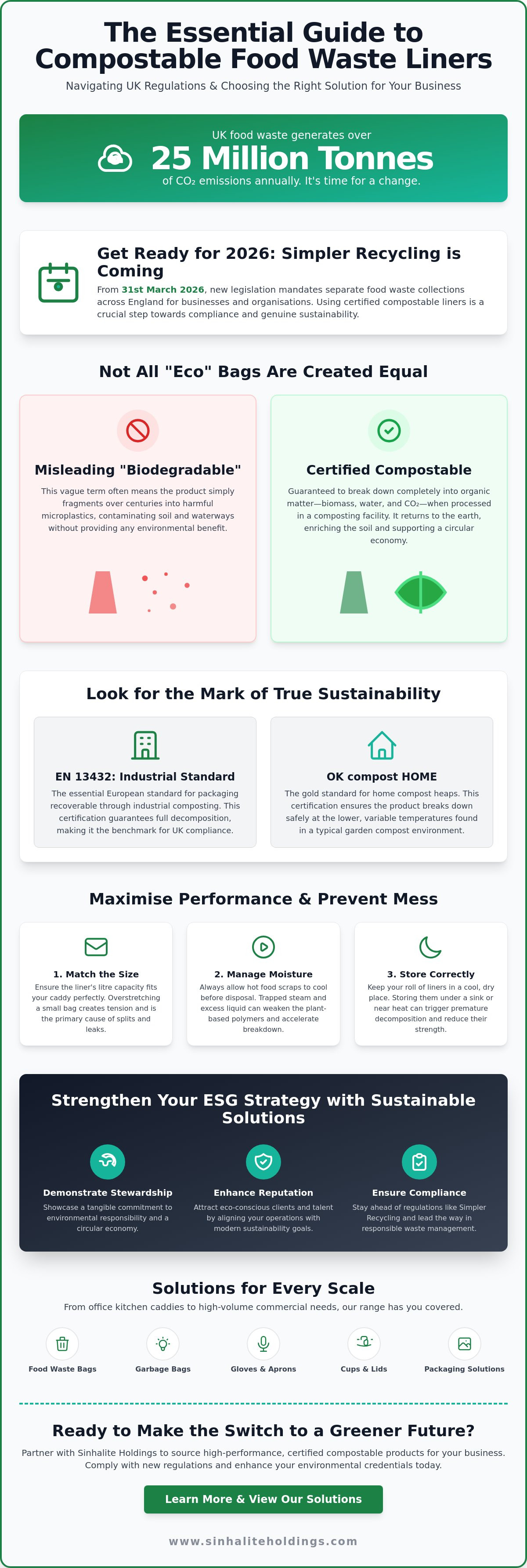
UK food waste accounts for 25 million tonnes of CO2 emissions every year, a figure that demands a smarter approach to how we manage our daily disposal habits. As the Simpler Recycling legislation mandates separate food waste collections across England starting March 31, 2026, finding the best compostable caddy liners uk has become a vital step for every responsible household and business. You need a solution that offers high performance without compromising your commitment to the planet.
It's a common frustration to find a liner has split or leaked, yet many are still confused by the difference between vague biodegradable claims and true compostability. This guide will empower you to identify high-performance, EN 13432 certified liners that streamline your waste management without the risk of greenwashing. We'll explore the latest material innovations that prevent sticking and leaking, ensuring your transition to the 2026 regulations is both efficient and genuinely sustainable.
Key Takeaways
- Understand the implications of the 2026 Simpler Recycling legislation and why EN 13432 certification is the essential standard for your food waste compliance.
- Learn how to identify the best compostable caddy liners uk by evaluating material integrity and capacity to ensure a leak-free, hygienic kitchen environment.
- Distinguish between deceptive "biodegradable" marketing and genuine compostable alternatives that break down into organic matter rather than harmful microplastics.
- Discover how integrating high-performance compostable liners into your operations strengthens your corporate ESG strategy and commitment to environmental stewardship.
- Gain practical insights on scaling sustainable waste practices from small office kitchen caddies to high-volume commercial environments.
Understanding Caddy Liners: Decoding UK Compostable Standards
Truly sustainable food waste management begins with understanding what compostable caddy liners are made of. These are plant based alternatives, typically derived from corn starch or PBAT, engineered to break down into organic matter within months. Unlike traditional plastic, they don't persist in the environment; they return to it. Identifying the best compostable caddy liners uk requires looking beyond marketing buzzwords to find products that actually support a circular economy.
Many products use the term "biodegradable" to sound eco friendly, but this label is often misleading. Standard biodegradable bags may simply fragment into microplastics that contaminate soil and waterways for centuries. In contrast, certified compostable liners must meet the rigorous EN 13432 European standard. This certification guarantees that the material will fully decompose into water, carbon dioxide, and biomass in industrial composting facilities. The OK compost HOME certification serves as the gold standard for backyard composting enthusiasts, ensuring the liner breaks down at lower, less consistent temperatures in a garden heap.
To better understand how these liners integrate into local waste systems, watch this helpful guide:
The Science of Materials: Starch vs. Paper Liners
Choosing between paper and starch based liners depends on your specific operational needs. Paper liners offer exceptional breathability, which helps dry out food scraps and reduce odours, but they often lack the leak resistance required for wet waste. Starch based bioplastics, such as those provided by Sinhalite Holdings, provide a robust barrier against moisture and tearing. These modern bioplastics ensure durability without compromising environmental integrity. A common query for businesses is do compostable bags contain plastic; the answer lies in their unique polymer structures. While they share the flexibility of traditional polymers, they are chemically designed to be consumed by microorganisms. This makes them the best compostable caddy liners uk for high performance needs, including heavy duty puncture resistant compostable garbage bags used in commercial kitchens.
How to Choose and Use Caddy Liners for Maximum Durability
Selecting the best compostable caddy liners uk involves more than just picking a brand; it requires a strategic approach to sizing and material care. To avoid the frustration of a split bag, you must match the litre capacity precisely to your caddy. Standard kitchen counter units usually require 5L or 7L liners. Overstretching a smaller bag creates unnecessary tension points that eventually lead to leaks and mess. By choosing the correct size, you ensure the weight of the food waste is distributed evenly across the reinforced base.
If you maintain a garden heap, verifying the "HOME" certification is essential for successful decomposition. For those following WRAP guidance for compostable packaging, it's clear that material performance is linked to environmental conditions. Moisture management is equally critical to bag longevity. You should always allow hot food scraps to cool before disposal. Steam trapped inside a liner can weaken the plant based polymers, causing premature breakdown while the bag is still in the caddy.
Preservation begins before the bag is even used. It's best to store your unused liners in a cool, dry cupboard rather than under a sink where pipes might create a humid atmosphere. Heat and humidity are the natural catalysts for composting; keeping your supply in a stable environment ensures they maintain their full structural integrity until they are needed for disposal.
Preventing Common Issues: Splitting and Odours
Breathable liners play a significant role in reducing the growth of anaerobic bacteria, which are the primary cause of foul kitchen smells. To further enhance performance, place a single sheet of newspaper at the bottom of the liner. This simple step absorbs excess liquid and prevents the bag from sticking to the base of the caddy. For more comprehensive hygiene strategies, explore our detailed guide on how to keep a food waste bin from smelling. Investing in high quality compostable caddy bags ensures your kitchen remains clean while supporting a sustainable, circular economy.
Scaling Sustainability: From Kitchen Caddies to Commercial Waste
Integrating the best compostable caddy liners uk into a business's daily operations is more than a simple hygiene choice; it is a fundamental component of a modern ESG strategy. For large scale organisations, these liners represent a tangible commitment to systemic change and environmental stewardship. When a company replaces traditional plastic with high performance compostable alternatives, it reduces its long term carbon footprint and simplifies waste streams for industrial processing. This transition demonstrates that a business is a responsible advocate for the planet rather than just a commercial entity.
Commercial environments demand significantly higher durability than the average household. This is where the transition from standard caddy bags to puncture resistant compostable garbage bags becomes essential for operational efficiency. By adopting a cohesive suite of products, such as compostable aprons and clingfilm, businesses create a closed loop system that eliminates the risk of plastic contamination in organic waste. Sinhalite Holdings acts as a visionary partner for UK councils and commercial organisations, providing the scalable, high quality tools required to meet ambitious sustainability targets with absolute confidence.
The Future of UK Waste: 2026 and Beyond
The "Simpler Recycling" legislation, taking effect on March 31, 2026, mandates that all businesses and households in England separate food waste for collection. Using certified compostable liners ensures that your organisation remains fully compliant with these shifting regulations while supporting the UK’s broader recycling objectives. As material science continues to evolve, we encourage you to stay informed about the future of compostable food packaging in the UK to leverage upcoming innovations. Transitioning your household or business toward a circular economy today is a proactive step that aligns your operations with the highest ethical standards of the future.
Empowering a Sustainable Future for UK Waste Management
Transitioning to responsible disposal practices is a vital commitment for any forward-thinking organisation. True sustainability depends on selecting liners that meet rigorous EN 13432 standards and managing moisture to ensure maximum durability. By aligning your operations with these principles, you don't just comply with the 2026 recycling mandates; you actively participate in the restoration of our natural ecosystems. It is a practical step that yields significant environmental rewards.
Identifying the best compostable caddy liners uk is the foundation of a leak-free, high-performance food waste system. Our products are engineered for puncture resistance and carry both OK compost HOME and Industrial certifications to guarantee full biological breakdown. As a trusted UK specialist in sustainable packaging, we provide the industrial-strength tools needed to scale your environmental impact with absolute certainty.
View our range of high-performance compostable caddy bags and start your journey toward a plastic-free operation today. Every small change in your kitchen or commercial facility contributes to a larger, positive shift for our planet. We're here to help you lead the way with confidence and purpose.
Frequently Asked Questions
Are compostable caddy liners better than paper bags for food waste?
Starch-based compostable liners offer superior moisture protection and leak resistance compared to paper alternatives. While paper is naturally breathable, it often lacks the tensile strength to hold wet organic matter without failing or tearing. Choosing the best compostable caddy liners uk ensures a hygienic waste system that prevents spills and odours in both domestic and commercial kitchen environments.
How long do compostable caddy liners take to break down in a home compost bin?
Liners with the OK compost HOME certification generally decompose within 26 to 52 weeks in a well-managed domestic compost heap. This process is driven by microbial activity, which requires a consistent balance of heat and moisture. If you use industrial-grade liners, they'll take significantly longer in a garden environment because they're designed for the controlled, high-heat conditions of professional facilities.
Why do my compostable bin liners keep splitting when I lift them out?
Splitting usually occurs because the liner has been exposed to excessive heat or moisture, which triggers the natural breakdown process prematurely. Steam from hot food scraps can soften the plant-based polymers, leading to structural failure. You can prevent this by allowing food to cool fully and storing your unused supply in a cool, dry place to preserve their engineered puncture resistance.
Can I put compostable caddy liners in my UK council green bin?
Most UK local authorities accept EN 13432 certified liners in food waste bins, but you should always verify specific local guidelines. These liners are designed to process efficiently alongside organic waste in industrial anaerobic digestion plants. As the 2026 recycling regulations standardise collections across England, using certified compostable bags remains the most reliable way to ensure your waste supports a circular economy.


