

With the UK Plastic Packaging Tax rate now at £228.82 per tonne, the financial cost of traditional materials is finally matching their environmental impact. You likely recognise that achieving compliance with uk plastic packaging tax is no longer just a simple regulatory task; it's a significant logistical challenge that can strain your supply chain and inflate operational budgets. Between tracking precise material weights and managing the confusion over whether compostable plastics are exempt, the path to a sustainable bottom line often feels obscured by rising fees and complex reporting requirements. It's a frustrating position for any business that wants to innovate without sacrificing profitability.
This strategic guide will show you how to master these complexities while aligning your compliance efforts with your long-term environmental stewardship goals. You'll discover how to handle the latest 2026 tax updates, identify specific material choices that reduce your financial liability, and understand how high-quality compostable solutions like garbage bags and food-grade films offer a practical, scalable route toward a circular economy. We'll provide the clarity you need to move from reactive reporting to a proactive, visionary packaging strategy that supports a cleaner future.
Key Takeaways
- Understand the 2026 financial implications of the updated £228.82 per tonne levy and the critical 10-tonne registration threshold for your operations.
- Master the essential reporting requirements for compliance with uk plastic packaging tax by establishing precise weight-based record-keeping systems for HMRC.
- Identify how transitioning to certifiable compostable alternatives, such as compostable garbage bags and caddy bags, can mitigate rising operational costs.
- Evaluate the strategic advantages of replacing traditional plastics with high-performance compostable clingfilm to enhance your brand's environmental credentials.
The 2026 UK Plastic Packaging Tax Landscape
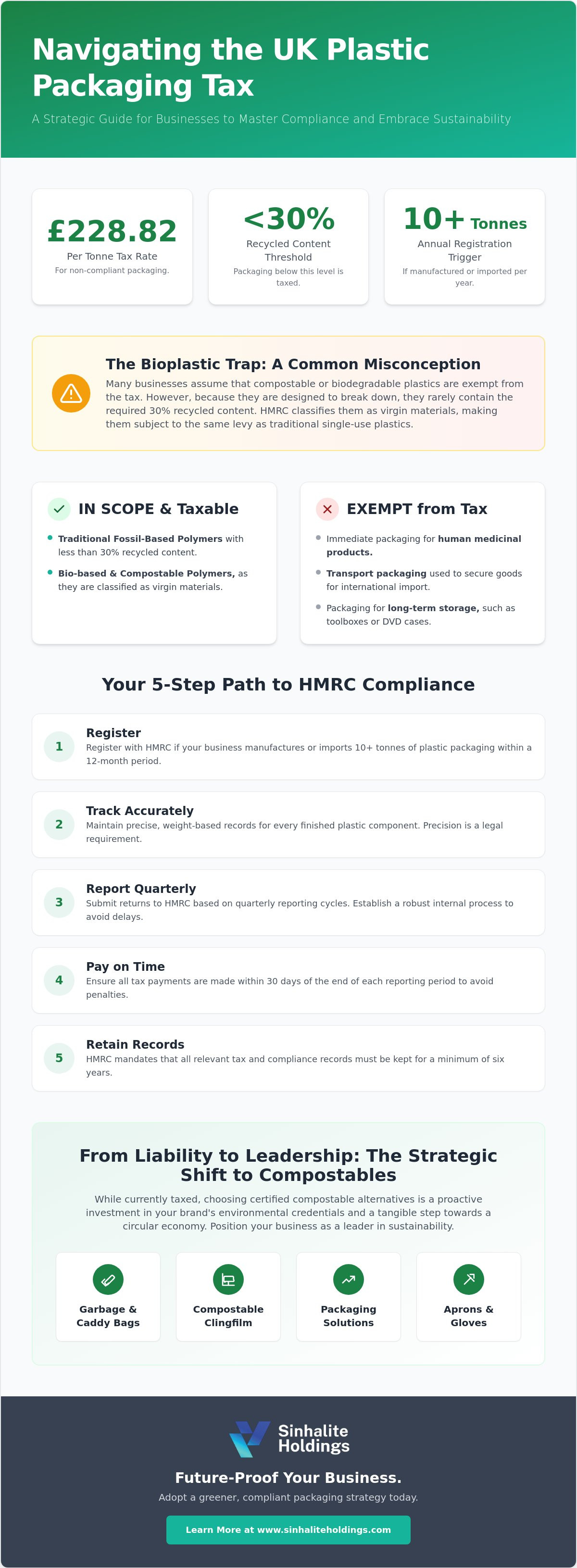
The 2026 fiscal year has introduced a more rigorous environment for businesses managing their material choices. As of April 1, 2026, HMRC increased the tax rate to £228.82 per tonne for plastic packaging containing less than 30% recycled material. This adjustment reflects a clear legislative intent to drive systemic change and discourage the use of virgin polymers. Any UK business that manufactures or imports 10 tonnes or more of plastic packaging within a 12-month period must register, regardless of whether they ultimately owe tax. Achieving compliance with uk plastic packaging tax requires a precise understanding of what HMRC classifies as "plastic" to avoid unexpected liabilities.
Under the current framework, the definition of plastic is broad. It encompasses both traditional fossil-based polymers and bio-based synthetic polymers. While most commercial materials fall within the tax's scope, specific reliefs are available for:
- Packaging used for the immediate wrap of human medicinal products.
- Transport packaging used to secure goods during international import into the UK.
- Packaging used for long-term storage, such as toolboxes or DVD cases.
For a broader context on how this fits into the national fiscal strategy, you can review this UK Plastic Packaging Tax Overview.
To better understand this concept, watch this helpful video:
The Bioplastic Trap: Why Compostables are Taxed
It's a common misconception that bio-based materials are exempt from this levy. Many organisations are surprised to find that compostable and biodegradable polymers are treated as virgin plastic under HMRC guidance. Because these materials are designed to break down naturally, they rarely contain the 30% recycled content required for exemption. This creates a unique challenge for businesses adopting responsible alternatives like compostable garbage bags or food waste bags. While these products provide immense environmental value by supporting the circular economy, they're currently subject to the same levy as traditional single-use plastics.
Transitioning your operations requires a strategic view of material performance and tax liability. For instance, implementing The Ultimate Guide to Compostable Clingfilm in the UK helps businesses understand how to integrate these high-performance materials while managing their tax footprint. A substantial modification is defined as any manufacturing process that alters the shape, structure, or thickness of a plastic packaging component, serving as the decisive moment when tax liability is triggered for an importer.
Practical Steps for Compliance and Reporting
Establishing a systematic approach to data collection is the first step toward mastering compliance with uk plastic packaging tax. HMRC requires businesses to operate on quarterly reporting cycles, with returns and payments due within 30 days of the end of each period. This frequency demands a robust internal process to ensure that every finished plastic component is tracked accurately by its weight in grammes. For organisations importing materials like compostable garbage bags or caddy bags, this level of precision is not optional; it's a fundamental requirement for legal integrity.
Importers must exercise particular caution by performing thorough due diligence on overseas manufacturers. You're responsible for verifying any recycled content claims to avoid significant penalties. Relying on certifiable standards is the most reliable way to ensure supply chain transparency. For example, understanding the OK compost HOME certification explained in our recent guide helps you identify materials that meet strict environmental criteria while providing the necessary evidence for your tax records. Detailed guidance on these requirements can be found in the Official UK Government Plastic Packaging Tax Guidance.
Evidence and Record Keeping Requirements
HMRC mandates that all relevant records be kept for at least six years to support your filings. Your compliance file should include purchase invoices, product specifications, and verified weight reports for every SKU. A critical rule to remember is that for multi-material packaging, if plastic is the heaviest single material, the entire component is classified as plastic for tax purposes. Maintaining high-quality documentation ensures you're prepared for potential audits while reinforcing your brand’s reputation for transparency.
Aligning Tax Data with ESG Strategy
The data gathered for compliance with uk plastic packaging tax serves as a powerful baseline for your switching business to sustainable packaging roadmap. By analysing where your highest tax liabilities occur, you can strategically prioritise a transition to compostable alternatives that support your net-zero goals. This proactive approach transforms a tax obligation into a catalyst for systemic change. Businesses seeking to lead this transition often find that partnering with a dedicated supplier of compostable solutions provides the practical tools needed to align operational efficiency with environmental stewardship.
Strategic Transition: Reducing Liability with Compostables
Transitioning away from virgin plastic isn't just about avoiding a levy; it's about future-proofing your business against a shifting regulatory landscape. While some industry voices suggest chemical recycling as a primary solution, this often maintains a dependency on traditional plastic structures. A true strategic shift involves moving toward materials that naturally integrate with biological cycles, turning a tax obligation into a catalyst for innovation.
Achieving long-term compliance with uk plastic packaging tax is most effectively managed by reducing the volume of taxable plastic entering your supply chain. Implementing The Ultimate Guide to Compostable Clingfilm in the UK in your commercial food environment demonstrates a commitment to systemic change. While the immediate tax cost of plastic is rising, the reputational gain of plastic-free operations offers a superior return on investment. You can find further industry perspectives on these shifts in Ecosurety's PPT Compliance Guide.
Scalable Solutions for Commercial Entities
Councils and large organisations can achieve immediate impact by replacing taxable bin liners with high-performance compostable caddy bags and garbage bags. These solutions are engineered for industrial strength, ensuring that operational standards aren't compromised. By choosing certifiable alternatives, you simplify the administrative burden of compliance with uk plastic packaging tax while demonstrating genuine environmental stewardship. For retail sectors, adopting compostable food roller bags eliminates the friction of single-use plastic, providing a seamless experience for your customers.
The Circular Economy Advantage
Compostable packaging acts as a vital bridge for efficient food waste collection. When liners and films can be processed alongside organic waste, it simplifies the recycling stream and reduces costly contamination. Sinhalite Holdings acts as a dedicated partner in this journey, providing the tangible tools needed for sustainable disposal and storage innovation. Transitioning to plant-based materials ensures your organisation is insulated against the inevitable tax hikes and tighter regulations projected for 2027 and beyond.
Securing Your Sustainable Competitive Advantage
The 2026 fiscal year marks a turning point where operational efficiency and environmental stewardship must become inseparable. By mastering the nuances of the £228.82 per tonne levy and implementing robust weight-based reporting, your organisation can maintain full compliance with uk plastic packaging tax while actively reducing its carbon footprint. The transition from traditional single-use plastics to certifiable compostable alternatives is no longer just a regulatory necessity; it's a strategic move toward a more resilient and transparent business model.
As a specialist provider of sustainable UK packaging, Sinhalite Holdings offers the high-performance compostable alternatives needed to replace taxable materials without compromising on durability or strength. We provide expert guidance on circular economy transitions, helping you turn tax obligations into opportunities for brand growth and systemic change. Whether you're looking to upgrade your waste management with compostable garbage bags or seeking food-safe solutions like compostable clingfilm, our team is here to support your mission.
Explore Sinhalite Holdings’ range of compliant compostable solutions to discover how high-quality caddy bags, shopping bags, and food roller bags can support your net-zero journey. Together, we can build a cleaner, greener future that benefits both your bottom line and the planet.
Frequently Asked Questions
Are compostable bags exempt from the UK Plastic Packaging Tax in 2026?
Compostable bags are generally not exempt from the tax in 2026 unless they meet the 30% recycled content threshold. HMRC defines plastic to include bio-based and compostable polymers. While these materials are essential for a circular economy, they're currently subject to the £228.82 per tonne levy. Organisations should view these as a strategic investment in sustainability that reduces long-term reliance on traditional fossil-based polymers.
What is the 10-tonne threshold and how is it calculated for UK businesses?
The 10-tonne threshold applies to the total weight of finished plastic packaging your business handles over a 12-month period. This includes any plastic components manufactured in the UK or imported from overseas. You must register for the tax if you've reached this limit in the last year or expect to reach it in the next 30 days. Registration is mandatory even if your packaging is exempt due to recycled content.
Can I claim tax relief if I export plastic packaging components out of the UK?
Tax relief is available if you export plastic packaging components out of the UK. You can claim a credit or defer the tax payment for up to 12 months if you intend to export the items. To ensure compliance with uk plastic packaging tax, you must keep precise records of shipping documents and export dates. This transparency allows businesses to recover costs while focusing on international trade and sustainable growth.
How do I prove that my packaging contains at least 30% recycled plastic?
You must provide verifiable evidence such as product specifications, supplier invoices, and audit reports to prove your packaging contains 30% recycled plastic. HMRC requires a clear paper trail showing the source of the recycled material. Maintaining compliance with uk plastic packaging tax is easier when you partner with transparent suppliers who provide certifiable data. This documentation protects your brand during audits and reinforces your commitment to responsible material sourcing.


