
With the UK pet population estimated to reach 13 million cats by 2026, the volume of waste generated by our feline companions has become a significant environmental consideration. Many pet owners and facility managers feel a deep sense of responsibility to reduce their plastic footprint, yet they often struggle with the practicalities of daily waste management. Utilizing high-quality compostable bags for cat litter disposal represents a proactive step toward systemic change. These solutions allow you to move away from traditional single-use plastics while maintaining the structural integrity needed for heavy, wet waste.
We recognise that the transition to sustainable materials only works if the products perform reliably. You shouldn't have to choose between environmental integrity and a leak-proof experience. This guide will demonstrate how to successfully adopt plastic-free alternatives that effectively contain odours and resist splitting. We will also provide clarity on the 2026 UK disposal regulations and the Simpler Recycling reforms; this ensures your approach to pet care aligns with the evolving standards of a circular economy.
Key Takeaways
- Identify the critical differences between true plant-based materials and oxo-degradable plastics to ensure your sustainability claims are backed by scientific integrity.
- Discover how engineering innovations provide compostable bags for cat litter disposal with the durability and moisture-barrier technology required for managing heavy pet waste.
- Navigate the complexities of 2026 UK waste regulations to ensure your disposal practices remain compliant with "Simpler Recycling" reforms and local council mandates.
- Learn how to transition your operations toward a circular economy by adopting high-performance, certified compostable alternatives that do not sacrifice hygiene or strength.
- Understand the practical steps for integrating heavy-duty compostable sacks into your organization’s waste management strategy to meet evolving environmental standards.
Understanding Compostable Bags for Cat Litter Disposal
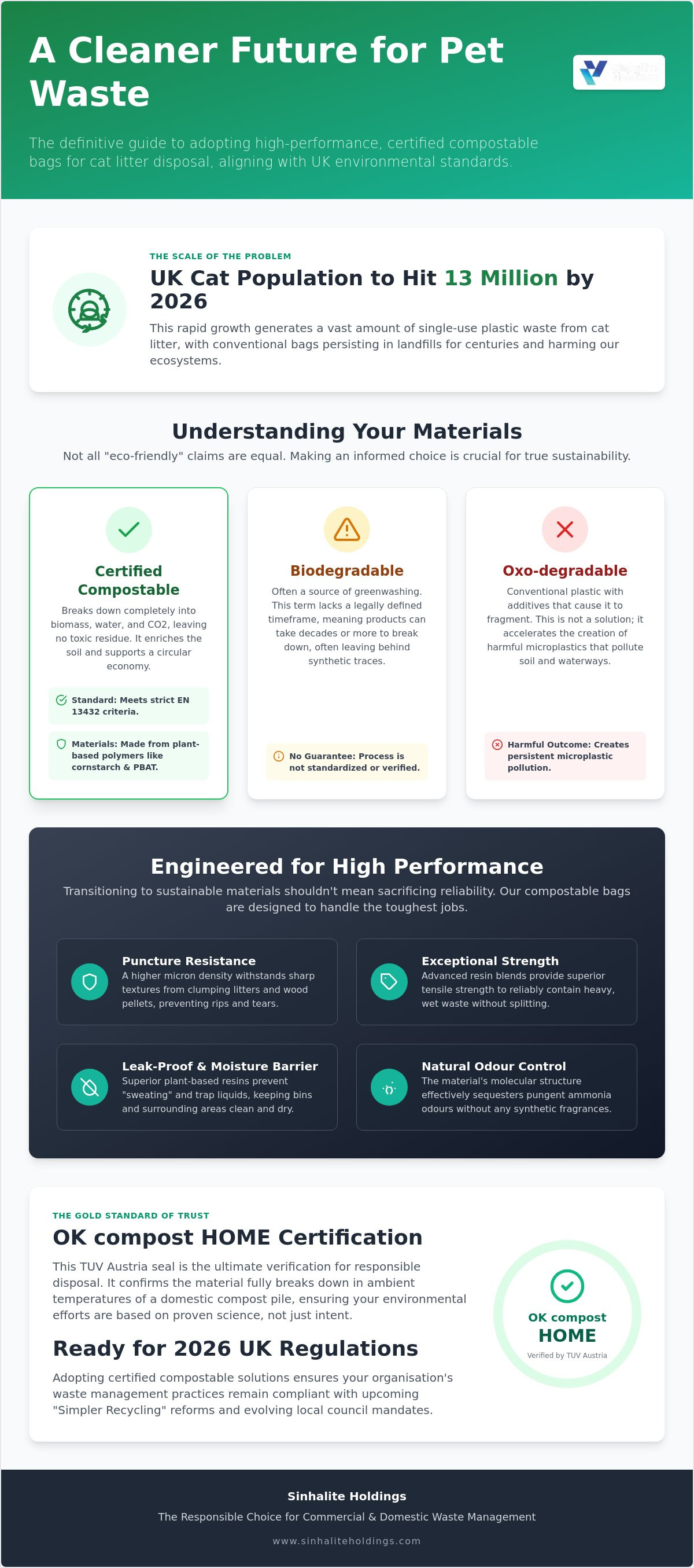
Traditional plastic pet waste bags contribute to the millions of tonnes of plastic sent to UK landfills, where they persist for centuries. Transitioning to compostable bags for cat litter disposal offers a solution that aligns with modern environmental stewardship. True compostability is achieved through plant-based polymers like cornstarch and PBAT. These materials are consumed by microorganisms, unlike oxo-degradable plastics that merely fragment into microplastics. This systemic change reduces the long-term impact on our soil and waterways. Understanding biodegradable and compostable bags is the first step in making an informed, responsible choice for waste management.
To better understand how these materials perform, watch this helpful video:
The OK compost HOME certification is the gold standard for domestic disposal in 2026. By choosing materials that return to the earth, businesses and pet owners support the UK's transition toward a circular economy. This model moves away from the "take-make-waste" approach, instead prioritising materials that can be reintegrated into natural cycles. It's a practical application of innovation that serves both immediate hygiene needs and long-term ecological health.
Compostable vs. Biodegradable: Why the Distinction Matters
The term "biodegradable" often functions as a greenwashing tool because it doesn't carry a legally defined timeframe for breakdown. To be truly effective, products must meet the EN 13432 standard. This ensures the material disappears entirely without leaving synthetic traces. You can explore this further in our guide: Do Compostable Bags Contain Plastic?
The Role of OK compost HOME Certification
Since UK industrial facilities often exclude animal waste, home-compostable materials are essential. The TUV Austria seal confirms the bag breaks down in ambient temperatures. This is crucial for responsible disposal, though pet waste should only be composted for non-food garden use to maintain safety. Selecting compostable bags for cat litter disposal with this certification ensures that your environmental efforts are based on verified performance rather than just intent.
Selecting High-Performance Bags for Heavy Pet Waste
Performance in sustainable waste management is defined by the resilience of the material under stress. When selecting compostable bags for cat litter disposal, the primary concern for many is the risk of splitting or leaking. High-quality bioplastics utilise advanced resin blends to provide the necessary tensile strength. Sinhalite bags are engineered to withstand the weight and sharp textures of clumping litters and wood pellets; this ensures that waste remains contained from the tray to the bin. Reliability is the foundation of any successful transition to plastic-free alternatives.
Effective moisture barrier technology is equally vital. Low-quality alternatives often suffer from "sweating," where moisture permeates the bag and causes it to stick to the bin liner. Advanced plant-based resins act as a superior barrier, trapping liquids and sequestering ammonia odours without the need for synthetic fragrances. This natural odour control is a result of the material's molecular structure, which effectively seals in pungent gases while maintaining environmental integrity. It's a cleaner, more professional approach to pet care.
Puncture Resistance and Leak-Proof Reliability
The density of a compostable bag is measured in microns, and for heavy-duty pet waste, a higher thickness is non-negotiable. Using a bag with insufficient micron density leads to the common frustration of double-bagging, which ultimately increases waste. For a detailed breakdown of the technical benchmarks required for heavy waste, you can consult our 2026 Guide to Puncture Resistant Compostable Garbage Bags. Investing in the correct material density ensures long-term cost-effectiveness and waste reduction.
Hygiene and Handling for Commercial Facilities
For catteries, shelters, and veterinary clinics, hygiene standards are paramount. Large organisations require scalable solutions that facilitate quick, secure disposal. Secure tie-handles on compostable garbage bags allow staff to seal waste quickly; this prevents spillages and maintains a sterile environment. Choosing the right capacity, whether for daily scooping or full tray changes, is essential for operational efficiency. If you are looking to upgrade your facility's waste protocols, you can explore our heavy-duty compostable sacks designed for professional use.
Sustainable Disposal Practices for UK Pet Owners and Businesses
Navigating the complexities of waste legislation requires a clear understanding of local infrastructure. In the UK, the Simpler Recycling reforms of 2026 have standardised many collection streams, yet pet waste remains a distinct category. Most local authorities exclude animal by-products from household food waste caddies to prevent contamination in industrial composting facilities. Consequently, using compostable bags for cat litter disposal ensures that you aren't introducing persistent plastics into the environment, even when waste is directed to general disposal streams. It's a proactive choice that prioritises ecological health over convenience.
If you choose to compost at home, safety is the priority. Cat waste should only be processed for non-food garden use, such as ornamental flower beds, to avoid pathogen transfer. For commercial entities, the decision to switch to sustainable packaging and disposal solutions is a strategic move toward meeting ESG goals. Sinhalite Holdings serves as a trusted partner in this transition, providing the expertise and certified materials needed to align your operations with modern environmental standards.
Responsible Waste Management in 2026
The current legislative outlook in the UK pet care sector reflects a growing demand for plastic reduction. Integrating compostable bags into a broader waste strategy is a practical way to prepare for future regulations. By adopting these high-performance alternatives, organisations can reduce their reliance on fossil-fuel-based plastics and support a cleaner, greener outlook for the industry. This transition is both achievable and advantageous for those looking to lead in sustainability.
Partnering with Sinhalite for Commercial Solutions
Councils and large-scale animal charities require reliable, high-volume solutions. Sinhalite Holdings offers wholesale supply with a focus on transparency and ethical manufacturing. We ensure that every product, from caddy liners to heavy-duty sacks, meets rigorous TUV Austria standards. This commitment to quality reinforces your brand’s reputation as a leader in responsible business practices. We provide the tangible tools needed to reach a zero-waste future, ensuring that your transition away from plastic is both seamless and effective.
Leading the Transition to Plastic-Free Pet Care
The journey toward a circular economy requires more than just good intentions; it demands high-performance tools that meet rigorous scientific standards. We've established that selecting materials with OK compost HOME and TUV Austria certifications ensures your environmental claims are backed by global reliability. By prioritising heavy-duty, puncture-resistant designs, you can eliminate the hygiene risks associated with thinner alternatives while adhering to the 2026 UK waste disposal regulations. Transitioning away from plastic doesn't mean compromising on durability or cleanliness.
Integrating compostable bags for cat litter disposal into your daily routine or commercial facility represents a tangible commitment to systemic change. As a specialist UK-based sustainable packaging provider, Sinhalite Holdings is dedicated to helping organisations navigate these shifts with confidence. We provide the technical expertise and robust products needed to reduce plastic waste without sacrificing operational efficiency. Explore our range of certified compostable bags for professional waste management and take a proactive step toward a cleaner future. It's a small change that delivers a significant long-term impact for our planet.
Frequently Asked Questions
Can I put compostable cat litter bags in my local council food waste bin?
No, you should not place these bags in municipal food waste bins. Most UK local authorities strictly exclude pet waste from food and garden waste streams because industrial composting facilities aren't designed to eliminate the specific pathogens found in animal faeces. To maintain public health standards, you should dispose of these bags in your general waste bin unless your specific council provides a dedicated service for animal waste.
Are compostable bags strong enough for clay or silica cat litter?
Professional-grade compostable bags for cat litter disposal are specifically engineered to handle the high density and sharp edges of clay and silica litters. By utilizing advanced plant-based resins and a higher micron thickness, these bags provide the puncture resistance necessary for heavy-duty use. This structural integrity ensures that the bags don't split or leak under the weight of wet litter, offering a reliable alternative to traditional plastic.
How long do compostable pet waste bags take to break down in a home compost heap?
Certified home-compostable bags typically disintegrate within six to twelve months in a well-maintained domestic compost environment. The speed of this process depends on ambient temperatures, moisture levels, and the presence of active microorganisms. It's vital to ensure that any compost containing cat waste is used only for non-food garden applications, such as ornamental flower beds, to prevent the risk of toxoplasmosis or other parasitic transfers.
What is the difference between OK compost HOME and industrial composting certifications?
The primary difference lies in the temperature required for the material to degrade. The OK compost HOME certification ensures the bag will break down at the lower, ambient temperatures found in a garden compost heap. Conversely, industrial certifications like EN 13432 require sustained temperatures of 55 to 60 degrees Celsius to initiate decomposition. Choosing home-certified compostable bags for cat litter disposal provides a more versatile solution that doesn't depend on specialized municipal infrastructure.


