
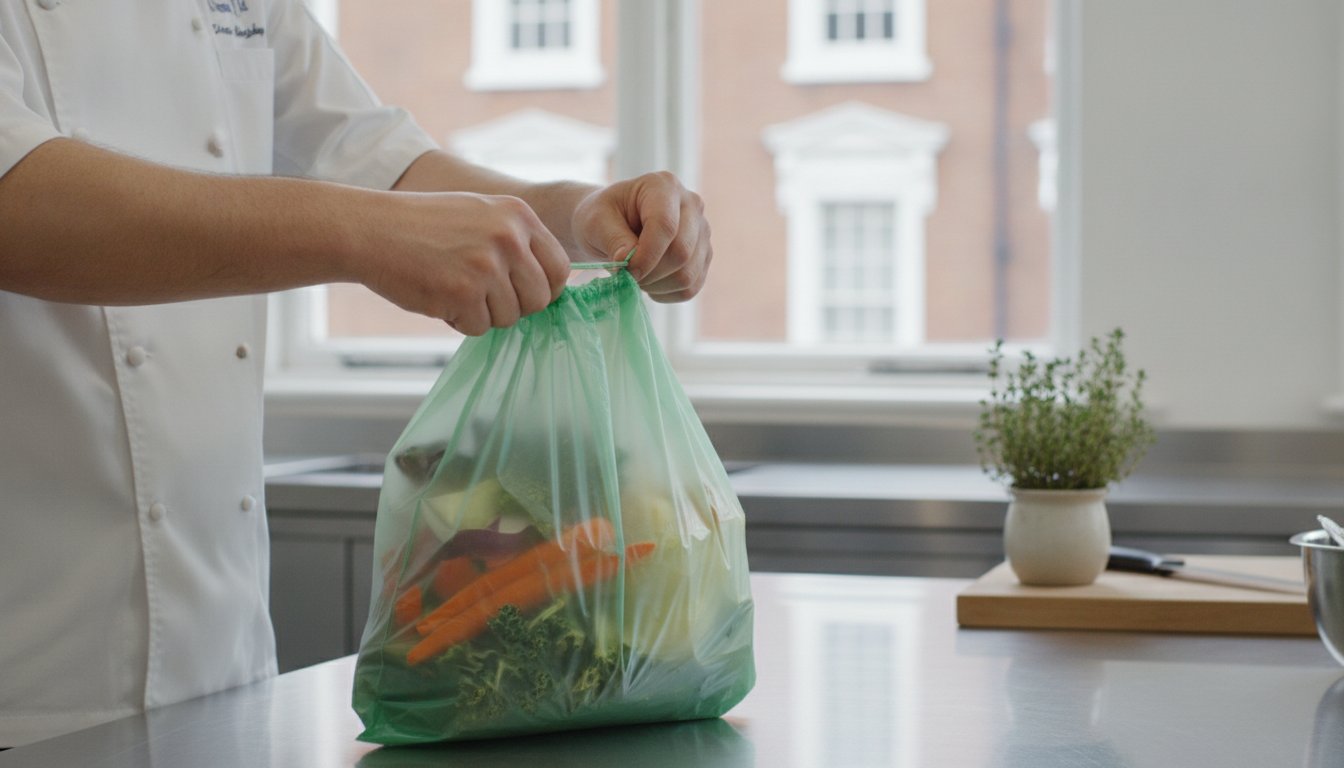
By 31 March 2026, every restaurant in England will be legally required to separate food waste from general rubbish, turning waste management from a back-of-house chore into a critical compliance task. You've likely felt the pressure of rising disposal costs and the frustration of flimsy liners that split during a busy service, yet finding reliable compostable bags for restaurants uk that actually meet EN 13432 standards remains a challenge amidst widespread greenwashing. It's understandable to feel cautious when the wrong choice leads to both operational mess and regulatory scrutiny.
This guide provides the strategic insights you need to master this transition, ensuring your kitchen stays efficient while you navigate the £228.82 per tonne Plastic Packaging Tax. We will examine high-performance materials that withstand commercial kitchen heat, explain the impact of 2026 Extended Producer Responsibility fees, and help you choose solutions that align with your long-term ESG goals. By the end of this article, you'll have a clear roadmap to implement waste solutions that protect both your brand reputation and your bottom line.
Key Takeaways
- Understand how the 2026 legislative landscape, including the Plastic Packaging Tax, transforms sustainable procurement into a core financial strategy for your business.
- Discover the technical specifications, such as advanced moisture barriers and puncture resistance, required for high-performance compostable bags for restaurants uk.
- Learn how to streamline your back-of-house operations by integrating certified compostable solutions into your food waste management and anaerobic digestion workflows.
- Explore the operational benefits of specialized products, including compostable food roller bags, for maintaining hygiene and speed in a busy kitchen environment.
- Position your business as a leader in the circular economy by establishing a reliable, compliant supply chain for your sustainable packaging needs.
The Strategic Shift: Why UK Restaurants are Adopting Compostable Solutions in 2026
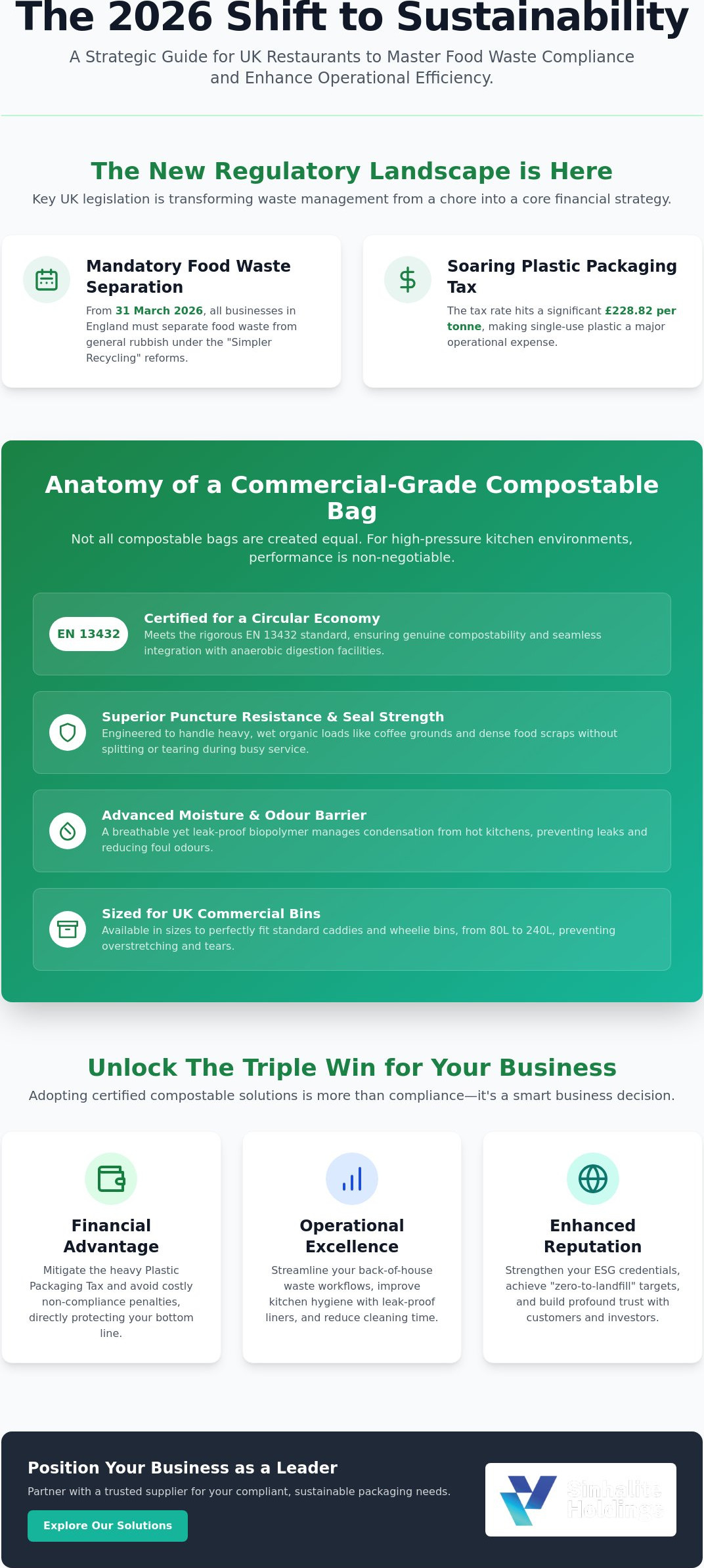
The UK hospitality sector is currently at a legislative crossroads. With the Plastic Packaging Tax rate reaching £228.82 per tonne as of 1 April 2026, the financial burden of traditional plastic has become a significant overhead for growing businesses. Transitioning to high-quality compostable bags for restaurants uk is no longer just an environmental choice; it's a strategic necessity to mitigate these escalating costs while ensuring operational hygiene. This shift reflects a broader commitment to systemic change within the industry.
To better understand how these materials perform in real-world conditions, watch this helpful video:
Beyond tax mitigation, the transition is driven by the "Simpler Recycling" reforms. From 31 March 2026, it's mandatory for all businesses in England to separate food waste from general rubbish. Using certified liners ensures that organic waste remains free from plastic contamination, allowing it to be processed efficiently via anaerobic digestion. This process converts kitchen scraps into renewable energy, embodying the principles of a circular economy. A circular economy is a systemic approach to eliminating waste through regenerative product design. Understanding what bioplastics are and how they function helps your team manage this organic stream with confidence.
Navigating UK Legislation and Plastic Reduction
Compliance is the foundation of long-term operational stability. Moving beyond single-use plastics helps your organisation avoid the reputational and financial risks associated with non-compliance. These compostable liners act as essential tools for meeting national waste separation mandates. By adopting these solutions, you ensure your kitchen operations remain seamless, hygienic, and legally sound as regulations tighten across the UK.
Enhancing ESG Credentials through Sustainable Procurement
Modern UK diners increasingly prioritize transparency and ecological responsibility. Achieving "zero-to-landfill" targets through switching business to sustainable packaging builds profound trust with both customers and investors. This move toward responsible innovation demonstrates that your restaurant is a visionary partner in the UK's green transition. It transforms a standard procurement decision into a powerful statement of purpose and corporate integrity.
Evaluating Performance: What Makes a Compostable Bag Suitable for Commercial Kitchens?
A commercial kitchen is a high-pressure environment that demands more than just basic containment. When selecting compostable bags for restaurants uk, you must prioritise puncture resistance to prevent catastrophic splits during a busy shift. Traditional thin liners often fail under the weight of heavy organic loads like wet coffee grounds and dense food scraps. High-performance bags are engineered with reinforced seal strength, ensuring they maintain their integrity from the prep station to the external collection point. Choosing the correct size is equally vital; liners should fit standard UK commercial bin dimensions, ranging from 80L caddies to 240L wheelie bins, to avoid overstretching and subsequent tears.
The technical "moisture barrier" is another essential feature. In high-temperature kitchens, steam and condensation can weaken inferior materials, leading to leachate leaks that create unhygienic conditions. Advanced biopolymers create a breathable yet leak-proof environment. This breathability allows moisture to evaporate, which significantly reduces the build-up of foul odours and bacteria. Consequently, using high-integrity liners reduces the frequency of deep-cleaning bins and minimises the need for harsh chemical sanitisers. If you're refining your procurement strategy, you can find durable compostable garbage bags designed specifically for these industrial demands.
Understanding Key Certifications: OK compost HOME vs Industrial
Verification is the only way to safeguard your business against greenwashing. While industrial composting is the standard for most UK waste streams, OK compost HOME certification explained highlights the gold standard for material versatility. This certification ensures that the bag will break down even in lower-temperature environments. Leading manufacturers often utilise Mater-Bi, a bioplastic material whose integrity and compostability are rigorously verified by TUV Austria. These certifications provide the transparency needed to align your operations with global corporate reliability standards.
The Science of Material Integrity
The shift toward plant-based polymers represents a fusion of modern innovation and natural processes. According to WRAP guidance for businesses, selecting the right material is crucial for ensuring that compostable packaging actually reaches the correct waste stream. These polymers are designed to be stable during use but highly reactive when exposed to composting microorganisms. This dual nature ensures that your staff can rely on the bags' strength during service without compromising the eventual goal of organic regeneration. It's a practical, scalable solution that supports a cleaner, greener future for the hospitality sector.
Operational Excellence: Implementing Certified Compostable Systems with Sinhalite Holdings
Sinhalite Holdings acts as a dedicated ally for businesses seeking to align their daily operations with modern ethical standards. We provide the tangible tools needed to transition away from traditional plastics without sacrificing industrial performance. Integrating high-performance compostable bags for restaurants uk into your existing workflow ensures that your back-of-house remains efficient and compliant. This transition is not merely about replacing one product with another; it's about adopting a systemic approach to waste that reflects your brand's commitment to environmental stewardship.
Innovation at the prep station is a critical component of this shift. Compostable food roller bags offer a hygienic, practical solution for food storage and handling, allowing chefs to maintain speed while reducing the site's plastic footprint. When you combine these with compostable garbage bags and compostable clingfilm, you create a cohesive, plastic-free kitchen environment. This holistic strategy simplifies your waste streams and reinforces a sense of purpose across your entire culinary team.
Wholesale Solutions for the UK Hospitality Sector
Managing a national restaurant chain or a growing franchise requires a reliable supply chain that can handle high-volume demands. Bulk procurement of heavy-duty refuse sacks and caddy liners provides the consistency needed for large-scale operations. Sinhalite Holdings specialises in national commercial packaging distribution, ensuring that every site in your network has access to the same high standards of durability. This reliability helps you avoid operational disruptions caused by stock shortages or inferior product performance, providing peace of mind for procurement managers.
Beyond the Bin: A Comprehensive Compostable Inventory
The transition to a circular economy extends to the customer's front door through the use of compostable shopping bags for takeaway and delivery services. These products provide a sustainable touchpoint that resonates with eco-conscious diners across the UK. However, the most critical successes often happen behind the scenes. We understand that puncture resistant compostable garbage bags solve the primary pain point for kitchen porters by preventing messy leaks and the need for double-bagging. By investing in a comprehensive inventory, you empower your team to work with confidence while protecting your bottom line from the hidden costs of waste mismanagement.
Leading the Green Transition in UK Hospitality
The 2026 waste reforms represent a pivotal moment for your business. Adopting high-performance compostable bags for restaurants uk is no longer a peripheral choice but a core component of a resilient, forward-thinking strategy. By aligning your procurement with certified standards, you ensure full compliance with the Plastic Packaging Tax while future-proofing your operations against shifting environmental mandates. We've established that material integrity, specifically puncture resistance and moisture barriers, is essential for maintaining a hygienic and efficient back-of-house environment.
Success in this transition depends on choosing a partner that understands the intersection of industrial pragmatism and ecological responsibility. Sinhalite Holdings offers specialist UK-wide distribution for commercial sectors, providing solutions that carry the prestigious OK compost HOME and TUV Austria certifications. Our puncture-resistant technology is specifically designed for the rigours of industrial use, ensuring your team can work with total confidence. It's time to move beyond plastic and embrace a cleaner, more sustainable future for your organisation.
Explore Sinhalite Holdings’ full range of commercial compostable solutions and take the next step toward operational excellence today. Together, we can build a circular economy that benefits your business and the planet alike.
Frequently Asked Questions
Are compostable bags strong enough for heavy restaurant food waste?
Yes, high-performance liners are engineered with advanced biopolymers that provide the necessary puncture resistance and seal strength for industrial use. They're specifically designed to handle dense, wet organic matter like coffee grounds and heavy kitchen prep waste. Using these specialised compostable bags for restaurants uk ensures that your back-of-house operations remain hygienic without the risk of splitting or leaking during a high-pressure service.
What is the difference between biodegradable and compostable bags for UK businesses?
The primary difference lies in the verification of the breakdown timeframe and the quality of the resulting residue. While "biodegradable" is a broad term with no fixed duration, certified compostable materials must break down within a specific window without leaving toxic microplastics behind. For commercial entities, choosing certified compostable solutions ensures that your packaging is fully compatible with UK industrial composting facilities and anaerobic digestion systems.
Do compostable bags for restaurants comply with UK Plastic Packaging Tax?
Certified compostable bags are currently exempt from the UK Plastic Packaging Tax because they're made from plant-based polymers rather than traditional petroleum-based plastics. As of April 2026, the tax rate stands at £228.82 per tonne for plastic packaging with less than 30% recycled content. Transitioning to compostable alternatives helps your business avoid these direct financial penalties while simultaneously supporting national waste separation mandates and your own ESG targets.
How should restaurants store compostable bags to prevent premature breakdown?
You should store these products in a cool, dry environment away from direct sunlight and high humidity to maintain their material integrity. Because they're designed to be reactive to microorganisms and moisture, exposure to damp conditions or extreme heat can trigger the degradation process early. Proper storage ensures that your inventory of garbage bags and caddy liners remains strong and reliable for 12 months from the date of purchase.


