
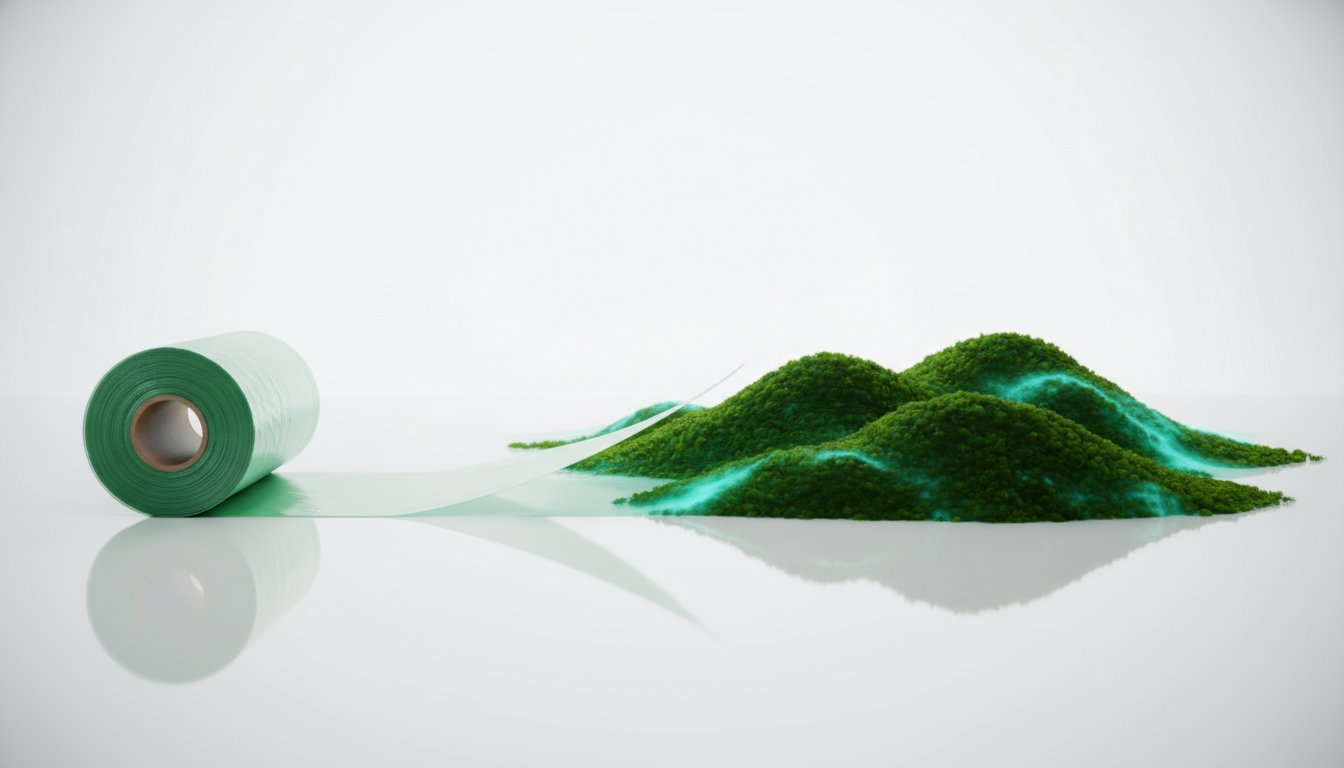
Could a single roll of bags be the difference between a seamless lunchtime rush and a messy, reputation-damaging failure? For many UK businesses, the transition to sustainable packaging feels like a choice between environmental ethics and operational durability. You shouldn't have to sacrifice performance for purpose. By switching to high-performance compostable food bags on a roll for delis, you can eliminate the risk of leaks and splits while meeting the strict demands of the 2026 regulatory environment.
It's frustrating when eco-friendly alternatives fail to fit your existing counter dispensers or lead to confusion over UK Plastic Packaging Tax compliance. We understand that your priority is a smooth workflow that protects both your products and your brand reputation. This 2026 Commercial Buyer’s Guide provides the clarity you need to source EN 13432 certified solutions that satisfy eco-conscious customers. You'll discover how to identify industrial-strength materials that resist oils and moisture, ensure seamless integration into your current deli setup, and confidently move your business toward a circular economy.
Key Takeaways
- Identify why 2026 represents a pivotal moment for UK delis to transition from traditional plastic to high-performance compostable alternatives.
- Evaluate material integrity and tensile strength to ensure your compostable food bags on a roll for delis can withstand heavy or oily items without failure.
- Ensure a seamless operational transition by choosing roll solutions designed for universal compatibility with standard UK counter dispensers.
- Protect your investment by implementing specific storage protocols that maintain the shelf life and durability of plant-based resins.
- Strengthen your brand reputation and regulatory compliance by integrating certified plastic-free products into your daily workflow.
Optimising Deli Operations with Compostable Food Bags on a Roll
The UK food service industry is undergoing a fundamental transformation as we approach the 2026 tipping point for plastic reduction. Removing traditional HDPE and LDPE plastics from the deli counter is no longer just a voluntary environmental gesture; it's a strategic move toward a circular economy. By adopting compostable food bags on a roll for delis, businesses can harmonise the high-speed demands of food service with a commitment to ecological responsibility. These plant-based alternatives ensure that hygiene standards remain uncompromised while significantly reducing the reliance on fossil-fuel-derived materials.
Understanding the technical distinction between generic 'biodegradable' terms and certified compostable standards is essential for commercial buyers. High-quality Compostable Roll Solutions provide a verifiable path to waste reduction because they're designed to break down into organic matter under specific conditions. This shift represents the intersection of operational efficiency and environmental stewardship, allowing staff to serve customers quickly without the guilt of contributing to long-term landfill waste.
To better understand how these sustainable alternatives perform in a commercial setting, watch this helpful video:
The Business Case for Plastic-Free Deli Counters
Switching to plant-based bioplastics allows delis to lower their corporate carbon footprint by replacing petroleum-heavy plastics with renewable resins. UK consumers are increasingly vocal about their preference for transparently sustainable packaging, often choosing to support businesses that demonstrate a clear ethical stance. Integrating compostable food bags on a roll for delis serves as a visible commitment to the future of compostable food packaging UK, showing patrons that your deli values the planet as much as its produce.
Regulatory Compliance and the Plastic Packaging Tax
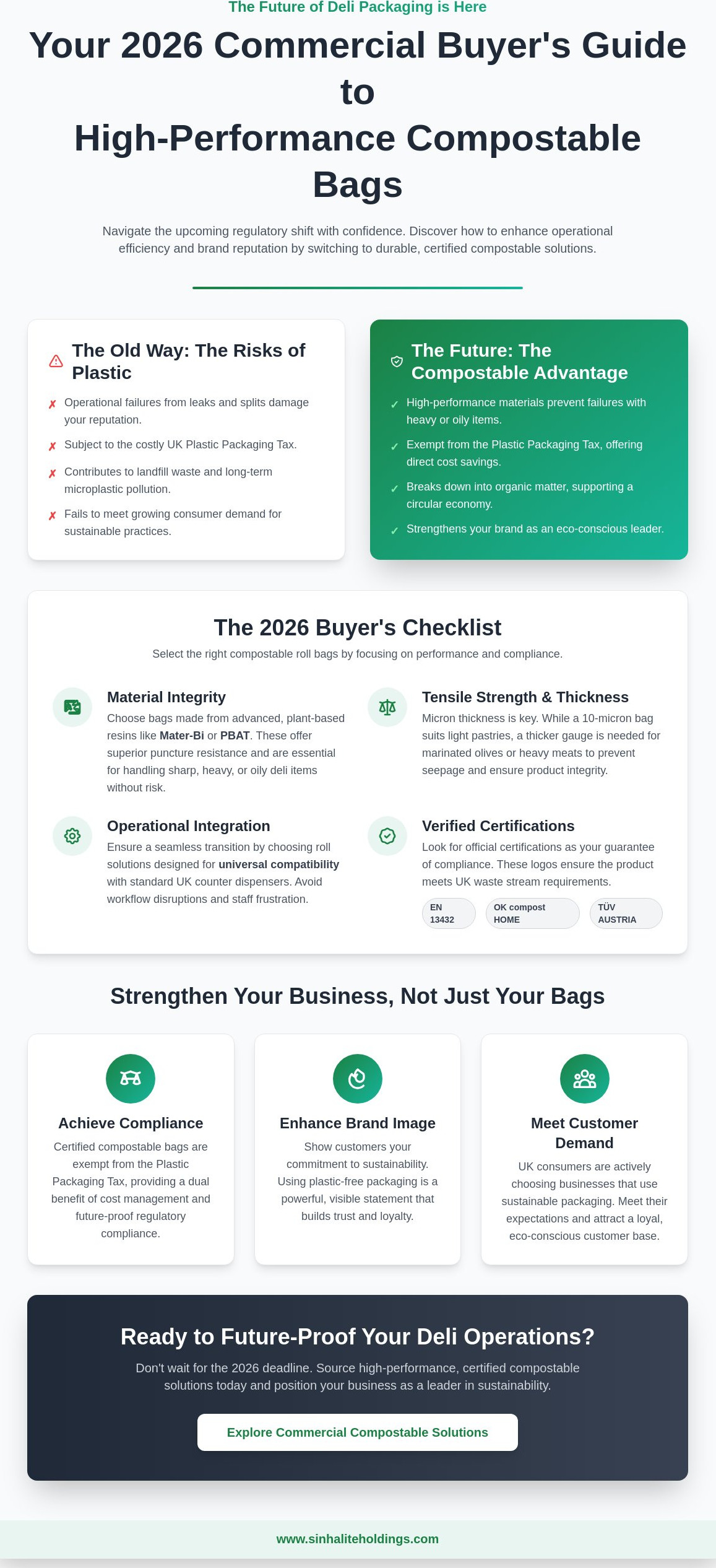
For many commercial entities, the financial implications of traditional plastic are becoming a burden. Certified compostable bags act as a strategic tax-avoidance tool by helping businesses navigate the Plastic Packaging Tax explained for small business. Since these bags are exempt from the tax levied on plastic packaging with less than 30% recycled content, they provide a dual benefit of cost management and compliance. Ensuring your deli bags meet the latest UK 2026 waste management standards is vital for maintaining a future-proof operation that remains both profitable and responsible.
The 2026 Buyer’s Checklist: Selecting the Right Compostable Roll Bags
Selecting high-performance compostable food bags on a roll for delis requires a shift from price-per-unit thinking to a focus on material integrity. In a commercial environment, a bag failure doesn't just waste food; it damages your brand's reputation for quality. You should seek out bags made from advanced resins like Mater-Bi or PBAT. These materials offer the puncture resistance necessary to handle sharp crusts or heavy produce without the risk of splitting. If you're ready to upgrade your inventory, you can explore our range of commercial compostable roll solutions designed for professional durability.
Tensile strength is largely determined by micron thickness. While a standard 10 micron bag might suffice for a light pastry, marinated olives or oily deli meats require a thicker gauge to prevent seepage. Maintaining clarity is also vital. A high-quality bag allows the vibrant colours of fresh salads and artisanal cheeses to remain visible, reassuring customers of the food's quality before they even leave your counter. Verify all stock against international standards. Look for the 'OK compost HOME' and TUV Austria seals of approval. These aren't just logos; they're your guarantee that the packaging aligns with UK waste streams and won't contribute to microplastic pollution.
Technical Specifications for Commercial Use
Different deli applications demand specific technical profiles. For lightweight items like individual rolls, a lower micron thickness is efficient and cost-effective. However, for heavy produce or marinated items, a higher gauge ensures the leak-proof seals remain intact under pressure. While 'biodegradable' is a generic term describing a material's eventual breakdown, 'certified compostable' refers to a strict, time-bound process that leaves no toxic residues behind. This distinction is critical for avoiding greenwashing and ensuring your business remains compliant with 2026 UK standards.
Food Safety and Chemical Integrity
With a strict ban on Per- and polyfluoroalkyl substances (PFAS) in food packaging enforced from 2026, ensuring your bags are chemically safe is a non-negotiable priority. Sinhalite Holdings prioritises non-toxic, plant-based materials over traditional starch blends to ensure superior structural integrity and direct food-contact safety. To understand how these materials differ from conventional plastics, read our essential guide to bioplastics for complete transparency. Choosing PFAS-free solutions protects your customers and aligns your deli with the highest modern health standards.
Integrating Sinhalite Holdings’ Compostable Roll Solutions into Your Workflow
Transitioning to compostable food bags on a roll for delis shouldn't disrupt your established service rhythm. Practical integration starts with ensuring that your new sustainable options function exactly like the traditional plastics they replace. Sinhalite Holdings’ roll solutions are engineered for universal compatibility with standard UK counter dispensers, allowing your team to maintain peak efficiency without needing to invest in new hardware. By focusing on industrial-grade perforations, we ensure an easy-tear experience that prevents bag wastage and keeps the lunchtime rush moving smoothly.
Operational success also depends on proper stock management. Because these bags are crafted from natural biopolymers, they're sensitive to extreme environmental conditions. We recommend storing your rolls in a cool, dry area away from direct heat sources to preserve the material's tensile strength and shelf life. When your staff and customers understand the value of these materials, the transition becomes a shared mission. Clear communication regarding waste streams ensures these bags reach the correct organic processing facilities, fulfilling the promise of a truly circular economy.
Dispenser Compatibility and Speed of Service
Speed is the lifeblood of a busy deli. Our compostable food bags on a roll for delis feature precise tear-lines that prevent the frustration of snagged or stretched material. Procurement teams should note that our rolls are designed to fit the most common UK dispenser core sizes, typically ranging from 38mm to 50mm. Measuring your existing spindle diameter before ordering ensures a perfect "drop-in" replacement that requires zero downtime for your counter staff.
Completing the Sustainable Suite
A responsible deli operation extends beyond the initial point of sale. To achieve a comprehensive plastic-free environment, you can pair your roll bags with compostable cling film that actually clings for wrapping artisanal cheeses and prepared platters. This creates a consistent brand message for your customers. For back-of-house efficiency, consider implementing a holistic waste strategy that includes puncture resistant compostable garbage bags. This ensures that food prep waste and packaging can be managed together in a single, eco-friendly waste stream, reducing your reliance on traditional landfill-bound liners.
While the initial unit price of compostable resins may differ from legacy plastics, the long-term value is found in tax savings and enhanced brand equity. By avoiding the UK Plastic Packaging Tax and meeting the expectations of a modern, eco-conscious clientele, your deli positions itself as a leader in the sustainable food movement. It's a pragmatic investment in a cleaner, more resilient future for your business and the community you serve.
Future-Proof Your Deli Operations Today
The transition toward sustainable packaging is a practical evolution for the modern UK food service industry. By prioritising materials that balance industrial strength with ecological integrity, you protect your business from regulatory risks while aligning with the values of your customers. Choosing compostable food bags on a roll for delis ensures that your daily operations remain efficient and compliant with the 2026 standards. These solutions represent a tangible commitment to a circular economy, proving that high-performance utility and environmental responsibility exist in perfect harmony.
Our TUV Austria and OK compost HOME certified products provide the professional reliability your staff requires. These bags are crafted from high-tensile, puncture-resistant plant-based resins and are already trusted by leading UK commercial kitchens and retailers to handle the most demanding deli environments. It's time to move beyond traditional plastics and embrace a solution that serves both your bottom line and the planet.
Upgrade your deli with Sinhalite Holdings’ certified compostable food bags on a roll and lead the way in responsible business practices. Taking this step today positions your brand as a visionary partner in the transition to a sustainable future. It's a choice that secures your reputation while contributing to a cleaner, greener outlook for the entire community.
Frequently Asked Questions
Are compostable food bags strong enough for wet deli items like olives or coleslaw?
Yes, high-quality compostable food bags on a roll for delis are specifically engineered to withstand the moisture and oils common in food service. The advanced plant-based resins used in these bags provide a reliable barrier that prevents seepage and maintains structural integrity. This ensures that your customers can transport marinated olives or fresh coleslaw safely without the risk of the bag splitting or leaking during their journey home.
Do these bags require industrial composting or can they go in home compost bins?
Sinhalite Holdings’ bags carry the OK compost HOME certification, meaning they can be processed in domestic compost heaps as well as industrial facilities. While industrial composting offers controlled environments for rapid breakdown, these bags are designed to degrade in the lower temperatures found in garden bins. This flexibility allows both businesses and customers to manage waste responsibly, supporting a local circular economy without needing specialised industrial infrastructure for every single item.
How long is the shelf life of compostable bags on a roll before they begin to degrade?
Most compostable bags have a shelf life of approximately 10 to 12 months when stored in the correct environment. Because they are made from natural biopolymers, they are designed to begin their natural breakdown process when exposed to heat, moisture, and microbes. To maximise longevity, you should keep your rolls in a cool, dry area away from direct sunlight. This proactive storage approach ensures the bags remain strong and ready for high-volume daily service.
Are Sinhalite Holdings’ food bags compliant with the UK Plastic Packaging Tax?
Yes, these certified compostable solutions are fully compliant and help businesses avoid the financial burden of the UK Plastic Packaging Tax. Since they are not made from traditional fossil-fuel-based plastics, they fall outside the scope of the tax levied on packaging with less than 30% recycled content. This makes compostable food bags on a roll for delis a financially prudent choice for commercial entities looking to reduce tax liabilities while improving their environmental stewardship.
Can these bags be used in a microwave or freezer for food storage?
These bags are excellent for freezer storage as the plant-based material remains flexible and puncture-resistant at low temperatures. However, they are not suitable for microwave use. The high heat generated in a microwave can cause the resins to soften or melt, compromising the bag's integrity and safety. For cold storage or room-temperature transport, they provide a durable and sustainable alternative to conventional polyethylene liners.


