
You might assume that choosing between cornstarch and PLA is a decision between two entirely different materials, but the commercial reality is far more nuanced. When evaluating cornstarch vs pla bags for your UK operations, the distinction often lies more in the specific polymer blend and certification than the raw feedstock itself. As a business leader in 2026, you're likely feeling the weight of the UK's Extended Producer Responsibility (EPR) modulated fees and the standard landfill tax rate of £130.75 per tonne. It's natural to feel overwhelmed by technical jargon or concerned that a compostable liner might split during a busy shift.
This guide will demystify the science to help you make an informed, sustainable choice for your organisation. You'll gain a clear understanding of material performance and the confidence to select products that meet your ESG goals while adhering to the BS EN 13432 standard for industrial compostability. We'll explore how these bio-based alternatives can help you navigate the 2026 regulatory landscape, ensuring your transition away from traditional plastic is both practical and scalable for a cleaner, greener future.
Key Takeaways
- Distinguish between cornstarch feedstocks and PLA polymers to navigate the cornstarch vs pla bags landscape with technical precision and commercial clarity.
- Evaluate how specific material blends impact the tensile strength and durability of compostable garbage bags and shopping bags for demanding commercial environments.
- Address practical performance concerns, such as moisture retention in food caddy bags, to ensure seamless integration into your organisation's daily operations.
- Identify the crucial differences between home and industrial composting certifications to guarantee your packaging choices meet official UK standards like BS EN 13432.
- Strengthen your organisation's ESG position by selecting high-quality compostable alternatives that support a visionary transition toward a circular economy.
The Fundamentals: Defining Cornstarch and PLA in Modern Packaging
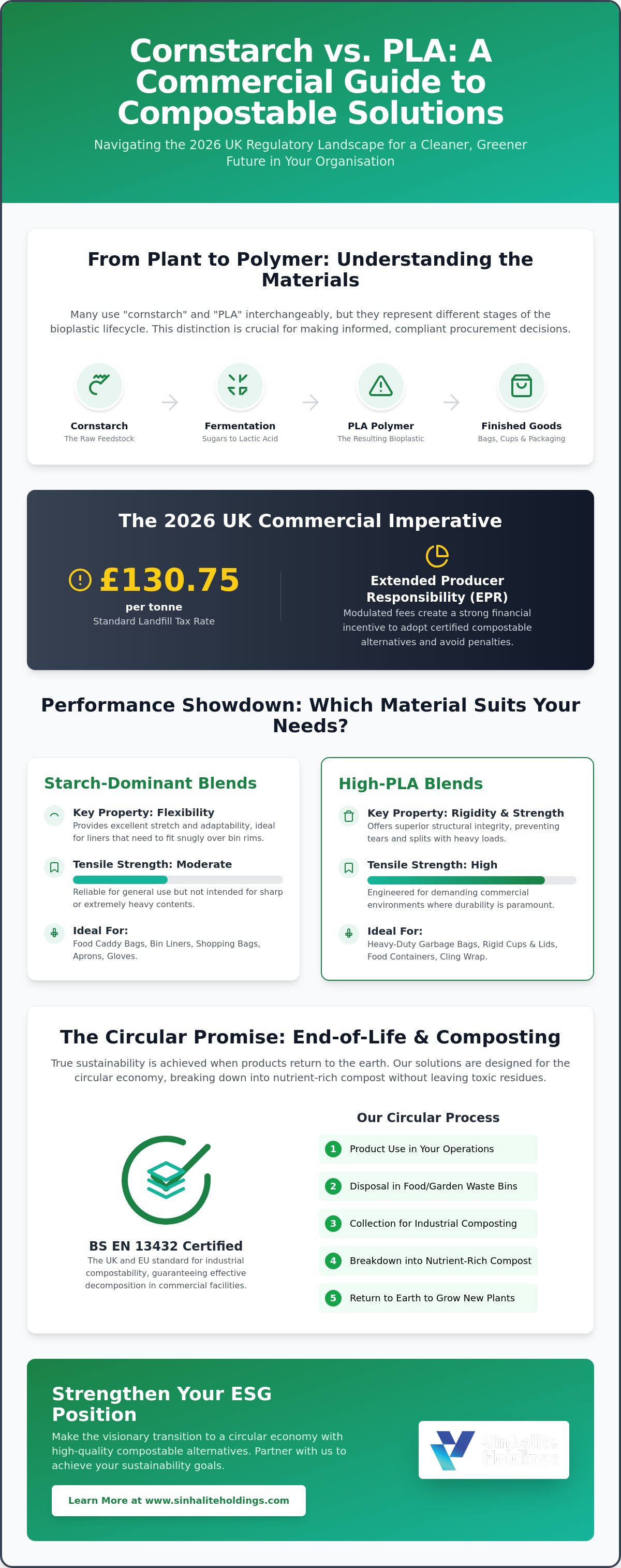
The conversation surrounding cornstarch vs pla bags often suffers from a lack of technical clarity. While many use these terms interchangeably, they represent different stages of the material lifecycle. Cornstarch is a renewable feedstock; it's essentially the raw biological resource. In contrast, Polylactic Acid (PLA) is the resulting bioplastic polymer created through a sophisticated chemical process. Understanding this distinction is vital for UK organisations looking to align their procurement with the BS EN 13432 standard for compostability. This standard ensures that materials break down effectively in industrial composting facilities, leaving no toxic residue behind.
To better understand this concept, watch this helpful video:
The transition from plant to packaging begins with fermentation. Microorganisms convert the sugars found in cornstarch into lactic acid, which is then polymerised to create PLA. This process allows us to move away from finite, oil-based plastics toward a regenerative model. By mastering these bioplastic fundamentals, businesses can better navigate the 2026 regulatory landscape and make choices that truly support a circular economy.
Feedstock vs. Polymer: What Is Actually in the Bag?
A common misconception is that a "cornstarch bag" consists only of pressed starch. In reality, pure starch lacks the tensile strength required for most commercial applications. To create durable solutions like compostable garbage bags or shopping bags, manufacturers often blend starch with other compostable polymers like PBAT. This combination provides the necessary flexibility and tear resistance. PLA is a versatile polyester derived from renewable resources like maize. At Sinhalite Holdings, we ensure material integrity through responsible sourcing, providing products that remain strong during use but return to the earth after disposal.
The Environmental Footprint of Production
The shift toward bio-based materials is driven by a profound commitment to reducing carbon footprints. Producing PLA and starch-based resins generates significantly lower greenhouse gas emissions compared to traditional petroleum-based polyethylene. By 2026, the focus has expanded to include the entire supply chain, making the use of non-GMO corn sources a priority for sustainable organisations. Whether you're using compostable caddy bags or food roller bags, choosing materials with a lower production impact is a proactive step toward systemic change. This approach ensures your operational choices reflect your ESG values without sacrificing the utility your business requires.
Performance Comparison: Durability, Heat Resistance, and Commercial Utility
Selecting the appropriate material requires an understanding of how these polymers behave under physical stress. When comparing cornstarch vs pla bags for commercial use, the decision rests on whether you prioritise elasticity or structural rigidity. High-PLA blends offer exceptional tensile strength, which is why they're the preferred choice for heavy-duty compostable garbage bags that must withstand significant weight without tearing. Conversely, starch-dominant formulations provide the flex needed for liners that must stretch over the rim of a bin. Research regarding the performance of bioplastics in food packaging shows that while these materials are naturally more breathable than traditional plastic, advanced manufacturing techniques have significantly improved their barrier properties. This breathability actually helps reduce odours by allowing moisture to evaporate, provided the bags are used within their recommended capacity.
Heat resistance also varies between these materials. PLA typically begins to soften at temperatures around 55°C, making it suitable for cold drinks but less effective for boiling liquids unless specifically crystallised for heat. Certain starch-polyester blends used in food roller bags can handle moderate warmth, though they aren't designed for high-temperature cooking applications. Understanding these thermal limits ensures your organisation chooses the right tool for the task.
Which Material Suits Your Business Needs?
Identifying the right SKU depends on your specific operational environment. Cornstarch blends are typically best suited for caddy liners and lightweight shopping bags due to their softer feel and higher elongation. If your organisation requires high-clarity films or rigid packaging, PLA-dominant structures provide the necessary stiffness and transparency. For commercial waste management, ensuring puncture resistance is vital. Many procurement officers ask do compostable bags contain plastic when reviewing these performance specs. The answer lies in the molecular structure; these materials offer the utility of plastic without the long-term ecological damage. Sinhalite Holdings provides these high-performance alternatives to help you transition with confidence.
Shelf-Life and Storage Requirements
Because these materials are designed to break down, storage conditions in your warehouse are critical to maintaining their integrity. High humidity and temperatures above 35°C can trigger premature degradation, particularly in starch-based materials. We recommend storing your stock in a cool, dry place away from direct sunlight to ensure a reliable shelf-life of up to 12 months. This proactive approach to inventory management ensures that your compostable food roller bags and aprons perform perfectly when they reach the front line. You can view our full range of durable solutions to find the right fit for your facility's specific climate and storage capacity.
Disposal and the Circular Economy: Navigating UK Composting Infrastructure
The effectiveness of any sustainability strategy relies on the end-of-life processing of chosen materials. In 2026, UK organisations face a standard landfill tax rate of £130.75 per tonne, making waste diversion a financial necessity as well as an ethical one. When comparing cornstarch vs pla bags, businesses must look beyond the material composition and focus on the specific disposal infrastructure available to them. While both materials are technically compostable, their degradation depends entirely on the environment they enter after use.
The primary distinction lies between "Home Compostable" and "Industrial Compostable" certifications. Industrial composting facilities provide the high temperatures and controlled microbial activity required to break down robust PLA structures within 12 weeks, as per the BS EN 13432 standard. For organisations without access to industrial waste streams, choosing products with the OK compost HOME certification is essential. This ensures that items like food waste bags will degrade in lower-temperature environments, such as a garden compost heap or a community composting project. Following the UK guidance on compostable packaging provided by WRAP helps procurement teams align their choices with existing national infrastructure.
Identifying Genuine Eco-Certifications
To avoid the pitfalls of greenwashing, procurement officers should use a rigorous verification process. Genuine compostable solutions will clearly display recognised certification marks rather than vague claims of being "eco-friendly" or "biodegradable."
- The Seedling Logo: This is the most recognised mark in the UK, indicating compliance with the European EN 13432 standard.
- TUV Austria Verification: Look for specific codes that can be cross-referenced on the TUV Austria database to ensure the certification is current.
- Material Transparency: Trusted suppliers will provide technical data sheets explaining the exact blend of cornstarch vs pla bags in their inventory.
The Future of Business Waste in 2026
Integrating compostable solutions into corporate ESG strategies is a logical bridge toward a circular economy. By replacing traditional plastic with compostable garbage bags and shopping bags, organisations can significantly reduce their reliance on fossil fuels. Sinhalite Holdings supports this transition by providing scalable, high-quality compostable SKUs that meet the rigorous demands of commercial waste management. This commitment to responsible innovation ensures that your business remains compliant with evolving UK regulations while actively contributing to systemic environmental change. It's time to move beyond temporary fixes and adopt a visionary approach to resource management.
Switch your business to sustainable packaging with Sinhalite Holdings.
Empowering Your Organisation’s Sustainable Transition
Understanding the technical nuances of cornstarch vs pla bags is more than a procurement exercise; it's a strategic step toward environmental leadership. By distinguishing between renewable feedstocks and high-performance polymers, your organisation can select materials that truly align with the UK's 2026 waste infrastructure. Whether you require the elasticity of starch-based liners or the structural integrity of PLA-dominant garbage bags, the tools for a responsible transition are already within reach. Performance and purpose are no longer mutually exclusive.
At Sinhalite Holdings, we specialise in providing high-performance compostable clingfilm and liners that never compromise on utility. Our products carry TUV Austria and OK compost HOME certifications, giving you the verification needed to meet rigorous ESG goals with absolute transparency. With expert UK-based sustainable packaging support, we're dedicated to helping you navigate the complexities of modern material science with calm, professional confidence.
Explore our range of certified compostable bags and packaging solutions and take proactive action toward a circular economy. It's an achievable shift that protects both your operational efficiency and our shared natural world. We're here to be your steady ally in creating a cleaner, greener future for your organisation.
Frequently Asked Questions
Are cornstarch bags better for the environment than PLA bags?
Neither material is inherently better as they are fundamentally linked; cornstarch serves as the raw feedstock while PLA is the refined bioplastic polymer. Both options provide a significant reduction in carbon emissions compared to traditional petroleum-based plastics. When evaluating cornstarch vs pla bags, the environmental advantage depends on choosing the right material for your specific disposal route, ensuring the product reaches an environment where it can safely return to the earth.
Can I put PLA bags in my home compost bin?
Most standard PLA structures require the sustained high temperatures found in industrial composting facilities to break down effectively. Unless a product explicitly carries a certification like OK compost HOME, it's unlikely to degrade in a domestic bin. For UK businesses, it's vital to verify that your waste management provider can process industrial-grade compostables to ensure these materials are diverted from landfill and integrated into a circular waste stream.
Do cornstarch bags smell or attract pests in food caddies?
Compostable liners are naturally breathable, which allows moisture to evaporate rather than pooling at the bottom of the caddy. This process keeps food waste drier and helps prevent the anaerobic conditions that typically cause foul odours. By reducing moisture buildup, these bags create a fresher environment that is actually less likely to attract pests compared to traditional plastic bags that trap liquids and accelerate rot.
What happens if a PLA bag ends up in the ocean instead of a compost facility?
PLA is specifically engineered to biodegrade under composting conditions and will not break down quickly in the cold, oxygen-poor environment of the ocean. If it enters a marine setting, it can persist for a significant period and behave similarly to conventional plastic. This underscores the importance of responsible disposal; compostable solutions are a visionary tool for sustainability, but they must be directed to the correct infrastructure to fulfil their environmental purpose.


