
If a bag is designed to return to the earth, why doesn't it simply melt away the moment it encounters a damp kitchen floor or a rainy delivery bay? It's a common concern for businesses and councils asking: do compostable bags work in water, or will they leave a trail of leaked waste and frustration? You aren't alone if you've worried about the structural integrity of plant-based alternatives. Most professionals expect their waste solutions to be tough and reliable, and the fear of a split bag is often a barrier to adopting more responsible practices.
This guide clarifies how compostable materials, such as those meeting the EN 13432 standard, interact with moisture. You'll learn why these bags are engineered for durability rather than instant solubility, ensuring they stay intact throughout their functional life. We'll examine the specific conditions required for biodegradation, provide practical tips to prevent premature failure, and explain why choosing high-quality compostable caddy bags is a scalable, professional step toward a circular economy. By the end, you'll have the confidence to transition away from traditional plastics without sacrificing the performance your organisation demands.
Key Takeaways
- Understand the distinction between moisture resistance and water solubility to ensure your waste management systems remain efficient and leak-free.
- Discover the definitive answer to do compostable bags work in water by exploring how hydrolysis facilitates biodegradation without causing immediate product failure.
- Identify the primary causes of bag degradation in commercial settings, specifically the synergy between high heat and moisture within closed collection bins.
- Learn how to select high-performance materials by prioritising certifications like OK compost HOME for superior tensile strength and stability.
- Master practical strategies for maintaining liner integrity during wet waste cycles, empowering your organisation to transition away from single-use plastics with confidence.
The Science of Solubility: Do Compostable Bags Dissolve in Water?
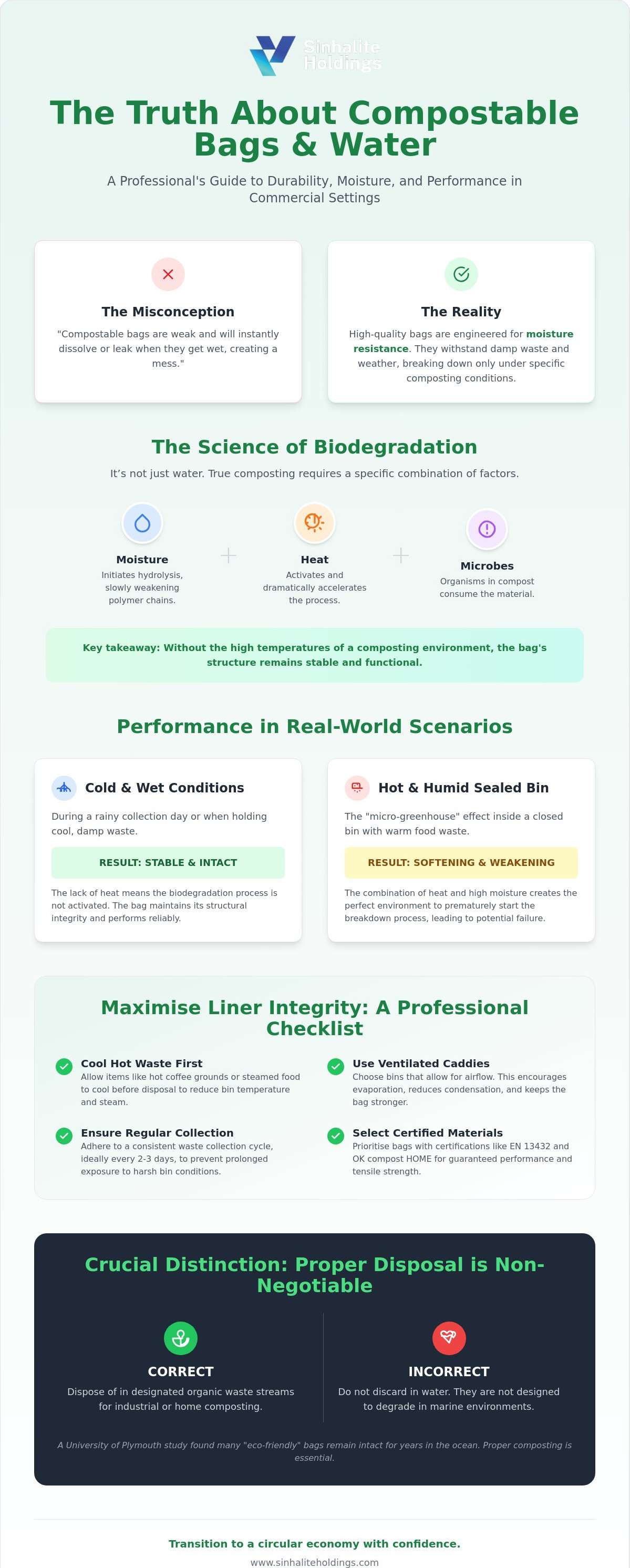
A common concern for many organisations is that switching to biodegradable and compostable bags will lead to a literal meltdown during a rainy collection day. This is a misconception. Standard compostable liners are engineered for moisture resistance, meaning they don't dissolve on contact like polyvinyl alcohol (PVA). While a PVA bag is designed to vanish in seconds, a high-quality compostable bag maintains its integrity even when exposed to damp food waste or typical UK weather. It's built to be tough until it reaches its final destination.
When asking do compostable bags work in water, it's vital to distinguish between surface wetting and saturation. A bag can get wet without failing. However, prolonged submersion or extreme saturation provides the catalyst for hydrolysis. This chemical reaction occurs when water molecules eventually penetrate the polymer chains, weakening them over time. This is a deliberate feature of the life cycle, not a design flaw. It ensures the bag eventually returns to the earth without leaving microplastics behind.
To better understand how these materials react in real-world composting environments, watch this helpful video:
Hydro-Biodegradation vs. Simple Solubility
Hydro-biodegradation is a sophisticated process where moisture initiates microbial breakdown without causing immediate dissolution of the material. Temperature acts as the missing ingredient here. In cold water or rain, the molecular structure remains stable; it's only in the heat of a composting environment that the breakdown accelerates effectively. This ensures that your compostable garbage bags don't melt in the rain during transport.
Biopolymers and Water Integrity
Modern solutions often utilise advanced biopolymers like Mater-Bi and PBAT to create a breathable yet leak-proof barrier. These materials allow water vapour to escape, which reduces the buildup of condensation and unpleasant odours inside a caddy. This breathability keeps the contents drier and the bag stronger. By managing moisture levels efficiently, these materials ensure that compostable caddy bags remain reliable throughout the entire waste collection cycle.
Performance in Wet Conditions: Managing Food Waste and Moisture
Performance in high-use commercial kitchens or council waste hubs relies on understanding environmental triggers. While we've established that these liners don't dissolve, the combination of high heat and high moisture in a closed bin is the primary cause of bag failure. When organisations ask do compostable bags work in water, they are often observing the softening effect of a "micro-greenhouse" environment. This doesn't mean the material is failing; it means the biological process is being prematurely invited by the conditions of the bin.
You might notice moisture on the exterior of a liner without a physical puncture. This "wicking" effect is actually a sign of high-quality breathability. By allowing water vapour to escape, the bag keeps the contents drier and reduces the anaerobic bacteria that cause foul odours. Learning how to keep a food waste bin from smelling often starts with choosing a bag that manages moisture through this precise vapour exchange. It's vital to remember that while they handle moisture well, they aren't designed for marine disposal. A prominent study on bag degradation in water by the University of Plymouth highlighted that many eco-friendly bags remain intact in marine environments for years. This underscores the need for proper organic waste streams rather than relying on water-based breakdown.
To ensure your compostable liners remain intact during collection cycles, follow this professional checklist:
- Allow hot food waste, like coffee grounds or steamed vegetables, to cool before disposal.
- Use ventilated caddies to encourage evaporation and prevent heat buildup.
- Line the bottom of the bin with a small amount of paper or cardboard to absorb excess liquids.
- Empty bins every 3 to 4 days to stay within the peak performance window of the bioplastic.
Preventing Splitting and Leaks in Caddy Liners
Splitting usually occurs when steam from hot waste softens the biopolymer, causing it to stretch and eventually tear under weight. Transitioning to a ventilated caddy system allows this moisture to evaporate, significantly extending the life of the bag. If you are experiencing frequent failures, it may be helpful to investigate why are my compostable bags splitting to identify if the issue is heat-related or due to bin adhesion. To avoid these common pitfalls, you can explore our range of high-tensile compostable garbage bags designed for commercial durability.
Storage Requirements for Unused Bags
The integrity of your bags begins long before they reach the bin. Bulk stock must be stored in cool, dry conditions away from direct sunlight. High humidity in a warehouse can effectively "age" the bags by initiating the hydrolysis process before they are even deployed. By maintaining a stable environment, you ensure that every liner performs with the strength and reliability your operations demand.
Choosing High-Performance Compostable Solutions for UK Organisations
Sinhalite Holdings stands as a dedicated partner for organisations seeking high-tensile, moisture-stable solutions that don't compromise on performance. Selecting the right product requires a deep understanding of certifications and material science. An OK compost HOME certification explained provides the necessary assurance that a material will break down in lower-temperature environments, which is a hallmark of superior biopolymer engineering. This certification ensures that the products you procure are as responsible as they are reliable.
The engineering behind these products involves precise micron-level thickness tailored for commercial use. Compostable garbage bags and shopping bags are designed with specific weight and moisture loads in mind. A higher micron count provides a more robust barrier against saturation. When procurement teams ask do compostable bags work in water, they are really asking about the duration of resistance. Thick, high-quality liners provide the structural security needed for heavy, wet commercial waste without the environmental impact of traditional plastics.
Industrial vs. Home Composting Performance
Industrial-grade bags often feature a thicker construction, making them more resistant to moisture in the short term. This durability is reflected in the BS EN 13432 standard, which is the benchmark for industrial compostability in the UK. This standard ensures that the material will break down within a 12-week window in a controlled facility. It remains water-resistant enough to handle the rigours of collection and transport, proving that do compostable bags work in water is a question of timing and environment rather than a lack of strength.
The Future of Sustainable Packaging
Innovation continues to expand the range of available solutions for commercial entities. Products like compostable household Clingfilm are now essential for managing wet food storage effectively, offering a breathable alternative to traditional films. Transitioning to sustainable packaging is a strategic move for UK businesses in 2026. It aligns operations with the circular economy while meeting the growing demand for environmental integrity. Choosing high-quality compostable alternatives is a practical, scalable way to lead your organisation toward a cleaner, greener future.
Leading the Transition to Professional Compostable Standards
The journey toward a circular economy begins with a clear understanding of the materials we use daily. We've established that while the answer to do compostable bags work in water is rooted in their moisture-stable design, their true purpose is found in managed organic waste cycles. These liners are engineered to be resilient. They provide the necessary strength for commercial waste collection without the environmental permanence of traditional plastics. By focusing on breathability and heat management, your organisation can eliminate leaks and maintain operational efficiency.
As a specialist UK supplier, Sinhalite Holdings provides high-tensile bioplastics that set a new benchmark for durability. Our products are certified OK compost HOME and TUV Austria, ensuring they meet rigorous global standards for performance and ecological safety. With puncture-resistant designs specifically created for heavy commercial waste, you don't have to choose between utility and responsibility. It's time to align your operations with a cleaner, more sustainable future.
Explore our range of high-performance compostable solutions for your business and take the next step in reducing your environmental footprint with confidence.
Frequently Asked Questions
Will compostable bags leak if I put liquids in them?
High-quality compostable caddy bags are designed to be leak-proof for organic waste, though they aren't intended for holding bulk liquids. The biopolymer creates a secure barrier that keeps fluids contained while allowing water vapour to escape. This breathability is a deliberate feature that reduces odours, but it means the bag may feel slightly damp on the outside without a physical leak actually occurring.
Can compostable bags be used in the rain?
You can certainly use these bags in the rain during transport or collection cycles without fear of them melting. While many procurement teams ask do compostable bags work in water or wet weather, these products are engineered to maintain their tensile strength during exposure to typical UK rainfall. They won't dissolve on contact; they require the specific heat and microbial activity of a composting environment to begin their breakdown process.
Do compostable bags dissolve in the ocean or rivers?
Compostable bags don't dissolve in oceans or rivers. These materials require the high temperatures and specific microbial populations found in industrial or home composting facilities to degrade. If they enter waterways, they can persist for long periods, which is why it's essential to ensure all compostable garbage bags are disposed of through correct organic waste streams to support a circular economy.
How long can a compostable bag hold wet food waste before breaking?
Most compostable liners effectively hold wet food waste for three to four days before the material begins to soften significantly. If the waste is particularly hot or stored in a completely sealed bin, this window may shorten due to accelerated hydrolysis. For the best results in commercial settings, we recommend emptying bins twice a week to ensure the liners remain easy to handle and puncture-resistant.


