
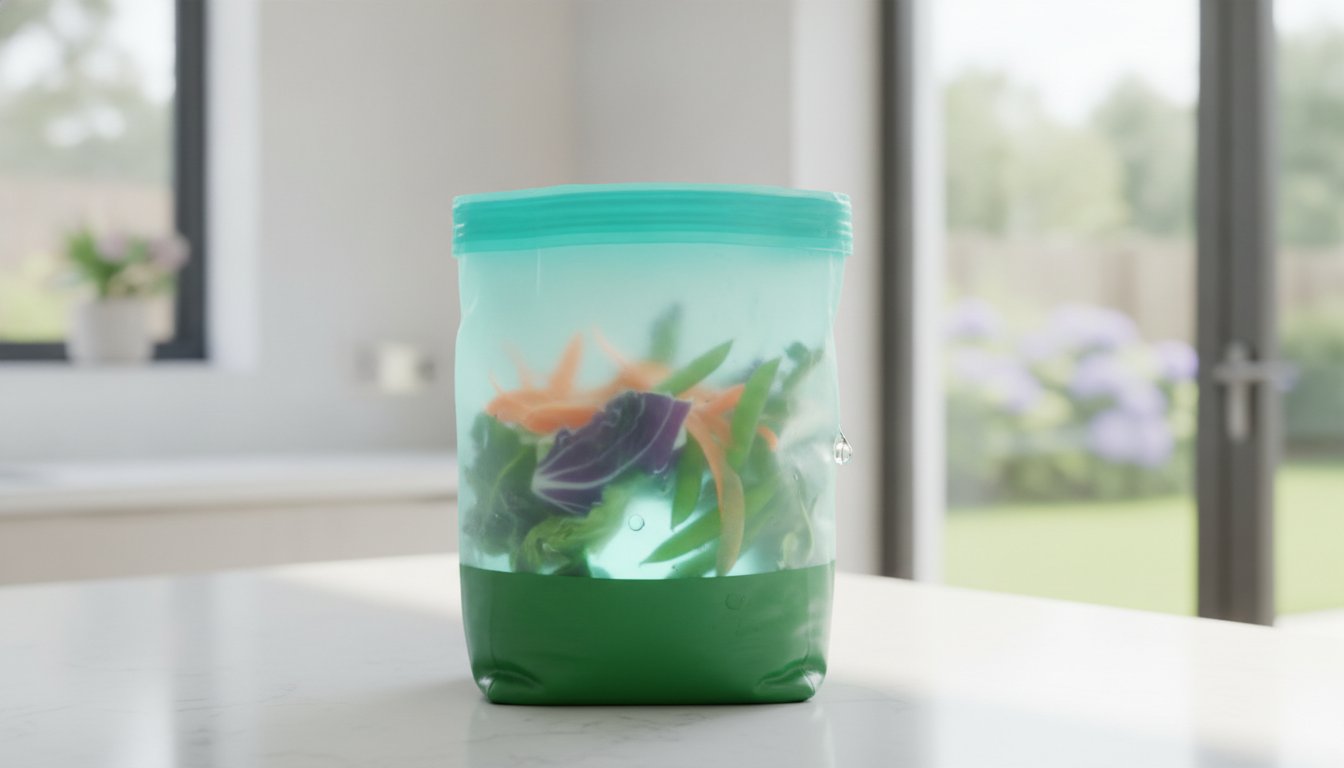
Is the damp residue at the bottom of your food waste bin an inevitable byproduct of environmental stewardship, or is it simply a sign of a failing system? Many UK organisations and households now ask, do compostable caddy bags leak, as they adapt to the Simpler Recycling legislation that came into full effect in 2026. While the presence of moisture can be frustrating, it often results from a misunderstanding of how breathable, plant-based materials interact with organic waste. Transitioning to responsible practices shouldn't mean compromising on the cleanliness or efficiency of your operations.
We recognize that a split liner or an unpleasant cleanup can discourage even the most dedicated commitment to sustainability. You need a food waste system that is both ecologically visionary and practically dependable. This guide explains the science behind liner permeability and provides professional techniques to maintain a hygienic, dry caddy. We'll preview the essential EN 13432 standards, moisture management strategies, and the performance-oriented innovations that allow compostable solutions to match the strength of traditional alternatives.
Key Takeaways
- Distinguish between "sweating" and structural failure to understand the natural breathability of plant-based resins.
- Discover if do compostable caddy bags leak or simply require better moisture management through strategies like using absorbent base layers.
- Learn how cooling hot organic waste before disposal prevents premature degradation and maintains the durability of your liners.
- Verify product reliability by identifying the BS EN 13432 certification, which ensures adherence to rigorous UK industrial composting standards.
- Adopt puncture-resistant, performance-grade solutions to create a mess-free food waste system that supports a sustainable circular economy.
Do Compostable Caddy Bags Leak? The Science of Bioplastic Permeability
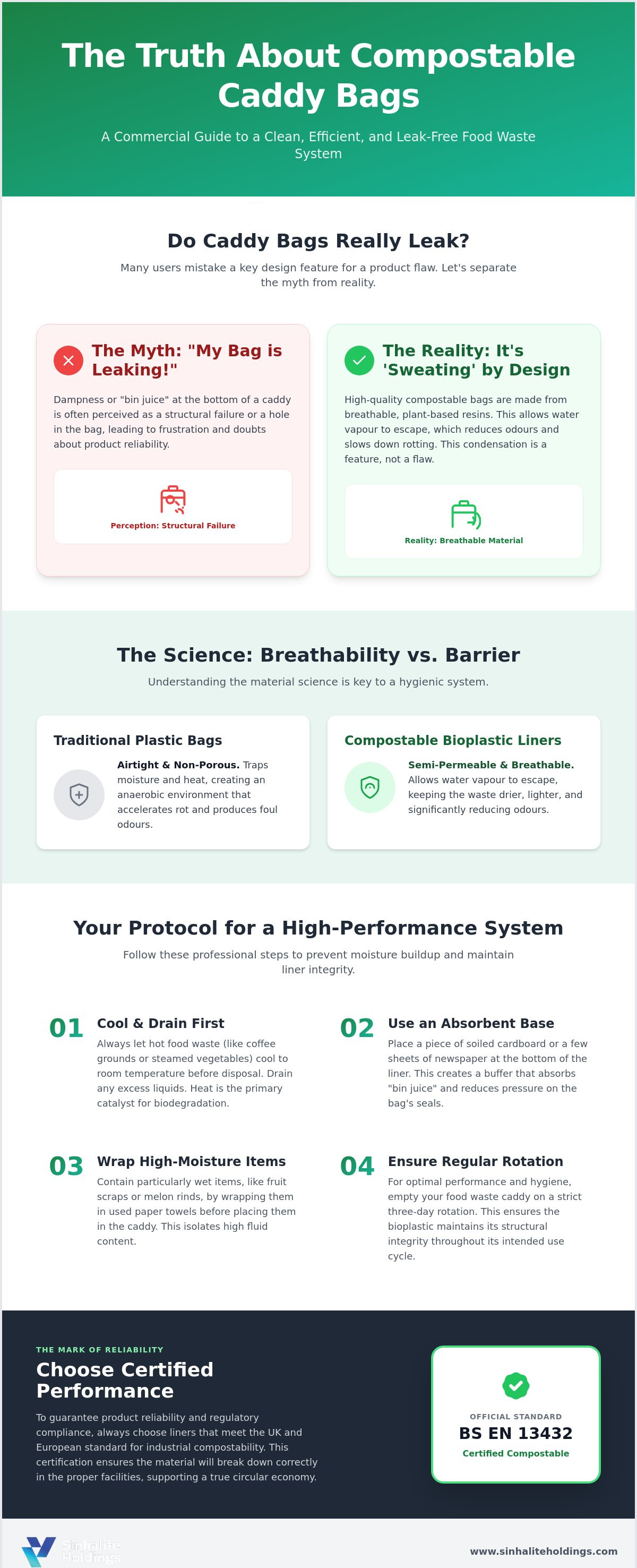
The question of whether do compostable caddy bags leak is often rooted in a misunderstanding of how these materials function at a molecular level. Unlike traditional single-use plastics, which are engineered to be entirely airtight and non-porous, high-quality compostable liners are designed with a specific degree of semi-permeability. This characteristic is fundamental to the Science of Bioplastics; using plant-based resins like cornstarch allows the bag to "breathe." This airflow is a deliberate hygiene feature, as it prevents the buildup of anaerobic bacteria that cause the pungent, foul odours often associated with food waste.
While traditional plastic traps moisture and accelerates rot, compostable materials facilitate the escape of water vapour. This process helps keep the waste drier and more stable during the collection cycle. However, this very benefit can lead to the perception of a product failure if the user isn't prepared for the resulting condensation. High-performance liners prioritising airflow are essential for maintaining a professional, odour-free environment.
To better understand how these materials interact with organic waste, watch this helpful video:
Breathability vs. Structural Failure
Many users mistake "sweating" for a structural failure, often asking do compostable caddy bags leak when they encounter moisture on the bin's exterior. When moisture appears on the outside of the bag, it's usually condensed steam or water vapour that has passed through the semi-permeable membrane. This isn't a hole or a defect; rather, it's evidence of the bag working to manage the internal environment. Managing this breathability is a core component of how to keep a food waste bin from smelling, as it reduces the liquid stagnation that leads to "bin juice."
The Role of Moisture and Heat
The integrity of a compostable liner is most challenged by heat and acidity. When hot organic scraps, such as coffee grounds or steamed vegetables, are placed directly into the caddy, they create a humid "micro-climate" inside the bag. This elevated temperature serves as a catalyst that begins to weaken the bioplastic bonds prematurely. Similarly, liquid-heavy waste like citrus peels or fruit scraps increases the hydraulic pressure at the base of the bag. Over time, the combination of high acidity and moisture can accelerate the biodegradation process before the bag even reaches an industrial composting facility.
How to Prevent Leaks and Manage Moisture in Your Caddy
Mastering moisture management is the most effective way to address the common concern: do compostable caddy bags leak? A dry and hygienic food waste system is not the result of luck. It is the outcome of a methodical approach to organic waste. Implementing a base-layer strategy is a professional standard for any sustainable kitchen. By placing a piece of soiled cardboard or a few sheets of newspaper at the bottom of the liner, you create a dedicated absorption zone. This buffer prevents "bin juice" from accumulating and reduces the hydraulic pressure on the bag's seals.
Heat is the primary catalyst for the biodegradation process. Allowing hot organic waste, such as coffee grounds or steamed vegetables, to reach room temperature before disposal is essential. If you place steaming scraps directly into the bag, you inadvertently trigger the material to begin breaking down. Using a caddy with a ventilated lid further supports this by allowing water vapour to escape rather than condensing into liquid. We recommend a strict three-day rotation for emptying to ensure the bioplastic maintains its structural integrity throughout its use.
Daily Management Protocol
A consistent routine ensures that your transition to responsible practices remains efficient. Follow these steps to keep your food waste contained:
- Cool and Drain: Ensure all scraps are at room temperature and excess liquids are drained before they enter the bag.
- Wrap High-Moisture Items: Wrap items like melon skins or citrus peels in used paper to contain their high fluid content.
- Layer with Carbon: Add dry paper or cardboard between layers of wet waste to maintain a balanced internal environment.
- Seal Loosely: Avoid compressing the waste; airflow prevents the anaerobic conditions that cause foul smells.
Optimising Your Caddy Environment
The physical placement of your caddy impacts liner performance. In many UK kitchens, placing a bin on a heated floor or in direct sunlight through a window creates a high-heat environment that accelerates liner degradation. Additionally, cleaning your caddy weekly with a vinegar solution is a practical necessity. Vinegar removes acidic residues that might otherwise begin to "pre-digest" the next liner. By choosing high-performance compostable caddy bags and maintaining these environmental controls, organisations can confidently support a circular economy without compromising on kitchen hygiene.
Choosing Performance-Grade Liners: Puncture Resistance and UK Standards
While effective moisture management is a vital operational step, the physical quality of the liner serves as the final safeguard for your food waste system. When organisations ask, do compostable caddy bags leak, the answer often involves the material's thickness and its adherence to specific regulatory benchmarks. In the United Kingdom, the BS EN 13432 certification is the essential standard. This ensures that the bag will disintegrate by at least 90% into fragments smaller than 2mm within 12 weeks in an industrial composting environment. Adhering to this standard guarantees that your waste management practices align with national sustainability requirements.
The weight-bearing capacity of a liner is directly dictated by its micron thickness (μm). While budget supermarket options are often thin and prone to failure, performance-grade liners feature a higher micron count designed to withstand the hydraulic pressure of heavy organic waste. For those managing smaller domestic systems or community allotments, it is also necessary to verify the OK compost HOME certification explained status. This ensures the material will break down at the lower temperatures found in garden compost heaps rather than requiring industrial heat.
What Defines a High-Performance Compostable Bag?
Premium liners utilize advanced bioplastic blends to achieve a sophisticated balance between environmental degradability and industrial-grade strength. These materials are engineered to resist the stretching and tearing that often leads to "bin juice" spills. This level of durability often prompts the question, do compostable bags contain plastic? High-quality compostable solutions are entirely free from traditional petroleum-based polymers. They rely on renewable plant-based resins that provide the necessary tensile strength without the ecological cost of microplastic pollution.
The 2026 Standard for Sustainable UK Waste Management
The implementation of the UK's Simpler Recycling legislation in 2026 has made reliable food waste containment a priority for businesses and councils alike. Choosing a performance-grade liner is a strategic investment in your organisation's ESG goals and operational hygiene. By opting for certified, puncture-resistant materials, you ensure that the concern of do compostable caddy bags leak is addressed through superior engineering. This commitment supports the UK’s transition to a circular economy, ensuring that organic matter is successfully diverted from landfills and transformed into valuable compost.
Securing the Future of UK Food Waste Management
A transition toward systemic environmental responsibility requires tools that perform as reliably as the traditional materials they replace. We've explored how the common concern, do compostable caddy bags leak, is frequently addressed through a combination of scientific understanding and practical moisture management. By distinguishing between natural breathability and structural failure, you can maintain a hygienic kitchen environment that supports the UK's 2026 recycling mandates.
Sinhalite Holdings remains a dedicated ally. We provide the industrial-grade durability required for large organisations and households alike. Our solutions utilize specialized plant-based resins that are certified to both BS EN 13432 and OK compost HOME standards. This ensures your waste management system is as robust as it is responsible. Explore our range of high-performance, puncture-resistant compostable caddy bags to find a scalable solution for your waste reduction goals. Together, we can build a future where sustainable practices are the standard for operational excellence.
Frequently Asked Questions
Do compostable caddy bags leak more than traditional plastic bags?
High-performance compostable liners don't leak more than traditional plastic when they are correctly certified and managed. While traditional plastic is airtight, compostable resins are designed to be breathable to prevent the foul anaerobic odours associated with rot. This breathability can sometimes be mistaken for a leak. If you choose a liner with the BS EN 13432 mark, you're selecting a product engineered for industrial-level durability and reliable containment.
Why is there always liquid at the bottom of my food waste bin?
The liquid you find is often water vapour that has condensed on the cool surface of the bin after passing through the breathable bag wall. This "sweating" is a sign that the liner is facilitating airflow to keep waste stable. However, if the liquid is dark or foul-smelling, it may indicate that do compostable caddy bags leak due to acidic waste or excessive heat accelerating the breakdown process.
How long can I leave food in a compostable bag before it splits?
We recommend emptying your food waste caddy every three days to maintain the structural integrity of the bioplastic. While many bags can last longer, the high moisture and acidity levels in organic waste begin to weaken plant-based bonds after 72 hours. Regular rotation ensures that your system remains hygienic and prevents the material from reaching a point of structural failure during removal for collection.
Are thicker compostable bags better at preventing leaks?
Increased micron thickness directly improves the puncture resistance and weight-bearing capacity of a compostable liner. Thicker bags are less likely to tear when confronted with sharp bones or heavy, wet coffee grounds. When evaluating whether do compostable caddy bags leak, prioritising a higher-gauge performance liner is a practical step for organisations dealing with high volumes of heavy or sharp commercial waste.


