
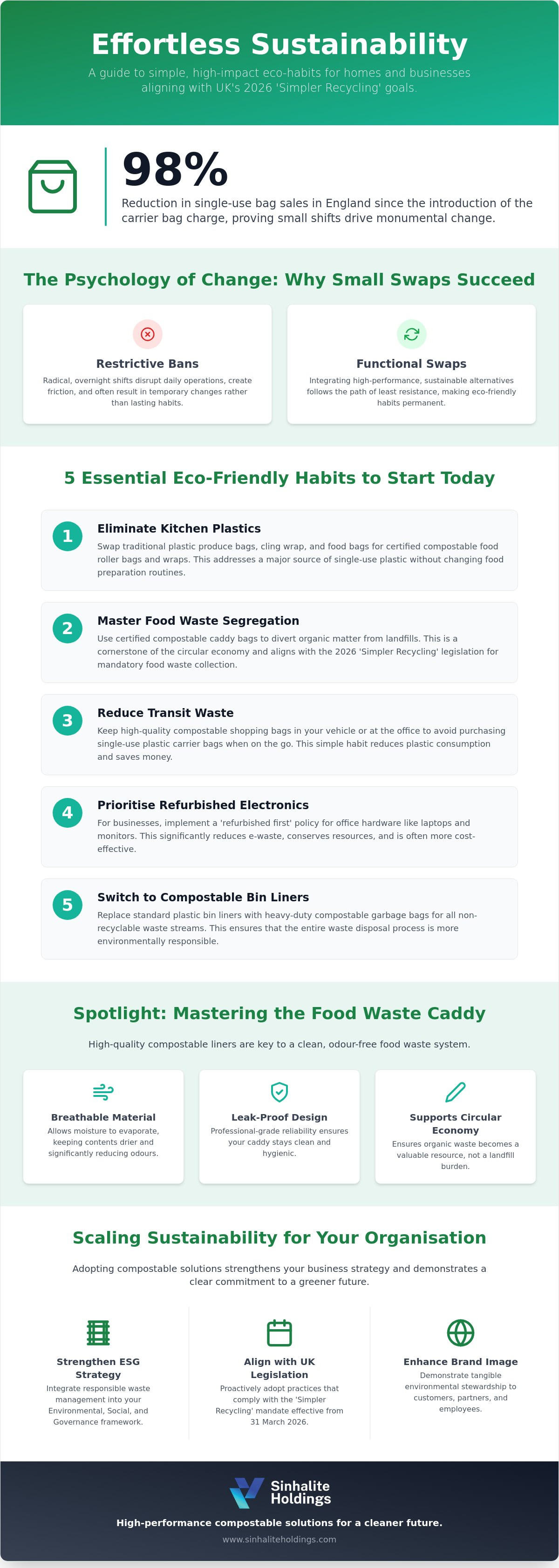
Since the introduction of the single-use carrier bag charge, retailers in England have seen a staggering 98% reduction in bag sales, proving that small, mandated shifts drive monumental change. You likely feel the pressure of constant climate headlines or find yourself confused by the technical differences between biodegradable and compostable materials. It's a common concern that eco-friendly living is too expensive for the average household or business, but sustainability doesn't have to be a financial burden or a logistical headache.
We believe that meaningful environmental stewardship begins with accessible, high performance solutions. With the 31 March 2026 'Simpler Recycling' legislation now standardising waste collection across England, there has never been a better time to refine your routines. This guide highlights easy eco-friendly habits to start right now, offering practical, low effort swaps like compostable food waste bags and plastic free cling wrap. We will explore how these intentional choices support a circular economy, helping you identify reliable UK suppliers and understand the tangible impact of moving away from traditional plastics for a cleaner, more resilient future.
Key Takeaways
- Understand why functional swaps like compostable food roller bags are more effective than restrictive bans for long-term sustainability.
- Discover easy eco-friendly habits to start today that replace single-use kitchen plastics with high-performance compostable alternatives.
- Learn how to master food waste segregation using certified compostable caddy bags to support UK circular economy goals.
- Explore how integrating compostable garbage bags into your operations can strengthen your organisation's ESG strategy and environmental impact.
- Align your operations with the latest UK recycling legislation by adopting scalable, responsible business practices that move beyond individual action.
The Psychology of Small Swaps: Why Easy Eco-Friendly Habits Stick
True sustainability isn't about radical, overnight shifts that disrupt your daily operations; it's about establishing repeatable actions that consistently reduce resource consumption. When searching for easy eco-friendly habits to start, the most effective approach involves identifying friction points in your current routines. By integrating sustainable living principles into your existing workflow, you ensure these changes become permanent rather than temporary experiments.
To better understand how these simple shifts can transform your environmental footprint, watch this helpful overview:
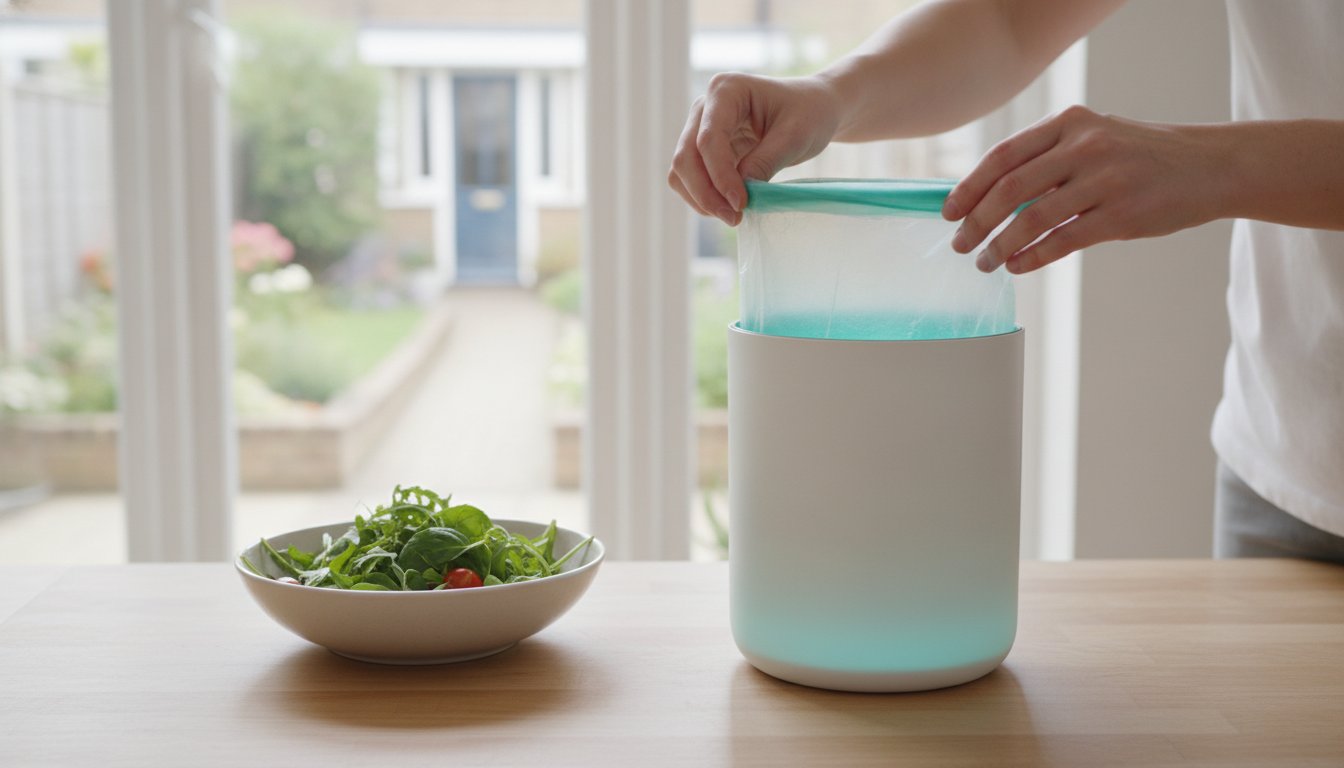
The Path of Least Resistance is a psychological concept that explains why functional swaps frequently outperform total bans. For example, switching to compostable clingfilm allows your kitchen staff or household to maintain their food preparation routines while eliminating plastic waste entirely. This specific swap addresses the "hidden" plastic problem without requiring new equipment or complex training. These small, individual choices contribute to the UK's broader circular economy goals, turning waste into a valuable resource instead of a landfill burden.
Identifying High-Impact, Low-Effort Changes
Focusing on high-impact areas often leads us to the kitchen and bathroom, where single-use plastics are most prevalent. Transitioning to certified compostable alternatives ensures that products like food roller bags or bin liners are disposed of responsibly. In 2026, the "compost-first" mindset is becoming the standard for British households and businesses alike. This shift is driven by the "Simpler Recycling" legislation, which mandates consistent food waste collection across England from 31 March 2026. By adopting these easy eco-friendly habits to start, you align your operations with national policy while demonstrating a clear commitment to environmental stewardship.
5 Essential Eco-Friendly Habits to Start Today
Adopting sustainable practices shouldn't feel like an administrative burden or a domestic chore. By identifying the specific tools required for success, households and organisations can implement easy eco-friendly habits to start without sacrificing efficiency or hygiene. Recent data on British attitudes towards sustainability indicates a strong appetite for environmental action, provided the solutions are practical and scalable. Success lies in replacing high-waste items with high-performance, compostable alternatives that fit seamlessly into existing workflows.
Consider these five foundational habits to reduce your footprint:
- Eliminate kitchen plastics: Swap traditional plastic produce bags for compostable food roller bags and wraps.
- Master food waste segregation: Use certified compostable caddy bags to ensure organic matter is diverted from landfills.
- Reduce transit waste: Keep compostable shopping bags in your vehicle or office to avoid the 10p to 25p single-use charges.
- Prioritise refurbished electronics: Implement a 'refurbished first' policy for office hardware to mitigate the growing e-waste crisis.
- Switch to compostable liners: Replace standard plastic bin liners with heavy-duty compostable garbage bags for all non-recyclable waste.
Mastering the Food Waste Caddy
Effective food waste management is a cornerstone of the circular economy. Many users worry about hygiene, but learning how to keep a food waste bin from smelling is simple with the right equipment. Using breathable, leak-proof compostable liners allows moisture to evaporate; this keeps the contents drier and significantly reduces odours. Choosing high-quality compostable packaging solutions ensures that your environmental goals are met with professional-grade reliability.
The 'Clingfilm Challenge': A Simple Plastic-Free Swap
Traditional PVC cling wrap is a significant contributor to plastic pollution because it is virtually impossible to recycle. These thin films often clog machinery and contaminate other recycling streams. Switching to plant-based, breathable alternatives is one of the most effective easy eco-friendly habits to start. These compostable wraps offer superior food preservation by allowing gases to escape, preventing the 'sweating' that leads to premature spoilage. It is a functional upgrade that protects both your produce and the planet.
Scaling Sustainability: Habits for UK Businesses and Organisations
For UK organisations, the transition to sustainable operations is no longer optional; it is a strategic necessity. With the "Simpler Recycling" legislation requiring all businesses to collect food waste and dry recyclables by 31 March 2027, forward-thinking leaders are identifying easy eco-friendly habits to start within their own facilities. Moving beyond individual actions, institutional change involves replacing traditional plastic liners with heavy-duty compostable garbage bags across all departments. These shifts ensure that your organisation remains ahead of the regulatory curve while supporting national circular economy targets.
Integrating these habits into your Environmental, Social, and Governance (ESG) strategy demonstrates a clear commitment to environmental stewardship. Proactive plastic reduction also helps prepare for regional shifts, such as the expected ban on single-use plastic carrier bags in Wales during 2026. There are significant reputational and financial advantages to switching business to sustainable packaging, as modern stakeholders increasingly favour partners that take measurable steps toward waste reduction.
Operational Swaps for Commercial Kitchens and Offices
Commercial kitchens and offices can achieve immediate impact by replacing single-use plastic aprons and gloves with high-performance compostable versions. Implementing bulk waste management with heavy-duty compostable sacks ensures that even high-volume operations remain compliant with environmental standards. These swaps are practical and scalable; they maintain hygiene without the long-term ecological cost of traditional polymers. Adopting these easy eco-friendly habits to start allows your team to maintain efficiency while significantly lowering your operational plastic footprint.
The ROI of Corporate Eco-Habits
The return on investment for corporate eco-habits extends beyond simple compliance. Reducing plastic waste often lowers disposal costs, especially as "Modulated Fees" under the Extended Producer Responsibility (EPR) scheme begin to penalise less recyclable packaging. Positioning your organisation as a leader in the UK's green transition fosters deeper brand loyalty among environmentally conscious clients. It's a pragmatic approach that aligns ethical responsibility with commercial growth, ensuring your business remains resilient in an increasingly regulated market.
Leading the Transition to a Circular Economy
Transitioning to sustainable operations is a logical progression toward greater efficiency and environmental responsibility. We've explored how small-scale changes, such as adopting compostable clingfilm, create a foundation for broader institutional shifts. For businesses and councils, scaling these efforts through heavy-duty compostable garbage bags ensures compliance with 2026 UK waste regulations while significantly reducing your ecological footprint. These are practical, easy eco-friendly habits to start that deliver immediate results without disrupting your daily productivity.
It's a pragmatic approach that doesn't just protect the planet; it strengthens your brand's integrity. As a specialist provider of OK compost HOME certified solutions, Sinhalite Holdings offers the high-performance alternatives needed to replace single-use plastics permanently. Our UK-based distribution network provides the reliability and strength required for commercial-grade waste management. Explore our range of certified compostable household essentials today to align your organisation with modern ethical standards. The path to a cleaner, greener future is built on these consistent, responsible choices.
Frequently Asked Questions
What is the easiest eco-friendly habit for a beginner to start with?
The most effective way to adopt easy eco-friendly habits to start is to focus on functional swaps that don't disrupt your daily routine. Replacing traditional plastic produce bags with compostable food roller bags or switching to compostable cling wrap are ideal entry points. These choices eliminate plastic waste at the source while maintaining the convenience you expect. It's about seamless integration rather than total sacrifice.
Are compostable bags better than reusable plastic bags for the environment?
Certified compostable bags are superior for waste management because they support a circular economy. While reusable plastic bags eventually degrade into harmful microplastics, compostable options transform into nutrient-rich soil. This is particularly vital for food waste collection, where plastic contamination often ruins entire recycling batches. Choosing compostable garbage bags ensures that your waste disposal practices align with high environmental standards.
How do I know if an eco-friendly product is actually compostable in the UK?
To verify a product's credentials, you should look for recognised certification marks such as "OK compost HOME" or the "Seedling" logo. These indicate the item meets the EN 13432 standard for compostability in the UK. This ensures the material will break down safely into organic matter without leaving behind synthetic fragments or toxic residues. Relying on these verified standards prevents greenwashing and guarantees your purchase supports genuine sustainability.
Can I use compostable caddy liners in my council food waste bin in 2026?
Yes, the 2026 Simpler Recycling legislation facilitates the use of certified compostable caddy liners across England. From 31 March 2026, all local councils are required to collect food waste from households, and most prefer the use of compostable liners to maintain hygiene. These liners are designed to be processed alongside organic waste, making them a practical component of a modern, efficient waste management system.
Is it more expensive to start eco-friendly habits at home?
Adopting easy eco-friendly habits to start is often more cost-effective than it appears when you consider the long-term savings. While high-performance compostable alternatives might have a slightly different price point, they help you avoid the 10p to 25p charges for single-use plastic bags. Additionally, better food preservation using breathable wraps reduces expensive food waste, making your household or business more financially resilient.
What is the difference between biodegradable and compostable habits?
Biodegradable refers to any material that eventually breaks down, but the term lacks a specific timeframe or safety guarantee. Compostable habits involve using materials that are strictly tested to decompose into organic matter within a set period. This distinction is crucial for environmental stewardship; compostable products ensure that your waste contributes to soil health rather than simply fragmenting into smaller, persistent pieces in the environment.


