
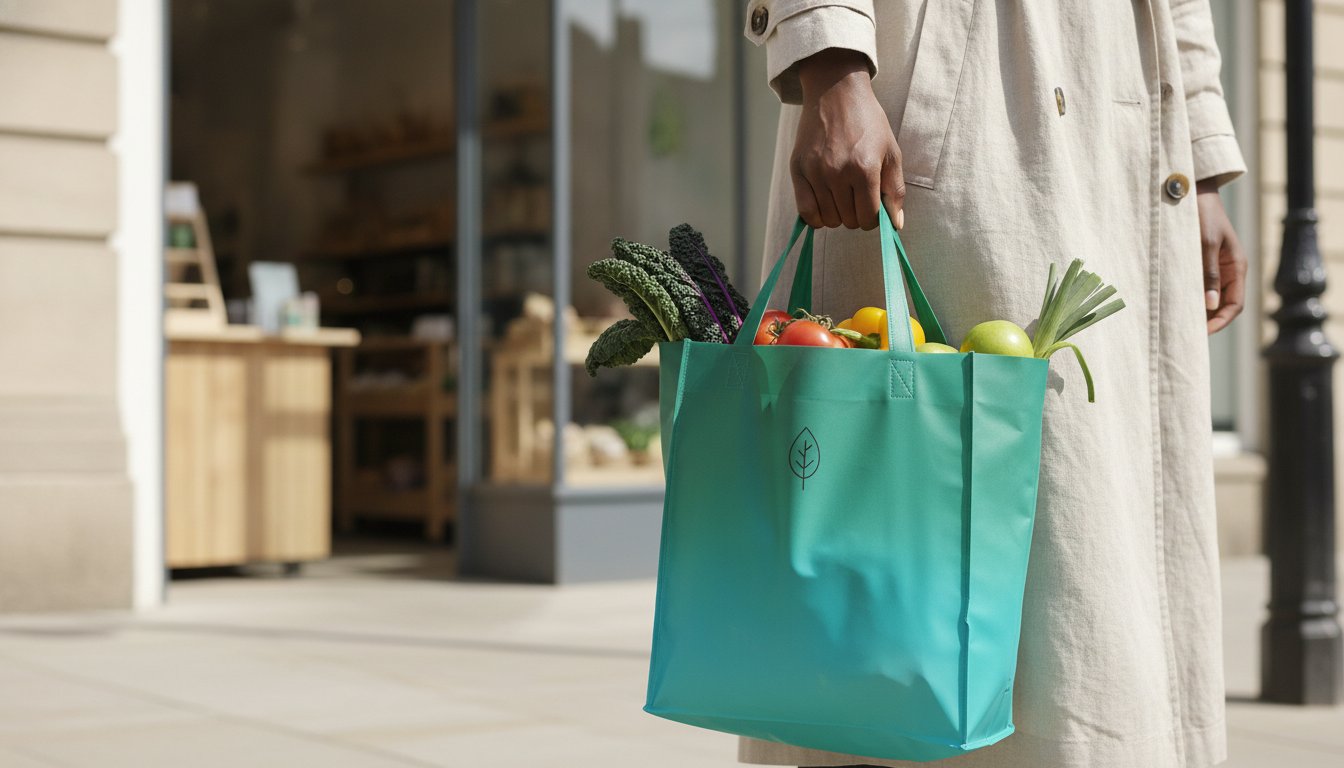
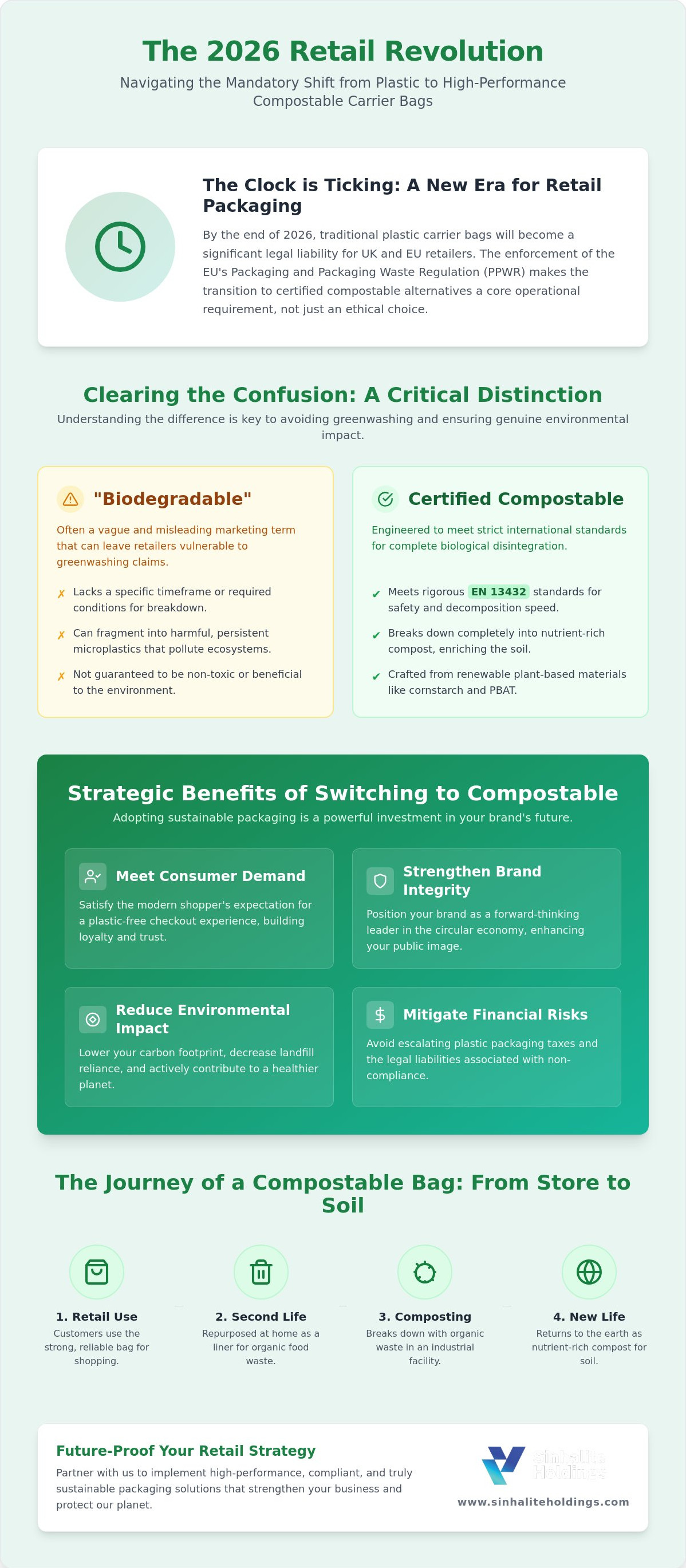
By the end of 2026, the traditional plastic carrier bag won't just be unpopular; it will be a significant legal liability for retailers. As the EU's Packaging and Packaging Waste Regulation (PPWR) becomes enforceable this August, the transition to certified compostable carrier bags for retail has moved from a visionary goal to a core operational requirement. You've likely felt the pressure to adapt while worrying if eco-friendly alternatives can truly handle the weight of a heavy shop without splitting. It's a common concern, especially when the distinction between "biodegradable" and "compostable" remains so frequently misunderstood in the marketplace.
We believe that responsible innovation should never come at the cost of utility. This guide will show you how to identify high-performance SKUs that meet the rigorous EN 13432 standards, ensuring your brand remains compliant with the 2026 global packaging shifts. We'll explore the technical durability of modern bio-polymers and provide a clear roadmap for integrating these solutions into a seamless waste management strategy. By the end, you'll have the tools to meet consumer demands for sustainability while strengthening your brand's reputation as a leader in the circular economy.
Key Takeaways
- Understand the fundamental shift towards plant-based materials and how they meet the rigorous expectations of the 2026 consumer for plastic-free checkout experiences.
- Learn how to identify and select high-performance compostable carrier bags for retail that maintain industrial-grade strength across various store departments.
- Discover the strategic ROI of sustainable packaging, balancing unit costs with long-term brand integrity and the mitigation of plastic packaging taxes.
- Explore the practical benefits of a circular waste strategy by encouraging customers to repurpose retail carrier bags as compostable liners for organic waste.
The Evolution of Retail Packaging: Why Compostable Carrier Bags Matter in 2026
Retail packaging is undergoing a profound transformation. We're moving away from the era of extraction toward a future of regeneration. True compostable carrier bags for retail are crafted from renewable, plant-based materials designed to return to the earth as nutrient-rich compost. Unlike traditional plastics, these solutions facilitate a natural lifecycle that enriches the soil rather than polluting it. Understanding the science of compostable materials is essential for any business aiming to align with this systemic shift.
By 2026, the UK retail environment has reached a tipping point where consumers expect a plastic-free checkout experience as a standard. This demand isn't just about optics; it's about active participation in a circular economy. When businesses choose compostable shopping bags, they help reduce landfill reliance and lower the carbon footprint of their operations. This choice demonstrates a commitment to stewardship that resonates with modern, ethically-minded shoppers.
To better understand how these materials perform in real-world conditions, watch this helpful video:
One of the most critical advancements in recent years is the industry's departure from 'degradable' additives. In the past, many products claimed to be eco-friendly but merely broke down into invisible, harmful microplastics. These fragments persist in our ecosystems for decades. Responsible innovation now focuses on materials that achieve complete biological disintegration, ensuring that no toxic residues remain in our food chain or waterways.
Compostable vs. Biodegradable: Clearing the Confusion
The term "biodegradable" is often a misleading marketing label because it lacks a specific timeframe or required environmental conditions for breakdown, often leaving retailers vulnerable to greenwashing claims. In contrast, certified compostable materials like cornstarch and PBAT are engineered to meet strict international standards for safety and speed of decomposition. If you're curious about the specific makeup of these biopolymers, it's worth exploring do compostable bags contain plastic to understand the difference between plant-derived resins and traditional fossil-fuel polymers.
Selecting High-Performance Compostable Carrier Bags for Your Store
Choosing the right compostable carrier bags for retail requires a careful balance of industrial strength and ecological integrity. It isn't just about replacing plastic; it's about ensuring the customer journey remains seamless and reliable from the point of sale to the home. Modern bio-resins have advanced significantly, offering tensile strength that rivals traditional polymers. Whether you're packing heavy grocery items or delicate apparel, these bags are engineered to resist puncturing and stretching under load, giving your customers the confidence they need during transit.
The format of your packaging should reflect the specific needs of your departments. Vest-style bags provide sturdy handles for bulkier loads, while die-cut options offer a sleek, professional profile for high-end boutiques. In fresh produce sections, food roller bags ensure hygiene and convenience without the environmental cost of single-use plastics. This versatility allows you to maintain operational efficiency while adhering to EPA guidelines on sustainable packaging and other global standards for responsible material use.
Because these materials are biological in nature, shelf-life and storage are practical considerations for your inventory management. We recommend keeping your stock in cool, dry environments away from direct sunlight to prevent premature degradation. When stored correctly, these bags maintain their performance for at least 12 months. Beyond utility, the tactile, matte finish of plant-based materials subtly communicates your commitment to sustainability. This aesthetic reinforces a premium brand image that resonates with the values of the 2026 consumer. If you're ready to upgrade your checkout experience, you can view our range of certified compostable shopping bags to find the perfect fit for your brand.
Certification Standards: OK compost and TUV Austria
Compliance in the UK market hinges on verifiable standards that distinguish genuine solutions from greenwashing. The OK compost INDUSTRIAL mark ensures the bag will break down in commercial facilities, while the OK compost HOME certification guarantees decomposition in domestic heaps. Always verify that your supplier's certifications are current and issued by recognised bodies like TUV Austria. For a deeper dive into these technical requirements, see our OK compost HOME certification explained guide.
Future-Proofing Your Retail Strategy with Sustainable Solutions
Investing in compostable carrier bags for retail is a strategic decision that pays dividends beyond the checkout counter. While initial unit costs may differ from traditional materials, the long-term return on investment is found in strengthened brand loyalty and the mitigation of environmental liabilities. By adopting these solutions now, your business avoids the escalating costs associated with the 2026 Plastic Packaging Tax. It is a proactive step. This choice shields your bottom line while demonstrating a genuine, verifiable commitment to ecological stewardship.
We view these bags as the beginning of a circular journey rather than the end of a transaction. A high-quality retail bag doesn't need to end its life in a general waste bin. Instead, it can be repurposed by the consumer as a caddy liner for domestic food waste. This dual-purpose utility adds tangible value for the customer and simplifies their own organic waste management efforts. It turns a simple carrier into a functional tool for environmental action, effectively reducing the volume of organic matter sent to landfills.
Partnering with a specialist like Sinhalite Holdings ensures that your supply chain remains resilient and fully compliant with evolving UK regulations. We provide the technical expertise needed to navigate complex certifications, ensuring your SKUs meet the highest standards of durability. This collaboration allows you to focus on your core retail operations while we manage the intricacies of sustainable material procurement. Adopting compostable carrier bags for retail allows your organisation to transition from a linear waste model to a truly circular one with confidence.
Operational Integration and Customer Education
Success depends on how effectively your team communicates these changes to the public. Training staff to explain why the bags have a unique texture or how they should be correctly disposed of transforms a standard transaction into an empowering educational moment. You can also integrate these efforts into your POS systems and ESG reporting to quantify your reduction in plastic waste. For a comprehensive look at managing this transition, read our strategic guide on switching business to sustainable packaging.
Leading the Transition to a Plastic-Free Future
The shift toward regenerative retail is a profound commitment to both regulatory excellence and environmental integrity. By choosing high-performance materials, you ensure that your operations remain compliant with the 2026 standards while providing customers with a reliable, durable alternative to single-use plastics. We've seen how these solutions bridge the gap between industrial utility and ecological responsibility, allowing your brand to act as a catalyst for systemic change. It is a transition that rewards foresight with long-term brand loyalty.
Implementing compostable carrier bags for retail is more than a simple product swap; it's a strategic investment in a circular economy where every bag has a second life as a nutrient-rich resource. As a UK-based specialist in compostable technology since 2018, Sinhalite Holdings provides the expertise needed to navigate this evolution with confidence. Our materials carry the trusted OK compost HOME and TUV Austria certifications, guaranteeing that your packaging meets the highest global standards for safety and performance. We're dedicated to ensuring your supply chain is both resilient and responsible.
The path to a cleaner, greener outlook is paved with practical, scalable choices made today. We invite you to explore our full range of certified compostable carrier bags and retail solutions at Sinhalite Holdings. Together, we can build a retail landscape that respects natural processes and secures a sustainable future for everyone.
Frequently Asked Questions
Are compostable carrier bags as strong as traditional plastic bags?
Modern compostable carrier bags for retail are engineered to offer tensile strength and puncture resistance that rival traditional polyethylene. High-quality bio-resins ensure that bags can carry heavy grocery loads or sharp-edged retail items without splitting. This durability is achieved through advanced material science. It ensures that your transition to sustainable packaging doesn't compromise the practical needs of your customers or the safety of their purchases.
How long do compostable retail bags take to break down in a home compost bin?
Certified OK compost HOME bags typically disintegrate within 26 to 52 weeks in a well-maintained domestic compost heap. The exact timeframe depends on environmental factors such as temperature, moisture levels, and microbial activity. While industrial facilities process these materials much faster, home-compostable versions break down naturally into water, CO2, and biomass. They leave no harmful microplastics behind in your garden soil.
Do compostable carrier bags qualify for exemptions under the UK Plastic Packaging Tax?
In the 2026 regulatory landscape, compostable materials are generally subject to the Plastic Packaging Tax unless they meet specific recycled content thresholds. However, their primary value lies in ensuring compliance with the EU's 2026 Packaging and Packaging Waste Regulation and similar global bans. Adopting these solutions helps your business avoid the legal liabilities and reputational risks associated with non-biodegradable plastics while preparing for a fully circular economy.
What is the best way to store bulk orders of compostable bags to prevent degradation?
To maintain the structural integrity of your compostable carrier bags for retail, store them in a cool, dry, and dark environment. Exposure to high humidity or extreme heat can trigger the biological breakdown process prematurely. When kept in optimal conditions, such as a shaded stockroom, these bags maintain a shelf life of approximately 12 months. This allows you to manage bulk inventory without worrying about a loss in performance.


