

Hygiene is the silent engine of a successful circular economy. Without a clean and efficient caddy system, even the most ambitious sustainability initiatives can falter when faced with the daily realities of organic waste management. Implementing effective food caddy hygiene tips is no longer just about kitchen maintenance; it's a vital component of meeting the UK's 2026 mandatory food waste collection requirements. You likely want to support the transition to a greener future, yet the prospect of odours, leaking bags, and pests can make responsible waste separation feel like a burden rather than an advantage.
We believe that professional environmental stewardship should never come at the cost of a clean workspace. This guide provides the strategic insights needed to maintain a pristine, odour-free routine that aligns with your organisation's ESG goals. We will explore how to select high-performance compostable liners and establish a durable, leak-proof system that prevents mess and fruit flies. By the end of this article, you'll have a clear roadmap for managing food waste with the confidence and precision that modern business standards demand.
Key Takeaways
- Understand why maintaining organic waste containers is essential for preventing pathogens and ensuring the long-term success of your sustainability programmes.
- Learn how to implement a reliable cleaning schedule using natural disinfectants to keep your kitchen environment fresh and odour-free.
- Discover essential food caddy hygiene tips, including the importance of emptying containers every two to three days to prevent fermentation.
- Explore the functional advantages of certified compostable caddy bags, which offer superior breathability to reduce moisture and unpleasant smells.
- See how choosing durable, leak-proof composting solutions helps your organisation meet its ESG goals while reducing reliance on single-use plastics.
The Importance of Food Caddy Hygiene in Sustainable Waste Management
Food caddy hygiene is the systematic practice of maintaining organic waste containers to prevent the accumulation of pathogens, unpleasant odours, and pests. When a system is kept in optimal condition, it ensures that the organic matter collected is of the highest quality, which is essential for the success of kerbside collection systems and the broader circular economy. Food caddy hygiene is a critical component of 2026 ESG standards for UK businesses, representing a fundamental commitment to operational excellence and environmental stewardship.
Poor hygiene is the primary reason individuals and businesses abandon food waste programmes. If a system becomes messy or foul-smelling, the collective commitment to sustainability often wavers. By prioritising cleanliness, organisations can ensure their environmental initiatives remain practical, scalable, and respected by those who use them every day.
To better understand the practical side of maintaining these systems, watch this helpful video on caddy care:
Common Hygiene Challenges: Odours and Pests
Unpleasant smells are often the result of anaerobic conditions. When food waste is compressed in a sealed container without airflow, bacteria begin to break down the material without oxygen, releasing foul gases. This process is accelerated by high moisture levels, which also create the perfect environment for the 'Fruit Fly Factor'. These pests are attracted to the fermentation of damp organic matter, making moisture control a central part of your food caddy hygiene tips strategy.
Hygiene as a Barrier to Recycling Participation
The 'yuck factor' is a significant psychological barrier in the workplace. If staff members associate the food waste caddy with leaks or flies, they're far less likely to participate in separation efforts. A clean, well-maintained system removes this friction, turning a potential chore into a seamless part of the daily routine. Maintaining a high standard of hygiene directly improves the green credentials of an organisation, proving that its commitment to the environment is matched by its commitment to a professional and healthy workspace. Effective food caddy hygiene tips allow businesses to transition away from traditional waste methods without sacrificing the comfort of their employees.
Step-by-Step Guide: How to Keep Your Food Waste Caddy Clean
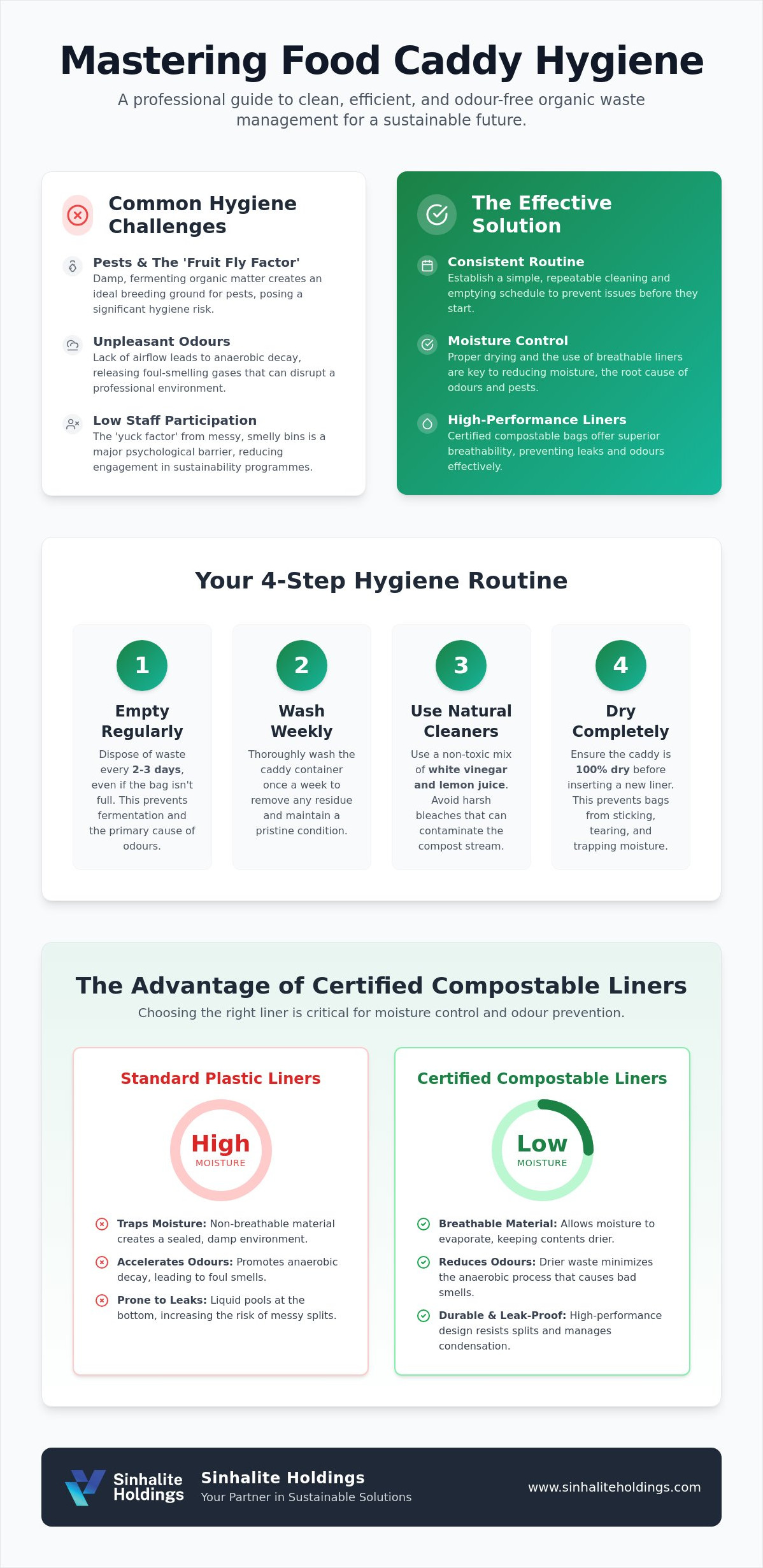
Establishing a consistent maintenance routine is the most effective way to ensure your organic waste system remains an asset rather than a liability. To achieve the best results, empty your kitchen caddy frequently, ideally every two to three days. This simple habit prevents excessive fermentation, which is the primary cause of the foul smells that can disrupt a professional kitchen or office environment. Even if the bag isn't full, regular disposal ensures that natural decomposition stays within a manageable range.
Weekly maintenance is equally vital for long-term success. Wash the container thoroughly using natural disinfectants like white vinegar or bicarbonate of soda. These substances neutralise odours without introducing harsh chemicals into the organic waste stream. It's also essential to ensure the caddy is completely dry before inserting a new liner. Moisture trapped between the bag and the bin wall can cause sticking and tearing, which undermines the durability of your waste routine. By following these food caddy hygiene tips, you can maintain a system that is as efficient as it is clean.
Natural Cleaning Solutions for a Fresh Caddy
We recommend avoiding harsh bleach or aggressive industrial cleaners. These chemicals can leave residues that potentially contaminate the composting process and may damage the structural integrity of your container over time. A simple, non-toxic scrub made from white vinegar and lemon juice provides an effective anti-bacterial solution that keeps your system fresh. For organisations aiming to lead by example, using natural cleaning agents ensures that every step of your waste management remains ecologically responsible.
Managing Moisture and Leakage
Liquid management is often the most significant challenge in food waste collection. Implementing layering techniques, such as placing a small amount of newspaper or cardboard at the bottom of the liner, helps absorb excess liquids from items like fruit scraps or coffee grounds. If you find your bags are difficult to remove, you can read our guide on how to stop compostable liners sticking to the bin for more advanced moisture control.
Strategic placement also plays a role in moisture reduction. Keep the caddy in a cool, shaded area away from direct sunlight to slow down the rate of decomposition. By choosing high-quality compostable caddy bags, you provide your team with the durable, leak-proof tools needed to implement these food caddy hygiene tips effectively while supporting a transition to a circular economy.
The Role of Compostable Caddy Bags in Maintaining Hygiene
While establishing a cleaning routine is essential, the choice of liner often dictates the long-term success of your waste management system. High-quality compostable liners do more than just hold waste; they actively contribute to a fresher environment through superior breathability. Unlike traditional plastic, which traps moisture and accelerates anaerobic decay, certified compostable materials allow moisture to evaporate. This natural ventilation keeps organic waste drier and significantly reduces the pungent odours typically associated with food scraps.
Using bags that carry the OK compost HOME certification ensures that your hygiene practices align with the highest environmental standards. These liners act as a robust barrier against bacteria and pathogens, protecting the internal surfaces of your bin and reducing the need for aggressive scrubbing. By integrating these tools into your food caddy hygiene tips, you create a system that is both sanitary and ecologically sound.
Why Quality Matters: Avoiding the 'Split'
The durability of a liner is a non-negotiable factor in commercial settings. A split bag doesn't just cause a mess; it contaminates the container and disrupts the efficiency of your team. Modern plant-based materials are engineered with advanced puncture resistance to handle heavier, wet organic waste without failing. If you've experienced issues with bag integrity in the past, understanding the science behind these materials can help you stop the split and maintain a seamless waste routine.
Transitioning Your Organisation to Compostable Solutions
Scaling hygiene across a commercial kitchen or a large office block requires reliable, scalable tools. Moving away from single-use plastics is a practical step that demonstrates corporate responsibility while simplifying maintenance. For larger collection points, the use of puncture resistant compostable garbage bags ensures that the hygiene standards established at the caddy level are maintained throughout the entire waste stream. This holistic approach supports the UK's transition to a circular economy, providing a cleaner, greener future for every organisation.
Advancing Toward a Cleaner, Circular Future
Maintaining a high standard of cleanliness in your organic waste system is a practical investment in your organisation's sustainability goals. By adopting consistent emptying schedules and utilising natural cleaning agents, you remove the psychological barriers that often hinder recycling participation. These professional food caddy hygiene tips ensure that your workspace remains fresh while your waste stream remains pure. This approach facilitates a seamless transition to the UK's mandatory food waste collection standards arriving in 2026. Consistent hygiene isn't just about odour control; it's the foundation of a successful environmental strategy.
Success in organic waste management ultimately relies on the quality of the tools you provide for your team. As a specialist in UK compostable solutions, Sinhalite Holdings provides puncture-resistant plant-based materials that protect your environment and your ESG commitments. You can upgrade your waste management with Sinhalite's compostable caddy bags to support the transition to a circular economy with confidence. Implementing these durable solutions demonstrates a clear commitment to innovation and responsible business practices. Taking these proactive steps today creates a more efficient and sustainable future for your organisation and the planet.
Frequently Asked Questions
Why does my food caddy smell even when it is closed?
Odours occur because organic waste undergoes anaerobic decomposition when trapped in an environment with limited airflow. This process releases pungent gases like methane and hydrogen sulphide. Even with a closed lid, these gases can escape through small gaps; it's a common issue with traditional plastic. Using breathable compostable bags helps moisture evaporate, which keeps the waste drier and significantly reduces the intensity of these natural chemical reactions.
How can I prevent fruit flies from gathering around my food waste bin?
Fruit flies are primarily attracted to the fermentation of sugars in damp organic matter. To prevent their presence, you should minimise moisture levels by layering dry cardboard or newspaper at the base of your liner. Ensuring your caddy is kept in a cool, shaded area also slows down the decomposition process. Establishing a reliable routine where you empty the bin every two to three days is the most effective way to disrupt their breeding cycle.
Are compostable caddy liners more hygienic than using no liner at all?
Certified compostable liners are significantly more hygienic than using no liner because they act as a physical barrier against bacteria and pathogens. Without a liner, liquid waste can pool at the bottom of the container, creating a breeding ground for germs that requires aggressive scrubbing to remove. By following professional food caddy hygiene tips and using durable liners, you protect the internal surfaces of your bin and ensure a cleaner, more efficient waste management routine.
How often should I clean my food caddy to maintain hygiene?
You should perform a thorough deep clean of your food caddy at least once a week using natural disinfectants. While emptying the bin every few days prevents the worst odours, it doesn't eliminate the need for a weekly wash with white vinegar or bicarbonate of soda to neutralise residual bacteria. Integrating this schedule into your food caddy hygiene tips ensures that your system remains odour-free and professional. Always allow the container to dry completely before replacing the liner.


