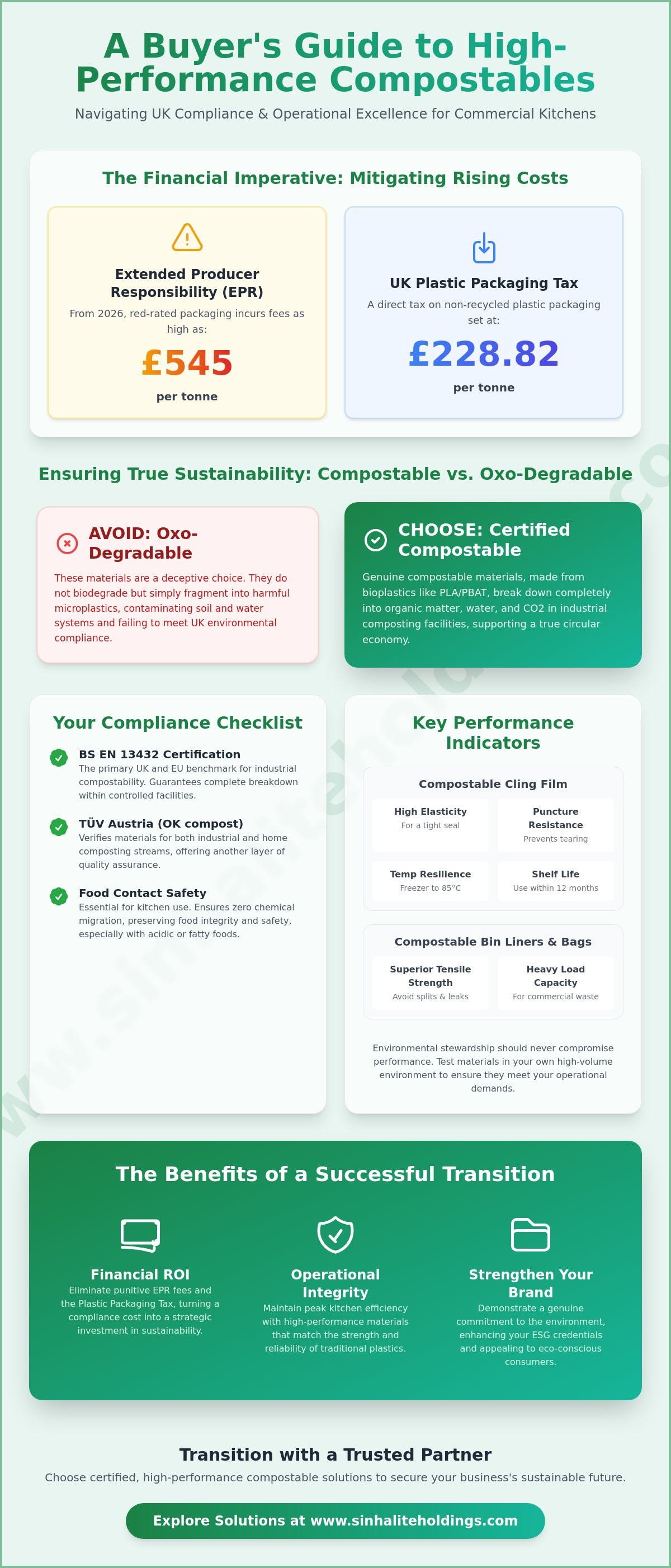
Did you know that under the 2026 Extended Producer Responsibility (EPR) scheme, red-rated packaging can now incur fees as high as £545 per tonne? You likely recognize that transitioning away from traditional plastics is no longer just an ethical choice but a vital financial strategy to mitigate rising operational costs. However, the pressure of a busy service often brings valid concerns about whether eco-friendly alternatives can truly withstand industrial use. It's a common frustration to worry about bags splitting under heavy loads or finding that your compostable cling film for commercial kitchens lacks the necessary stretch and seal to maintain food safety standards.
We believe that environmental stewardship should never come at the expense of performance. This guide will help you identify high-performance, certified compostable packaging that ensures full UK regulatory compliance while strengthening your brand’s sustainability credentials. You will discover how to navigate the 2026 Plastic Packaging Tax, verify authentic BS EN 13432 certifications, and implement puncture-resistant solutions that keep your kitchen running at peak efficiency. By choosing the right materials, you can reduce your carbon footprint and tax liabilities without compromising the integrity of your daily operations.
Key Takeaways
- Verify the integrity of your supply chain by understanding the critical role of BS EN 13432 and TÜV Austria certifications in preventing chemical migration and ensuring safe food contact.
- Master the selection of high-performance materials, such as compostable cling film for commercial kitchens, by prioritizing high elasticity and superior seal strength for rigorous industrial environments.
- Optimise your procurement by matching material strength to specific applications, ensuring your food roller bags and compostable garbage bags withstand commercial loads without failure.
- Analyse the long-term ROI of sustainable transitions, focusing on how certified compostable solutions help your business mitigate the financial impact of the £228.82 per tonne Plastic Packaging Tax.
- Streamline your waste management infrastructure by adopting a single-stream approach that simplifies disposal and supports the transition toward a circular, plastic-free economy.
Understanding Food Grade Compostable Standards for UK Businesses
In 2026, the definition of "food grade" for sustainable packaging has evolved to meet rigorous safety and environmental benchmarks. For a professional kitchen, this means ensuring that plant-based polymers offer zero chemical migration, even when in contact with acidic sauces or fatty proteins. Choosing the right compostable cling film for commercial kitchens requires a focus on materials that preserve food integrity without leaching synthetic additives. This transition is a practical step toward aligning your daily operations with the UK’s vision for a circular economy.
To better understand how these materials perform in a professional environment, watch this helpful video:
Compliance begins with verifying specific certifications that guarantee performance within UK waste streams. The BS EN 13432:2000 standard remains the primary benchmark for industrial compostability, ensuring that packaging breaks down completely within controlled facilities. While "OK compost HOME" certifications are excellent for smaller-scale use, industrial standards are often more suited for high-volume back-of-house efficiency. It's also vital to distinguish between truly compostable and biodegradable materials and deceptive oxo-degradable products. The latter merely fragment into microplastics, failing to meet the strict environmental criteria required for modern commercial compliance.
The Science of High-Performance Bioplastics
Modern bioplastics rely on advanced resins like Mater-Bi and blends of PLA/PBAT to deliver the functional properties chefs depend on. These materials provide a superior oxygen barrier, which is essential for extending the shelf life of prepared ingredients. Unlike traditional PVC or LDPE films, these plant-based alternatives are inherently non-toxic and free from harmful phthalates. Clarifying whether do compostable bags contain plastic is a vital distinction for ESG reporting and helps demonstrate your brand’s commitment to genuine sustainability. By integrating high-performance compostable cling film for commercial kitchens, you ensure that your food safety standards remain as high as your environmental ambitions.
Commercial Buying Framework: Selecting the Right Cling Film and Bags
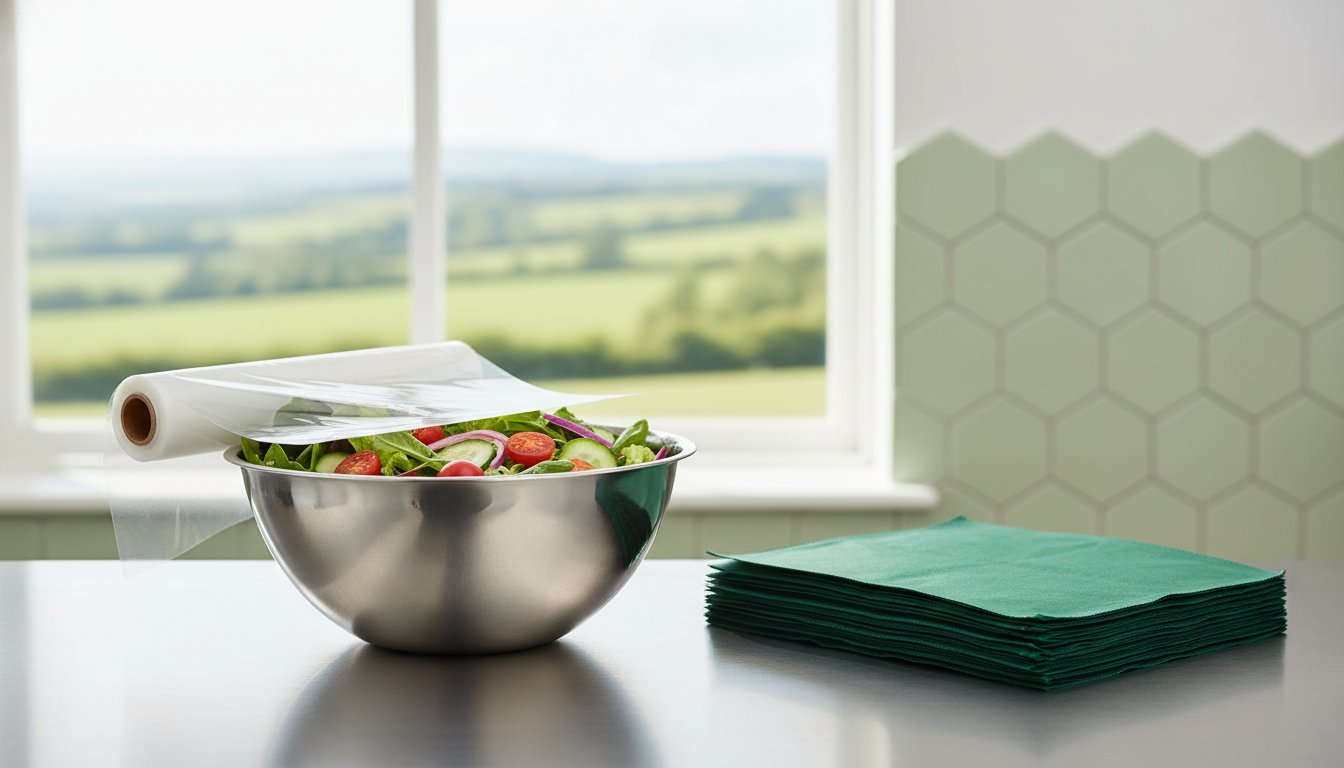
Selecting the ideal compostable cling film for commercial kitchens requires a shift in how procurement teams evaluate material performance. Unlike traditional PVC, which relies on synthetic plasticisers for stretch, high-quality bioplastic films use plant-based resins to achieve a reliable "cling factor." It's essential to test these materials under tension in high-volume environments to ensure they maintain a tight, hygienic seal around stainless steel gastronorms and ceramic prep bowls. A film that lacks sufficient elasticity can lead to oxygen ingress, which prematurely spoils expensive ingredients and increases food waste.
Temperature resilience is another critical factor in a professional setting. Most food-grade compostable wraps are engineered for specific thermal ranges, typically performing safely from freezer temperatures up to approximately 85°C. Exceeding these limits can cause structural failure or unwanted softening of the material. When purchasing in bulk, businesses should also account for the natural shelf life of bioplastics. Because these materials are designed to break down, stored rolls should be used within 12 months to ensure they retain their full tensile strength and puncture resistance.
Application Spotlight: From Delis to Commercial Kitchens
For high-traffic retail environments, lightweight food roller bags are the standard for produce and bakery items. However, back-of-house operations require the heavy-duty performance of commercial compostable cling film UK suppliers provide to ensure kitchen hygiene. Managing organic waste also demands high-integrity caddy liners. Understanding how to keep a food waste bin from smelling often comes down to using breathable, leak-proof bags that prevent anaerobic bacteria buildup. You can find these high-performance essentials in our compostable business range.
Procurement Checklist for Volume Buyers
- Load-Bearing Capacity: Verify the micron gauge of your compostable garbage bags to ensure they can handle heavy organic waste without splitting.
- Puncture Resistance: High-performance films must resist tearing when wrapping bone-in meats or produce with sharp edges.
- Compliance Documentation: Ensure every batch comes with a certificate of conformity to UK food safety and compostability standards.
By matching the specific gauge and material properties to your kitchen's unique workflow, you create a seamless transition to sustainable alternatives. This methodical approach ensures that your commitment to the environment supports, rather than hinders, your operational excellence.
Operational Integration: ROI and the UK Plastic Packaging Tax
The financial landscape for UK hospitality has shifted significantly with the 2026 update to the Plastic Packaging Tax. At £228.82 per tonne for packaging with less than 30% recycled content, the cost of traditional single-use plastics is no longer just a procurement expense; it's a growing tax liability. By integrating compostable cling film for commercial kitchens, businesses can effectively bypass these specific penalties while future-proofing their operations against upcoming EPR modulated fees. This strategic shift transforms a line item into a risk-mitigation tool that protects your bottom line.
Operational efficiency improves when you move toward a "single-stream" organic waste collection. When food scraps and their packaging, such as caddy bags and food roller bags, can be disposed of in the same bin, you reduce the complexity of waste sorting. This simplification often leads to lower collection costs from waste contractors. Beyond the balance sheet, adopting these materials provides a tangible proof point for your ESG targets. It signals to consumers that your sustainability claims are backed by physical innovation, which is essential for building long-term brand equity in a conscious market.
Mitigating Financial Risks in 2026
Plant-based materials offer a degree of price stability that fossil-fuel-linked plastics cannot match. While conventional plastic prices fluctuate with global oil markets, bioplastics are increasingly scalable and predictable. Switching to compostables is a proactive measure that protects your business from both tax hikes and market volatility. It's a clear path toward financial resilience that aligns with the UK’s broader environmental objectives.
Staff Training and Workflow Implementation
The success of any sustainable transition depends on the team using the tools. It's essential to educate kitchen staff on how to identify compostable wraps to prevent contamination of recycling or organic streams. Clear signage and hands-on training are the most effective ways to ensure high-integrity disposal. Procurement teams can leverage the ultimate guide to compostable clingfilm in the UK as a comprehensive training resource to standardise these new workflows across multiple sites.
Sinhalite Holdings acts as a steady, dependable ally for organizations ready to scale these transitions nationally. We provide the tangible tools, from heavy-duty garbage bags to high-performance compostable cling film for commercial kitchens, needed to reach a cleaner, greener future. By choosing a partner dedicated to responsible innovation, you ensure that your transition is both achievable and commercially advantageous.
Future-Proofing Your Kitchen Operations
Adopting a circular approach to food packaging is a powerful way to demonstrate your brand's commitment to environmental stewardship. By focusing on materials certified to EN 13432 and TÜV Austria standards, you ensure that your kitchen remains compliant with the 2026 UK regulatory landscape. This transition isn't just about waste reduction; it's a calculated move to mitigate the financial impact of the Plastic Packaging Tax while maintaining the high standards your customers expect. You've seen how the right bioplastics can balance industrial strength with ecological responsibility.
Integrating compostable cling film for commercial kitchens allows you to maintain hygiene and prep efficiency without the environmental baggage of traditional plastics. As a specialist UK-wide supplier for national hospitality chains, we offer puncture-resistant designs that stand up to the rigours of heavy-duty commercial use. You don't have to choose between performance and purpose when you have the right tools in hand. Our solutions are designed for immediate implementation, helping you reach your sustainability targets with confidence.
Explore our range of high-performance compostable bags and film for your business.
We believe that every responsible choice brings us closer to a cleaner, greener industry, and we're ready to help you lead that change with optimism and integrity.
Frequently Asked Questions
Is compostable cling film strong enough for professional catering use?
Yes, high-performance compostable cling film for commercial kitchens is specifically engineered to meet the rigours of a busy service. These films use advanced plant-based resins that provide the necessary elasticity and "cling factor" to seal tightly over stainless steel prep bowls and gastronorms. While they feel slightly different to traditional PVC, their puncture resistance ensures that food hygiene and preservation standards remain uncompromised during high-volume operations.
Does compostable food packaging have a specific expiry date?
Most compostable products, including food roller bags and wraps, have a recommended shelf life of approximately 12 months for optimal performance. Because these materials are designed to break down naturally, they can gradually lose their tensile strength and flexibility if they're stored for too long. To maintain their structural integrity, it's best to keep your stock in a cool, dry environment away from direct sunlight and humidity.
Can compostable bags be used for hot food or microwave heating?
Many compostable wraps and bags are safe for use with warm foods, typically handling temperatures up to 85°C. This makes them suitable for covering warm prep items or for short periods of microwave defrosting. However, they aren't usually designed for high-heat cooking or boiling. Always check the specific thermal ratings provided by your supplier to ensure the material doesn't soften or fail when exposed to heat.
How do I verify if a supplier is providing genuine EN 13432 certified bags?
You can verify authenticity by looking for the "Seedling" logo or the TÜV Austria "OK compost" mark, which must be accompanied by a unique 7-digit license number. A transparent supplier will always provide a certificate of conformity that explicitly references the BS EN 13432 standard for industrial compostability. Checking these license numbers against official certification databases is a practical way to protect your business from greenwashing and ensure full regulatory compliance.