
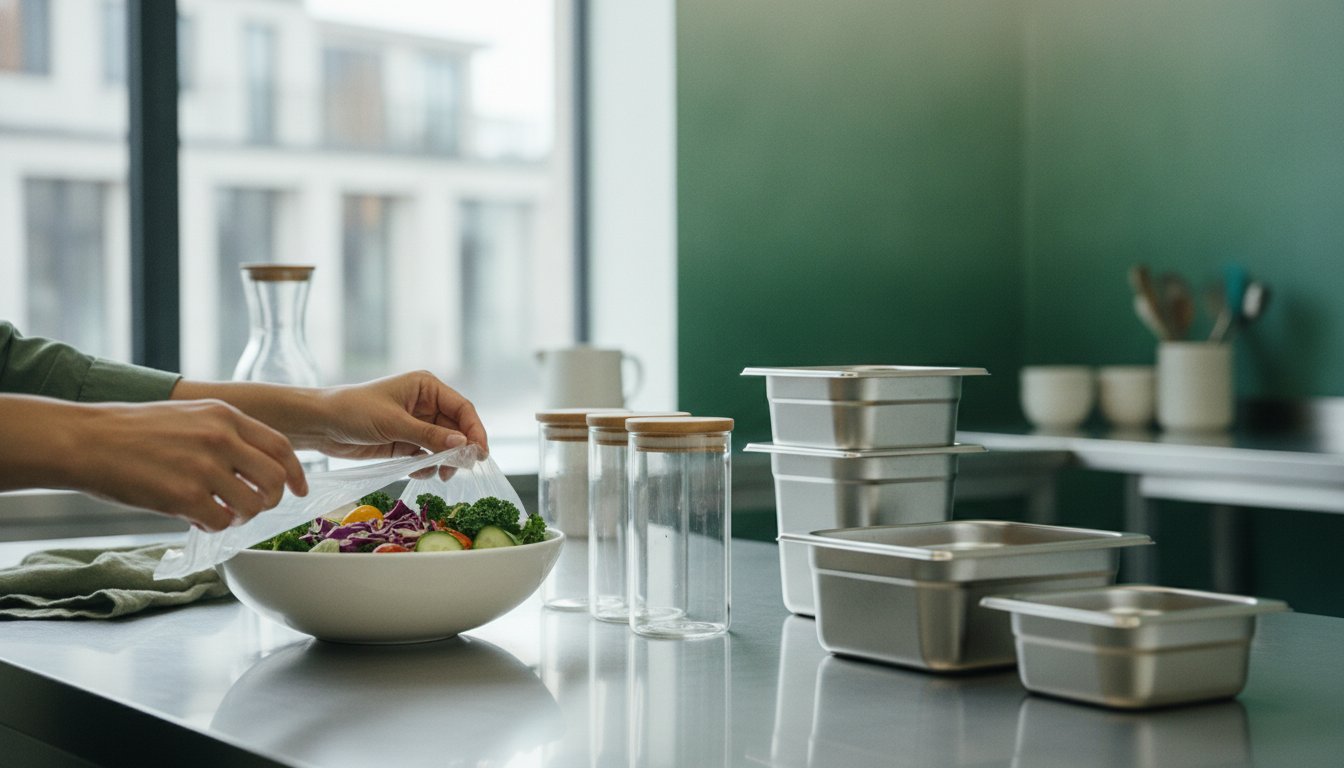
Could your current packaging be costing you more in taxes and brand reputation than the transition to sustainable materials? With the UK Plastic Packaging Tax now set at £228.82 per tonne, identifying effective plastic free food storage ideas is no longer just an environmental goal; it's a commercial necessity. Most business leaders recognise that the era of single-use plastics is ending, yet the fear of food spoilage or non-compliance often slows the transition. You're likely looking for a way to protect your produce without the risks of BPA or PFAS leaching into your inventory.
This guide promises to simplify that transition by highlighting non-toxic, scalable alternatives that meet the highest UK sustainability standards. We'll explore how to replace traditional films and bags with certified compostable solutions that perform under pressure. By the end of this article, you'll have a clear strategy for modernising your food storage while ensuring your organisation remains compliant with the latest EPR modulated fees and recycling mandates.
Key Takeaways
- Identify non-toxic materials free from BPA, phthalates, and PFAS to ensure food safety and long-term health in your home or business.
- Compare the benefits of glass and stainless steel as durable, non-reactive foundations for a professional-grade kitchen setup.
- Explore practical plastic free food storage ideas that utilise certified compostable clingfilm and food roller bags for superior hygiene and convenience.
- Recognise how adopting high-quality compostable alternatives supports the UK circular economy and helps your organisation meet evolving regulatory requirements.
Understanding the Shift to Non-Toxic Food Storage Containers
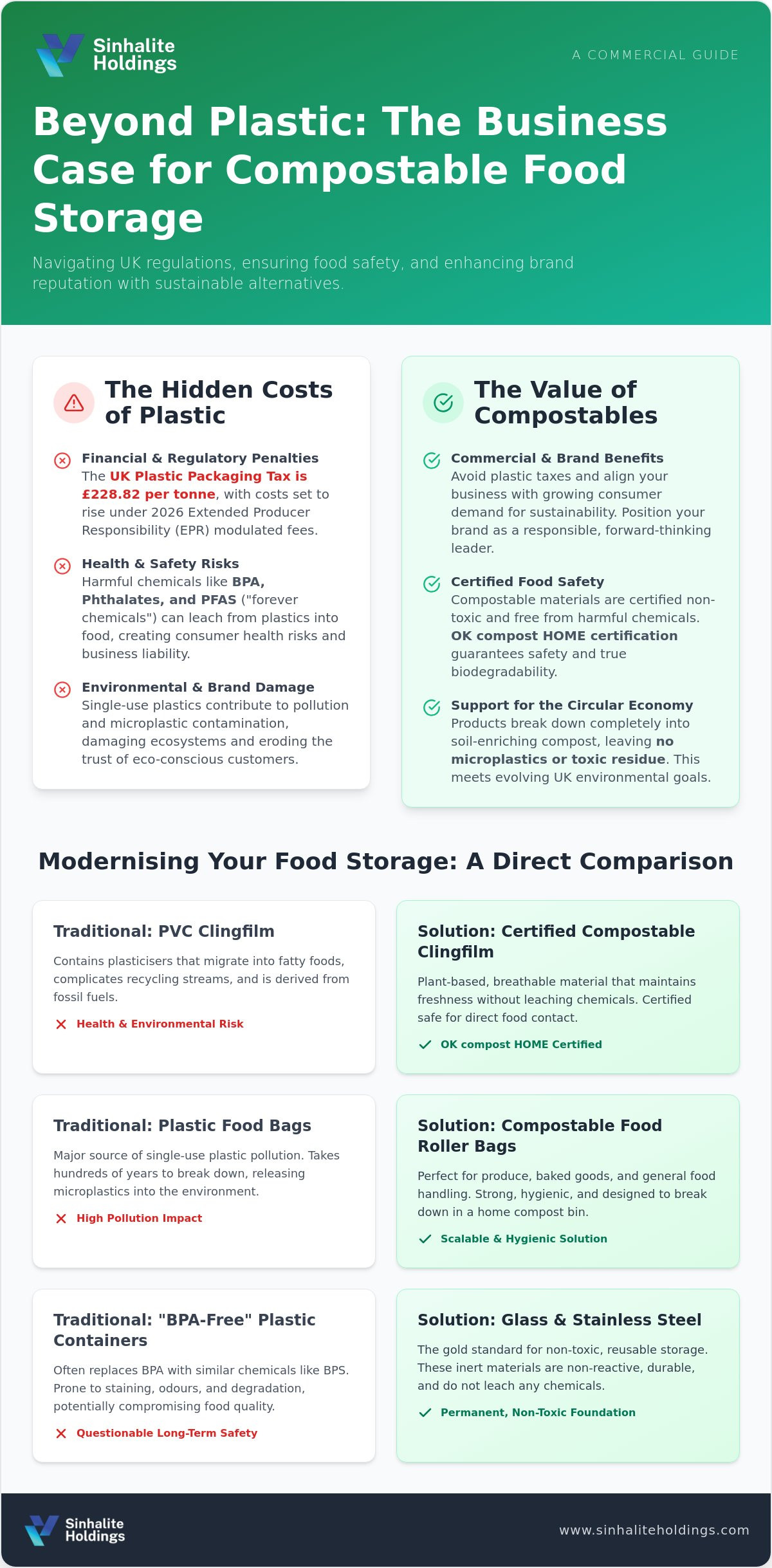
The UK's transition toward a circular economy is driving a fundamental reassessment of how we preserve and protect our food. While the history of food storage containers shows a long progression from natural vessels to synthetic polymers, the modern focus has shifted back to material integrity. Non-toxic food storage refers to solutions crafted from materials free from Bisphenol A (BPA), phthalates, and per- and polyfluoroalkyl substances (PFAS). These substances are known for their tendency to leach into food, especially when exposed to heat or fatty acids, creating long-term health risks for consumers and operational liabilities for businesses.
Choosing inert materials like glass, stainless steel, or certified bioplastics allows organisations to reduce exposure to endocrine disruptors while aligning with stringent UK environmental standards. This move is not merely a trend; it's a response to the 2026 Extended Producer Responsibility (EPR) requirements that penalise difficult-to-recycle packaging. Non-toxic storage is the intersection of material safety and environmental biodegradability.
To better understand this concept, watch this helpful video:
Identifying Harmful Plastics in the Kitchen
Many commercial kitchens rely on "BPA-free" plastics, but these labels don't always guarantee safety. Manufacturers frequently replace BPA with Bisphenol S (BPS) or other chemical analogues that may exhibit similar biological effects. Traditional PVC clingfilm presents another challenge; it often contains plasticisers that migrate into oily foods and complicates the recycling stream. When businesses seek plastic free food storage ideas, they must look beyond marketing buzzwords to find materials that are truly chemically stable and environmentally responsible.
The Role of UK Certifications in Safety
Reliable safety in food storage is verified through rigorous third-party testing. This makes the OK compost HOME certification explained a vital resource for any organisation evaluating new suppliers. Standards set by TUV Austria ensure that storage materials, such as compostable food roller bags and clingfilm, break down completely in home or industrial composting environments. These certifications confirm that the products leave behind no toxic residues or microplastics, ensuring that your commitment to sustainability is backed by scientific evidence.
The Best Plastic-Free Alternatives for Every Food Type
Implementing effective plastic free food storage ideas requires a nuanced understanding of how different materials interact with specific ingredients. Glass and Pyrex remain the gold standard for long-term storage. Because they're completely non-reactive, they don't absorb odours or stain, making them ideal for high-acid contents like citrus or tomato-based sauces. For commercial environments, stainless steel offers a lightweight and virtually indestructible alternative. It's particularly effective for batch cooking and transporting meals across large sites where durability is a priority.
However, the choice isn't just about durability; it's about chemical safety and regulatory compliance. Recent UK Parliament evidence on PFAS highlights the persistent risks associated with "forever chemicals" often found in traditional grease-resistant coatings. Transitioning to platinum-grade silicone for freezer storage or using organic cotton produce bags for dry goods helps eliminate these risks. For businesses looking to align with these standards, exploring sustainable packaging solutions can provide a clear roadmap for replacing outdated plastic inventory.
Matching Material to Shelf-Life
Glass is superior for maintaining the flavour profile of complex dishes, whereas stainless steel excels in "grab-and-go" settings where weight and breakage are primary concerns. Using the right tool for the job ensures your kitchen remains efficient and compliant with modern safety standards. For dry goods like bread or grains, natural textiles allow for essential airflow, preventing the moisture build-up that leads to premature mould growth in sealed plastic environments.
The Limitations of Hard Containers
Rigid containers, while durable, aren't a universal solution for shelf-life. They often leave a significant "air-gap" that accelerates oxidation and spoilage in fresh-cut produce. This air exposure is why hard containers can sometimes lead to faster waste for items like halved avocados or leafy greens. To maintain peak freshness, kitchens often require flexible solutions that can contour directly to the food's surface, a role traditionally filled by plastic films but now better served by modern compostable alternatives.
Scalable Solutions: Compostable Clingfilm and Food Bags
While glass and steel are excellent for permanent storage, high-volume commercial kitchens require flexible solutions that don't compromise hygiene or speed. This is where compostable clingfilm becomes an essential tool. Unlike traditional PVC films, these certified alternatives don't contain harmful plasticisers that can migrate into fatty or oily foods. Official guidance from the Food Standards Agency on BPA underscores the importance of monitoring chemical migration; this makes the switch to plant-based films a proactive safety measure. For delis and bulk prep stations, compostable food roller bags offer the same convenience as their plastic predecessors without the long-term environmental burden.
Integrating these items is a critical step in switching business to sustainable packaging. These plastic free food storage ideas allow organisations to maintain high operational standards while meeting the 2026 UK "Simpler Recycling" requirements. Because these materials are designed to break down alongside food waste, they simplify the separation process for staff and reduce general waste costs.
Compostable Film vs. Beeswax Wraps
Many small-scale operations consider beeswax wraps, but they often present hygiene challenges in professional settings. Beeswax cannot be washed at the high temperatures required to kill bacteria from raw proteins, which increases the risk of cross-contamination. In contrast, compostable film is a single-use, hygienic barrier that provides a superior airtight seal. This tight contact is necessary to prevent freezer burn without plastic, ensuring that expensive inventory remains protected for longer periods.
Implementation for UK Organisations
Large organisations can easily incorporate compostable caddy bags and roller bags into existing food waste collection streams. This alignment supports a circular economy where packaging returns to the earth as nutrient-rich compost. For high-volume kitchens, food roller bags provide a cost-efficient way to manage portion control and ingredient prep without the guilt of single-use plastic waste. By choosing certified materials, businesses demonstrate a commitment to both public health and environmental stewardship.
Securing a Sustainable Future for Your Kitchen and Business
Transitioning to a business model that prioritises non-toxic materials is a decisive step toward environmental leadership. It's about responsibility. By integrating durable reusables with flexible, plant-based alternatives, you eliminate the risks of chemical leaching. These choices ensure your operations remain compliant with evolving UK regulations while protecting the integrity of the food you serve or store.
Adopting plastic free food storage ideas provides a clear path to reducing waste and meeting the expectations of a conscious consumer base. Our products are crafted from 100% plastic-free and plant-based materials. They're fully compliant with UK OK compost HOME standards. As a partner trusted by the UK hospitality and commercial sectors, we provide the tools needed for a seamless transition to a circular economy.
Explore our range of certified compostable food storage solutions to begin your journey toward a cleaner, more responsible future. The tools for systemic change are available today; taking action now ensures your organisation remains resilient and respected in a greener marketplace.
Frequently Asked Questions
Are all plastic-free food storage containers microwave safe?
No, microwave safety depends entirely on the material composition of the container. While glass and platinum-grade silicone are typically safe for high temperatures, stainless steel must never be used in a microwave. For flexible solutions, you should check the manufacturer's temperature limits on certified compostable clingfilm to ensure it maintains its structural integrity during heating. Always verify that a product is explicitly labelled as microwave-safe before applying heat.
How do I know if a food storage bag is truly compostable and not just degradable?
True compostability is verified through specific third-party certifications such as the OK compost HOME standard. Unlike "degradable" plastics, which often simply fragment into harmful microplastics, certified compostable materials break down into nutrient-rich organic matter. When researching plastic free food storage ideas, always look for the TUV Austria logo to ensure the product meets rigorous UK biodegradability requirements. This ensures the material supports a genuine circular economy without leaving toxic residues.
Can I use compostable clingfilm for professional catering and raw meat?
Yes, certified compostable clingfilm is a highly effective and hygienic solution for professional catering environments. Because it's a single-use barrier, it eliminates the cross-contamination risks associated with reusable wraps like beeswax when handling raw meat or fish. These plant-based films provide the necessary airtight seal to protect proteins while remaining fully compatible with commercial food waste collection streams. This makes them a superior choice for maintaining strict food safety standards in high-volume kitchens.
What is the best way to store leafy greens without using plastic bags?
The most effective method involves wrapping the greens in a damp natural textile or placing them inside a compostable food roller bag. These bags allow for a slight exchange of air while maintaining the humidity necessary to prevent wilting. This approach ensures your produce stays crisp for longer periods without the environmental impact or chemical leaching associated with traditional single-use plastic bags. It's a practical way to extend shelf life and reduce waste in busy commercial settings.


