

What if your office kitchen's afternoon tea break was costing your business £118 every single hour in regulatory penalties? Since the Environment Agency introduced these time-based charges in February 2026, the stakes for workplace recycling have never been higher. You likely understand that separating food waste is now a legal necessity under the Simpler Recycling reforms, but the practical reality of managing organic waste often brings concerns about foul kitchen odours and unwanted pests. Finding the right balance between strict compliance and a pleasant working environment requires more than just a new bin; it demands a reliable system built on high-performance commercial food waste bags UK organisations can trust to maintain hygiene standards.
This guide provides a clear roadmap for implementing a seamless, odour-free collection system that aligns perfectly with 2026 regulations. You will learn how to navigate the specific requirements for your business size, from micro-entities to large corporate hubs, while prioritising durability and environmental integrity. We will explore how to select infrastructure that meets the BS EN 13432 standard, ensuring your waste is processed efficiently into renewable energy through anaerobic digestion. By the end of this article, you will have the tools to transform a mandatory chore into a sophisticated pillar of your corporate ESG strategy.
Key Takeaways
- Grasp the essential legal requirements of the 2026 Simpler Recycling reforms to ensure your business avoids costly hourly non-compliance charges.
- Identify the ideal infrastructure for your workspace, including high-performance commercial food waste bags uk that prevent leaks and maintain office hygiene.
- Learn to conduct a comprehensive waste audit that informs the strategic placement of ergonomic caddies and smaller tea station units.
- Implement visual 'What Goes Where' guides to simplify the transition for staff and significantly reduce bin contamination.
- Connect your daily waste management practices to broader corporate ESG goals, fostering a culture of environmental stewardship and responsibility.
Navigating the 2026 UK Waste Regulations and Planning Your Strategy
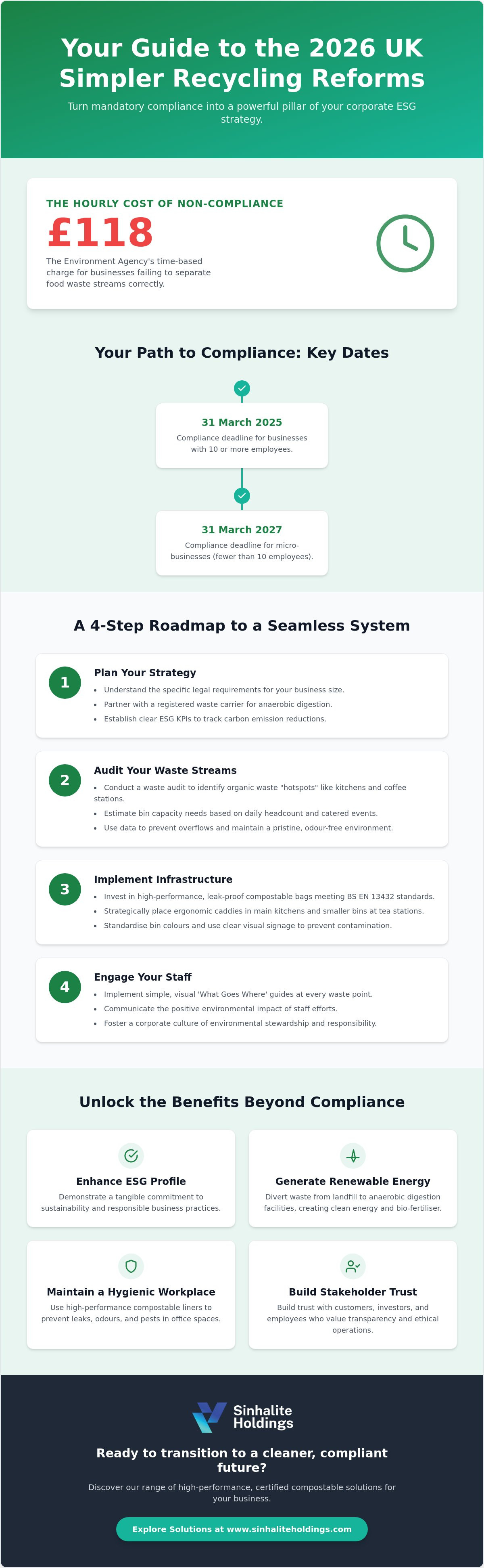
The landscape of corporate responsibility is shifting as the UK government implements the Simpler Recycling reforms. This legislative framework mandates that all businesses in England must separate food waste from their general waste streams, a move designed to drastically reduce the environmental impact of Food waste in the United Kingdom. While many organisations with 10 or more employees were required to comply by 31 March 2025, micro-businesses have until 31 March 2027 to finalise their transitions. Proactive adoption isn't just about avoiding the £118 per hour regulatory charge for non-compliance; it's about positioning your brand as a visionary leader in environmental stewardship.
To better understand this concept, watch this helpful video:
Successful implementation begins with a robust strategy that bridges the gap between legal necessity and daily office operations. You should start by identifying a registered waste carrier that transports organic matter directly to anaerobic digestion facilities, where it's converted into renewable energy and bio-fertiliser. To keep this system efficient, establishing clear ESG KPIs will allow your team to track carbon emission reductions and celebrate the tangible impact of diverted landfill waste. This methodical approach ensures your business remains compliant while contributing to a cleaner, greener circular economy.
The 2026 Legal Imperative for UK Offices
The 2026 Simpler Recycling mandate requires all commercial entities in the UK to implement separate collection systems for food waste to ensure organic matter is diverted from landfills. Beyond the immediate threat of financial penalties, early compliance builds trust with stakeholders who increasingly value transparency and ethical operations. Using high-quality commercial food waste bags uk businesses can rely on ensures that your commitment to the law doesn't compromise the hygiene or professional atmosphere of your workspace.
Auditing Your Office Waste Streams
Before installing new bins, conduct a thorough waste audit to identify organic waste hotspots. Coffee stations, communal lunchrooms, and executive kitchenettes often produce varying volumes of organic matter that require different containment solutions. You'll need to estimate your required bin capacity by cross-referencing your average daily headcount with the frequency of catered events. This data-driven approach ensures you select the right size of compostable caddy bags to prevent overflows and maintain a pristine, odour-free environment.
Implementing a Seamless In-Office Infrastructure
Transitioning from a regulatory strategy to a physical setup requires a thoughtful approach to bin placement and liner quality. Selecting the right commercial food waste bags uk businesses need for high-traffic kitchens is the foundation of a hygienic system. High-visibility, ergonomic caddies serve as effective central hubs in main kitchens, while smaller, discreet units are better suited for individual tea stations. To maintain a professional environment, you should utilise high-performance compostable caddy bags that offer leak-proof containment. This ensures that the transition to a circular system is as clean as it is compliant.
Standardisation is your strongest tool against cross-contamination. By using consistent bin colours and clear, visual signage across the entire organisation, you remove the guesswork for staff members. This clarity is essential for meeting the standards outlined in the UK government guidance on food disposal. Once collected internally, waste should be moved daily to external wheelie bins. These larger containers require puncture resistant compostable garbage bags to prevent tears and spillages during the final collection phase.
The Role of Certified Compostable Liners
Choosing liners that carry the EN 13432 certification is a critical step for successful organic waste processing. These certified commercial food waste bags uk businesses use are designed to break down fully within industrial composting and anaerobic digestion facilities. While some legacy bioplastics were prone to splitting, modern innovations in material science have created durable, high-strength alternatives. These advanced solutions provide the reliability of plastic without the long-term ecological damage. If you're looking to upgrade your office infrastructure, you can browse our range of industrial-strength compostable solutions to find the right fit for your team.
Maintaining Hygiene and Preventing Odours
Hygiene is often the primary concern when introducing organic collection. To neutralise smells in communal spaces, select caddies equipped with lids and integrated carbon filters. You should also strategically place bins away from direct sunlight or office radiators, as heat accelerates organic decomposition. Regular cleaning of the caddies themselves ensures that your food waste system remains a positive addition to the workplace rather than a source of frustration.
Driving Staff Engagement and Sustaining Long-Term ESG Impact
The physical installation of bins and the procurement of high-performance commercial food waste bags uk businesses rely on are only the first steps toward a circular economy. Culture drives compliance. To ensure long-term success, you must launch an internal awareness campaign that bridges the gap between individual actions and your organisation’s broader environmental stewardship. Clear, visual 'What Goes Where' guides are essential; they remove ambiguity and prevent the cross-contamination that can lead to rejected waste collections. According to WRAP's commercial food waste guide, engaging staff through education is a primary driver of high-quality recycling streams.
Creating a Culture of Environmental Responsibility
Appointing 'Green Champions' within different departments empowers employees to take ownership of the new system. These advocates act as a local resource for colleagues, answering questions and encouraging the correct use of compostable liners. This shift is often part of a larger narrative of switching business to sustainable packaging, demonstrating that the organisation is committed to systemic change rather than superficial fixes. Quarterly reviews based on staff feedback will help you refine the system and address any friction points.
Monitoring and Reporting Success
Integrating food waste metrics into your annual sustainability reports provides stakeholders with tangible proof of your ESG progress. You can use data from your waste contractor to celebrate milestones, such as the total tonnes of CO2 saved by diverting organic matter from landfills. This transparency builds trust with clients, investors, and potential employees who prioritise ethical business practices. By treating waste management as a measurable performance indicator, you transform a regulatory requirement into a powerful tool for corporate reputation and long-term impact. High-quality commercial food waste bags uk organisations use daily are the silent partners in this success, ensuring the process remains hygienic and efficient year after year.
Leading the Transition to a Circular Workplace
Embracing the 2026 Simpler Recycling reforms is more than a matter of legal compliance; it's a strategic opportunity to redefine your organisation's relationship with the environment. By establishing a robust internal infrastructure and fostering a culture of active participation, you turn a mandatory requirement into a powerful testament to your corporate values. Success in this transition relies on the strength of your foundational tools. High-quality commercial food waste bags uk businesses can depend on are essential for maintaining a hygienic, odour-free office while ensuring that organic matter is successfully diverted to anaerobic digestion facilities.
As a UK-based specialist in compostable packaging solutions, Sinhalite Holdings is dedicated to supporting this systemic change. Our product range is fully EN 13432 and OK compost HOME certified, providing the industrial strength required for high-traffic commercial environments. We're proud to be trusted by national organisations for sustainable waste management, offering practical tools that bridge the gap between visionary ESG goals and daily operational reality. It's time to future-proof your office with solutions that don't compromise on performance or the planet.
Ready to align your operations with the future of British recycling? Explore our range of high-performance compostable caddy bags for your office and take a decisive step toward a cleaner, more responsible future for your team and the environment.
Frequently Asked Questions
What foods can be included in our office food waste collection?
Your office collection can include all raw and cooked food leftovers, such as fruit peelings, vegetable scraps, meat, dairy, and bread. It's also suitable for coffee grounds and loose tea, though you should check if your tea bags contain plastic before adding them to the bin. Diverting these materials from general waste ensures they're processed into valuable resources rather than contributing to landfill methane emissions.
How do we prevent pests and fruit flies in the office kitchen?
Maintaining kitchen hygiene relies on using high-performance commercial food waste bags uk organisations trust to prevent leaks and odours. You should ensure caddies are emptied into external bins daily and equipped with tight-fitting lids to deter fruit flies. Placing your bins in cool, shaded areas further slows decomposition; this proactive approach keeps your communal spaces fresh while you fulfil your environmental responsibilities.
Are compostable bags better than plastic for office food waste?
Compostable bags are the superior choice because they're designed to break down alongside organic matter in industrial facilities. Traditional plastic liners contaminate the waste stream, often requiring expensive mechanical removal or causing the entire load to be sent to a landfill. By choosing EN 13432 certified commercial food waste bags uk suppliers provide, you support a seamless transition to a circular economy without the environmental cost of single-use plastics.
What happens to the food waste once it leaves our office?
Once collected, your food waste is typically transported to a specialised anaerobic digestion facility. Inside these sealed tanks, microorganisms break down the organic matter to produce biogas, which is then converted into renewable electricity and heat. The remaining nutrient-rich material becomes high-quality bio-fertiliser for British agriculture; this process completes the circular loop and directly reduces your organisation's reliance on fossil fuels.


