
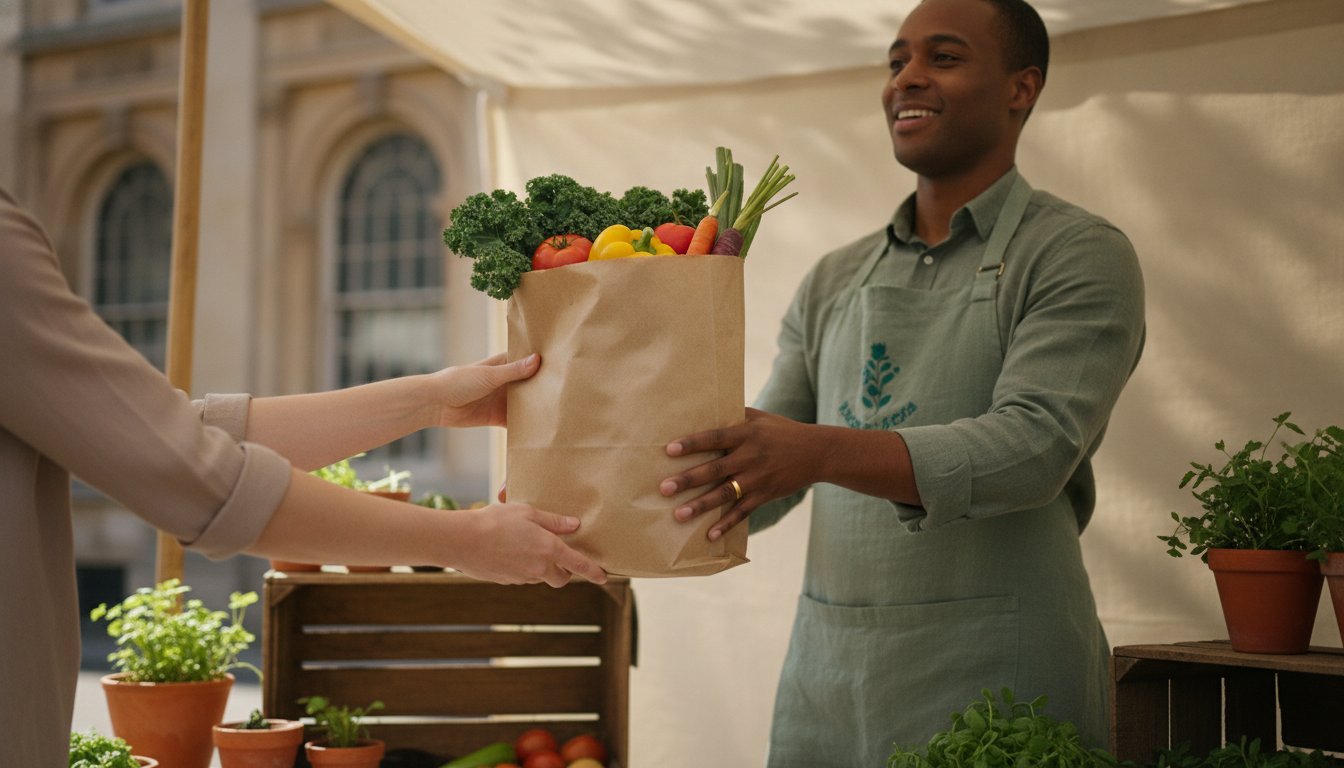
By 2026, your choice of carrier bag or food wrap has become a more powerful branding tool than the logo on your sign. You likely recognise that implementing sustainable packaging for market stalls is no longer just an environmental preference; it's a financial and social necessity under the latest UK regulations. It's natural to feel concerned about whether eco-friendly wraps will truly protect your goods or if the costs of the Plastic Packaging Tax, now at £228.82 per tonne, will eat into your margins. We believe that environmental stewardship and commercial success should work in harmony, rather than in opposition.
This guide will show you how to transition your business to high-performance compostable solutions that meet strict 2026 standards while exceeding customer expectations. We'll demystify complex certifications like OK compost HOME and provide a clear roadmap for adopting functional, compliant solutions. You will learn how to select innovative materials that maintain product freshness and reinforce your reputation as a responsible, visionary trader in a circular economy.
Key Takeaways
- Understand why 2026 shoppers demand plastic-free markets and how to align your brand with these evolving environmental expectations.
- Identify the critical performance metrics for sustainable packaging for market stalls, focusing on materials that provide the durability and strength required for professional outdoor trading.
- Discover how to select compostable cling film that maintains high standards of food hygiene while delivering the reliable adhesion your business requires.
- Learn a methodical framework to audit your current plastic usage and transition toward certified, circular solutions that support a cleaner future.
The Shift to Sustainable Packaging for UK Market Stalls in 2026
The character of British street markets is changing as modern shoppers view every stall through a lens of environmental accountability. Choosing Sustainable packaging is no longer a niche preference; it's a fundamental requirement for commercial viability. By transitioning to high-performance compostables, traders move beyond the limitations of traditional plastics to embrace a model that prioritises long-term ecological health. It's a shift that replaces disposable culture with a sense of purpose and responsibility.
This transition addresses a critical environmental imperative. The UK generated 2.4 million tonnes of plastic packaging waste in 2021, and the vibrant market sector contributes significantly to this total. Adopting sustainable packaging for market stalls reduces your carbon footprint and positions your business as a leader in the transition toward a circular economy. It transforms a necessary operational expense into a powerful statement of intent that resonates with a conscious public.
To better understand this concept, watch this helpful video:
Meeting the 2026 Consumer Demand for Plastic-Free Trading
Shoppers at artisan markets seek authenticity in every purchase. Every element of the transaction, from the primary product to the compostable shopping bags used for transport, contributes to the overall brand experience. Visible sustainability fosters deep customer loyalty because it proves your values align with theirs. High-quality packaging signals that you value both your product and the planet. Ultimately, sustainable packaging represents a tangible commitment to a circular economy where waste is designed out of the system entirely.
Navigating UK Regulations and the Plastic Packaging Tax
Compliance has become a primary driver for operational change in the UK. As of April 2026, the Plastic Packaging Tax has risen to £228.82 per tonne, affecting any business handling significant volumes of non-recycled plastic. While many small traders fall below direct reporting thresholds, these costs are invariably passed down through the supply chain. switching business to sustainable packaging mitigates these financial risks and ensures you remain ahead of evolving legislation. Verified certifications, such as BS EN 13432, provide the necessary evidence to avoid greenwashing penalties and build genuine trust with local councils and consumers.
Evaluating Compostable Alternatives: A Buyer’s Framework for Traders
Selecting sustainable packaging for market stalls requires a shift in focus from simple cost per unit to material performance and functional integrity. In an outdoor trading environment, your packaging must withstand variable weather, physical handling, and the specific demands of your product range. We believe that choosing the right material is a proactive step toward operational excellence; it ensures that your commitment to the planet never compromises the quality of your service.
A significant hurdle for many traders is identifying compostable cling film that actually clings. Traditional plastic wraps rely on chemical additives for adhesion, but modern plant-based innovations now offer comparable performance without the environmental cost. When evaluating these alternatives, prioritise thickness and puncture resistance to ensure food hygiene remains uncompromised during a busy market day.
Essential Packaging for Food Stalls and Artisan Delis
For vendors handling fresh produce or baked goods, hygiene and presentation are paramount. Compostable food roller bags provide a practical, plastic-free solution for self-service or staff-managed produce handling. These items, along with plant-based cling wrap, prevent moisture loss and protect against contamination without the risk of chemical leaching into organic products. When choosing compostable shopping bags, ensure they are rated for the weight of your heaviest jars or bottles to prevent failures at the point of sale.
Durability and Performance: Ensuring Your Packaging Protects Your Goods
Market days are demanding, and your waste management should be just as robust as your sales strategy. Utilizing puncture resistant compostable garbage bags is essential for managing stall waste without messy leaks or tears. High-quality compostable materials shouldn't feel fragile; they should offer the strength and moisture barriers required to keep produce fresh and stalls clean. This functional reliability is a core component of a professional circular packaging strategy guide that supports long-term business growth.
While procurement costs for compostables can be 15-25% higher than plastic, the investment builds significant brand equity and regulatory safety. To see how these materials perform in real-world conditions, you can explore our range of high-performance compostables designed for the rigorous needs of UK traders. Proper storage in cool, dry conditions will ensure your stock maintains its shelf-life and performance throughout the trading season.
Implementing a Circular Packaging Strategy for Your Stall
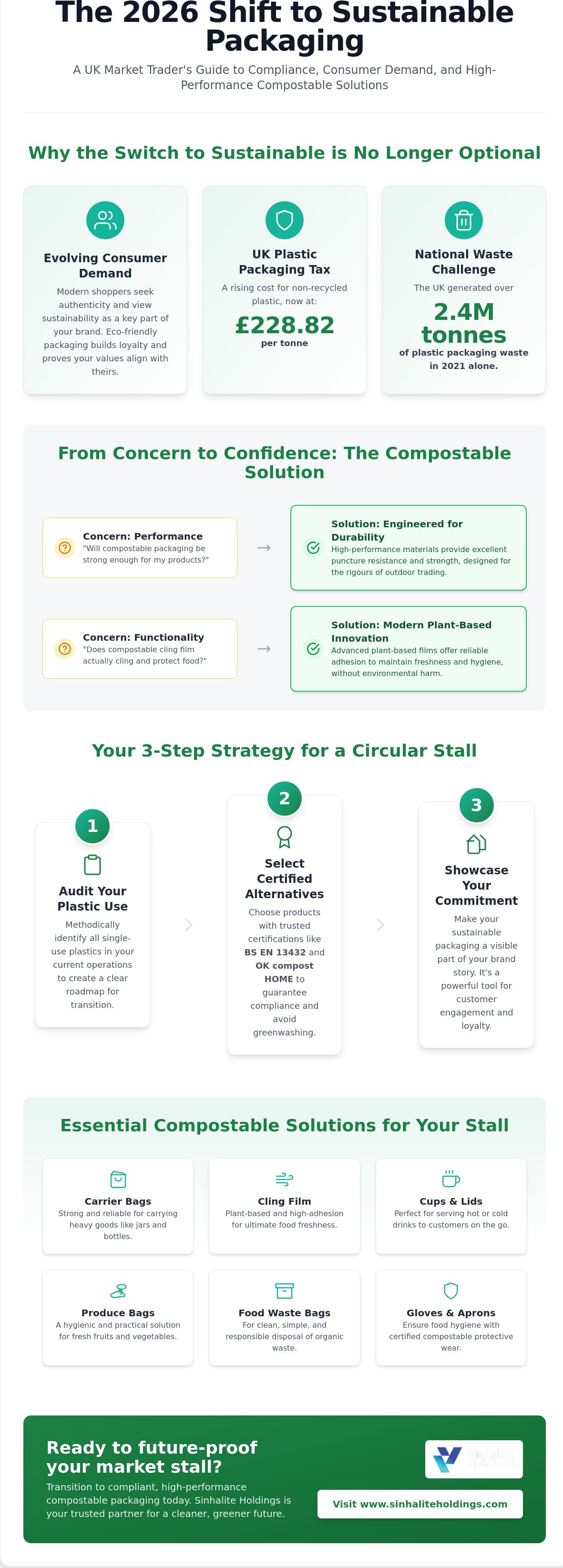
Transitioning to a circular model transforms your stall from a simple point of sale into a hub for environmental stewardship. This methodical approach ensures that your shift toward sustainable packaging for market stalls is both seamless and commercially advantageous. We believe that a well-executed strategy does more than satisfy regulations; it inspires confidence in your brand as a leader in the green transition.
Begin by auditing your current plastic footprint to identify "quick wins." Replacing high-volume items, such as plastic produce rolls, with compostable food roller bags allows for immediate impact without disrupting your daily operations. Next, ensure every replacement is backed by rigorous standards. You can find OK compost HOME certification explained in our detailed guide, which clarifies how these materials break down safely in domestic environments. Training your team is equally vital; staff must understand that compostable items require cool, dry storage to maintain their structural integrity. Finally, empower your customers by providing clear instructions on how to compost their packaging at home, completing the circular loop.
Transitioning to Certified Compostable Solutions
Partnering with specialist UK suppliers like Sinhalite Holdings provides the technical assurance required for modern trading. By integrating compostable caddy bags into your workflow, you can effectively manage organic stall waste in line with the latest UK food waste separation requirements. These operational shifts, culminating in the use of compostable shopping bags at the final touchpoint, reinforce a consistent message of quality and environmental responsibility.
Communicating Your Sustainability Story to Customers
Transparency is a powerful marketing asset that builds lasting customer relationships. Use professional signage to highlight your shift to 100% compostable packaging; this clarity often justifies the premium pricing associated with high-quality artisan goods. When customers see that their packaging is part of a "closed-loop" system, they feel like active participants in a positive movement. Providing simple disposal instructions on your bags ensures that your sustainable packaging for market stalls ends its life as nutrient-rich compost rather than persistent landfill waste.
Securing Your Stall’s Future in a Circular Economy
Adopting sustainable packaging for market stalls is a strategic investment that aligns your commercial operations with the values of a conscious 2026 public. By moving beyond traditional plastics, you don't just avoid regulatory penalties; you build a brand that stands for integrity and innovation. We've explored how selecting high-performance, certified compostables ensures that your food hygiene and product protection standards remain uncompromised. This transition is a practical step toward a cleaner, more resilient business model.
As a specialist UK provider of certified compostable solutions, Sinhalite Holdings has been supporting the transition to a UK circular economy since 2018. Our high-performance materials are specifically designed for commercial durability, providing the strength required for professional trading without environmental compromise. We believe that every stall owner has the power to lead this change, turning a necessary operational choice into a visionary statement of intent.
Explore our range of professional compostable packaging for UK traders to begin your transition today. Together, we can create a vibrant market sector that respects natural processes while delivering exceptional quality to every customer.
Frequently Asked Questions
Is sustainable packaging for market stalls more expensive than traditional plastic?
The initial procurement cost for compostable materials is generally 15 to 25 percent higher than non-compostable alternatives. However, this investment is increasingly offset by the rising costs of the UK Plastic Packaging Tax, which reached £228.82 per tonne in April 2026. Transitioning to sustainable packaging for market stalls also builds significant brand equity, as modern shoppers often prioritise traders who demonstrate clear environmental responsibility.
Will compostable cling film actually keep my food fresh during a long market day?
High-performance compostable cling film is specifically engineered to provide an effective moisture barrier that maintains product freshness for the duration of a busy trading day. These plant-based films offer the necessary breathability for fresh produce while preventing dehydration; this ensures your goods remain in peak condition for your customers. Because these materials focus on commercial utility, they provide the reliable seal needed to meet strict food hygiene standards without the use of traditional plastic polymers.
What happens if compostable bags get wet in typical UK market weather?
Modern compostable shopping bags and food roller bags are designed to be water-resistant and will not lose their structural integrity during a rainy market day. The biodegradation process requires specific conditions found in composting environments; it doesn't trigger simply because of a rain shower. You can trust that your packaging will remain strong and durable during customer transit. We recommend storing your unused stock in a cool, dry place to ensure the materials maintain their maximum shelf-life and performance.
How can I tell the difference between real compostable packaging and greenwashed plastic?
You should always look for verified certifications such as BS EN 13432 or the "OK compost HOME" label to distinguish genuine products from greenwashed alternatives. Authentic sustainable packaging for market stalls will clearly state whether it's suitable for domestic or industrial composting facilities. We suggest avoiding vague terms like "eco-friendly" or "biodegradable" if they lack supporting evidence. These terms often lack the rigorous testing required to ensure a product truly returns to the earth without leaving harmful microplastics behind.


